
No-Registration Casinos in the UK: Free Slots, Pay N Play, or Offshore Risk?
 Available in GB
The phrase “no registration casino UK” promises something the regulated market will not give a British player: a casino where the operator takes real money, pays real winnings and never asks who you are. It is the most searched casino concept in the country, and the one least matched by what the Gambling Commission permits. What the search actually returns is three different products — free-play demo slots on third-party sites, streamlined onboarding at UKGC-licensed casinos, and offshore crypto sites operating entirely outside British regulation. Each delivers a different experience, a different cost, and a different level of protection, and conflating them is the easiest mistake a UK player can make.
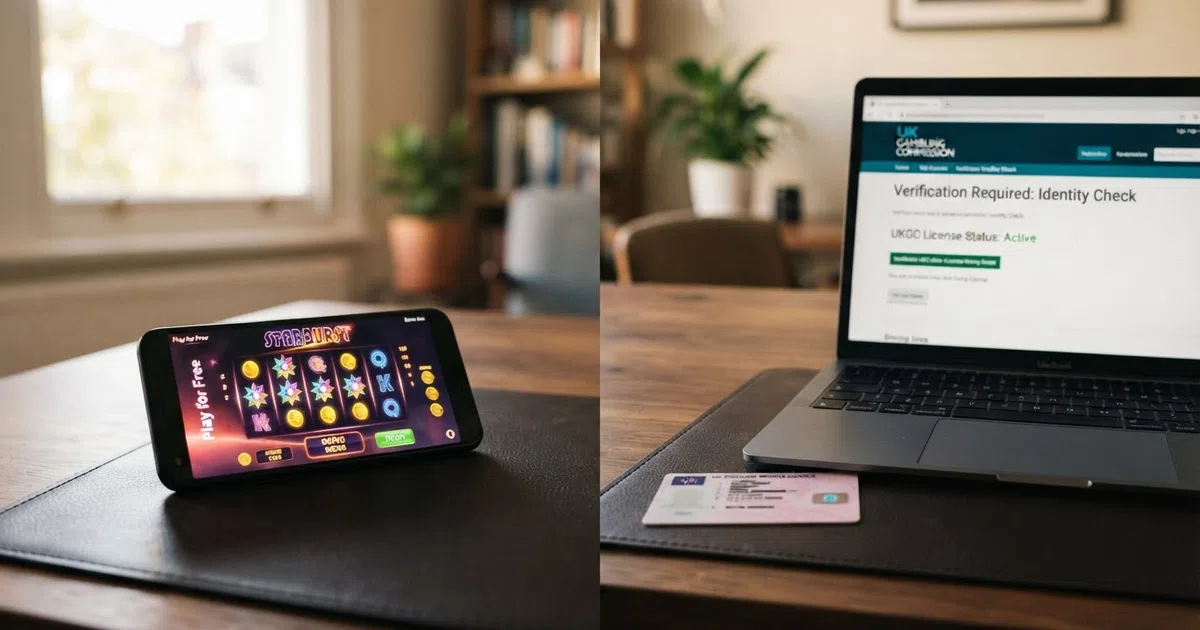
This page maps every path through that gap.
Data current as of September 9, 2026 and checked against the Gambling Commission’s public register.
“No Registration Casino UK” Is Three Different Things — Here’s Which One You’re Actually Getting
A search for “no registration casino UK” pulls back, in roughly equal measure, three distinct products that share almost nothing except the keyword. One affiliate reviewer put the honest position plainly: “no registration casinos are not available in the UK. This is due to the account creation requirements of the UK Gaming Commission (UKGC), which demands that casinos need to verify each player’s age and identity before they can gamble.” Another explained the same point in different words: “the phrase no verification gets thrown around a lot, but it rarely means what it seems.” Both are right: at a GB-licensed casino, identity verification is the legal floor under every other promise the operator makes. What the search actually delivers is a choice between three substitutes, each with a different trade.
The Three Meanings of “No Registration” in the UK
The first substitute is free-play demo slots on third-party affiliate sites and game-aggregator platforms. These run in a browser, use virtual credits, pay nothing real, and ask for nothing. They are the only genuinely registration-free gambling experience a UK player can legally access. The trade is the obvious one: the credits are play money, the wins are play money, and there is no path to a real payout.
The second substitute is Pay N Play and open-banking onboarding at UKGC-licensed casinos. The trade name “no account casino” comes from this model — Trustly Pay N Play and TrueLayer SignUp+ verify a player’s identity through their bank during the first deposit, replacing the traditional sign-up form. The licence-holding operator still meets the Commission on its own terms: name, address and date of birth are confirmed before any spin, but the form is replaced by a bank handshake. Trustly’s “lite” version and TrueLayer’s SignUp+ are currently under trial with a small number of UK operators, and neither is fully rolled out. What Pay N Play strips out is the typing; what it does not strip out is the regulatory duty behind the typing.
The third substitute is offshore crypto casinos with no UKGC licence. Bitcoin, Ethereum, USDT and altcoin deposits, wallet-based access, no identity check at all. The trade is everything a British licence is built to provide: no GAMSTOP coverage, no Gambling Commission complaints route, no ADR scheme, no Financial Ombudsman and no compensation scheme if the operator withholds funds. One commentary summarised the position bluntly: “None of these platforms hold a UKGC licence — they can’t, because UK rules ban licensed operators from accepting crypto. That means no GamStop, no Financial Ombudsman, no compensation scheme if the casino folds.” That is the entire British consumer-protection regime, removed in one payment-method choice.
Pay N Play and Open Banking — Registration That Feels Like It Isn’t There
Pay N Play is the closest a UK-licensed casino can legally get to “no registration.” The model works by pushing identity verification upstream into the deposit step: the player chooses their bank from a list, logs in through their bank’s own authentication, and Trustly or TrueLayer returns the verified name, address and date of birth to the casino. The traditional registration form disappears because the bank has already done the work.
In practice, the UK has it in trial form. Trustly’s Pay N Play “lite” version is running with a small number of UK operators; TrueLayer’s SignUp+ is also being trialled. Neither is fully rolled out, so the experience most UK players encounter today is still a form-based sign-up with KYC documents attached. The structural point is more important than the rollout timetable: even when Pay N Play lands at full scale, it is not a regulatory exemption. The pre-deposit KYC mandate applies to the operator, not to the user interface. A bank-verified player is a verified player; the Commission is satisfied because the data is identical, the operator’s duty is unchanged, and the player’s experience is faster.
That distinction matters. Pay N Play is a faster interface, not a removed check.
What You Give Up When You Skip Registration
The consumer protections a UK player leaves behind at an unlicensed offshore casino are not abstract. They are specific tools, each with a specific function.
GAMSTOP is the headline. Every GB-licensed online operator has been required to integrate GAMSTOP since 31 March 2020, and exclusion periods of six months, one year or five years (with or without auto-renewal) cannot be cancelled early. GAMSTOP works by linking a player’s identity to every UKGC-licensed operator. If the offshore casino never asked who you are, GAMSTOP has nothing to link — and the exclusion is defeated the moment the player logs in to a different site.
The complaints layer is the second loss. A UKGC-licensed casino routes disputes through the Commission’s complaints procedure and an approved ADR scheme. A player whose funds are withheld at a UKGC-licensed casino has a defined route to redress. At an offshore crypto casino, the same player has whatever route the operator’s terms allow — and whatever route a Curaçao or Costa Rica regulator might, in principle, provide. British consumer law does not apply; the Financial Ombudsman does not apply; the Commission’s enforcement team does not apply.
The statutory safer-gambling tools are the third layer. The mandatory deposit-limit prompt before first deposit (from 31 October 2025), the financial vulnerability check at £150 net deposit in a rolling 30-day period (from 28 February 2025), reality checks, time-outs and the display of session losses are all operator-side obligations. They exist because the regulator requires them, and the regulator only requires them of its own licensees. The offshore site has none of these because the offshore site has none of these obligations.
The fourth layer is the criminal-law position. Providing unlicensed gambling facilities to British customers is a criminal offence under section 33 of the Gambling Act 2005 — up to 51 weeks’ imprisonment, an unlimited fine, or both, for the operator. The penalty sits with the operator, not the player, but the practical risk of lost funds sits with the player.
No-Account Casino vs Traditional Casino — A Side-by-Side Look
| Path | Registration time | Consumer protection | What the player actually gets |
|---|---|---|---|
| Free-play demo slot on third-party site | Instant, no form | None required | Virtual-credit play only, no real-money wins |
| Pay N Play at a UKGC-licensed casino | One bank handshake, then deposit | Full UKGC protection — GAMSTOP, ADR, Commission complaints | Real-money play with identity verified by the bank |
| Traditional UKGC-licensed casino sign-up | Form, document upload, KYC review | Full UKGC protection — same as above | Real-money play with verified identity, slower onboarding |
| Offshore crypto casino with no KYC | Wallet connection only | None — no GAMSTOP, no ADR, no Commission route | Real-money play with zero British consumer protection |
The table is the shortest version of the trade. Free play is fast and unprotected; Pay N Play is fast and protected; traditional sign-up is slower and protected; offshore crypto is fast and unprotected in a different way.
UK-Licensed Casinos With the Lightest Registration in 2026
The ranking below covers the ten UKGC-licensed casinos that come closest to a no-registration experience — from genuinely deposit-free free spins to zero-wagering welcome offers to the fastest onboarding. Every operator on this list holds an active Gambling Commission licence and every one of them still requires identity verification before real-money play. That is the price of operating in Britain; the ranking is for which operator makes the price cheapest.
| Operator | UKGC Licence Status | No-Deposit Free Spins | Wagering on Free Spins | Total Free Spins in Welcome Package |
|---|---|---|---|---|
| Sky Vegas | Active (Account 38718, Flutter Entertainment) | 50 | 0× | 270 |
| Paddy Power Games | Active (PPB GE Limited, Flutter Entertainment) | 60 | 0× | 260 |
| Betfair Casino | Active (Licence 39439, Flutter Entertainment) | 50 | 0× | 150 |
| Bet365 Casino | Active (bet365 Group Ltd) | — | 0× | Up to 500 |
| William Hill Vegas | Active (William Hill Organisation Limited) | — | 10× | 200 |
| Ladbrokes Casino | Active (LC International Limited, Entain) | — | 0× | 100 + 300 LadBucks |
| Betfred Casino | Active (Done Brothers / Petfre) | — | 0× or 10× | Up to 200 |
| Gala Casino | Active (LC International Limited, Entain) | — | Up to 10× | — |
| 888 Casino | Active (Account 39028, 888 UK Limited) | — | — | — |
| Buzz Bingo Digital | Active (Account 57594, Buzz Bingo Digital Limited) | — | — | — |
Three operators in the featured set — Sky Vegas, Paddy Power Games and Betfair Casino — offer genuinely deposit-free free spins. The other seven require a deposit and, in most cases, an additional stake or wager before free spins are released. Where a field reads “—”, the current welcome terms were unconfirmed at the time of review and the slot should not be filled by inference.
Sky Vegas: 50 No-Deposit Free Spins, Zero Wagering
Sky Vegas runs the cleanest genuinely-deposit-free offer on the featured set: 50 free spins credited without a deposit, at £0.10 per spin, with zero wagering on whatever the spins produce. The seven-day expiry applies from credit, and no maximum cashout cap is stated. A further 200 free spins are released on a £10 first deposit, taking the total welcome package to 270 spins. The UKGC licence is Account 38718, active under Flutter Entertainment plc.
The trade-off is the one every genuinely deposit-free offer in Britain carries: the player keeps identity-verification as the price of admission. UKGC requires name, address and date of birth before any free spin can be issued, so the 50 no-deposit spins are credit-light, not verification-light. Demo mode is available at Sky Vegas but requires account creation and age verification per UKGC rules. Verdict: the headline figure is the highest-stakes no-deposit free-spin count with the cleanest wagering terms in the ranking, and the right reader is the one who wants real-money play from the very first spin without depositing first.
Paddy Power Games: 60 No-Deposit Free Spins, Zero Wagering
Paddy Power Games offers the largest no-deposit free-spin count in the featured set: 60 spins, split 50 standard plus 10 on Paddy’s Mansion Heist, at £0.10 per spin, zero wagering, seven-day expiry, and no maximum cashout cap stated. A further 200 free spins release after a £10 deposit and wager, lifting the total to 260. The licence sits with PPB GE Limited under Flutter Entertainment.
The condition is the same as Sky Vegas: the Commission requires identity verification before any free spin, including the deposit-free ones. The first 60 spins are genuinely free of money but not free of the KYC step. This offer is ideal for players prioritising high-volume spins over a longer-term deposit bonus, provided they complete the verification step.
Betfair Casino: 50 No-Deposit Free Spins on Jackpot King Games
Betfair Casino offers 50 no-deposit free spins at £0.10 per spin, zero wagering, seven-day expiry, with no maximum cashout cap stated. The qualifying distinction in the featured set is the eligible game set: the no-deposit spins can be used on Jackpot King progressive-jackpot titles, which gives the offer a higher-variance path than the standard spin bundles at Sky Vegas and Paddy Power. A further 100 spins release on a £10 deposit, bringing the total to 150. The licence is 39439 under Flutter Entertainment.
The wagering structure is identical to Sky Vegas and Paddy Power; the difference is the game selection and the variance profile that comes with it. Players seeking higher-volatility potential from no-deposit play will find this selection of jackpot titles a compelling alternative to fixed-return standard slots.
Bet365 Casino: Up to 500 Free Spins Over 10 Days
Bet365 runs the largest total free-spin package on the featured set — up to 500 spins distributed over ten days, with a random daily allocation of 5, 10, 20 or 50 spins, at £0.10 per spin with zero wagering. The 500-spin ceiling requires a minimum £10 lifetime deposit, so the offer sits in the deposit-triggered column rather than the no-deposit one. Each credit carries a seven-day expiry and the player has 30 days from opt-in to claim the full package.
The trade-off the headline number conceals: the daily allocation is randomised, not guaranteed. A player who lands 5 spins on nine days and 50 on one is still inside the 500-spin ceiling. There is no stated maximum cashout cap. If you prefer a slow-burn promotional experience with potential for high volume over several days, this package offers a unique structure.
William Hill Vegas: 200 Free Spins on Big Bass Splash
William Hill Vegas offers 200 free spins on Big Bass Splash, triggered by depositing and staking £10. The wagering on free-spin winnings is 10× — at the UKGC’s hard cap — and the maximum cashout is capped at £30. The free-spin credit carries a 72-hour expiry and the player has seven days to meet the wagering. The licence sits with William Hill Organisation Limited.
The £30 cashout cap is the headline number the reader has to absorb. At zero wagering (which William Hill does not offer here), 200 spins at £0.10 produces a small but uncapped win. At 10× wagering on the winnings plus a £30 cashout cap, the offer trades spin volume for a tighter ceiling. This promotion is best suited to existing Big Bass Splash fans who view the bonus as a controlled test of the game rather than a primary win strategy.
Ladbrokes Casino: 100 Free Spins Plus LadBucks
Ladbrokes offers 100 free spins plus 300 LadBucks, triggered by depositing and spending £10 on slots. Wagering on free-spin winnings is zero — credited as cash, a rare term among the deposit-triggered offers on this list. The player has 48 hours to opt in and 7 days to use the spins. The licence sits with LC International Limited under Entain.
The two-clocks structure (48 hours to accept, 7 days to use) is the trade for the zero-wagering structure. A player who misses the opt-in window forfeits the offer; a player who accepts and does not use the spins within seven days forfeits the credit. For players who can commit to the activation window, receiving winnings as cash provides an immediate and transparent return.
Betfred Casino: Up to 200 Free Spins on Selected Games
Betfred offers up to 200 free spins on selected games, triggered by staking £10. Wagering varies by current promotion — either 0× or 10×, both of which sit within the UKGC’s hard ceiling — and the typical validity window is seven days. The maximum cashout and the per-spin value were unconfirmed this review cycle. The licence sits with Done Brothers (Cash Betting) Limited and Petfre (Gibraltar) Limited.
The variable wagering is the trade-off. A player who lands the 0× version gets the cleanest possible structure; a player who lands the 10× version gets a heavier one. The unconfirmed fields mean the offer is best read as a stake-triggered promotion whose current terms the player should confirm on the operator’s site before opt-in. Checking the promotion page directly is the only way to ensure the specific wagering terms align with your expectations.
Gala Casino: Rotating Welcome Offer
Gala runs a rotating welcome offer, triggered by depositing and staking £10. The exact free-spin count, wagering multiple, validity window and maximum cashout were unconfirmed this review cycle. The 10× wagering ceiling imposed by LCCP SR Code 5.1.1 applies by law regardless of which offer version is live. The licence sits with LC International Limited under Entain.
The rotation is the trade. A reader who landed on a 0× spin bundle in one month may find a 10× spin bundle the next. The hard ceiling protects against the worst historical offers, but it does not standardise across Gala’s own promotions. Verdict: the right reader is one who treats Gala’s welcome as a current-snapshot offer rather than a structural fixture.
888 Casino: Established Operator With Broad Game Selection
888 Casino holds UKGC Account 39028, active since 1 November 2014 under 888 UK Limited, covering Casino Remote, Bingo Remote and General Betting Standard. The welcome offer combines a deposit bonus with free spins; the exact free-spin count, wagering, validity window and maximum cashout were unconfirmed this review cycle. The game portfolio spans NetEnt, Playtech, Evolution, IGT, Blueprint and Pragmatic Play — six providers.
The Commission took regulatory action against the operator on 18 November 2025; the specific terms of that action were not detailed in this review’s research. A reader weighing 888 Casino should note that the action postdates several of the licence’s cleanest years and predates the current welcome-offer cycle. Verdict: the right reader is one who values a long-standing licence and broad provider coverage and is willing to confirm the current welcome terms before depositing.
Buzz Bingo Digital: Newest UKGC Licence Among Featured Operators
Buzz Bingo Digital holds UKGC Account 57594, active since 31 March 2023 under Buzz Bingo Digital Limited — the newest licence among the ten featured operators. The licence covers Casino Remote, Bingo Remote and Linked Gambling Software Remote. The welcome offer is triggered by depositing and staking £10; the free-spin count, wagering, validity window and maximum cashout were unconfirmed this review cycle. The game portfolio spans Blueprint, Pragmatic Play, Evolution, Playtech and Red Tiger — five providers.
The trade-off is the one every new licence carries: a smaller provider set and an unconfirmed current offer. The licence itself is clean and recent, which means the operator’s compliance posture is shaped by post-2019 KYC rules from the start rather than retrofitted. Verdict: the right reader is one who values a fresh licence with modern compliance baked in and is willing to confirm the current welcome terms on the operator’s site.
Free Slots and Casino Games — The Only Truly Registration-Free Play in the UK
Every path in this page so far has a registration step somewhere — even the no-deposit free-spin offers require identity verification before the first spin. The single exception is free-play demo slots on third-party affiliate sites, game-aggregator platforms and review portals. These sites carry no UKGC licence for real-money play because they offer no real-money play; they run on virtual credits, pay nothing real and ask for nothing.

The distinction is sharper than most search results make clear. Demo mode on a third-party affiliate site requires no account and no verification. Demo mode on a UKGC-licensed casino site requires an account and age verification, because the Commission treats free-to-play games on a licensee’s own site as licensable activity. Two buttons labelled “Play for Free” can sit behind two completely different gates.
Free Slots You Can Play Instantly — No Download, No Registration
The breadth of free slots on UK-facing third-party sites is wider than the licensed real-money market, and runs without any of its frictions. Classic three-reel slots mimicking the fruit-machine format are the starting point: simple paylines, a single bonus round or none, low-variance spinning. Five-reel video slots add bonus rounds, free-spin features and branded themes — anything from mythology to film tie-ins. Three-dimensional and cinematic slots add animated sequences, soundtrack design and multi-stage bonus features. Progressive-jackpot demo slots run the jackpot meter, but the meter cannot be paid out in free-play mode because the credit is virtual.
None of these categories requires an account, a download or an email address. The technical reason is HTML5, which is covered below; the commercial reason is that no real money changes hands.
How No-Download Instant-Play Technology Works
Every free slot on a third-party site runs through HTML5, the browser-native graphics standard that replaced Flash and largely replaced native casino apps. The same game file runs in any modern browser on desktop or mobile, with no plugin and no download step. The player’s balance is a virtual-credit counter that resets on page refresh — there is no account to save it to, which is why there is no loyalty programme, no progress bar and no real-money conversion.
The technical ceiling of no-account play is the practical reason the keyword exists. A game that runs in a browser without a download is, almost by definition, a game that can run without an account. The two phrases — “no download” and “no registration” — travel together in search queries because the technology makes them the same choice.
Demo Mode vs Real-Money Play — What Changes When You Switch
Demo slots and real-money slots share the same game file but not always the same configuration. The most important difference for a UK reader is the RTP: a slot in demo mode may use a different return-to-player configuration than the real-money version of the same title, which means a slot that “feels” a certain way in free play may behave differently at stake. Volatility behaves the same way — high-variance demo play still carries the long losing runs, but they cost nothing real.
The player’s behaviour changes too. With no real-money risk, bet-sizing collapses to its lowest setting, session length extends without the cost-discipline real-money play imposes, and the loss-chasing impulse that drives much of harmful gambling simply has no fuel. The UKGC’s safer-gambling design rules — auto-play banned, spin speed capped at 2.5 seconds, losses disguised as wins banned, reverse withdrawals banned — apply to real-money play at licensed casinos. They do not apply to third-party demo slots, where the rules of the platform are the rules of the browser.
The asymmetry cuts both ways. Demo mode gives the player an honest look at the game’s variance profile without risking money; it gives the player no protection if the game is rigged because, at virtual credits, rigged play cannot be distinguished from honest play by the player.
Free Casino Games Beyond Slots — Blackjack, Roulette and More
Free-play mode extends beyond slots to table games, video poker and RNG-based casino games on third-party sites. Blackjack variants (single-deck, multi-hand, European rules) run in browser. European and American roulette do the same. Baccarat and casino poker — Casino Hold’em, Three Card Poker, Caribbean Stud — all run in practice mode. Video poker (Jacks or Better, Deuces Wild) runs the same way.
Live-dealer free play does not exist, because streaming a real dealer costs money the operator will not spend on an unregistered player. The distinction between “free slots” and “free casino games” matters because search engines treat them as separate clusters — one player searching “free blackjack no registration” and another searching “free slots no registration” are looking for different things on the same kind of site.
Why Most “No-Registration Bonuses” Still Need Your Details
The phrase “no registration bonus” joins two ideas that pull apart the moment the player reaches the cashier. A bonus, in the UK regulated market, is a credit the operator issues against a verified customer account — and the verification runs before the credit, not after. The result is that “no-registration” bonuses are actually no-deposit bonuses: the registration step is gone, the verification step is not, and the bonus is paid in free spins or credit once the operator has confirmed the player is who they say they are.
The 2026 rule changes narrowed what those bonuses can carry. From 19 December 2025, mixed-product promotional offers are banned — a casino bonus cannot be conditioned on the player playing a different product type (bingo, lottery, betting). From 19 January 2026, wagering requirements on casino bonuses are capped at 10× the bonus amount under LCCP Social Responsibility Code 5.1.1. The compression reshaped every welcome offer in the market: pre-2026 wagering multiples of 35× to 65× were common, and the 10× cap compresses that range by a factor of three to six. No-deposit bonuses are typically capped at £5–£10 in credit value and carry short expiry windows, game restrictions and win limits.
The Three Operators That Actually Offer No-Deposit Free Spins
Only three operators in the featured set offer free spins without a deposit first: Sky Vegas (50 spins), Paddy Power Games (60 spins, including 10 on Paddy’s Mansion Heist) and Betfair Casino (50 spins on Jackpot King games). All three sit under Flutter Entertainment; all three charge zero wagering on winnings; all three charge £0.10 per spin and run a seven-day expiry. None of them removes the KYC step.
The other seven featured operators — Bet365 Casino, William Hill Vegas, Ladbrokes Casino, Betfred Casino, Gala Casino, 888 Casino and Buzz Bingo Digital — require a deposit, and in most cases an additional stake or wager, before any free spin is released. The deposit itself is the gate, the wager is the additional cost, and the free spins are the credit. None of the seven sits in the genuinely-deposit-free column.
How the 10× Wagering Cap Changed UK Casino Bonuses
The 10× wagering cap arrived on 19 January 2026 under LCCP SR Code 5.1.1, and it ended a market in which welcome bonuses could carry 35×, 50× or 65× turnover requirements. The compression is the structural story of the past year: a £10 bonus at 10× requires £100 in turnover before withdrawal; the same £10 bonus at 50× required £500. Operators responded by trimming bonus sizes, shortening expiry windows, or moving to zero-wagering structures where the bonus is paid as cash. The zero-wagering path is the one Sky Vegas, Paddy Power Games and Betfair Casino took on their no-deposit free spins — and the one William Hill Vegas did not take on Big Bass Splash, where 10× still applies with a £30 cashout cap.
The cap did not produce a flat market. Zero-wagering offers sit entirely outside the framework because winnings are withdrawable immediately and the bonus has no turnover requirement to count. Deposit-triggered offers with 10× wagering still carry real cost; the cap simply lowered it. A reader comparing two offers needs to read the wagering line, not just the spin count.
Deposit-Match and Stake-Triggered Offers — What the Other Seven Operators Offer
| Operator | Trigger | Free Spins | Wagering | Validity | Cashout Cap |
|---|---|---|---|---|---|
| Bet365 Casino | £10 lifetime deposit required | Up to 500 over 10 days | 0× | 7 days per credit; 30 days to claim | No cap stated |
| William Hill Vegas | Deposit + stake £10 | 200 (Big Bass Splash) | 10× | 72h spins; 7d wagering | £30 |
| Ladbrokes Casino | Deposit + spend £10 | 100 + 300 LadBucks | 0× (winnings as cash) | 48h accept; 7d use | No cap stated |
| Betfred Casino | Stake £10 | Up to 200 | 0× or 10× varies | Typically 7 days | Unconfirmed |
| Gala Casino | Deposit + stake £10 | Unconfirmed | Up to 10× | Unconfirmed | Unconfirmed |
| 888 Casino | Deposit + bonus | Unconfirmed | Unconfirmed | Unconfirmed | Unconfirmed |
| Buzz Bingo Digital | Deposit + stake £10 | Unconfirmed | Unconfirmed | Unconfirmed | Unconfirmed |
The “Unconfirmed” entries are the honest gap in the data: research could not pin down current terms for Gala, 888 or Buzz Bingo. The table leaves the cells empty rather than filling them with inference, because an inferred number is a worse guide than no number. A reader looking at Betfred, Gala, 888 or Buzz Bingo should check the operator’s promotional terms on the day of deposit, because the welcome offer may have rotated.
New UK Casinos With Streamlined Registration in 2026
The newest wave of UKGC-licensed casinos was built with the May 2019 verification mandate as a design constraint from day one, rather than retrofitted around it. Knight Slots, Pub Casino and Duelz are three recently launched brands referenced in the keyword cluster for “new no-registration casino UK” — newer platforms whose registration flows were designed against a verification-first regulatory model, not adapted to one.
That design posture matters. A casino launched in 2023 or 2024 does not carry legacy onboarding code from the pre-2019 era. Its registration flow is built around document upload and automated verification from the first commit; its deposit flow assumes a verified player; its free-spin credit assumes a KYC-checked identity. The result is a structurally shorter path from landing page to first spin than a casino launched in 2014 — not because the verification is weaker, but because the front-end was redesigned to absorb it.
The constraint is unchanged: every new UKGC casino must verify before deposit. What differs is the friction.
UKGC-Licensed Casinos That Launched With Modern Registration
Knight Slots, Pub Casino and Duelz are the three recently launched brands the keyword cluster cites. Each holds an active UKGC licence; each launched after the May 2019 KYC mandate; each was built to satisfy the mandate without dragging the player through a long form. The shared feature is a registration flow that compresses the verification step into the deposit step where possible — bank-verified identity through Trustly or TrueLayer where the player chooses open banking, automated document verification where the player uploads a driving licence or passport.
The right reader for this set is the one who values speed without giving up regulation: the same identity check the older sites run, but inside a registration flow that does not feel like it.
What to Check Before Signing Up to a New No-Registration-Style Casino
A new casino’s registration speed is not a guarantee of its withdrawal speed, and the two should be checked separately. Three checks are worth the time before depositing.
First, does the casino support open-banking verification through Trustly or TrueLayer? The presence of either is a signal that registration speed was a design priority, and that bank-verified identity has been integrated into the deposit step. The Trustly “lite” trial and the TrueLayer SignUp+ trial are running with a small number of UK operators; a casino on either is at the leading edge of streamlined onboarding.
Second, what is the stated verification turnaround and which documents does the casino accept? A casino that names a 24-hour automated-verification window and accepts passport, driving licence and recent utility bill is faster in practice than one that names a 48-hour manual-review window and accepts only passport plus bank statement. Both are within UKGC rules; the first is the better fit for a player who wants to play the same day.
Third, does the casino’s terms allow demo-mode browsing before full verification? The UKGC requires age verification before free-to-play games on a licensee’s own site, so the answer is often “partially” — the lobby may be browseable, but the spin button is gated until verification completes. A casino that lets the player browse the full game catalogue in demo mode before KYC is one that has invested in the front-end.
Crypto Casinos With No KYC — What You Gain in Privacy, You Lose in Protection
A cryptocurrency casino that skips KYC is structurally incompatible with a UKGC licence. The Commission’s pre-deposit verification mandate (since May 2019) and the broader LCCP framework require identity verification of every customer. No licensed operator can therefore accept crypto deposits from anonymous wallets while holding a GB licence, and no GB licence is possible for a brand that runs on wallet-based identity. Every no-KYC crypto casino accepting UK customers is unlicensed for the British market by definition.
The gap between a UKGC-licensed casino and an offshore crypto casino is not a list of features; it is the entire regulatory model.
Bitcoin, Ethereum and Altcoin Casinos That Skip KYC
Bitcoin remains the dominant deposit currency at no-KYC crypto casinos. Ethereum, Litecoin, USDT, Dogecoin and TRON are widely supported as alternatives. The access mechanism is wallet-based: the player connects a Web3 wallet — MetaMask is the commonest — and the wallet address serves as identity. No email, no password, no document upload.
The licensing jurisdictions cluster around Curaçao, with Costa Rica and fully unlicensed operations filling out the long tail. None of these licences carries the obligations a GB licence carries: no pre-deposit identity verification, no GAMSTOP integration, no deposit-limit prompt, no financial vulnerability check. The licensing regime is lighter because the obligations are lighter, and the operator is not in scope for the Commission’s enforcement.
What UK Consumer Protections Disappear at an Offshore Crypto Casino
Every layer of the British consumer-protection regime stops at the UKGC’s own licensees. GAMSTOP coverage applies only to GB-licensed operators; an offshore crypto casino has no integration with the British self-exclusion database, and a player who has self-excluded through GAMSTOP can deposit and play at a crypto casino minutes later. The Gambling Commission’s complaints process does not apply because the operator is not licensed by the Commission. There is no ADR scheme, no Financial Ombudsman recourse and no compensation scheme if the casino withholds funds or folds. The mandatory deposit-limit prompt, the financial vulnerability check at £150 net deposit in a rolling 30-day period, the reality checks and the time-out tools — all UKGC requirements — do not exist at an offshore crypto casino because none of these requirements bind the operator.
The asymmetry is structural. The British player who moves to an offshore crypto casino trades the entire safer-gambling infrastructure for an anonymous wallet, and the regulator the player left behind does not have jurisdiction at the destination.
Crypto vs Fiat — How the Payment Method Changes the Registration Question
Fiat payment rails carry identity data by design. A debit card payment carries the cardholder’s name; a bank transfer carries the account holder’s identity; an open banking payment through Trustly or TrueLayer returns verified name, address and date of birth as part of the transaction. These rails satisfy KYC because the data is already attached to the payment, and a UKGC-licensed operator using them can meet the pre-deposit verification mandate inside the deposit step.
A cryptocurrency transaction carries a wallet address and a transaction hash, and nothing else. There is no cardholder name, no account holder, no verified identity — only a public key. The payment rail is the registration rail: where the rail carries identity, the registration step is compressed; where the rail does not, the registration step is replaced by no step at all. Credit cards are banned for UK gambling altogether (since 14 April 2020, including credit-card-funded e-wallet payments), so the only fiat rail that matches crypto’s anonymity profile is not available to a British player who wants to stay inside the regulated market.
UK rules ban licensed operators from accepting crypto. The offshore casino that does accept it cannot hold a UKGC licence. The two facts together draw the line: a player who wants crypto deposits and a UKGC licence is asking for a combination the regulator does not permit.
Are No-Registration Casinos Legal in the UK? What the Gambling Act Actually Requires
The short answer is that the legal status of a “no-registration casino” in the UK depends entirely on which of the three paths the search returns. Free-play demo slots on third-party sites are legal because no real money is at stake and no licence is required. Pay N Play at a UKGC-licensed casino is legal because the operator holds a GB licence and the bank-verified identity satisfies KYC. An offshore crypto casino taking British customers without a GB licence is operating illegally under section 33 of the Gambling Act 2005, even though the player who uses it commits no offence.

The longer answer is the regulatory framework.
The May 2019 Verification Mandate — Why Every UK Casino Must Check Your ID First
Before May 2019, a UK player could deposit, play and withdraw within a 72-hour window while the casino verified their identity in the background. The grace period was built into the licence conditions. Since 7 May 2019, the Gambling Commission has required every GB-licensed remote operator to verify the customer’s name, address and date of birth before any deposit, any gamble, or any free-bet or bonus use. The rule extends to free-to-play games on the licensee’s own site: age verification is required before demo mode at a UKGC-licensed casino.
The 72-hour grace period is gone. That is the single structural fact that makes “no registration” real-money play impossible at a GB-licensed casino. The Commission’s rule is not a guideline; it is a licence condition. An operator that lets a player spin before verification is in breach, and the enforcement record against breaches is substantial.
What the Gambling Act 2005 Requires of Every UK-Licensed Casino
The Gambling Act 2005 is the primary statute, and section 1 sets three licensing objectives: preventing gambling from being a source of crime or disorder, ensuring gambling is fair and open, and protecting children and vulnerable persons. Every GB-licensed operator’s procedures are tested against these objectives; the LCCP and RTS are the working instruments through which the objectives are enforced.
The Gambling (Licensing and Advertising) Act 2014 extended the regime to remote operators by making a GB licence compulsory at the point of consumption. A Curaçao, Maltese or Gibraltar licence is not a substitute: any operator taking British customers must hold a GB licence, and the Commission is the regulator.
Offshore Casinos and UK Law — The Risk of Playing Unlicensed
Providing gambling facilities without a required GB licence is a criminal offence under section 33 of the Gambling Act 2005 — up to 51 weeks’ imprisonment, an unlimited fine, or both. The penalty sits with the operator. No penalty has been traced for a player who merely gambles on an unlicensed site.
The Commission’s enforcement model is disruption, not blocking. Between April 2024 and June 2025, the UKGC issued 3,140 disruption notices, referred 447,778 URLs to search engines, and saw 287,961 URLs removed, with an average 32% fall in engagement across 160 disrupted sites. The tools are cease-and-desist notices, search-engine referrals, domain registrar pressure and payment-provider engagement. Legislation that would grant the Commission statutory ISP-blocking powers has been proposed but not enacted.
The practical risk the player assumes at an offshore site is not criminal but financial: no British consumer redress, no ADR, no compensation scheme, no GAMSTOP coverage, no Commission complaints route. The operator faces the criminal penalty if caught; the player faces the consequences if the operator decides not to pay.
The UK Rules That Cap and Prohibit — What a No-Registration Search Needs to Know
| Regulatory Requirement | Limit or Cap | In Force Since |
|---|---|---|
| Pre-deposit identity verification (name, address, DOB) | Mandatory before any deposit, gamble, free bet, bonus or free-to-play on licensee’s site | 7 May 2019 |
| Online slots maximum stake (players 25+) | £5 per game cycle | 9 April 2025 |
| Online slots maximum stake (players 18–24) | £2 per game cycle | 21 May 2025 |
| Wagering requirement cap on casino bonuses | 10× the bonus amount (LCCP SR Code 5.1.1) | 19 January 2026 |
| Mixed-product promotional offers | Banned | 19 December 2025 |
| Credit cards for gambling | Banned (including credit-card-funded e-wallets) | 14 April 2020 |
| Auto-play on slots | Banned | 31 October 2021 |
| Spin speed | Minimum 2.5 seconds per game cycle | 31 October 2021 |
| Reverse withdrawals | Permanently banned | 31 October 2021 |
| Losses disguised as wins | Banned | 31 October 2021 |
| Mandatory deposit-limit prompt before first deposit | Required | 31 October 2025 |
| Financial vulnerability checks at £150 net deposit in 30 days | Required (CCJs, bankruptcy orders, IVAs, DROs) | 28 February 2025 |
| Gross-deposit-limit terminology standardisation | Required (RTS 12) | 30 September 2026 |
| GAMSTOP integration | Mandatory for all GB-licensed online operators | 31 March 2020 |
The table is the British regulatory floor. Every “no registration” casino in the UK either sits inside it (UKGC-licensed) or outside it (offshore). There is no licensed operator that sits halfway.
Staying Safe When Registration Isn’t the Gatekeeper
The safer-gambling tools at UKGC-licensed casinos are operator-side obligations, and they exist because the regulator requires them. The registration step at a UKGC-licensed casino is the gateway to every one of them: deposit-limit setting, financial vulnerability checks, reality checks, time-outs and GAMSTOP self-exclusion all require a verified identity to bind against. The safer-gambling toolkit is not a feature the player can opt into — it is a regulatory infrastructure that runs underneath the casino floor.
A search for “no registration casino UK” that ends at an offshore site loses access to that infrastructure by definition.
GAMSTOP and Self-Exclusion — What Happens When There Is No Account to Exclude
GAMSTOP exclusion periods are six months, one year, five years, or five years with auto-renewal — and the exclusion cannot be cancelled early. The system covers every GB-licensed online operator and binds them all to the same exclusion list. The system cannot reach offshore sites, third-party demo platforms or crypto casinos, because none of those operators hold a GB licence and none participate in the scheme.
The structural implication: a player who has self-excluded through GAMSTOP and then plays at an offshore no-KYC casino has defeated their own exclusion. The registration step is the self-exclusion step — if the casino never asked who the player is, GAMSTOP has nothing to link, and the exclusion is a paper promise. A player weighing an offshore site against a UKGC-licensed one should understand that the British self-exclusion regime runs through licensed operators only.
Deposit Limits, Reality Checks and the UK Safer-Gambling Toolkit
Every UKGC-licensed casino must offer a deposit-limit prompt before first deposit, with the limit easy to review and alter, and any request to decrease a limit actioned immediately. From 30 September 2026, only a gross deposit limit (based solely on money paid into the account over a set period) may be called a “deposit limit”; the terminology standardisation is part of RTS 12. Financial vulnerability checks run at £150 net deposit in a rolling 30-day period, using publicly available data — County Court Judgments, bankruptcy orders, Individual Voluntary Arrangements, Debt Relief Orders.
Reality checks, time-outs and session-loss displays are required during real-money slots play. None of these tools exists at an offshore crypto casino because none of these obligations binds an unlicensed operator.
Where to Get Help — GamCare, the NHS and the National Gambling Support Network
The help available to a UK player is free, confidential and does not depend on where the player has been gambling. GamCare runs the National Gambling Helpline on 0808 8020 133, plus live chat and online support; in 2026, 81.5% of helpline contacts cited online forms of gambling, a five-year high. The National Gambling Support Network treated 11,960 clients in 2024/25 — an 11% increase on the previous year — and 93% of clients completing treatment showed improvement. NHS gambling harm clinics operate in England, Scotland and Wales. Gamblers Anonymous runs peer-support groups across Great Britain. GambleAware funds research, prevention and treatment: almost 1 in 3 adults experiencing gambling problems now want treatment, up from 17% in 2020.
The help infrastructure sits outside the casino entirely, and a player who has been gambling at a third-party demo site, a UKGC-licensed casino or an offshore crypto casino can use it on the same terms.
How We Evaluate No-Registration Casino Options
Every featured operator was checked against the Gambling Commission’s public register, which was last updated on 29 July 2026. Only active UKGC licence holders appear in the ranking. Welcome-offer terms were researched from each operator’s published promotional terms and cross-checked against the UKGC’s 10× wagering cap and the mixed-product promotional offer ban. Where a current term was unconfirmed — Gala’s rotating offer, 888’s current welcome, Buzz Bingo’s current welcome — the gap is left in the table rather than filled by inference.
The legal framework section is built from the Gambling Act 2005, the Gambling (Licensing and Advertising) Act 2014, the LCCP, the RTS and UKGC enforcement data covering April 2024 to June 2025. The safer-gambling infrastructure section is built from GamCare, GambleAware, the National Gambling Support Network and the NHS Adult Psychiatric Morbidity Survey 2023–24.
The ranking orders operators by the extent to which their welcome offer and registration experience approach no-registration play. No-deposit free spins carry the most weight. Zero wagering carries the most weight. Streamlined onboarding — open banking where supported — carries weight where it is in place. The honest context is that every operator on the list requires identity verification before real-money play, because every operator on the list holds a UKGC licence.
What UK Players Should Actually Do About “No Registration” Casino Offers
The three paths the page maps are not interchangeable. Each one trades off a different combination of speed, protection and real-money access, and no single path delivers all three.
Free-play demo slots on third-party affiliate sites are the only genuinely registration-free experience available to a UK player. The trade is the entire point: the credits are virtual, the wins are virtual, and no path to a real payout exists. The right reader is one who wants the spinning without the spend and accepts the loss of any real-money upside.
A UKGC-licensed casino with no-deposit free spins — Sky Vegas, Paddy Power Games or Betfair Casino — delivers real-money play with full consumer protection. The trade is the verification step the Commission requires before any free spin, even the genuinely-deposit-free ones. The right reader is one who wants to win real money, accepts the KYC step, and values the British safer-gambling infrastructure that runs underneath the casino.
An offshore crypto casino skips KYC entirely — and skips GAMSTOP, the Commission, ADR, the Financial Ombudsman and every other safeguard British law provides. The trade is the entire British consumer-protection regime, removed by the choice of payment rail. The right reader, if there is one, is one who has weighed the lost protections and accepted them in exchange for wallet-based anonymity.
The evidence on this page is that no single path delivers speed, protection and real-money access in one bundle. The closest a UK player can get is the no-deposit free-spin offers at Sky Vegas, Paddy Power Games or Betfair Casino — real-money play, full UKGC protection, no deposit required and zero wagering on winnings, with identity verification as the price of admission. Beyond that, the trade is real and visible.
Frequently Asked Questions
How can I play online slots for free without registering or downloading anything?
Third-party affiliate sites and game-aggregator platforms offer thousands of free slots that run in any modern browser through HTML5, with virtual credits and no account required. Demo mode at a UKGC-licensed casino site requires account creation and age verification per UKGC rules. The trade-off is straightforward: third-party sites pay no real-money wins, while a UKGC-licensed casino’s demo mode requires registration but pays real money when you switch to funded play.
What is Pay N Play and does it work at UK online casinos?
Pay N Play is a Trustly product that verifies a player’s identity through their bank during the first deposit, replacing the traditional registration form with a bank handshake. In the UK, it is currently available only as a “lite” version under trial; TrueLayer’s SignUp+ is also being trialled with a small number of operators, and neither is fully rolled out. Pay N Play simplifies onboarding without removing the operator’s KYC duty — the Commission requires verification regardless of the interface.
Are crypto casinos that skip KYC checks safe for UK players?
No UKGC-licensed casino can accept cryptocurrency deposits under current UK rules, so a crypto casino with no KYC is unlicensed for the British market by definition. The Commission cannot block ISP access, so the casino stays reachable, but the player loses GAMSTOP coverage, Commission complaints routes, ADR, Financial Ombudsman recourse and any British compensation scheme if funds are withheld. The operator faces criminal liability under section 33 of the Gambling Act 2005; the player faces the practical risk of lost funds.
What is the maximum I can win from a no-deposit free spins bonus in the UK?
No-deposit free spins at UKGC-licensed casinos carry no stated maximum cashout cap in the featured set’s no-deposit offers — Sky Vegas (50 spins), Paddy Power Games (60 spins) and Betfair Casino (50 spins) all credit winnings as withdrawable cash with zero wagering. Deposit-triggered offers are different: William Hill Vegas caps free-spin winnings at £30, and other operators may attach short expiry windows or game restrictions. The trade is between the deposit-free cleanest structure (the Flutter brands) and the deposit-triggered tighter structure (the rest).
How does GAMSTOP protect me if I play at a casino that does not ask me to register?
GAMSTOP works by linking a player’s verified identity to every UKGC-licensed operator, so a self-exclusion registered with GAMSTOP applies across the entire licensed market — every casino that asked who you are. A casino that does not ask who you are cannot be reached by GAMSTOP, because the system has no identity to bind against. If the player chooses an offshore no-KYC casino, the GAMSTOP exclusion does not extend to it, and the self-exclusion is defeated at the point the player logs in to a different site.
Account – trustedcasinos-notongamstop
Content created by the «trustedcasinos-notongamstop» team