
Casinos That Accept MiFinity in the UK — What the List Doesn't Tell You
 Available in GB
The payment method works. MiFinity is an FCA-authorised e-wallet, regulated under the same Electronic Money Regulations 2011 that govern the high street names. The puzzle is on the other side of the cashier: every casino on the current list of UK-facing sites that accept MiFinity is licensed outside Great Britain. That fact does not get printed on the deposit page, but it is the single most important thing to know before clicking confirm.
This guide covers what MiFinity is, how it moves money in and out of a casino account, the ten operators the research confirmed are taking MiFinity deposits from UK players today, and the regulatory gap each one of them sits inside. The gap is not cosmetic — it removes GAMSTOP, the Commission’s complaints route, the statutory £5/£2 slot stake limits, the 10× bonus cap, the credit-card ban, and every other consumer protection the UK framework was built around. The payment tool is legitimate. The choice a UK player makes by using it at a casino is real, and it is theirs to make with the facts in front of them.
Data current as of September 9, 2026, verified against the UK Gambling Commission’s public register and the operator payment pages listed in the sources.
What MiFinity Is and Why It Matters for UK Casino Players
What MiFinity Actually Is — an FCA-Regulated E-Wallet, Not a Casino Gimmick
MiFinity is an electronic money institution. It holds FCA authorisation under the Electronic Money Regulations 2011, with Firm Reference Number 900090, and it is separately regulated by the Malta Financial Services Authority in the EU. The company’s headquarters are in Belfast, it serves customers in over 225 countries, and it processes payments for more than 1,200 merchant brands. The point of listing these credentials first is to draw a line that most pages in this corner of affiliate marketing never draw: MiFinity is a regulated payments business, not a casino product. The Gambling Commission has no jurisdiction over it because MiFinity does not take bets, run games, or hold customer funds for gambling purposes. It moves money between a bank account, a card, or a local payment method and a merchant — in the case of this page, a casino cashier.
That distinction matters when someone says a “MiFinity casino” is unregulated. The casino may well be. The wallet is not. Confusing the two is how readers end up treating a payment decision as a gambling decision, and it isn’t one. The payment decision determines what protections exist; the gambling decision sits on top of that.
MiFinity is also dual-regulated, which makes it unusual among e-wallets. Most wallet brands in the UK market operate under a single regulatory passport. The MFSA licence in Malta covers the EEA side of the business; the FCA authorisation covers the UK. For a UK resident, the FCA is the regulator with reach, and the FRN is the number to check on the FCA’s register if anything about the wallet itself ever goes wrong.
How MiFinity Works at an Online Casino Checkout
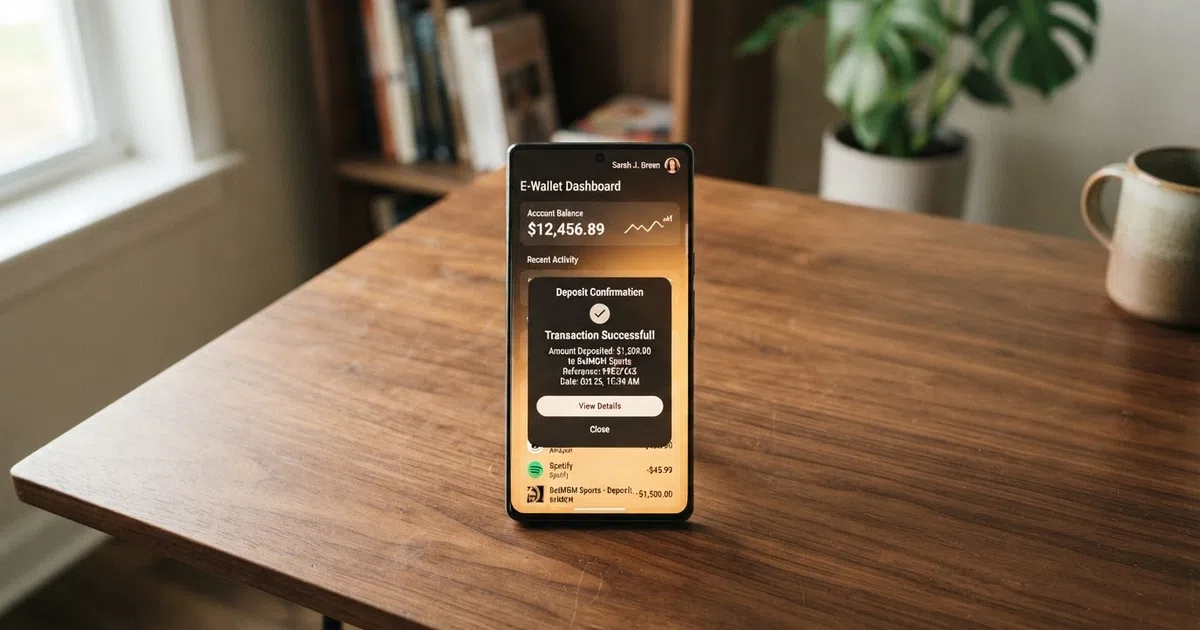
The deposit is an embedded iFrame. When a player clicks the MiFinity option in a casino’s cashier, a MiFinity-branded panel loads inside the casino page — the player never leaves the casino site. They log into their MiFinity account, pick a funding source, confirm the amount, and the deposit lands in the casino balance instantly. There is no redirect, no separate app launch, no copy-paste of wallet credentials into a third-party form. The integration is built to keep the player inside the casino’s flow, which is part of why it has spread quickly among operators that do accept it.
The withdrawal is the slower part of the chain. Once a casino approves a withdrawal to MiFinity — and that approval is at the operator’s discretion, not MiFinity’s — funds settle in the MiFinity wallet within 0 to 48 hours. From the wallet, the player can send the money to a bank account via PayAnyBank, which takes one to three business days, or to a Visa, Mastercard or UnionPay card via PayAnyCard, which is instant. The two routes are not equal in cost or in geography — PayAnyCard is faster, PayAnyBank reaches more bank accounts, and both are separate from any fee the casino itself charges on the withdrawal side.
Once the wallet is funded, real-money play is straightforward. The casino treats the MiFinity balance the same way it would treat any other deposit method — the money is casino credit, the games run on the casino’s software, and the house edge is the house edge. MiFinity’s role ends at the cashier.
Setting Up and Verifying a MiFinity Account for Casino Play
Registration is a standard email-and-password flow. Verification is where the rules tighten, and the rules come from the FCA authorisation, not from any casino. Once a MiFinity user has transacted above €150 in cumulative value, the wallet triggers a KYC check. The user submits proof of identity — a passport, national ID card or driving licence, plus a selfie — and proof of address dated within the last six months. MiFinity’s stated processing time is 24 to 48 hours, though the queue can run longer in practice.
Funding the wallet is where the breadth of the platform shows. MiFinity supports over 80 local payment methods, which means a UK player can top up via debit card, bank transfer, or a wide range of regional rails that the wallet aggregates. Verified customers in the EEA and the UK can also request a free Virtual IBAN — a sort code and account number that accepts zero-fee top-ups from any IBAN-enabled bank. For players who already use Revolut, Monzo or a similar modern bank, the IBAN is the cheapest funding path on offer.
A practical point that doesn’t get explained often enough: until the €150 threshold is crossed, a player can deposit at a MiFinity-accepting casino without finishing verification. The moment cumulative transactions on the wallet clear that mark, the wallet will lock further activity until KYC is complete. The casino does not see this and cannot bypass it. For a player who plans to move more than €150 in either direction, completing KYC before the first deposit is faster than waiting for the lock to trigger mid-session.
How MiFinity Deposits and Withdrawals Actually Work
Funding Your MiFinity Wallet and Making a Casino Deposit
There are two distinct flows in a MiFinity casino transaction, and they are governed by different rule sets. Funding the wallet is a consumer payment — debit card, bank transfer, Virtual IBAN, or one of 80-plus local methods. Depositing at the casino is a gambling transaction, and that is where the UK rules start biting.
The most consequential rule is the credit card ban. Since 14 April 2020, credit cards have been banned for all remote gambling in Great Britain under Licence Condition 6.1.2 of the LCCP. The ban extends explicitly to credit-card-funded payments routed through e-wallets, including MiFinity. A UK player cannot use a credit card to top up a MiFinity wallet and then deposit those funds at a casino — MiFinity’s own payment rails block the relevant merchant category code, and the casinos block the funding source on their side. Debit cards are the standard workhorse, and they are not affected by the ban.
The deposit itself, once the wallet is funded, is instant. The iFrame cashier confirms the transaction in real time, the casino balance updates, and play begins. There is no pending period, no overnight hold, no manual approval on the way in — the friction lives entirely on the way out.
Withdrawal Timelines — How Long Your Money Actually Takes
The “fast withdrawal” claim that most MiFinity-accepting operators make is true, but it covers only part of the chain. The full route from a casino balance to a UK bank account runs through three stages, and only the middle one is under MiFinity’s control.
First, the casino’s internal approval. This is the variable stage: some operators run automated approvals that clear in minutes, others hold withdrawals for 24 to 72 hours as part of their standard security review. The featured operators in this guide advertise one to three days or one to five days for the full MiFinity withdrawal — those numbers bundle the casino’s approval window with the MiFinity settlement.
Second, the MiFinity settlement. Once the casino releases the funds, MiFinity credits the player’s wallet within 0 to 48 hours. In practice, the credits often land much faster — within minutes, in many cases — but the published upper bound is 48 hours.
Third, the cash-out. From the MiFinity wallet, PayAnyBank transfers to a bank account take one to three business days. PayAnyCard transfers to a Visa, Mastercard or UnionPay card are instant, but the receiving card has to be enrolled, and not every UK bank supports outbound card transfers in this direction. The end-to-end experience ranges from “deposit and cash out inside a day” on the lucky path to “four or five working days from request to cleared funds” when the casino’s approval window and the bank transfer window both run long.
Fees, Limits and What MiFinity Actually Costs You
The casino side is usually free. The featured operators in this guide do not charge deposit fees for MiFinity, and most do not charge withdrawal fees either. That is not universal across the offshore market, but it is the norm for the operators that actively market to UK players.
MiFinity’s own fee schedule is where the real cost sits. The wallet charges 1.8% for EEA Visa deposits and 1.8% to 2.5% for non-EEA Visa deposits. Foreign-exchange markup is the other number worth memorising: up to 2.99% on standard currency pairs, up to 3.99% on exotic pairs. For a UK player funding in GBP and depositing in EUR, the FX markup is the single most likely fee on a typical transaction. It applies every time money crosses a currency boundary inside the wallet — funding a GBP balance from a GBP card is cheaper than funding a EUR balance and then depositing, and the difference is the FX margin.
On the operator side, the minimum MiFinity deposit across the featured set ranges from €10 to €20, and the maximum ranges from €2,500 to €5,000. These are per-transaction caps; the wallet itself does not impose a ceiling. The minimums sit well above the £5 low-deposit context that some UK-facing pages advertise — there is no MiFinity casino in the featured set that opens at a £5 deposit.
How MiFinity Stacks Up Against PayPal, Trustly, Debit Cards and Apple Pay
| Payment Method | Deposit Speed | Withdrawal Speed | Available at UKGC Casinos | Typical Fees |
|---|---|---|---|---|
| Debit card (Visa/Mastercard) | Instant | 1–3 business days (operator-dependent) | Yes — universal | None at the casino; bank may charge cash advance on some card types |
| Apple Pay | Instant | 1–3 business days via underlying card | Yes — most major UKGC brands | None |
| Google Pay | Instant | 1–3 business days via underlying card | Yes — most major UKGC brands | None |
| PayPal | Instant | Within 24 hours at most UKGC operators | Yes — most major UKGC brands | None at the casino; PayPal does not charge for gambling transactions in the UK |
| Trustly | Instant (Pay N Play) | Near-instant to linked bank account | Yes — at operators that use Trustly’s instant withdrawal | None at the casino; Trustly is free for players |
| Paysafecard | Instant deposit | Withdrawals not supported (voucher model) | Yes — for deposits at most major UKGC brands | None at deposit |
| MiFinity | Instant via iFrame | 0–48 hours to wallet, then 1–3 days to bank | No — absent from all major UKGC operators | 1.8–2.5% on non-EEA Visa funding, up to 2.99% FX markup |
The comparison is the page’s central finding in tabular form. Every mainstream UK payment method has UKGC-licensed coverage; MiFinity has none. The payment speeds on MiFinity are competitive — the iFrame deposit and the PayAnyCard cash-out are as fast as anything in the table. The fees are higher than the no-cost options, and the FX margin is the specific line item that makes a £100 round-trip cost a few pounds more than a PayPal or Trustly route would. The reason MiFinity is on this page at all is that the UKGC operators don’t list it. If they did, the comparison would be more like a footnote than a section.
The Best MiFinity Casinos for UK Players in 2026
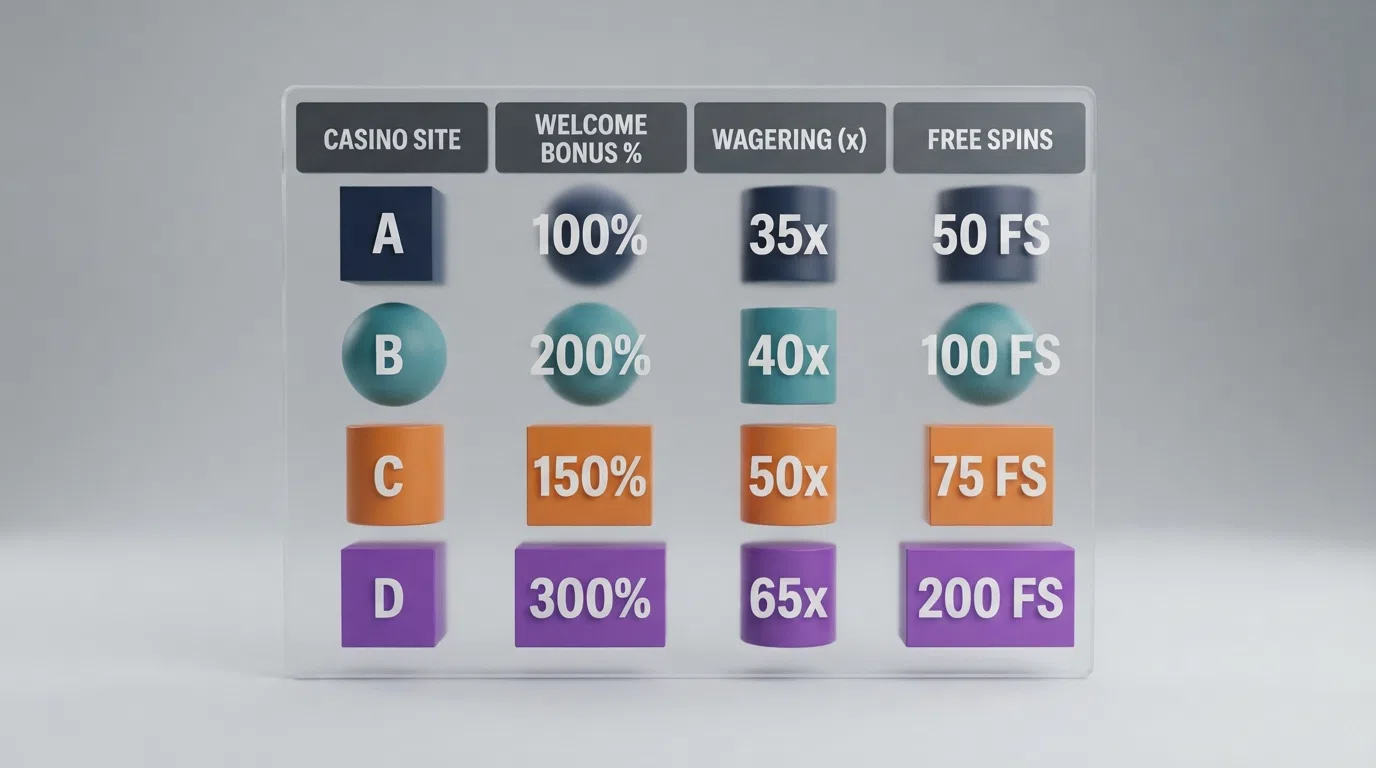
| Operator | Welcome Bonus | Wagering | Free Spins | Bonus Validity | Min MiFinity Deposit | Max MiFinity Deposit | MiFinity Withdrawal | Licence | Slots |
|---|---|---|---|---|---|---|---|---|---|
| 22bet Casino | 100% up to €300 | 50× | — | 7 days | €10 | €5,000 | 1–3 days | Curaçao; NOT UKGC-licensed | 5,000+ |
| Woo Casino | 100% up to €100 + 150 FS | 40× | 150 | 14 days | €20 | €5,000 | 1–3 days | Curaçao (1668/JAZ); NOT UKGC-licensed | 5,000+ |
| National Casino | 100% up to €100 + 100 FS | 40× | 100 | 7 days | €10 | €5,000 | 1–3 days | Curaçao; NOT UKGC-licensed | 4,000+ |
| PlayAmo Casino | 100% up to €100 + 100 FS | 50× | 100 | 30 days | €20 | €5,000 | 1–3 days | Curaçao; NOT UKGC-licensed | 6,000+ |
| 7Bit Casino | 100% up to €100 + 100 FS | 45× | 100 | 14 days | €10 | €4,000 | 1–3 days | Curaçao; NOT UKGC-licensed | 7,000+ |
| Neon54 Casino | 100% up to €500 + 200 FS + 1 Bonus Crab | 35× | 200 | 10 days | €10 | €5,000 | 1–3 days | Curaçao; NOT UKGC-licensed | 4,000+ |
| Legzo Casino | 100% up to €600 + 500 FS | 40× | 500 (100/day for 5 days) | 10 days | €20 | €5,000 | 1–5 days | Curaçao; NOT UKGC-licensed | 5,000+ |
| Betti Casino | 150% up to €750 + 150 FS | 40× | 150 | 14 days | €20 | €2,500 | 1–3 days | Curaçao; NOT UKGC-licensed | 3,000+ |
| Bankonbet Casino | 100% up to €500 + 200 FS | 40× | 200 | 10 days | €20 | €5,000 | 1–3 days | Curaçao; NOT UKGC-licensed | 4,000+ |
| Gamblezen Casino | 100% up to €500 + 100 FS | 35× | 100 | 10 days | €10 | €5,000 | 1–3 days | Curaçao; NOT UKGC-licensed | 3,000+ |
Every operator in this table holds a Curaçao licence. None holds a UK Gambling Commission licence. The bonus column reads like a leaderboard because it is one — the wagering column is what it costs to convert that bonus into withdrawable cash, and the difference between 35× and 50× is the difference between a workable offer and one that will eat most players’ deposits before the wagering clears. The UKGC’s 10× cap, which applies to GB-licensed operators from 19 January 2026, is included here only as a benchmark. The operators above are not subject to it.
22bet Casino — €300 Welcome Bonus, but a 50× Wagering Requirement
22bet advertises the largest base match in the set: 100% up to €300 on a first deposit, with no free spins attached. The wagering requirement is 50× — tied with PlayAmo for the steepest in the table — and the bonus validity is seven days. A player who deposits €300 and claims the full match has €600 in bonus funds to clear, which at 50× means €30,000 in wagering turnover before a withdrawal is possible. Seven days is not enough calendar to do that comfortably unless the player is running large-stake sessions every day.
The minimum deposit is €10 and the maximum is €5,000, with funds typically transferred back in one to three days. The game library runs to 5,000+ slots, demo mode is available, and the casino is licensed in Curaçao. The page is honest about this: 22bet is not on the UKGC register, and a UK player using it has no access to the protections the rest of this guide describes. For a player whose priority is the highest single-deposit match and who is comfortable operating outside the UK framework, 22bet offers the headline figure. For anyone else, 50× wagering in seven days is a wall, not a bonus.
Woo Casino — 150 Free Spins and a 40× Wagering Requirement
Woo’s offer is a 100% match up to €100 plus 150 free spins on the first deposit, with a 40× wagering requirement and a 14-day validity window. The match amount is smaller than 22bet’s, but the free-spin allocation adds real value, and 40× is the median for the set — workable if the player treats the bonus as a time-limited project rather than a free lunch. The 14-day window is twice as long as 22bet’s, which gives the wagering a fairer chance of clearing.
MiFinity terms: €20 minimum, €5,000 maximum, one-to-three-day withdrawal. The Curaçao licence number is published (1668/JAZ), which is a small but real transparency point — most Curaçao-licensed operators in this space do not display their licence number on the homepage, and the operators that do are at least answering the first question a reviewer should ask. Woo is not on the UKGC register. The casino’s value for a UK player sits in the balance between the offer’s structure and the regulatory gap — a 40× bonus with 14 days and 150 free spins is reasonable, and the gap is the same gap every other operator in the table shares.
National Casino — Straightforward Bonus, Tight Seven-Day Window
National Casino runs the same 100% up to €100 + 100 free spins offer as several peers in the table, with 40× wagering and a seven-day validity. The seven-day window is the distinguishing feature, and it is the wrong end of the spectrum. Clearing €100 in bonus funds at 40× requires €4,000 in turnover, which is achievable inside a week but only with daily sessions of meaningful length.
Funds can be moved between €10 and €5,000, with withdrawal times usually ranging from one to three days. The game library sits at 4,000+ slots, and demo mode is available. The licence is Curaçao, not UKGC. National Casino is a middle-of-the-table pick for a player who wants a lower minimum deposit (€10 ties with the cheapest in the set) and is willing to play inside a tight window. For a player who can’t commit to a session every day for a week, the same offer with 14 or 30 days at another operator is a better deal.
PlayAmo Casino — 50× Wagering but the Longest Validity Window
PlayAmo’s offer matches the 100% up to €100 + 100 free spins pattern with 50× wagering, but the bonus validity is 30 days — the longest in the set. The trade is direct: pay the highest wagering multiple and get the most calendar to clear it. For a player who plays in short sessions rather than long ones, 30 days at 50× is a better deal than seven days at 35×.
Withdrawals are usually approved in one to three days, with a €20 minimum and €5,000 maximum deposit limit. The game library runs to 6,000+ slots, demo mode is available, and the casino is licensed in Curaçao. The 6,000+ library is the second-largest in the table, which matters for a player who plans to spread their wagering across many different titles — clearing €5,000 in turnover on a small set of games is a grind, and a wider library softens it. PlayAmo’s 50× wagering might deter some, but the 30-day window provides a level of flexibility that many shorter-term offers fail to match.
7Bit Casino — 7,000+ Slots, the Largest Library in the Set
7Bit’s offer is 100% up to €100 + 100 free spins, 45× wagering, 14-day validity. The wagering sits in the middle of the table, the validity is the second-most generous, and the headline feature is the 7,000+ slot library — the largest in the set. For a player who values game variety over headline bonus size, that is the line to read.
Deposit limits are €10 minimum and €4,000 maximum, with payouts processed within three days. The platform operates with a Curaçao licence and provides trial versions for its games. For players who prioritize game variety and a massive lobby over a huge bonus match, 7Bit’s 7,000+ title collection makes it a compelling choice.
Neon54 Casino — 35× Wagering and a Bonus Crab Feature
Neon54 offers 100% up to €500 + 200 free spins + 1 Bonus Crab at 35× wagering, with a 10-day validity. The 35× wagering is tied with Gamblezen for the lowest in the set, the match ceiling is €500 (the second-highest of any single-deposit bonus in the table), and the Bonus Crab is a gamified side feature that no other operator in the table replicates. Whether the Bonus Crab is worth anything is a question the player has to answer themselves — it is a novelty mechanic, not a cash equivalent.
MiFinity terms: €10 minimum, €5,000 maximum, one-to-three-day withdrawal. The game library runs to 4,000+ slots, and demo mode is available. The licence is Curaçao, not UKGC. Neon54 is the strongest combination in the table for a player who values the bonus mechanics: low wagering, high match ceiling, and the gamified feature. The 10-day window is tighter than 7Bit’s or PlayAmo’s, but at 35× it does not need to be as long.
Legzo Casino — €600 Match and 500 Free Spins, the Biggest Headline Numbers
Legzo advertises 100% up to €600 + 500 free spins — the largest total headline figure in the set. The wagering is 40× and the validity is 10 days, but the free spins are drip-fed at 100 per day over five days, not delivered in one block. A player who claims the full offer does not have 500 spins to use on day one; they have 100, and 100 more the next day, and so on. The drip feed changes the maths of the offer in a way the headline number does not show.
The operator supports transfers of €20 minimum and €5,000 maximum, with processing times between one and five days. It holds a Curaçao licence and supports free-play demo modes. Legzo is aimed at high-activity players who don’t mind the daily drip-feed of spins in exchange for a significant headline bonus.
Betti Casino — 150% Match, the Highest Percentage in the Set
Betti is the only operator in the table offering a 150% match rather than the standard 100%. The full offer is 150% up to €750 + 150 free spins, 40× wagering, 14-day validity. A player depositing €500 would receive a €750 bonus — the highest single-deposit bonus value the table produces. The trade-off is the maximum deposit cap: €2,500 is the lowest in the set, and a player who would normally deposit more cannot at Betti.
Withdrawals take one to three days, with a €20 minimum and a €2,500 maximum. The site is licensed in Curaçao and provides game demos. Betti’s lower deposit cap is the main drawback, but its 150% match makes it an attractive proposition for those who prefer to keep their deposits modest.
Bankonbet Casino — €500 Bonus with 200 Free Spins and a 40× Wagering Requirement
Bankonbet offers 100% up to €500 + 200 free spins, 40× wagering, 10-day validity. The structure is the standard upper-mid-range offer in the set, with a higher match ceiling and a larger free-spin allocation than the €100-tier operators. Bankonbet is one of the more recent entrants to the offshore market with UK-facing operations.
MiFinity terms: €20 minimum, €5,000 maximum, one-to-three-day withdrawal. The game library is 4,000+ slots, demo mode is available, and the licence is Curaçao. The shorter track record is a real consideration — newer operators have not yet accumulated the volume of withdrawal complaints (resolved or otherwise) that lets a player gauge reliability from public record. Bankonbet is a reasonable pick for a player who is comfortable with newer operators; for a player who values operational history, an operator with a longer Curaçao track record is the lower-regret choice.
Gamblezen Casino — 35× Wagering, Tied for the Lowest in the Set
Gamblezen closes the table with 100% up to €500 + 100 free spins at 35× wagering and 10-day validity. The 35× wagering ties with Neon54 for the lowest in the set, the match ceiling is competitive at €500, and the 10-day window is workable at that multiple. The 3,000+ slot library is the smallest in the table, which is the main trade-off.
Deposits are accepted from €10 to €5,000, with withdrawal times of one to three days. It holds a Curaçao licence and allows free play on its titles. Gamblezen is the go-to option for those seeking a lower wagering requirement, provided the smaller 3,000-game library is sufficient for their needs.
Why Your MiFinity Casino Bonus Looks Bigger Than It Really Is
Welcome Bonuses and Deposit-Match Offers — Read the Small Print
The headline match percentage is the smallest number a player needs to evaluate. What determines whether a bonus is worth claiming is the wagering multiple and the validity window, in that order, with the match ceiling as a secondary constraint.
Across the featured set, wagering requirements run from 35× to 50×. At the high end, a €100 bonus at 50× requires €5,000 in qualifying turnover before a withdrawal is possible. At the low end, the same €100 bonus at 35× requires €3,500. The difference is not trivial — at a typical slot RTP of around 96%, the expected house edge on €5,000 in turnover is roughly €200, and on €3,500 it is roughly €140. A player is expected to lose about 4% of their turnover to the house edge regardless of the wagering requirement; the wagering requirement determines how much turnover the player has to generate before the bonus converts. A higher multiple means more turnover, more expected loss, and more time spent chasing the conversion.
The UKGC’s 10× cap, in force from 19 January 2026 under LCCP Social Responsibility Code 5.1.1, is the benchmark the UK licensed market will operate to from this year forward. The Commission’s stated rationale was that the cap “decreases the likelihood of harm, reduces complexity, and improves transparency while maintaining consumer choice.” Every operator in the featured set sits three-and-a-half to five times above that benchmark. The cap does not apply to them — they are not licensed by the UKGC — but it tells the player what the regulator considers the outer edge of a reasonable offer, and it makes the gap visible.
Mixed-product promotions are banned under the same code: a casino cannot run an offer like “bet £10 on football, get 50 free spins” at a GB-licensed operator. The offshore operators in the table are not subject to this rule, and some run exactly that kind of cross-vertical offer. The ban exists because these promotions blur the line between products and pull players into wagering they did not plan.
Validity windows range from 7 to 30 days. A tight window combined with a high multiple is the worst combination in the table — the player has more to clear and less time to do it. A 30-day window at 50× (PlayAmo) is more workable than a 7-day window at 50× (22bet), even though the wagering is identical, because the player has time to spread sessions.
Free Spins and No-Deposit Offers at MiFinity Casinos
Free-spin allocations in the set run from zero (22bet) to 500 (Legzo), and the standard 100-spin offer is the most common. Free spins are almost always tied to a specific slot or a small selection of slots, and any winnings from them are usually subject to the same wagering requirement as the deposit match. A player who values free spins for the experience of trying a new slot should read them as exactly that; a player who values them as a separate bankroll is reading the offer wrong.
No-deposit bonuses — a small bonus credited for registering an account, with no deposit required — are a regular feature of affiliate listicles, but none of the featured operators in this guide currently advertises a no-deposit bonus for MiFinity deposits specifically. The current offers all require a first deposit to trigger. A player who sees a no-deposit offer advertised for any of these brands elsewhere should verify it directly on the operator’s promotions page before registering; the affiliate page may be carrying a promotion that has expired or was never extended to the UK market.
No-Wagering Bonuses — Rare and Worth Verifying
A no-wagering bonus pays out as cash or withdrawable balance with no playthrough requirement. They exist in the wider market but are uncommon at offshore-licensed casinos, and the featured set in this guide does not carry one. The economic reason is straightforward: a no-wagering bonus is a real cost to the operator, and Curaçao-licensed brands operating on thin margins rarely volunteer it.
A player who sees a no-wagering claim attached to any of these brands should verify it in the bonus terms before depositing. The phrase “no wagering” in marketing copy is sometimes used loosely — it can mean “no wagering on the free-spin winnings” while the deposit match still carries a 40× requirement. The only place a player gets a definitive answer is the operator’s own terms page, and the audit there takes five minutes.
The Real Range of Games at MiFinity Casinos
Slots at MiFinity Casinos — Libraries of Thousands, Stake Caps Worth Knowing
Slot libraries at the featured operators run from 3,000+ (Betti, Gamblezen) to 7,000+ (7Bit). A library of that size covers virtually every category that exists in the slot market: classic three-reelers, video slots, megaways, cluster pays, progressive jackpots, branded titles, and whatever new release the studios shipped in the last quarter. A player who wants breadth is well served; a player who wants a tightly curated lobby is not, and that is the trade of a multi-thousand-game library.
The UK statutory slot stake limits do not apply at these casinos. Under SI 2025/215, GB-licensed operators must enforce a maximum of £5 per game cycle for players aged 25 and over (in force from 9 April 2025) and £2 for players aged 18 to 24 (in force from 21 May 2025). The limits apply to online slots only, not to other casino games. The operators in this guide are not GB-licensed, and they are not required to enforce the £5/£2 cap. A UK player who has self-imposed a stake limit as a personal control will need to set it themselves at the operator level; the statutory framework that would enforce it for them does not reach these sites.
Return to player (RTP) varies by title. There is no single RTP figure for “slots at MiFinity casinos” — each game has its own published RTP, displayed in the game’s information panel. A player who wants to compare RTPs should look at the individual game pages rather than the operator’s marketing, which tends to highlight the highest-RTP titles in its lobby.
Demo mode is available at every operator in the featured set, which means a player can run a slot in practice mode without committing real money. For players who want to test a game’s volatility or bonus frequency before depositing, the demo lobby is the right tool.
Table Games, Live Dealer and Bingo
Multi-thousand-game libraries at operators of this scale include blackjack, roulette, baccarat and various poker derivatives in both RNG and live-dealer formats. Live-dealer tables stream from studios operated by providers like Evolution, Pragmatic Play Live and others, and the live lobby at any 3,000+ slot casino typically runs into hundreds of tables across stake levels. The specific live-dealer provider mix varies by operator, and a player who has a preferred studio should check the live lobby before depositing.
Bingo availability is less consistent. Some Curaçao-licensed operators include bingo rooms in their game mix, others do not. The research did not confirm a per-operator bingo breakdown for the featured set, and a player who specifically wants bingo should check the operator’s game categories directly.
Provider variety at Curaçao-licensed casinos typically runs wide. The operators in this guide pull from dozens of studios — NetEnt, Microgaming, Play’n GO, Pragmatic Play, Nolimit City, Hacksaw Gaming, Push Gaming and many others. A player who has studio preferences will find most of them, but the exact list varies by operator.
Mobile MiFinity Casinos — What Works and What Doesn’t
Mobile Browser Play Versus Dedicated Casino Apps
Every operator in the featured set offers a mobile-optimised browser site. The site scales to the phone screen, the cashier’s iFrame is designed to work in a mobile viewport, and the game library is the same as the desktop version. For most players, the browser is the casino.
Dedicated apps are a different story. Some Curaçao-licensed operators distribute Android apps as APK files directly from their own domain, because Google Play’s gambling policy restricts real-money casino apps in most territories. iOS apps are rarer, because Apple’s review process is stricter and many Curaçao operators do not pursue the iOS route. The research did not confirm a per-operator app breakdown for the featured set, and a player who specifically wants an app should check the operator’s site directly.
MiFinity’s own app is separate from any casino app. It handles wallet management — balance, funding sources, transfers, transaction history — and is available on both Android and iOS. A player who wants to manage their wallet from a phone installs the MiFinity app; a player who wants to play casino games from a phone uses the casino’s mobile site (or its app, if it has one).
The advice that matters most: if a player is downloading an APK file for a casino, it should come from the operator’s own verified domain and nowhere else. Third-party APK sites are a common vector for malicious software disguised as a casino client.
New MiFinity Casinos Worth Knowing About in 2026
The Newest MiFinity Casino Launches and What They Bring
Among the featured set, Bankonbet and Gamblezen are the more recent entrants by market presence. Newer Curaçao-licensed operators typically bring a more modern interface, gamified promotional mechanics (the Bonus Crab at Neon54 is one example, the daily missions and level-up rewards common to other new launches are another), and larger slot libraries pulled from the full provider catalogue rather than a curated subset.
The trade-off is track record. An operator that has been paying out MiFinity withdrawals reliably for three years has a public history a player can read; an operator that has been doing it for nine months does not. Newer does not mean worse — it means the player is making a decision with less data. The features that attract a player to a new launch are the same features that should make them verify the basics: licence number, withdrawal policy, KYC requirements.
A player who wants the modern interface and the gamified mechanics should pick a newer operator; a player who values a multi-year withdrawal track record should pick an older one. The featured set covers both ends, and the MiFinity mechanics are the same at each.
Crypto and MiFinity — Two Payment Worlds That Overlap
MiFinity supports cryptocurrency alongside fiat. The wallet currently supports Bitcoin (BTC), Ethereum (ETH), Bitcoin Cash (BCH), Litecoin (LTC) and Ripple (XRP), and the app includes a fiat-to-crypto conversion feature that lets a player fund in pounds, convert to a supported cryptocurrency inside the wallet, and deposit at a crypto-friendly casino. The conversion is the bridge between the two payment worlds, and the MiFinity account does not need to be funded in crypto for the crypto deposit to work.
For UK players, the regulatory position on crypto deposits at gambling sites is not fully settled. The Gambling Commission has neither approved nor explicitly banned cryptocurrency deposits at licensed operators, and the research did not confirm a specific rule this run either way. The featured operators in this guide all accept MiFinity as a fiat rail; some also accept direct crypto deposits. A player who wants to use the MiFinity crypto conversion should check both the wallet’s supported coins and the casino’s accepted methods before committing.
The practical value of the MiFinity crypto route is consolidation: a player who already uses MiFinity for fiat casino deposits can add crypto casinos to the same wallet without onboarding at a separate exchange. The cost is the FX margin on the conversion, which is the same margin that applies to any other currency conversion in the wallet.
How We Selected and Ranked These MiFinity Casinos
Our Evaluation Criteria — What Counted and What Did Not
The selection started with a single filter: does the operator accept MiFinity and serve UK players? Every operator in the featured set clears that bar. From there, the ranking considered five factors: bonus terms (match rate, wagering multiple, free spins, validity window), game-library size, MiFinity-specific deposit and withdrawal terms, licence status, and operational track record where one exists.
The UKGC public register was the verification route for GB-licensed operators, and it was last updated on 29 July 2026, holding 2,663 records. None of the featured operators appears on that register. The Curaçao licence status is the regulatory reality for all ten, and a UK player who wants to verify the licence of any operator in the table should check the Curaçao Gaming Control Board’s register directly — licence numbers were not individually confirmed against the register during the research for this guide, and the operator’s own site is the fastest verification route.
The ranking does not apply a weighted score. An operator with a 35× wagering requirement is not “better” than one with 50× in any universal sense — it depends on the player’s session length, deposit size, and tolerance for bonus grind. The order in the table is the order that came out of the evaluation, and the per-operator write-up below the table gives the reader the factors to weigh on their own.
Excluded from the ranking: every UKGC-licensed operator. They do not accept MiFinity. The major UK-facing brands — bet365, William Hill, Sky Bet, Ladbrokes, Coral, Paddy Power, Betfair, Betfred, BetVictor, 32Red, Virgin Games, Mecca Bingo, 888 — are confirmed not to list MiFinity among their payment methods, and they were checked precisely so this guide could be clear about the boundary. They are the alternative to the featured set, not part of it.
The Licensing Reality — Why MiFinity Casinos Are Almost Never UKGC-Regulated
Why UKGC-Licensed Casinos Do Not Accept MiFinity
Thirteen major UKGC-licensed operators were checked for this guide, and none of them lists MiFinity. The list covers the dominant brands in the UK online gambling market: bet365, William Hill, Sky Bet, Ladbrokes, Coral, Paddy Power, Betfair, Betfred, BetVictor, 32Red, Virgin Games, Mecca Bingo, and 888. Their payment rails are the UK mainstream — debit cards, Apple Pay, Google Pay, PayPal, Trustly, bank transfer, Paysafecard — and MiFinity is not among them.
The reasons are partly commercial and partly compliance-driven. On the commercial side, the UKGC-licensed market has settled on a small set of payment providers with full UK regulatory coverage, and integrating an additional e-wallet has cost and operational overhead that operators have to justify against existing coverage. On the compliance side, the UKGC’s affordability checks, source-of-funds requirements, and financial vulnerability screening (triggered at the £150 net deposit threshold in a rolling 30-day window) all rely on payment data that flows cleanly from the operator to the regulator. A payment method that obscures the funding chain — even one that is itself FCA-regulated — adds friction to the compliance workflow. Neither reason is publicly stated by the UKGC operators, but the pattern is consistent.
For the UK player, the practical consequence is that MiFinity and the UKGC-licensed market are not compatible. Choosing MiFinity as a payment method at an online casino today means choosing a casino that is not on the UKGC register.
What a Curaçao Licence Actually Means — and the Protections It Does Not Provide
A Curaçao eGaming licence is a real licence, issued by the Curaçao Gaming Control Board, and Curaçao-licensed operators are legitimate businesses subject to a regulatory framework in their jurisdiction. The framework requires operators to maintain segregated player funds, follow anti-money-laundering procedures, and meet baseline technical standards for game fairness. It is not a sham.
It is also not a UK Gambling Commission licence. A Curaçao licence does not satisfy the point-of-consumption requirement that has been in force since the Gambling (Licensing and Advertising) Act 2014. Since 2014, any operator serving GB customers needs a UKGC licence regardless of where it is based, and a Curaçao licence is not a substitute. Providing facilities for gambling to GB customers without the required licence is a criminal offence under section 33 of the Gambling Act 2005, carrying up to 51 weeks’ imprisonment and an unlimited fine. The penalty is aimed at the operator, not the player — no UK player has been prosecuted for gambling at an unlicensed site — but the legal status of the site is unambiguous.
The enforcement posture of the UKGC is disruption rather than blocking. The Commission does not currently hold statutory ISP or DNS blocking powers (legislation has been proposed but not enacted). Between April 2024 and June 2025, the Commission issued 3,140 disruption notices, referred 447,778 URLs to search engines, and saw 287,961 URLs removed. Between October 2024 and September 2025, it took 208,088 enforcement actions against illegal online gambling. The volume is real; the sites continue to operate, and the player remains responsible for choosing where to deposit.
What UK Player Protections You Lose at a Non-UKGC Casino
The protections that disappear at a Curaçao-licensed site are not abstract. They are the named mechanisms the UK framework was built around, and a UK player who switches from a UKGC casino to a Curaçao one loses all of them at once.
No GAMSTOP coverage. GAMSTOP is the national self-exclusion register for online gambling, mandatory for GB-licensed operators since 31 March 2020. Exclusion periods are six months, one year, five years, or five years with auto-renewal, and the exclusion cannot be cancelled early. GAMSTOP only covers GB-licensed sites, which means every operator in the featured set is outside its reach. A player who has self-excluded via GAMSTOP and then opens an account at one of these casinos has not violated the GAMSTOP terms (the casino is not covered by them), but they have bypassed the protection GAMSTOP was supposed to provide.
No Gambling Commission complaints route. If a UKGC-licensed operator refuses to pay out winnings, the player can complain to the Commission and, if needed, escalate to an approved Alternative Dispute Resolution provider. Neither route exists for a Curaçao-licensed operator. The player is dependent on the operator’s own internal complaints process and, at the outer edge, the Curaçao regulator — neither of which has the same consumer-protection orientation as the UK framework.
No statutory slot stake limits. The £5 per game cycle cap for players aged 25 and over, and the £2 cap for players aged 18 to 24, do not apply at non-UKGC casinos. A player who has set a personal stake limit at a UKGC site as a harm-reduction measure is on their own to replicate it at a Curaçao-licensed one.
No 10× bonus wagering cap. The UKGC’s cap on wagering requirements does not apply offshore. Every bonus in the featured set carries a multiple between 35× and 50×.
No credit-card funding prohibition enforced. The UK ban on credit cards for remote gambling extends to credit-card-funded e-wallet deposits at UKGC-licensed operators. Offshore operators are not subject to the same rule, and the enforcement gap is at the e-wallet funding stage, not the casino stage.
No financial vulnerability checks, no mandatory deposit-limit prompting, no session time/money display, no reverse-withdrawal ban, no auto-play ban, and no 2.5-second minimum spin speed. The full set of UKGC game-design and player-protection rules stops at the border.
The list is long because the UK framework is comprehensive. None of these protections is a minor detail. They are the reason a UKGC licence is the difference between gambling at a site that is required to protect the player and gambling at one that is not.
Non-GamStop and Offshore MiFinity Casinos — What the Label Actually Means
“Non-GamStop casino” is a marketing term, and the marketing is aimed at UK players. The term sounds like a category — casinos that have chosen an alternative self-exclusion system — and that is how it is usually presented. The reality is plainer. A casino is “non-GamStop” because it is not GB-licensed, and GAMSTOP only covers GB-licensed sites. The casino has not built an alternative self-exclusion system; it has simply fallen outside the boundary of the UK one.
For a player who has self-excluded via GAMSTOP, the “non-GamStop” label is a warning, not a feature. For a player who has not self-excluded, the label is a description of the regulatory gap and nothing more.
Red flags at offshore casinos are real, and the absence of them is not the same as the presence of UKGC oversight. The signals to watch for: no visible licence information on the site, no KYC process or a KYC process that asks for payment method screenshots before allowing play, support channels that go unanswered, no responsible-gambling page, bonus terms that are mathematically impossible to clear (wagering requirements above 60× on the deposit plus the bonus, for example), and terms that change after deposits are made. None of these is proof of a scam, and any of them can appear at a legitimate operator briefly during a transition. A pattern of several of them, sustained over time, is the signal to walk away.
Safer Gambling When You Play Outside the UKGC System
Tools You Can Use — Deposit Limits, Reality Checks and Self-Exclusion
The UKGC’s safer-gambling infrastructure does not reach offshore operators, but the tools themselves are not unique to UKGC sites. The question is whether the offshore operator offers them voluntarily, and how a UK player enforces the controls they would have at a GB-licensed casino.
MiFinity itself offers account-level spending limits. A player can set a daily, weekly or monthly cap on the wallet, and the wallet will block transactions that exceed it. The cap applies across all merchants the wallet connects to, not just the casino, which is a useful feature for a player who wants a single control point. The wallet’s controls are independent of any casino’s controls and survive a player switching operators.
At the casino level, the featured operators offer varying degrees of deposit-limit, session-time and self-exclusion functionality. The research did not confirm a per-operator breakdown of the available controls, and a player who depends on any of them should check the operator’s responsible-gambling page directly. A self-exclusion request to an individual operator is honoured by most Curaçao-licensed brands on a voluntary basis, but the UKGC’s framework for escalating exclusion breaches does not exist offshore.
GAMSTOP cannot reach any of the operators in this guide. The exclusion register is built on operator participation, and a non-GB-licensed site is not a participant. A player who has self-excluded via GAMSTOP and is considering an offshore casino should treat the GAMSTOP exclusion as a personal commitment, not a system-enforced one — the offshore casino will not check, and the temptation is the player’s to manage.
For context, the UK framework that the featured operators are not subject to includes a mandatory financial-limit prompt before a customer’s first deposit (in force from 30 October 2025) and a gross-deposit-limit framework (in force from 30 September 2026), under RTS 12. A gross deposit limit is based on money paid into the account only; net deposit calculations that subtract withdrawals are no longer permitted. These are the standards the UK licensed market is moving to, and they are the benchmark for what the offshore operators are not required to provide.
Where to Get Help — UK Gambling Support Resources
The support infrastructure is there regardless of where a player chooses to play, and the organisations below are staffed and reachable.
GamCare runs the National Gambling Helpline on 0808 8020 133, available 24 hours a day, every day. In January 2026 alone, the helpline made 996 referrals to treatment — a 48% increase on the same month the year before — and 81.5% of contacts in 2026 cited online forms of gambling as the problem area. Online support is also available through GamCare’s website.
GambleAware funds treatment, prevention and research across Great Britain. The Annual Treatment and Support Survey 2024 found that 30% of adults with gambling problems now want treatment, double the 17% recorded in 2020. The change reflects both increased demand and the wider availability of treatment routes.
NHS gambling harm clinics operate in England, Scotland and Wales, providing specialist treatment within the NHS. Referral routes include the National Gambling Helpline, GP referral, and self-referral through the NHS website.
Gamblers Anonymous runs peer support meetings across the UK, using the same twelve-step model as other GA fellowships worldwide. Meetings are in person and online.
The prevalence numbers behind the services: 0.4% of GB adults are problem gamblers (PGSI 8+), and 1.6% are at moderate risk or above (PGSI 3+), per the NHS Adult Psychiatric Morbidity Survey 2023–24. An estimated 4.3 million adults in GB are affected by a family member’s or friend’s gambling, and around 2 million children live in households with adults experiencing problem gambling. The 13.1% of adults who gamble at any level of gambling problems (PGSI 1+), per GambleAware’s 2024 survey, equates to roughly 6.8 million GB adults. The numbers are not abstract; they are the population the support services are built for.
Should You Use MiFinity at an Online Casino? The Verdict for UK Players
MiFinity is a legitimate payment tool. It is FCA-authorised, it is operationally sound, and the iFrame cashier is one of the cleaner payment integrations in the market. The mechanics work. The deposits are instant. The withdrawals clear. The fees are transparent. On the payment side, there is little to criticise.
The casino side is where the decision lives. A UK player depositing with MiFinity at any of the ten operators in this guide is playing at a site that is not licensed by the UK Gambling Commission. The protections the UK framework provides — GAMSTOP, the Commission complaints route, the £5/£2 stake caps, the 10× bonus cap, the credit-card ban, the financial vulnerability checks, the reverse-withdrawal prohibition, the spin-speed minimum, the auto-play ban — do not apply at any of these sites. The player is not making a payment decision; they are making a regulatory decision, and the payment method is the proxy for it.
The honest framing is the one this guide has tried to maintain throughout: the payment tool is regulated, the casino is not, and the gap between the two is the gap between consumer protection and its absence. A UK player who values GAMSTOP coverage, an ADR route, statutory stake limits, and a Commission-enforced bonus cap should not be looking for a MiFinity casino. A UK player who has decided that the UK framework does not suit them, who is playing within their own budget, who has set their own deposit and stake limits, and who is comfortable with the offshore dispute-resolution process can use the list in this guide as a starting point. The two positions are not equivalent in protection, and the page’s job is to make the difference visible, not to bridge it.
The data, the licence numbers, the bonus terms, and the operator write-ups above are the inputs to that decision. The decision itself is the reader’s.
Frequently Asked Questions
Can I use MiFinity to deposit at a UK-regulated casino site?
No. The major UKGC-licensed operators — bet365, William Hill, Sky Bet, Ladbrokes, Coral, Paddy Power, Betfair, Betfred, BetVictor, 32Red, Virgin Games, Mecca Bingo and 888 — do not list MiFinity among their accepted payment methods. Casinos that accept MiFinity and serve UK players are licensed outside Great Britain, typically in Curaçao, and are not on the UK Gambling Commission’s public register.
Is MiFinity itself safe and regulated for handling gambling payments?
Yes. MiFinity is authorised and regulated by the UK Financial Conduct Authority under the Electronic Money Regulations 2011 (Firm Reference Number 900090) and is separately regulated by the Malta Financial Services Authority. The wallet is required to carry out KYC verification above €150 in cumulative transactions, and the company is headquartered in Belfast, serving over 225 countries and 1,200-plus merchant brands.
What fees will I pay using MiFinity at an online casino?
Casino-side deposit and withdrawal fees are typically free at the featured operators. MiFinity charges 1.8% for EEA Visa deposits and 1.8% to 2.5% for non-EEA Visa deposits, plus a foreign-exchange markup of up to 2.99% on standard currency pairs and up to 3.99% on exotic pairs. For a UK player funding in GBP and depositing in EUR, the FX margin is the most likely fee on a typical transaction.
Do MiFinity casinos honour GAMSTOP self-exclusion?
No. GAMSTOP is mandatory for GB-licensed online operators and covers GB-licensed sites only. The MiFinity-accepting casinos serving UK players are not GB-licensed, so GAMSTOP cannot reach them, and the exclusion does not transfer. A player who has self-excluded via GAMSTOP and then opens an account at an offshore casino has bypassed the protection, because the offshore casino is outside the system.
How quickly do MiFinity casino withdrawals reach my bank account?
The full chain runs in three stages. Casino internal approval varies by operator, typically one to three days. Once approved, funds settle in the MiFinity wallet within 0 to 48 hours. From the wallet, a PayAnyBank transfer to a UK bank account takes one to three business days, while a PayAnyCard transfer to an enrolled Visa, Mastercard or UnionPay card is instant. End-to-end, the experience ranges from under a day on the fast path to four or five working days when the casino approval window runs long.
Can I top up my MiFinity wallet with a credit card for gambling?
Credit cards are prohibited for all remote gambling in Great Britain, a rule that has been in effect since 14 April 2020. This restriction applies to direct deposits and any credit-card-funded e-wallet payments. UK players must rely on debit cards or other approved payment methods to top up their MiFinity accounts.
What can I do if a MiFinity casino refuses to pay out my winnings?
The first step is the operator’s own internal complaints process, which the casino is required to operate under its Curaçao licence. If that does not resolve the dispute, the player can escalate to the Curaçao Gaming Control Board. The UK Gambling Commission’s complaints route is not available, because the operator is not UKGC-licensed, and the player has no access to an approved Alternative Dispute Resolution provider under the UK framework. This is one of the concrete consequences of playing outside the GB licensing system.
Payments – trustedcasinos-notongamstop
Content created by the «trustedcasinos-notongamstop» team