
Online casinos that accept SMS deposits in the UK
 Available in GB
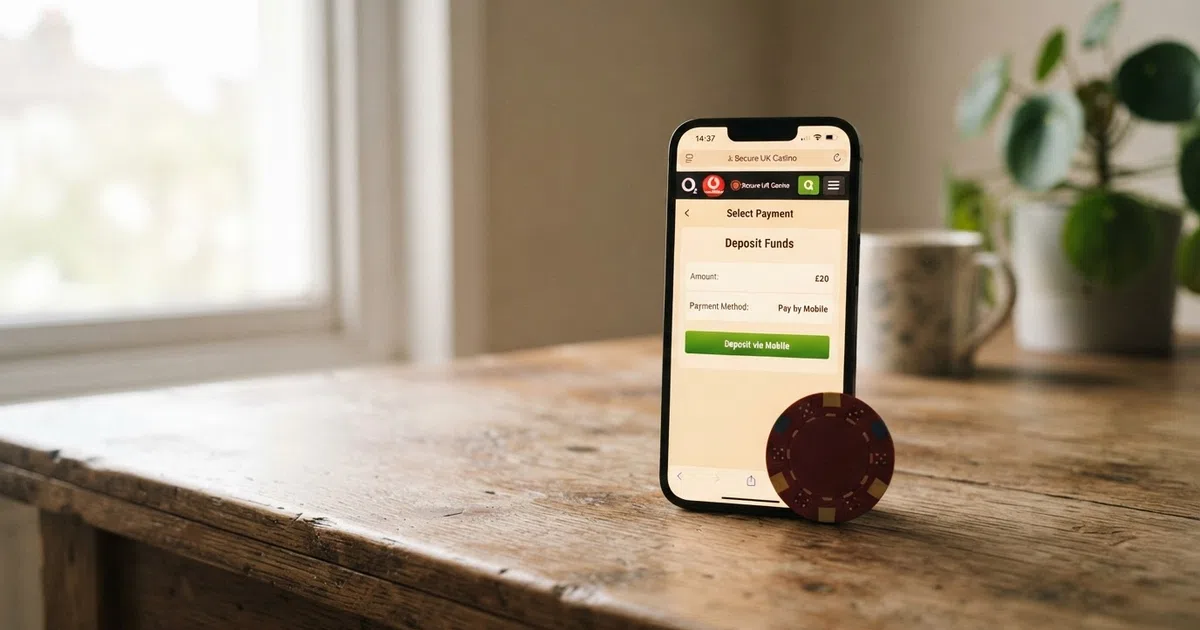
A phone-bill deposit sounds like the simplest payment method in iGaming. No card to type, no app to download, no second screen. You type a number at the casino cashier, confirm a text message, and the money lands. The trouble is what sits underneath that surface. SMS deposits are capped by statute at £40 a day and £240 a month, the network charges a 15–25% processing fee that comes straight off the deposit, and once the money has gone you cannot get it back the same way it came. Withdrawals need a debit card, a bank transfer or an e-wallet — always a second method.
Verified against the UK Gambling Commission public register on September 9, 2026.
What an SMS casino actually is — and what it is not
An SMS casino is an online casino that lets you fund your account by charging the deposit to your mobile phone bill, or deducting it from your prepaid credit. The casino does not receive the money the way it would from a card payment; the money flows through a carrier-billing provider — typically Boku or Fonix in the UK — and lands on your phone bill at the end of the month, or disappears from your top-up balance immediately.
That is what it is. It is not a casino you play by sending a text message to a phone number, and it is not an unregulated free-for-all. Every SMS deposit at a legitimate UK site still flows through a Gambling Commission-licensed casino, with the same identity checks, the same self-exclusion via GAMSTOP, and the same statutory slot stake limits that apply to card-funded play.
Two regulatory lines from earlier years matter here. Since 14 April 2020, no GB-licensed operator may accept payment for gambling by credit card, including credit-card-funded e-wallet payments. That prohibition does not extend to phone-bill deposits: the charge-to-mobile route sits outside the credit-card ban because it is not credit. The credit-card ban stops at the card rail; SMS deposits run through a separate premium-rate-service framework.
The charge-to-account model: how your phone bill becomes a casino deposit
UK charge-to-mobile services sit inside the premium-rate-service framework. Until 1 February 2025, day-to-day regulation of premium-rate services was handled by the Phone-paid Services Authority (PSA). From that date, Ofcom took the regulatory role over after the PSA ceased operating. The framework imposes two hard caps on every charge-to-mobile payment at a licensed casino: £40 per single transaction, and £240 per calendar month per subscriber.
What that looks like at the till: if you deposit £5 via SMS, you do not actually pay £5. A 15–25% processing fee is deducted before the deposit lands in your casino balance — so a £5.12 phone-bill charge might produce only £4 of casino credit. On a £10 deposit, you can lose £1.50–£2.50 to the fee before a single spin is played. The fee is not optional and it is not a casino choice; it is the carrier-billing provider’s charge for routing the payment.
The model is one-way. The same source that explains the fee structure puts it bluntly: “This is a one-way transaction. UK mobile networks do not offer a standard merchant refund route that credits casino winnings or routine refunds back to a phone bill.” That structural feature shapes everything else on this page — the withdrawal method, the bonus eligibility, the way the deposit cap bites. There is no merchant refund route because the network was never designed to receive money back from a merchant.
SMS casino versus traditional online casino: the real differences
The deposit speed is the first difference. An SMS deposit is instant: you type a number, receive a code, enter it, and the balance updates within seconds. A debit card deposit at a new account can take one to three days while the casino runs its verification and fraud checks. For a player who wants to play now, SMS wins on speed.
The cap is the second difference. SMS deposits cannot exceed £40 per transaction or £240 per calendar month — the cap is set by the Payment Services Regulations 2017, not by any individual casino, and no operator can raise it. A debit card deposit has no statutory ceiling; a player can deposit £500 in one go if the casino’s own deposit-limit prompt lets them.
The withdrawal gap is the third. SMS is deposit-only. If you fund your account by phone bill, your winnings come out by debit card, bank transfer, or e-wallet — never by SMS, never back to the phone bill. That means every SMS depositor must register a second payment method before they can cash out. The casino does not ask for it at deposit time; it asks at withdrawal time, when the player has already won money they want to move.
Strong Customer Authentication works differently too. With SMS, the casino sends a confirmation request to the player’s phone and the player proves SIM possession by replying or entering a code. With debit card or bank transfer, the SCA step runs through the bank’s app or 3-D Secure flow, which often means leaving the casino screen and coming back. SMS keeps the whole flow on one device.
How SMS deposits work: the real price of playing on your phone bill
The mechanics are simple and the price is not. A player who treats SMS as a default deposit method is paying for the convenience twice: once in the processing fee that shrinks every deposit, and once in the extra step of registering a second payment method for withdrawals. The £40 daily and £240 monthly caps are a structural safeguard rather than a restriction — they are the premium-rate-service framework enforcing a ceiling the casino cannot override, and they are what makes the SMS channel genuinely distinct from a debit card deposit.
For an SMS-only player who maxes the daily cap, the £240 monthly ceiling runs out after six £40 deposits. Add the 15–25% fee and the effective monthly bankroll is closer to £180–£204 of casino credit. For a casual player depositing £10 every few days, the fee represents the same percentage slice but a smaller absolute cost, and the cap sits far below the monthly ceiling.
The step-by-step: from casino cashier to phone-bill charge
Making an SMS deposit at a UK casino follows a fixed sequence.
- Select “Pay by Mobile” or “Pay by Phone” at the casino cashier.
- Enter the deposit amount within the carrier’s £40 single-transaction cap.
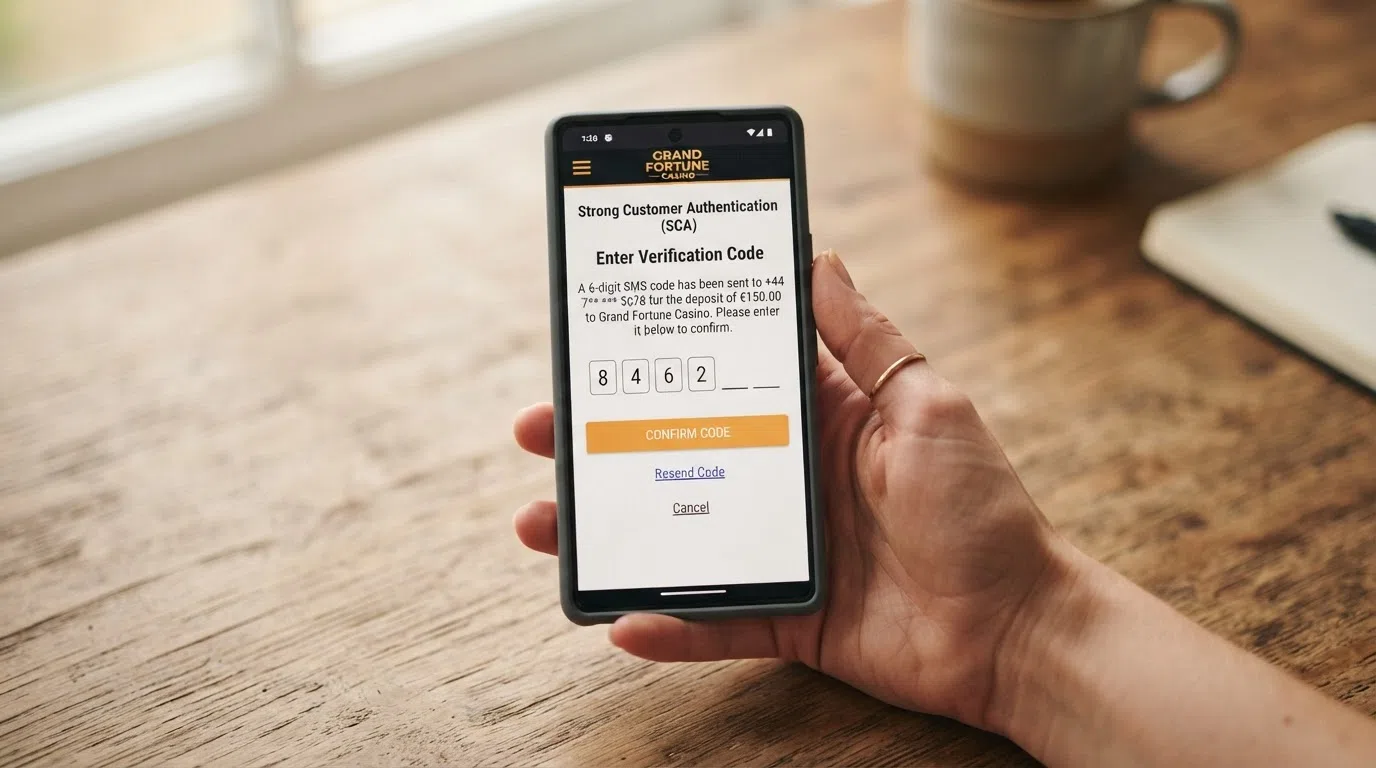
- Receive the verification SMS — this is the Strong Customer Authentication step, with the casino sending a confirmation request to the handset.
- Confirm by replying or entering the code, proving SIM possession.
- Watch the charge appear on the next phone bill (postpaid) or deduct from prepaid credit.
- See the funds, minus the 15–25% processing fee, appear in the casino balance.
The whole flow takes under a minute on a handset. The fee deduction is the step that surprises most first-time SMS depositors: the deposit amount they typed and the balance that lands do not match.
Boku, Fonix, and the networks that carry your deposit
Two carrier-billing providers carry most UK SMS casino deposits. Boku operates in more than 90 countries with over 28 million active users, requires no account creation or app download, and is free for the consumer at the point of use — the fee is paid by the merchant or absorbed in the merchant-pricing model. Fonix is a UK-focused provider that adds a 4-digit PIN sent to the handset as a second factor, and positions carrier billing as a responsible-gaming payment on the strength of the £40 daily and £240 monthly spend caps.
The older Payforit framework has been largely absorbed into Boku and Fonix. Siru Mobile and PayviaPhone appear as secondary options at a handful of sites. All four major UK networks — O2, Vodafone, EE, and Three — support SMS casino deposits through these providers, though not every casino enables every network.
£40 a day, £240 a month: where the limits come from — and why they matter
The statutory basis for the caps is the Payment Services Regulations 2017, Schedule 1, Part 2(l). The regulation carves out electronic communications payments from the wider payment services regime, but only on the condition that each payment stays within £40 per single transaction and £240 per calendar month per subscriber. Cross either ceiling and the payment falls outside the exclusion, which is why no licensed casino lets a player exceed either number — they cannot route the payment legally if they do.
These are premium-rate-service limits, not casino-imposed marketing thresholds. They exist because the regulator wanted charge-to-mobile payments to stay small enough that consumer protection rules around refunds and disputes could be relaxed. The consequence for a casino player is that an SMS deposit is structurally small by design.
The caps interact with the age-banded slot stake limits that came into force in spring 2025. Players aged 25 and over face a £5 maximum stake per game cycle on online slots; players aged 18 to 24 face a £2 maximum. A £40 SMS deposit buys eight £5 spins or twenty £2 spins before it is gone. A £240 monthly ceiling buys 48 £5 spins or 120 £2 spins across the month. The SMS channel suits casual, low-stakes play by construction.
The £150 net-deposit vulnerability-check threshold, in force from 28 February 2025, adds a third interaction. A player maxing the SMS daily cap hits £150 in net deposits after roughly four days. The check itself uses publicly available data — county court judgments, bankruptcy orders, individual voluntary arrangements, debt relief orders — and runs at the moment of deposit, not after the fact.
No, you cannot cash out to your phone bill — here is what to use instead
The one-way nature of the SMS deposit is a structural feature, not an operator choice. UK mobile networks have no merchant-refund route for gambling winnings; the architecture that lets the casino charge a phone bill does not let it credit one. A player who funds their account by SMS must register a second payment method — debit card, bank transfer, or e-wallet — before the first withdrawal.
That second method matters more than the first. The casino asks for it when the player requests a payout, not at signup. The practical move is to add a debit card or e-wallet to the account at the same time as the first SMS deposit, so the withdrawal path is already open when the money is won. The verification SMS used at deposit — the casino sends a code, the player confirms — is the same Strong Customer Authentication flow that runs on a card payment; it proves SIM possession, not identity.
The 15–25% shrink: what SMS deposits really cost in fees
The processing fee is the line item that turns SMS from a convenience into a tax. Across UK sources, processing fees for SMS and phone-bill deposits run from approximately 15% to 25%, deducted from the deposit before it lands. The worked example carries across all of them: a £5.12 phone-bill charge produces about £4 of casino credit. On a £10 deposit, the player loses £1.50–£2.50 to the fee.
Some casinos absorb the fee and price it into their margin; others pass it on to the player. The variation matters for comparison. A site that charges a flat £2.50 fee per SMS deposit, regardless of size, makes small deposits disproportionately expensive — a £5 deposit is half eaten by the fee, while a £40 deposit loses only 6%. Sites that scale the fee as a percentage still take the same proportional slice, but the absolute cost rises with deposit size.
The fee structure is the single biggest reason to treat SMS as a specific tool rather than a default. For a player depositing £40 once a week, the fee is the price of not typing a card number. For a player depositing £10 three times a day, the fee is a structural drag on the bankroll.
Where you can (and cannot) deposit by SMS at UK online casinos in 2026
The split is the story. Of the ten featured operators on this page, three have confirmed SMS deposit support via Fonix or another provider, three have confirmed it is not supported, and four have not confirmed either way. The major UK brands — Bet365, William Hill, MrQ — have either phased out phone-bill deposits or never offered them. The SMS deposit niche is served by mid-tier and specialist brands rather than the household names.
The table below sets the comparison fields the plan prescribes — licence status, SMS deposit support, welcome offer headline, and slot count. Welcome-offer details vary; the column carries what research gives, with the no-data marker where it gives nothing.
| Casino | UKGC Licence | Accepts SMS Deposits | Welcome Offer | Slots |
|---|---|---|---|---|
| Duelz | Active | Yes — Fonix, min £10 | Deposit + play £25 get 140 free spins | 1,000+ |
| Hollywoodbets | Active | Yes — Fonix, min £5 | — | 500+ |
| JeffBet | Active (verify on public register) | Yes | — | 1,000+ |
| Sky Vegas | Active (Flutter Entertainment) | Not confirmed | 50 no-deposit + 200 free spins on £10 deposit/spend, 0× wagering, 7-day expiry | 600+ |
| Bet365 | Active | No | Bet £10 Get £30 in free bets (sportsbook) | 1,000+ |
| William Hill | Active (evoke/888 Holdings) | No | 200 free spins on Big Bass Splash, 10× wagering, £30 winnings cap, 72-hour expiry | 500+ |
| MrQ | Active | No (withdrawn) | 100 free spins on Big Bass Splash, 0× wagering, 48-hour expiry | 900+ |
| 32Red | Active (Kindred Group) | Not confirmed | 320 free spins on Big Bass Splash, 0× wagering, 30-day expiry | 500+ |
| Virgin Games | Active (Gamesys/Bally’s) | Not confirmed | 100 free spins on Big Bass Splash, no wagering, 30-day expiry | 400+ |
| Betfred | Active | Not confirmed | — | 500+ |
The column “Accepts SMS Deposits” carries a Yes/No/Not confirmed split rather than a uniform Yes, because honest ranking requires showing which operators can actually take the deposit this page is about. A reader who arrives looking for SMS support and lands on a William Hill writeup without that disclosure has been misled.
Duelz: Fonix-powered SMS deposits with a £10 minimum
Duelz runs on a UKGC active licence and accepts Fonix pay-by-mobile deposits from a £10 minimum. The welcome offer is structured as a deposit-and-play package: stake £25 and receive 140 free spins. Game providers include NetEnt, Play’n GO, and Pragmatic Play, with a catalogue of more than 1,000 slots.
Independent affiliate confirmation from OLBG notes that the welcome offer is available to SMS depositors — a critical point, because some sites exclude phone-bill depositors from bonuses without saying so in the headline terms. The £10 minimum sits above the £5 entry point at Hollywoodbets, but below the typical £20 card deposit at major UK brands.
For those prioritizing verified SMS support, an eligible welcome bonus, and variety in their slot library, Duelz is the primary choice.
Hollywoodbets: the £5 SMS deposit entry point
Hollywoodbets runs on a UKGC active licence and accepts Fonix pay-by-mobile deposits from a £5 minimum — the lowest SMS entry point among the featured operators. Game providers include NetEnt and Pragmatic Play, with around 500 slots. Welcome-offer terms are not specified in the research.
The £5 minimum matters for two reasons. First, it lets a player test the SMS channel at the smallest legal deposit, which is the right way to evaluate a payment method that charges a percentage fee. Second, it sits below the £10 minimum at Duelz and the £30 qualifying deposit at 32Red, so a player who wants the smallest possible commitment has a starting point. The welcome offer should be checked at the casino before depositing.
Players looking for the smallest entry point can use Hollywoodbets, provided they double-check the current welcome bonus terms on the site first.
JeffBet: a 1,000+ slot library with SMS deposits
JeffBet runs on a UKGC active licence — verify on the public register — and is listed by Legalbet as accepting SMS deposits. Game providers include NetEnt and Microgaming, with more than 1,000 slots. Welcome-offer terms are not specified in the research.
The slot count ties JeffBet with Duelz for the largest library among confirmed SMS-accepting operators, which matters for a player maxing the £240 monthly cap and looking for variety. The provider list leans older — Microgaming rather than Reel Kingdom — so the Big Bass series is less central here than at Duelz or Hollywoodbets.
JeffBet is an alternative for players who need a confirmed SMS channel and a library of 1,000+ slots; just remember to verify the welcome bonus when you land.
Sky Vegas: 250 free spins, zero wagering — but SMS support unconfirmed
Sky Vegas runs on a UKGC active licence under Flutter Entertainment. SMS or pay-by-mobile support is not confirmed; the listed deposit methods are debit card, Apple Pay, and Pay by Bank. The welcome offer is the strongest no-wagering package in the featured set: 50 free spins with no deposit required, plus 200 free spins on a £10 deposit and spend, all at 0× wagering, with a 7-day expiry. Game providers include NetEnt, Play’n GO, Pragmatic Play, and IGT, with around 600 slots.
The mismatch is the centre of the trade-off. Sky Vegas offers the headline free-spin count and the cleanest wagering terms in the table, and it accepts deposits by card and bank transfer. The SMS channel is the question. If Sky Vegas does accept SMS deposits, the offer becomes the strongest value for an SMS player who can verify the channel before depositing; if it does not, the offer sits outside the SMS conversation entirely.
Sky Vegas is for the no-wagering bonus hunter rather than the SMS depositor, as phone-bill support remains unconfirmed at this Flutter-owned site.
Bet365: the market leader that does not do SMS deposits
Bet365 runs on a UKGC active licence. SMS or pay-by-mobile is not supported — there is no phone-bill deposit option. The headline welcome offer is a sportsbook Bet £10 Get £30 in free bets, 7-day expiry; the casino welcome offer varies. Game providers include NetEnt, Playtech, and Pragmatic Play, with more than 1,000 slots.
Bet365 sits on this page because it is the largest UK gambling brand and a reader comparing SMS deposit casinos needs to see the alternative at the same scale. A player who wants SMS support does not get it here. A player who wants brand authority, market depth, and a sportsbook-heavy welcome offer gets everything else.
If brand authority and a sportsbook-heavy welcome offer take precedence over SMS convenience, Bet365 is the market leader for the job.
William Hill: 200 free spins — but no phone-bill deposit route
William Hill runs on a UKGC active licence under evoke/888 Holdings. SMS or pay-by-mobile is not supported; the casino’s deposit review confirms “William Hill does not currently accept deposits by phone bill.” The welcome offer is 200 free spins on Big Bass Splash at 10p each, on a deposit and stake of £10+, with 10× wagering on winnings and a £30 winnings cap, 72-hour expiry. Game providers include NetEnt, Play’n GO, and Pragmatic Play, with around 500 slots.
The 10× wagering sits at the current GB cap; the £30 winnings cap is the trade-off. A player who clears the wagering at the cap and lands a higher-value spin combination still walks away with £30, not the full advertised payout. The free-spin count is competitive with Sky Vegas’s deposit-and-spin leg, but the terms are tighter.
William Hill remains a household name with a strong sportsbook heritage, though players here must rely on traditional debit-card deposits.
MrQ: no-wagering free spins, but SMS deposits are gone
MrQ runs on a UKGC active licence. SMS or pay-by-mobile is no longer supported — the casino’s deposit page states: “While phone credit top-ups are no longer available, we’ve kept the fast-deposit logic intact.” The welcome offer is 100 free spins on Big Bass Splash at 10p per spin on a first £10 deposit, with 0× wagering, uncapped winnings paid as real money, and a 48-hour expiry. Game providers include NetEnt and Pragmatic Play, with around 900 slots.
MrQ pioneered the no-wagering free-spins format in the UK and the offer still sets the standard: zero wagering, real-money winnings, no cap. The SMS withdrawal is the cost — a player who values the SMS deposit channel cannot use the MrQ offer through it. The 48-hour expiry is the tightest in the featured set, which means the spins need to be played on the day of credit.
MrQ leads the market for no-wagering free spins, but note that this operator no longer processes SMS-based top-ups.
32Red: 320 free spins with zero wagering — debit card only
32Red runs on a UKGC active licence under Kindred Group. SMS or pay-by-mobile is not confirmed; the listed deposit methods are debit card and instant bank transfer. The welcome offer is the largest free-spin count in the featured set: 320 free spins on Big Bass Splash at 10p each, on a deposit and stake of £30, with 0× wagering and a 30-day expiry. Game providers include Microgaming and NetEnt, with around 500 slots.
The free-spin count is the headline. 320 spins at 10p is £32 of slot value before any winnings land. The qualifying deposit of £30 is the highest in the table — three times MrQ’s £10, six times Hollywoodbets’ £5 SMS minimum — so a player weighing the offer against a smaller SMS-friendly entry point is paying a premium for the spin count.
For the largest free-spin count in the table, 32Red is the operator of choice, provided you are comfortable with a £30 debit-card deposit.
Virgin Games: 100 free spins, cash winnings — SMS status unclear
Virgin Games runs on a UKGC active licence under Gamesys / Bally’s. SMS or pay-by-mobile is not confirmed; the listed deposit methods are Visa and Mastercard debit, and Visa Electron. The welcome offer is 100 free spins on Big Bass Splash, configured as 1p per spin across 10 lines for a total value of £1, on a deposit and wager of £10+, with no wagering on winnings (paid in cash) and a 30-day expiry. Game providers include NetEnt, IGT, and Gamesys, with around 400 slots.
The free-spin value is the smallest in the featured set — £1 across the 100 spins — but the no-wagering treatment and the cash-payout mechanic make the offer competitive at higher spin values. A player who hits a bonus feature on a 1p line still walks away with the cash equivalent, not a bonus balance.
Virgin Games delivers a no-wagering cash-payout bonus that suits casual players, though they should verify the current payment methods on the site.
Betfred: a UK high-street name — SMS deposit support unconfirmed
Betfred runs on a UKGC active licence. SMS or pay-by-mobile is not confirmed; the major UK high-street brand should be checked at the cashier. Welcome-offer terms are not specified in the research. Game providers include Playtech and NetEnt, with around 500 slots.
The high-street name is the trade-off. A player who recognises the brand from the shop window may expect SMS support as part of the offer; the deposit page is the only place to confirm it. The provider list — Playtech at the head rather than Pragmatic Play — suggests a catalogue weighted toward Playtech’s range of branded slots rather than the Reel Kingdom Big Bass series.
Betfred suits a player who values the high-street brand and is prepared to verify SMS support and the current welcome offer at the site before depositing.
Which slots give you the most play for your SMS deposit
The slot landscape at SMS-deposit casinos is dominated by the same handful of studios that power the rest of the UK market. The titles that matter for an SMS player are the ones with the highest return-to-player percentage relative to volatility — because a capped, fee-shrunk deposit buys fewer spins than the headline number suggests, and every percentage point of RTP stretches that smaller bankroll a little further.
The table below ranks the six titles research carries real per-title figures for. The RTP column is exact where research gives it; volatility, provider, and max-win figures carry what research has.
| Slot Title | RTP | Volatility | Provider | Max Win |
|---|---|---|---|---|
| Starburst | 96.09% | Low | NetEnt | 500× stake |
| Book of Dead | 96.21% | High | Play’n GO | 5,000× stake |
| Big Bass Bonanza | 96.71% | High | Pragmatic Play / Reel Kingdom | 2,100× stake |
| Big Bass Splash | 96.71% | High | Pragmatic Play / Reel Kingdom | 5,000× stake |
| Gonzo’s Quest | 95.97% | Medium | NetEnt | 2,500× stake |
| Squealin’ Riches | 96.05% | High | Pear Fiction Studios | 13,512× stake |
The RTP difference: why a few percentage points matter on an SMS deposit
The RTP spread across the table is narrow — from 95.97% at Gonzo’s Quest to 96.71% at the Big Bass titles, a gap of 0.74 percentage points. On a £10 deposit after the 15–25% fee, the difference works out to roughly 7p of expected loss across a session of 100 spins at £1 per spin. The percentage difference is real, but the absolute cost on a capped SMS deposit is small.
Volatility does more work than RTP on a small deposit. A low-volatility title like Starburst pays out smaller amounts more frequently; a high-volatility title like Book of Dead pays out larger amounts less frequently. On a £10 bankroll, the high-volatility title can drain the balance in twenty spins without landing a bonus feature, while the low-volatility title keeps the balance ticking over for longer. The highest RTP in the table sits with high-volatility titles, which is the worst combination for a capped SMS deposit.
The age-banded stake limit adds a second constraint. At £5 per spin (age 25+) or £2 per spin (age 18–24), the spin count from a £10 deposit is two or five respectively. The bankroll does not last long enough for a low-volatility grind to play out. The honest read: the SMS channel suits players who want a small, capped deposit and are playing for entertainment value rather than extended session time.
Slot providers at SMS casinos: who makes the games you will actually play
NetEnt is the universal provider across the featured operators. Starburst and Gonzo’s Quest appear in every catalogue, and the NetEnt range covers the low-volatility staple (Starburst) and the medium-volatility flagship (Gonzo’s Quest) that anchor any SMS-friendly slot list.
Pragmatic Play, often working with Reel Kingdom, dominates the bonus-slot space. Big Bass Bonanza and Big Bass Splash are the two highest-RTP titles in the table and the two most common free-spin targets across the welcome offers on this page — William Hill, MrQ, 32Red, and Virgin Games all run their free spins on Big Bass Splash. A player chasing the welcome bonus is, in practice, chasing time on Reel Kingdom titles.
Play’n GO supplies the high-volatility staple. Book of Dead is the canonical Play’n GO slot and the highest-volatility title in the table at 96.21% RTP with a 5,000× max win. The combination of high RTP and high volatility suits a player with a longer session and a larger bankroll than the SMS channel typically delivers.
Microgaming and IGT appear as secondary providers at specific operators. 32Red leans Microgaming; Sky Vegas and Virgin Games lean IGT. Pear Fiction Studios — the studio behind Squealin’ Riches — is a niche provider whose title sits in the table because of its 96.05% RTP and an unusually high 13,512× max win. A player who finds Squealin’ Riches in an SMS casino’s catalogue has found a high-volatility outlier worth knowing about.
Is depositing by SMS legal and safe? What UK regulation actually requires
SMS deposits at a licensed UK casino are legal. The product sits inside a regulated framework that runs from the Gambling Commission’s licensing regime through the Payment Services Regulations 2017 to the premium-rate-service rules now administered by Ofcom. What the regulation does not cover is just as important as what it does: an SMS deposit at an unlicensed site is not protected by any of it.

The Gambling Commission is the single statutory regulator. It licenses operators, personnel, and software, and publishes a public register of every licence holder — searchable by business name, trading name, domain name, or account number, with 2,663 records at the time of writing. The three licensing objectives set by section 1 of the Gambling Act 2005 are preventing crime, ensuring fairness, and protecting children and vulnerable persons. Every LCCP code and RTS standard a casino operates under maps back to one of those three.
The point-of-consumption licensing requirement, in force since the Gambling (Licensing and Advertising) Act 2014, means every operator taking GB customers must hold a GB licence. A Curaçao or Maltese licence is not a substitute; it does not authorise the operator to take GB customers, and operating without a GB licence is a criminal offence under section 33 of the Gambling Act 2005 — up to 51 weeks’ imprisonment and an unlimited fine.
UKGC licensing and what it means for your SMS deposit
A UKGC licence is the single gatekeeper. Before a licensed casino can take an SMS deposit from a player, it must verify the player’s name, address, and date of birth — mandatory since 7 May 2019, before the customer can deposit or gamble. The verification step runs at the cashier, before the SMS deposit is even offered, and it is the moment the player enters the regulated system.
The public register is the verification tool. Every UKGC-licensed business appears on gamblingcommission.gov.uk/public-register/businesses, searchable by name or domain, with the licence status shown as Active, Expired, or Revoked. A player who wants to confirm that Duelz, Hollywoodbets, or JeffBet is licensed can search the register directly. A casino that does not appear on the register is not licensed to take GB customers.
The LCCP and the RTS carry the day-to-day obligations. LCCP social responsibility codes govern player interaction, deposit limits, and bonus terms. RTS technical standards govern game design, return-to-player display, and the technical integrity of every spin. The two together are what the player-protection claims on a UK casino homepage actually mean in practice.
GamStop, non-GamStop, and what each means for an SMS depositor
GamStop is mandatory for every GB-licensed online operator since 31 March 2020. Exclusion periods are six months, one year, five years, or five years with auto-renewal; once registered, an exclusion cannot be cancelled early; and the scheme continues for up to seven years if the player does not make contact at the end of the minimum period. A player who wants to stop gambling across every GB-licensed site in one step uses GamStop.
A casino marketed as “not on GamStop” or “non-GamStop” is an offshore operator that does not hold a GB licence. The product it offers — online casino to GB customers — requires a GB licence under the 2014 Act; without one, the operator is operating illegally in the GB market. The most common offshore licences at these sites are Curaçao eGaming, PAGCOR (Philippines), and Anjouan — all of which carry lighter consumer protections than the UKGC or the MGA.
A player at a non-GamStop site loses the protections that come with a GB licence: no GamStop coverage, no Gambling Commission complaints route, no ADR, no British consumer redress if funds are withheld. The current regulatory regime aims enforcement at the operator, not the player — no penalty has been traced for a player who merely gambles on an unlicensed site — but the loss of protection is real and is the only line that matters when funds go missing.
The recent regulatory changes have raised the floor under licensed play. Since 14 April 2020 no GB-licensed operator may accept credit-card payments for gambling. Since 31 March 2020 GamStop has been mandatory. From 31 October 2025 every operator must prompt the customer to set a financial limit before the first deposit and action any decrease immediately. From 19 December 2025 wagering requirements are capped at 10× and mixed-product promotional offers are banned. From 6 April 2025 the statutory levy replaced voluntary contributions, with remote casino licences paying 1.1% of gross gambling yield. From 1 April 2026 Remote Gaming Duty rose from 21% to 40%. None of these apply at an offshore site.
SMS casino bonuses: what you really get when you deposit by phone
The bonus landscape for SMS depositors was reshaped by the 10× wagering cap that took effect on 19 December 2025 under LCCP Social Responsibility Code 5.1.1. Before the cap, bonus wagering at UK casinos commonly ran at 35× or higher. Under the cap, no GB-licensed operator may set a wagering requirement above 10×, and mixed-product promotional offers — the “bet £10 on football, get free spins” structure — are banned outright.
The cap applies to all GB-licensed bonuses regardless of deposit method. An SMS depositor clearing a welcome offer at the new ceiling is wagering ten times the bonus, not thirty-five. The 10× ceiling is the headline change, but the mixed-product ban is what closes the loophole that let sportsbooks dangle casino spins as a cross-sell.
Bonus eligibility by deposit method varies. Some casinos exclude SMS deposits from welcome bonuses without stating the exclusion in the headline terms; others, like Duelz, explicitly include phone-bill depositors. The honest comparison is per-operator: the welcome-offer column in the operator ranking table above shows what each featured casino offers, and the eligibility question is the one the player should answer at the cashier before depositing.
No-deposit bonuses and free spins you can claim via SMS
The no-deposit and free-spin offers across the featured set split into two camps. Sky Vegas, MrQ, 32Red, and Virgin Games offer no-wagering free spins — the cleanest possible bonus structure, with winnings paid as cash or real-money balance. William Hill offers free spins at 10× wagering with a £30 winnings cap — the cleanest structure the new regulation allows.
The pattern is uncomfortable for an SMS depositor: the strongest no-wagering offers sit with operators whose SMS support is unconfirmed or withdrawn. Sky Vegas is unconfirmed; MrQ has confirmed the channel is gone; 32Red is unconfirmed and lists debit card only; Virgin Games is unconfirmed and lists debit card. Duelz, the confirmed SMS operator with the 140 free-spin deposit-and-play offer, sits inside the cap at competitive terms.
A player who wants no-wagering free spins and SMS support must check the eligibility question at the cashier before depositing. A player who wants no-wagering free spins without SMS support has four strong options in the table. A player who wants SMS support and a strong free-spin welcome has Duelz.
SMS verification bonuses: claiming a bonus by confirming your number
A separate bonus type exists at some UK casinos: the SMS verification no-deposit bonus. The casino rewards the player for verifying their phone number, not for depositing by phone. The player registers, confirms a code sent by SMS, and receives a bonus — free spins or a small cash credit — without depositing.
The 10× wagering cap applies to these offers too. The mechanic is different from a pay-by-SMS deposit bonus — the verification bonus rewards proving SIM possession, while the deposit bonus rewards funding the account through the phone bill — but the wagering ceiling treats them the same. No featured operator on this page is confirmed to offer an SMS verification no-deposit bonus, and the topic is best treated as a separate path a player may find at a casino they already use.
Wagering requirements on SMS deposit bonuses: the 10× cap in practice
The 10× wagering cap is the single biggest change to UK bonus terms in the past decade. On a £10 SMS deposit with a 100% match, the player wagers £100 to clear the bonus — at 35×, the same offer would have required £350 in wagering. The cap cuts the clearing requirement by more than two-thirds.
The cap applies to wagering on bonus funds and to wagering on free-spin winnings. A 10× multiplier on free-spin winnings is now the ceiling; what used to be 30× or 40× on free-spin wins is no longer legal at a GB-licensed casino. The clearing math for an SMS depositor is faster at every bonus level, which is the upside. The trade-off is that bonus sizes have shrunk in response — operators who cannot stretch wagering across 35 turns have less room to inflate the headline bonus.
The mixed-product ban closes the cross-sell loophole. A sportsbook at a GB-licensed casino can no longer offer free casino spins as part of a sports promotion; the offer has to be single-product. For an SMS depositor, this means a welcome offer tied to a casino deposit is a casino-only offer — no football bet attached.
How to pick an SMS casino: what reviews actually tell you
SMS casino reviews are thinner than reviews of card-funded casinos, because the pool of operators accepting the method is smaller and the affiliate sites covering it are fewer. The reviews that exist tend to focus on three things: whether the casino accepts SMS deposits at all, what the minimum and maximum SMS deposits are, and whether the welcome bonus is available to phone-bill depositors. The evaluation criteria that matter for a player comparing SMS casinos are a longer list.
The first criterion is fee transparency. Does the casino absorb the 15–25% processing fee or pass it on to the player? A casino that absorbs the fee shows the deposit amount the player typed as the casino credit; a casino that passes it on shows a smaller credit. The difference is invisible until the player checks the balance after the SMS confirmation.
The second is bonus eligibility for SMS depositors. Some casinos exclude SMS deposits from the welcome bonus without flagging the exclusion in the headline terms. The player who deposits by phone bill and then finds the bonus is not available has lost both the fee and the bonus. Confirmation at the cashier — or in the bonus terms — is the only safeguard.
The third is the minimum SMS deposit. The featured SMS-accepting operators set minimums of £5 (Hollywoodbets) and £10 (Duelz); Fonix’s own terms set the per-transaction maximum at £40. A player who wants to deposit £40 by SMS is at the cap by definition; a player who wants to deposit £5 by SMS is at Hollywoodbets’s floor.
The fourth is the UKGC licence check. Every featured operator in this guide holds an active UKGC licence, verifiable on the public register at gamblingcommission.gov.uk/public-register/businesses. A casino not on the register is not licensed for GB customers, and an SMS deposit at an unlicensed site carries none of the protections this guide describes.
Red flags when choosing an SMS deposit casino
The warning signs cluster around transparency. A visible UKGC licence number on the casino footer is the baseline; a casino that does not display one — or displays a number that does not resolve on the public register — has failed the first check.
A welcome bonus that excludes SMS depositors without saying so in the headline terms is the second warning. The player who deposits by phone bill and finds the free spins are not available has been treated as a second-class customer. The disclosure should be at the cashier, before the deposit, not buried in the bonus terms after the fee has been deducted.
A fee structure that is hidden until after the deposit is the third warning. The £2.50 flat fee charged by some specialist sites on every SMS deposit is visible only at the cashier. A percentage-based fee is harder to spot because the deposit amount the player typed and the balance that lands differ by a non-round number. The player who does not check the balance after the SMS confirmation has paid a fee they did not know they were paying.
A “non-GamStop” label marketed as a feature rather than a risk disclosure is the fourth warning. A casino that promotes its non-GamStop status as a benefit to the player is marketing the loss of consumer protection. GamStop is a player-protection tool; a casino that frames its absence as a selling point is selling the wrong thing.
A withdrawal method that the player has not set up is the fifth. The SMS channel is deposit-only; if the casino asks for a debit card or e-wallet at the first withdrawal and the player has not registered one, the payout stalls while the second payment method is verified. The fix is to register the second method at signup, not at withdrawal time.
Pay-by-phone on a handset: where the experience was designed to shine
The SMS deposit channel was designed for handsets. The verification SMS arrives on the same device the player is using to play, the confirmation step happens in the same app or browser session, and the whole flow takes less than a minute without leaving the casino screen.
On desktop the same flow runs but with an extra step: the player enters the phone number at the cashier, switches to the phone to read the SMS, enters the code back at the desktop, and returns to the game. The verification SMS still proves SIM possession, but the round-trip across two devices adds friction the handset does not have. Boku’s no-account, no-app-download model means the player can move from browsing a slot to funding an account without any pre-setup — the carrier-billing layer carries the identification that a card payment would otherwise need.
Mobile casino sites optimise the pay-by-phone cashier for small screens. The deposit amount selector sits above the keyboard, the verification code input is a single field, and the confirmation button is large enough to tap without zooming. On desktop the same cashier is a wider form with the same fields in a different layout.
Responsible gambling when your phone bill is your bankroll
SMS deposits add a layer of friction that can help — and a separation between the bankroll and the bank account that creates a specific risk. The phone-bill layer means the player does not see the deposit leave a current account in real time; the charge arrives on the next phone bill, or the credit disappears from the prepaid balance, after the gambling has happened. The £40 daily and £240 monthly caps are the structural safeguard that the SMS channel enforces on every licensed casino, and they sit alongside the player’s own deposit-limit setting as a second ceiling.
The 2024 Gambling Survey for Great Britain found 2.7% of adults aged 18+ scored 8+ on the Problem Gambling Severity Index. The NHS Adult Psychiatric Morbidity Survey 2023–24 found 1.6% of adults experienced at least moderate-risk gambling (PGSI 3+) and 0.4% experienced problem gambling (PGSI 8+). The Health Survey for England 2024 found 5% of adults had PGSI scores of 1 or more, stable since 2012. GamCare reported 996 referrals to treatment and peer-based support services in January 2026, up 48% year-on-year; the National Gambling Support Network treated 11,960 clients in 2024/25, up 11% on the previous year. GAMSTOP self-exclusion awareness among gamblers sat at 28.0% in the year to December 2025, with 3.2% reporting usage.
Deposit limits, reality checks, and the tools every SMS player should set
The deposit-limit prompt has been mandatory since 31 October 2025. Before the first deposit, the operator must ask the player to set a financial limit; once set, any decrease takes effect immediately, and from 30 September 2026 only a gross deposit limit may be called a “deposit limit” under RTS 12B. The prompt applies to SMS deposits the same way it applies to card deposits — the channel does not exempt the player from setting a ceiling.
Reality checks and session-time displays have been mandatory since 31 October 2021, alongside the auto-play ban, the 2.5-second minimum spin speed, the ban on losses disguised as wins, and the permanent ban on reverse withdrawals. Every slot session must show total losses, total wins, and time played. The display is on the same screen as the spin button; ignoring it is a choice, not an accident.
The interaction between the SMS channel’s own caps and the player’s deposit-limit setting is the structural safeguard the channel provides. A player who sets a personal daily deposit limit below £40 effectively halves the SMS ceiling; a player who sets a monthly limit below £240 caps themselves well below the statutory maximum. The tool is in place; setting it lower than the statutory cap is the move that makes it work for the player.
The £150 net-deposit vulnerability-check threshold, in force from 28 February 2025, is the operator-side backstop. When a player’s net deposits cross £150 in a rolling 30-day period, the operator runs a publicly-available-data check — county court judgments, bankruptcy orders, individual voluntary arrangements, debt relief orders — and acts on what it finds. A player maxing the SMS daily cap hits the threshold after four days.
Where to get help: the UK gambling support infrastructure
The National Gambling Helpline is 0808 8020 133, run by GamCare, free and open 24 hours a day. GamCare also runs counselling and a live chat service. GambleAware publishes information, self-assessment tools, and treatment referrals. NHS gambling harm clinics run in three regional services: the Northern Gambling Service, the National Problem Gambling Clinic in London, and the Southern Gambling Service. Gamblers Anonymous runs peer-support meetings across the UK. GAMSTOP offers free self-exclusion from every GB-licensed online operator, online-only and licence-bound, with exclusion periods of six months, one year, five years, or five years with auto-renewal.
How we evaluated every SMS casino on this page
Every operator in the featured set was checked against the UK Gambling Commission public register for active licence status. SMS deposit support was verified against the operator’s own deposit page where one exists, against independent affiliate sources (Legalbet, OLBG, casinowithdrawal.co.uk, casinolyze.co.uk) where the operator’s own page is silent, and against the bonus terms where the welcome-offer eligibility by deposit method is the question. Where a source confirms SMS support, the entry states so; where a source confirms it is not supported, the entry states so; where neither is confirmed, the entry states the gap.
The ranking criteria are five: confirmed SMS deposit support, UKGC licence status, welcome-offer value and wagering terms under the post-December 2025 10× cap, slot count and provider quality, and minimum deposit. The featured set mixes confirmed SMS operators (Duelz, Hollywoodbets, JeffBet) with high-authority brands whose SMS status is unconfirmed or negative (Sky Vegas, Bet365, William Hill, MrQ, 32Red, Virgin Games, Betfred). The mix is deliberate: a guide that included only confirmed SMS operators would miss the comparison a reader needs against the brands they have already heard of, and a guide that included only major brands would miss the operators that actually accept the method this page is about.
The limitation is that several major UK brands have phased out phone-bill deposits entirely, and the SMS deposit niche is served by mid-tier and specialist brands rather than household names. The featured set reflects that split rather than smoothing it over.
SMS deposits: know what you are paying for before you press send
SMS deposits are a specific tool. The convenience case is real: no card details, no account sign-up at Boku or Fonix, instant deposit, a spending cap built into the channel. A player who wants the smallest possible commitment and the strongest structural safeguard against over-spending finds it here.
The cost case is also real. A 15–25% processing fee shrinks every deposit before it lands. Withdrawals require a second payment method, registered at signup or at first cashout. The best no-wagering bonuses sit with operators whose SMS support is unconfirmed or withdrawn. The fee and the one-way flow make SMS a deliberate choice rather than a default.
For a casual player who values the spending cap and the phone-bill separation, the SMS channel is the right tool. For a player who wants the largest bonus count or the lowest fee on a larger deposit, a debit card deposit at a GB-licensed casino is cheaper and supports withdrawals through the same method. The comparison table and the operator profiles above carry the detail; the choice between the two is the one a reader makes alone.
Frequently asked questions
What happens if I do not pay my phone bill after making a casino deposit?
The casino deposit has already landed in the casino balance, so the gambling has already happened. The unpaid phone bill is a debt to the mobile network, and the network can restrict the SIM, pursue the debt through standard channels, and report it to credit reference agencies. A first-time missed payment on a postpaid account typically triggers a fee and a reminder; persistent non-payment can lead to service restrictions. The casino balance is unaffected until the player tries to withdraw, at which point the second payment method is the only path out.
Can I use pay by SMS at a casino that is not on GamStop?
Casinos marketed as “non-GamStop” or “not on GamStop” do not hold a UK Gambling Commission licence, so they are operating illegally in the GB market. They may still offer SMS deposits through Boku, Fonix, or other carrier-billing providers, but the player loses the protections that come with a GB licence: no GamStop coverage, no Gambling Commission complaints route, no ADR, no British consumer redress if funds are withheld. The current regulatory regime aims enforcement at the operator; the player does not face a penalty for gambling on an unlicensed site, but the loss of protection is real when funds go missing.
How do SMS deposits compare to debit card or e-wallet deposits at UK casinos?
SMS deposits are instant, capped at £40 per transaction and £240 per calendar month, and carry a 15–25% processing fee. Debit card deposits can be larger and have no statutory cap, but the first deposit at a new account may take one to three days while the casino runs verification. E-wallet deposits are instant and uncapped but require a pre-funded e-wallet account. SMS is deposit-only; debit cards and e-wallets support both deposits and withdrawals, which means SMS depositors must register a second method before they can cash out.
Do pay-by-SMS deposits qualify for welcome bonuses and free spins?
It depends on the casino. Some GB-licensed casinos include SMS depositors in their welcome offers; others exclude them. Duelz is confirmed by OLBG to include SMS depositors in the 140 free-spin welcome. MrQ’s no-wagering free spins are available but MrQ no longer accepts SMS deposits. Sky Vegas, 32Red, and Virgin Games do not confirm SMS deposit eligibility, and their welcome offers are documented above. The eligibility question is the one to check at the cashier before depositing, because exclusions are not always flagged in the headline terms.
Can I withdraw winnings using SMS or phone bill deposits at UK casinos?
No. The SMS channel is deposit-only at every GB-licensed casino. UK mobile networks do not offer a merchant-refund route that credits gambling winnings back to a phone bill, so withdrawals must use a second registered payment method — debit card, bank transfer, or e-wallet. The practical move is to register the second method at signup rather than at the first withdrawal, so the payout path is open when the money is won.
Which UK mobile networks support SMS casino deposits?
All four major UK networks — O2, Vodafone, EE, and Three — support SMS casino deposits through carrier-billing providers such as Boku and Fonix. Not every casino enables every network, and prepaid and postpaid accounts are both supported. The verification SMS used as Strong Customer Authentication arrives on the handset, proving SIM possession, and the charge appears on the next phone bill or deducts from prepaid credit.
Payments – trustedcasinos-notongamstop
Content created by the «trustedcasinos-notongamstop» team