
Casinos that accept Google Pay in the UK: a ranked, regulation-first guide for 2026
 Available in GB
A casino that accepts Google Pay at the cashier is, by definition, a UKGC-licensed casino — Google Pay’s own payment integration is closed to operators without one. That fact does the boring, useful work of narrowing this market before any ranking starts. What the deposit method then adds is a single-tap, tokenised, biometric-confirmed route from a UK debit card to a casino balance, typically in seconds, at no fee, with the minimum deposit set somewhere between £5 and £10 across the featured set. What it does not add is a way to take money out: at almost every UKGC-licensed casino, Google Pay is deposit-only, and withdrawals have to be routed through a bank transfer or a debit card instead.
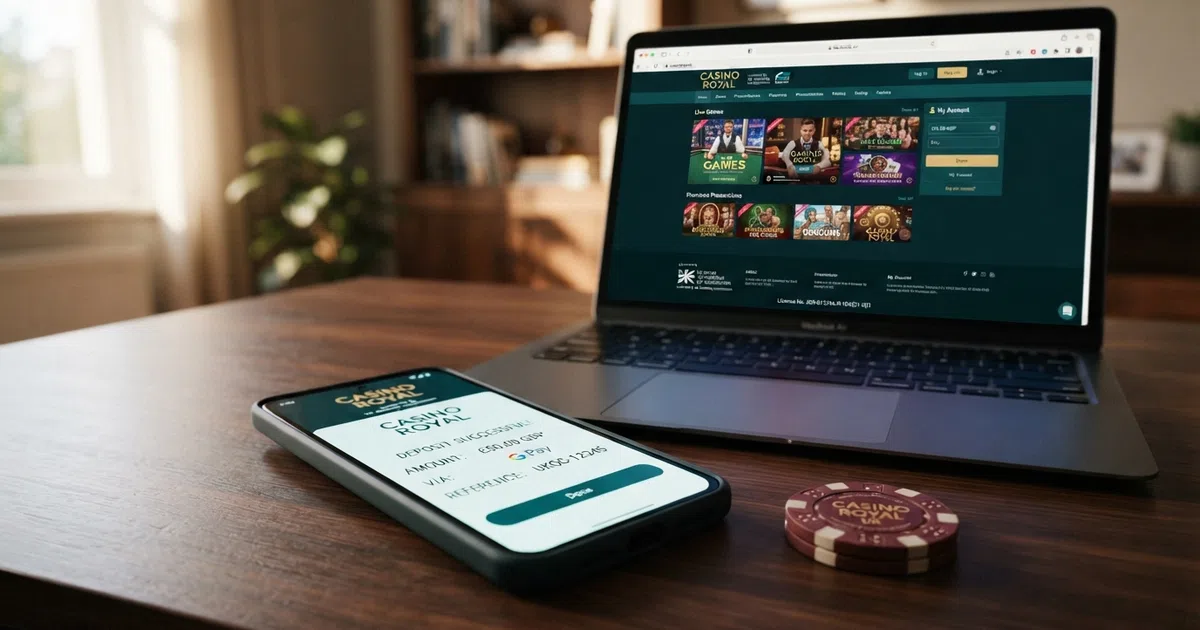
The ten operators on this page all meet the same regulatory baseline. The differences between them are in welcome-offer value, wagering terms, deposit ceilings and the small set of cases where a payment method is excluded from a bonus. The page below ranks them, walks through what a Google Pay deposit looks like in practice, and sets out the bonus, game and player-protection rules that govern the choice in 2026.
Data current as of September 9, 2026 and checked against the UK Gambling Commission’s public register and each operator’s own terms page.
What Google Pay casinos are — and why the payment method matters
A Google Pay casino is an online casino that has integrated Google Pay as a deposit method at its cashier. For a UK player, the search “casinos that accept Google Pay UK” almost always returns operators that also meet a second condition: they hold a Gambling Commission licence. The link is technical, not coincidental. Google Pay’s own policy restricts the integration to UKGC-licensed operators, so any site offering Google Pay deposits to a British player is by construction a regulated one. That is the safety floor the payment method gives the search for free.
What Google Pay actually does at the cashier is a single thing: it takes a stored debit or credit card and presents it as a tokenised payment on a phone or a Chrome browser. The player does not type the card number, expiry or CVV. The casino never sees them either. Google Pay issues a Device Account Number, stored inside the device’s Secure Element chip, and a fresh, transaction-specific security code for each payment. The number that travels across the network is not the card number; it is a token. The standard contactless ceiling of £100 is the only place this matters at the till, and at a casino it does not — biometric verification (fingerprint or face) lifts the cap for the transaction.
The appeal to UK players is the three properties a Google Pay deposit offers in one move: it is instant, it is fee-free, and the minimum deposit tends to be low. Across the operators covered here, minimums sit between £5 and £10. Maximums vary more — £5,000 is common, with some operators setting no stated ceiling and others capping lower.
How Google Pay works at UK online casinos
The deposit itself takes longer to describe than to make. At a UK online casino with Google Pay enabled, the player opens the cashier, selects Google Pay, enters the amount, and confirms with a fingerprint or face scan. The casino receives a tokenised authorisation against the card stored in Google Wallet; the funds arrive in the casino balance instantly, and the player is back in the lobby. No card number is typed, no CVV is read out, no intermediary screen asks for a one-time passcode. The round trip is a single tap after the first set-up.
On Android the flow is native — Google Pay runs through the Google Wallet app, so the biometric step happens on the device. On desktop, a Chrome browser triggers the same flow through a Google Pay prompt. The difference between the two is purely the screen the prompt lands on; the underlying authorisation is identical. Either way, the card details never leave the device, the casino’s servers never see them, and Google itself does not set a spending cap on the transaction once the user is authenticated. The £100 contactless ceiling that applies to physical card taps does not apply here.
The default daily transaction ceiling a UK bank applies to its own debit card still applies, of course. A player whose bank caps contactless at £100 will see the same cap on Google Pay unless the bank treats biometric authentication as lifting it — most major UK banks do, but the policy is the bank’s, not Google’s. The audit on this page treats the absence of a Google-imposed cap as a feature, not as a guarantee of any specific bank-level behaviour.
Why Google Pay appeals to UK casino players (and where it falls short)
- Speed. Deposits clear instantly, and the player is betting within a tap of the cashier screen — no redirect to a banking app, no card-entry fields, no waiting for a confirmation page.
- No fees. Neither the casino nor Google charges for a deposit. The bank’s own interchange is absorbed on the merchant side.
- Low minimums. The minimum Google Pay deposit across the featured set is £5 (at Bet365, Midnite and 32Red) and £10 (at Sky Vegas, Virgin Games, William Hill, Coral, Betfair and Paddy Power).
- Tokenised security. A Device Account Number and a dynamic security code replace the card number. The casino never holds the card, and a stolen casino account cannot be used to extract a card from the cashier.
- Native on Android. For UK players, who use Android disproportionately, the method needs no app beyond Google Wallet, which is already on the device.
The single hard limit, and the one to plan around: Google Pay is deposit-only at the vast majority of UKGC-licensed casinos. Withdrawals have to be made by bank transfer, debit card or another e-wallet. The featured set falls squarely into that majority. One UKGC-licensed operator outside the featured set, BoyleCasino, does support Google Pay withdrawals — it is mentioned in the withdrawal section below for completeness, and the section on the deposit-only reality explains why that exception is rare.
How Google Pay casino payments actually work in the UK
A Google Pay casino payment in the UK is, in practice, two different experiences joined at the cashier. The deposit side is what the player came for: one tap, instant clearance, no fees. The withdrawal side is an entirely different method, almost always a bank transfer or a debit card, with its own timelines and its own limits. The page below treats them as a single lifecycle because that is how a player experiences them, but the mechanics on either side are not the same.
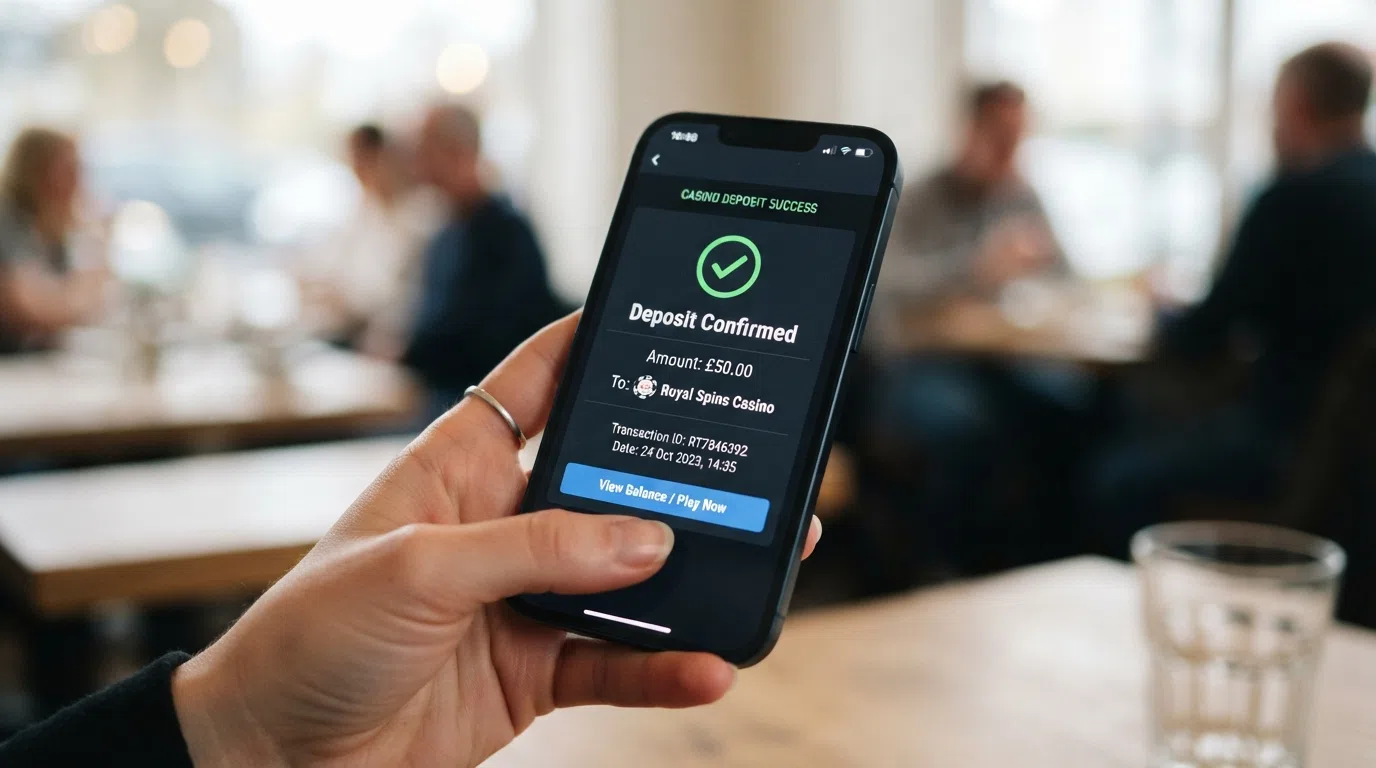
The regulatory backdrop matters more here than on most payment methods. Two rules shape the deposit flow: identity must be verified before the first deposit at any UKGC-licensed site, and the operator must prompt the player to set a financial limit before they put any money in. A third rule — the credit card ban — sits underneath the choice of payment method and explains why a Google Pay deposit in the UK is almost always backed by a debit card in Google Wallet rather than a credit card.
How to deposit at a Google Pay casino
- Create the account and complete identity verification — name, address and date of birth, with a document check, before any deposit is accepted.
- Open the cashier and select Google Pay from the list of deposit methods.
- Enter the amount, between the operator’s minimum (£5 or £10) and maximum.
- Confirm the payment with a fingerprint, face scan or device PIN — the same biometric step a contactless card payment asks for, and the one that lifts the £100 contactless ceiling where the bank treats it as authenticated.
- The balance updates instantly and the player returns to the lobby.
Two details are worth flagging before the first deposit. First, the operator will prompt for a financial limit before the deposit goes through — that prompt is mandatory from 31 October 2025 and is not a marketing screen. Second, the payment method linked in Google Wallet needs to be a debit card, not a credit card; the credit card ban covers e-wallet-funded credit card payments as well as direct card payments, and a Google Pay deposit that draws on a credit card will be declined by the operator.
The withdrawal reality: Google Pay is deposit-only at most UK casinos
The single most important thing to know about a Google Pay deposit at a UK casino is that it cannot be the way the winnings come back. The payment method is not a withdrawal rail at any of the ten operators ranked below. It is not a withdrawal rail at the broader set of UKGC-licensed Google Pay casinos either. The technical reason is that Google Pay was built as a payment-initiation method, not a payout-rail; the practical reason is that the casino’s payments team needs a verifiable destination account in the player’s name, and Google Pay does not expose one.
What the casino will offer instead, in almost every case, is a withdrawal to the debit card that was used to fund Google Wallet, or a bank transfer to a verified UK account. The exact mix depends on the operator. Bet365, for example, runs its withdrawals through bank transfer once Google Pay has been the deposit method. Virgin Games and Betfair say “debit card or bank transfer” with the same caveat — Google Pay is fine on the way in, not on the way out. The withdrawal timelines are operator-driven, not Google Pay-driven, and they sit in the 24-to-72-hour range across the featured set, with bank transfers often slower than debit-card withdrawals at the same operator.
There is a single, narrow exception inside the UKGC-licensed market. BoyleCasino, operated by BoyleSports, supports Google Pay for both deposits and withdrawals — research notes a daily withdrawal ceiling of £50,000 via Google Pay at that brand. It is not in the ranked ten because the rest of its profile does not meet the page’s editorial bar, but the exception proves the rule is not technical. The rest of the market has simply chosen not to support it.
Deposit limits, minimums and maximums at Google Pay casinos
The minimum Google Pay deposit at the featured operators is either £5 or £10. Bet365, Midnite and 32Red all set the floor at £5; Sky Vegas, Virgin Games, William Hill, Coral, Betfair and Paddy Power set it at £10. The maximum is more variable. Several operators cap at £5,000 per transaction (Bet365, Virgin Games); 32Red states no maximum; the rest sit somewhere in the £5,000–£10,000 band. There is no statutory deposit ceiling in Great Britain — the regulator caps the per-spin stake and the offer of a limit, not the level at which the limit is set.
What the regulator does require, from 31 October 2025, is that the operator prompt the player to set a financial limit before the first deposit goes through. From 30 September 2026, only a “gross deposit limit” — one based on money paid in, not net of withdrawals — may be called a deposit limit at all. A decrease to a limit takes effect immediately; an increase has a 24-hour cooling-off period. The prompt itself is not optional and not a marketing screen. It is the regulator telling the operator to ask the player to set the boundary before the player sets the bet.
These rules govern the offer of limits; the choice of ceiling stays with the player. A high-roller setting £5,000 a day on a casino that allows it does not bump into a UK-wide ceiling — only into the operator’s own house limit and the bank’s own daily cap. The minimums, by contrast, are uniform enough across the featured set that the choice between £5 and £10 is rarely the reason to pick one operator over another.
Google Pay alternatives for getting your money out
Once a deposit has cleared through Google Pay, the realistic options for getting money back are the standard UKGC withdrawal set. Bank transfer is the default; a return to the debit card that funded Google Wallet is the next most common route; PayPal and Trustly are accepted at some operators in the featured set for withdrawals specifically, even where they were not the deposit method; Apple Pay, Paysafecard and Skrill round out the alternatives a UK player will see at one operator or another.
The choice between them is usually a speed-versus-fee decision. Bank transfers are free at the casino end but tend to be the slowest route, often 2–3 working days on top of the operator’s own pending window. Debit-card withdrawals are usually faster, often inside 24 hours once approved, and carry no fee at the casino. PayPal and Trustly split the difference, with same-day or next-day settlement where the operator supports them, and no fee at the casino end. The set of methods is largely a function of what the operator has integrated; the speed is largely a function of the operator’s own processing window, which is why withdrawal-time columns in any ranking matter more than the brand of e-wallet behind them.
What the alternatives cannot do is change the underlying fact: a Google Pay deposit is a one-way transaction, and the player needs a second method on file before any meaningful winnings are likely to be in play. Picking a withdrawal method at the same time as the deposit method is not over-engineering; it is the only honest way to budget the round trip.
The best Google Pay casinos for UK players in 2026
The ten operators below are all UKGC-licensed, all accept Google Pay for deposits, and all sit inside the regulatory baseline that the rest of this page sets out. The ranking is editorial, drawn from the welcome-offer value, the wagering terms, the Google Pay deposit range and the player-protection footprint at each site. No single criterion dominates; the spread on wagering (zero on most, ten-times at Coral and William Hill) and on bonus type (deposit-gated free spins versus a no-deposit allocation) was weighted as much as the headline number of spins.
Two operators — BoyleCasino and others outside the featured set that also support Google Pay for withdrawals — are not in the ranking. They are mentioned in the relevant section above and are not a recommendation; the page rates what it has reviewed, and what it has reviewed is the ten below.
| Casino | UKGC Licence | Welcome Offer | Free Spins | Wagering | Google Pay Deposit |
|---|---|---|---|---|---|
| Bet365 | Hillside (UK Gaming) ENC (55149) | Up to 500 free spins, no deposit match | Up to 500 (£0.10 each) | 0× | £5–£5,000 |
| Sky Vegas | Sky Betting & Gaming (Flutter) | 50 no-deposit spins + 200 after £10 spend | 250 total | 0× | £10 min |
| Paddy Power | PPB Entertainment (39411, Flutter) | 60 no-deposit spins + 160 after £10 wager | 220 total | 0× | £10 min |
| Virgin Games | Gamesys (Bally’s Corporation) | 100 free spins on Game of Thrones | 100 (1p × 10 lines) | 0× | £10–£5,000 |
| Betfair | Betfair Casino (39435) | 50 no-stake spins + 100 with £10 stake | 150 total | 0× | Same as debit card |
| Midnite | UKGC-licensed (launched 2018) | 100 bonus spins, no wagering | 100 | 0× | £5 min |
| Coral | LC International (Entain) | Bet £5 Get 100 spins + £10 bonus | 100 (10p) | 10× | Qualifies for welcome |
| William Hill Vegas | WHG International (evoke/888) | 200 free spins on Big Bass Splash | 200 (10p) | 10× (with £30 cap) | Accepted |
| Betfred | Petfre (Gibraltar) | Stake £10, get 200 wager-free spins | 200 | 0× | Often excluded; debit card advised |
| 32Red | Kindred Group | Not detailed in current research | — | — | £5 min, no stated max |
The numbers in the table come from the operator terms pages and the UKGC public register. Where a column reads “—”, the operator’s current snippet set did not carry the figure and the audit treats the cell as no-data. Two caveats apply across the whole table. First, the wagering column reflects the post-19 December 2025 environment, in which the LCCP cap of 10× is the legal maximum and zero-wagering is the operator’s commercial choice. Second, the Google Pay deposit column reflects the deposit-side limits only; withdrawals are a separate matter and almost always run through a different method, as the earlier section sets out.
Bet365: the biggest free-spins package with no wagering
Bet365’s welcome offer is the largest in the featured set on volume: up to 500 free spins, allocated as 10 daily selections of between 5 and 50 spins over 10 days, each at £0.10. The winnings carry zero wagering. The catch is the qualification: £10 in lifetime deposits is needed to unlock the full allocation, and the daily selections expire after 7 days if unused. Google Pay is accepted for deposits from £5 to £5,000, instant and fee-free. Withdrawals revert to bank transfer, with timelines that depend on the operator’s own processing window.
The trade-off is between volume and friction. 500 spins at £0.10 is a £50 ceiling on spin value, but the daily-allocation mechanic means the player has to log in for 10 consecutive days to claim the full offer. For a player who plays daily, that is no obstacle; for one who plays weekly, the offer is effectively smaller than it reads. The Google Pay deposit range is wide enough that the £10 unlock is not a financial commitment. The wagering-free structure means any winnings land as withdrawable cash from the moment the spin settles, which is the strongest single feature of the offer.
Sky Vegas: 50 free spins before you deposit a penny
Sky Vegas splits the welcome into two halves and leans into the first. Fifty free spins are credited without any deposit at all, with zero wagering on whatever they pay. A second tranche of 200 spins unlocks after a £10 deposit and £10 of slot play. The Flutter Entertainment group backing means the platform is one of the more polished in the featured set; the Google Pay minimum sits at £10, consistent with the rest of the Flutter family. Research did not confirm a Google Pay withdrawal route; the assumption, on the evidence, is that the operator runs the standard deposit-only path.
The appeal of this offer is that the no-deposit half is genuinely no-deposit. There is no card to register before the first spin, no token wager to “qualify”. A player who is happy with 50 wager-free spins can stop there with no money at risk. A player who wants the 200-spin extension puts £10 in, plays £10 of slots, and gets the rest. The split also makes Sky Vegas a reasonable first stop for a player who wants to test a Google Pay casino without committing a deposit.
Paddy Power: up to 260 free spins with the biggest no-deposit allocation
Paddy Power’s structure is similar to Sky Vegas’s but the no-deposit allocation is larger and the headline total goes further. Sixty no-deposit free spins, with zero wagering, lead the offer. Up to 160 more arrive after a £10 wager, taking the total as high as 220. The Flutter group operates both, which is why the two offers share a no-deposit, no-wagering shape and differ in the count. Google Pay is accepted as a deposit method; the Flutter group does not always list Google Pay as qualifying for the welcome offer, so the player should confirm at the cashier before depositing if the bonus matters.
The 220-spin ceiling depends on which allocation tier the player hits. The no-deposit 60 are certain; the further 160 are an upper bound. The honest reading is that 60 spins are guaranteed and 160 more are possible, with a 10× wagering requirement absent on every spin. It is a dual-tier bonus that rewards the risk-averse player with a guaranteed floor while leaving the ceiling open.
Virgin Games: 100 free spins on a premium title with no wagering
Virgin Games attaches its 100 free spins to Game of Thrones, the branded Playtech slot, with a 1p coin size and 10 lines for a £0.10 spin value. The 30-day window to complete the qualifying wager and a further 30 days to use the spins is the structural cost of the offer. Google Pay is accepted for deposits between £10 and £5,000, instant and fee-free. The 900+ game library and the Gamesys platform make it the broadest product in the Gamesys family. The Gamesys / Bally’s Corporation backing is visible in the platform’s polish, and the UKGC licence sits on the public register.
For a player who likes themed slots, the Game of Thrones tie-in is a real differentiator. The wager-free structure means the winnings are cash from the moment they credit. The £10 minimum deposit is the standard ceiling across the non-Flutter half of the set, and the 30-day window is generous. The only honest caveat is that the 100 spins are tied to a single title, not a pool, so the player who wants variety is paying for branding.
Betfair: 150 free spins split between no-stake and staked
Betfair splits the welcome into a no-stake tranche of 50 free spins and a £10-staked tranche of 100 more, both at 10p per spin and both with zero wagering. The Flutter group operates it; the offer shape is recognisably Flutter, with the no-stake half doing the heavy lifting. Google Pay is accepted with the same limits as the operator’s debit-card deposits. Withdrawals are deposit-only via Google Pay, reverting to the operator’s standard bank-transfer and debit-card rails.
The Betfair structure is a halfway house between Sky Vegas’s 50-plus-200 and Paddy Power’s 60-plus-up-to-200. The total of 150 is smaller than either; the 50-spin no-stake half is broadly equivalent. A player who likes the Betfair sportsbook crossover will find the casino product sits behind the same login, which is a quiet convenience the pure-play casinos do not always offer. The Google Pay deposit range is the debit-card-equivalent band, which at Betfair is the standard £10 floor.
Midnite: 100 wager-free spins from a newer contender
Midnite launched in 2018 and is the youngest UKGC-licensed operator in the featured set. The welcome is clean: 100 bonus spins, no wagering, with a £5 Google Pay minimum. Withdrawals on other methods typically clear within 24 hours, which is the fastest standard figure in the ranking. The Pragmatic Play / NetEnt / Big Time Gaming / Evolution provider mix covers the four major slot and live-dealer studios a UK player is most likely to want.
The 100-spin offer is the smallest at the top of the ranking, but the no-wagering structure, the £5 minimum and the 24-hour withdrawal window combine into a clean product. Midnite built its product after the latest regulatory tightening, resulting in a lean, simplified experience that older operators struggle to match without impacting their legacy user base.
Coral Casino: bet £5, get 100 spins and a £10 bonus (10× wagering applies)
Coral is the rare operator in the featured set where wagering still applies. The welcome is a £5 deposit plus a £5 slot bet qualifying for 100 free spins at 10p on selected games, plus a £10 bonus with 10× wagering. The free spins are valid for 7 days from credit, the bonus for 30. Google Pay deposits qualify for the welcome offer, which is the part of the Coral profile that matters for this page. The Entain group backing puts Coral in the same family as Ladbrokes and Gala Bingo.
The trade-off is straightforward. Coral pays the player in spins and a small cash bonus, both with 10× wagering — the legal ceiling since December 2025, but a real one nonetheless. The qualifying bet is the same size as the deposit, which is unusually small for a wagered bonus. A player who is happy to play through the bonus once and walk away with the result will find the maths tight but workable. A player who prefers wager-free spins will be better served by the eight operators above Coral in the table.
William Hill Vegas: 200 free spins with a £30 win cap
William Hill Vegas offers 200 free spins on Big Bass Splash at 10p each, with 10× wagering on winnings and a £30 cap on what those winnings can pay out. The spins expire after 72 hours from credit; the offer itself runs until the end of 2026. The evoke / 888 Holdings group operates the brand. Google Pay is accepted; research does not confirm welcome-offer eligibility for Google Pay deposits at William Hill, so the player should check the cashier.
The £30 cap is the trade. A 200-spin offer at 10p with a £30 ceiling is a real-money offer only if the bonus slot pays modestly; Big Bass Splash is a medium-high volatility title with a 2,100× max win, which means most spin outcomes will sit well below the cap and the 10× wagering is the more meaningful friction. For a player who is happy with the 10× playthrough and understands the cap, the offer is generous on volume. For a player who wants the winnings to land as cash, the spin count is the wrong shape.
Betfred: 200 wager-free spins — but Google Pay may not qualify
Betfred’s offer is structurally similar to William Hill’s but cleaner: 200 wager-free spins after a £10 stake, no cap on winnings from those spins, and no 10× playthrough. The catch is in the payment method. Betfred “often excludes” Google Pay from welcome-offer qualification, with a debit card recommended for the first deposit. The Google Pay deposit route is available; the welcome bonus is not always attached to it.
The right reading is that Betfred’s offer is excellent and that the Google Pay angle is the wrong way to take it. A player who wants the 200 wager-free spins should make the first deposit with a debit card, then switch to Google Pay for subsequent deposits if they prefer. The casino is still a Google Pay casino; it just is not a Google Pay welcome-bonus casino at the moment of writing. For a player who values the bonus over the payment method, that is a small detour, not a disqualification.
32Red: Google Pay accepted with a £5 minimum and no stated ceiling
32Red rounds out the ranking as a clean Google Pay deposit option. The minimum sits at £5, the maximum is not stated, deposits are instant and fee-free, and the Kindred Group operates the brand. The welcome bonus is not detailed in the current research, so the page does not rate it; the Google Pay profile is what the ranking can stand on. Withdrawals on other methods follow the standard UKGC operator pattern, and the 32Red casino product carries the Microgaming / Evolution / NetEnt / IGT provider mix that a long-running UK brand tends to.
The honest verdict on 32Red is that it is a Google Pay casino first and a bonus-led casino second. A player who has a preferred welcome offer elsewhere will not find a better Google Pay deposit experience by switching; a player whose priority is the deposit method and who is happy to skip the welcome-offer ranking will find 32Red meets the brief.
Google Pay casino bonuses: what you really get in 2026
The bonus landscape at UK Google Pay casinos in 2026 is shaped by two things: the post-19 December 2025 LCCP environment, and the competitive reality that no-wagering spins have become the default. The statutory cap on wagering is 10× the bonus amount. The mixed-product offer — “bet on football, get free spins” — is banned. The result is that the majority of featured operators now offer zero-wagering free spins as their headline welcome, and the two operators who do still carry wagering (Coral, William Hill) do so at exactly the statutory ceiling.
The 10× cap is the meaningful change. Before the rule came in, a 30× or 40× wagering requirement was common. The new ceiling is not theoretical: it is the legal maximum, and any offer above it is a regulatory breach. The cap is the floor of how much an offer can cost the player in playthrough. The offers that drop to zero wagering are the operators’ commercial choice on top of that floor, and they are now the norm rather than the exception.
Welcome bonuses and no-deposit free spins at Google Pay casinos
The two main shapes are the no-deposit free-spin tranche and the deposit-gated free-spin package. Sky Vegas and Paddy Power both lead with no-deposit spins — 50 and 60 respectively, both wager-free. Coral and Betfair mix the two with a deposit-and-stake qualifier. Bet365, Virgin Games, Midnite, William Hill, Betfred and 32Red are deposit-gated in their standard welcome, with the qualifier ranging from a £5 stake to a £10 deposit and stake. Google Pay deposits qualify for the welcome at most but not all operators: Coral confirms it; Betfred often excludes it; the rest sit in between and the player should check the cashier before depositing if the bonus matters.
The no-deposit offer is the cleaner of the two. The 50 or 60 wager-free spins at Sky Vegas and Paddy Power are the most player-friendly welcome in the set, because they require nothing from the player beyond registration and identity verification. The deposit-gated offers are larger in headline count but carry a real-money qualifier. A player who wants to test a Google Pay casino before committing any money should look at the no-deposit offers first.
No-wagering spins and the new bonus rules: what terms actually matter
The 10× statutory cap is the headline; the operator choices underneath it matter more. Of the ten featured operators, eight offer zero wagering on free spin winnings (Bet365, Sky Vegas, Paddy Power, Virgin Games, Betfair, Midnite, Betfred, 32Red), and two offer 10× (Coral, William Hill). Among the zero-wagering set, two carry a cashout cap (William Hill at £30, plus a 72-hour expiry on the spins) and the rest do not. Among the 10× set, both have short validity windows on the spins — Coral at 7 days, William Hill at 72 hours — and a 30-day window on the bonus element where applicable.
The two terms a player should always check are the wagering multiple and the max-cashout cap. The first determines how much of the bonus has to be played through before it becomes withdrawable cash; the second caps the winnings the bonus can produce. A 10× wagering requirement on £10 of winnings means £100 of slot play before withdrawal; a £30 max-cashout cap means the bonus cannot pay more than £30 regardless of what the slot does. Neither is hidden, but neither is highlighted at the cashier either, and the difference between a £30-cap bonus and a no-cap bonus of the same headline size is the difference between a £30 ceiling and a 2,100×-max-win ceiling on the same slot.
The games you can play at Google Pay casinos
The games on offer at a Google Pay casino are not shaped by the payment method. The Google Pay deposit puts money in the balance; the balance then buys time on whatever the operator’s content catalogue carries, and that catalogue is set by the operator’s platform deals rather than by the cashier. What the player sees at the lobby is a normal UK online casino: a few hundred to a few thousand slots, a live-dealer floor, a table-games section, and — at some operators — a bingo room or a Slingo product.
Two rules do shape the experience. The first is the age-banded slot stake cap, in force since spring 2025: £5 per game cycle for players aged 25 and over, £2 per game cycle for players aged 18 to 24. The cap is on the stake, not the win, and it applies to the total staked within a single game cycle. The second is the game-design package from 31 October 2021: no auto-play, no spin speeds below 2.5 seconds, no losses disguised as wins, no reverse withdrawals, and a session display of total losses, total wins and time played. The combination is the most distinctive regulatory environment in the European iGaming market, and it is what a UKGC-licensed Google Pay casino offers under the bonnet.
Slots at Google Pay casinos: what you can play and what it costs
The slot product at a UKGC-licensed Google Pay casino covers the same provider mix a player would find at any other UK-licensed brand. Pragmatic Play, NetEnt, Play’n GO, Big Time Gaming and Evolution anchor the catalogue across the featured set. The major slot categories — classic three-reel, video slots, Megaways, Slingo, branded titles, jackpot slots — are all represented. The bonus slots in the welcome offers are a useful proxy for what the catalogue is built around: Big Bass Splash (Pragmatic Play), Game of Thrones (Playtech), Starburst (NetEnt), Book of Dead (Play’n GO).
The cost of a slot session at a UKGC-licensed casino is set by the stake cap, not by the slot. A player aged 25 or over can stake up to £5 per game cycle; a player aged 18–24 can stake up to £2. The cap is per cycle, which means the maximum cost of a 100-spin session is £500 for a 25+ player and £200 for an 18–24 player at the maximum stake, before any return. The expected cost is lower, and the calculation below works it through at the RTP of the bonus slot most often attached to a welcome offer.
| Slot | Provider | RTP | Volatility |
|---|---|---|---|
| Big Bass Splash | Pragmatic Play | 96.71% | Medium-high |
| Starburst | NetEnt | 96.09% | Low |
| Book of Dead | Play’n GO | 96.21% | High |
The volatility column is a classification, not a number. Book of Dead’s high volatility means the slot pays less often but in larger amounts when it does; Starburst’s low volatility means the opposite; Big Bass Splash sits between. The RTP figures are the percentages research confirms for these exact titles; other titles in the catalogues will carry their own figures, and the operator’s paytable is the source of truth at the slot level.
To take one worked example at the statutory stake cap: 100 spins on Big Bass Splash at £5 per spin for a 25+ player is a £500 total stake, and at the slot’s 96.71% RTP the expected return is £483.55. The expected loss on that session is therefore £16.45. The same 100 spins at the £2 cap for an 18–24 player is a £200 total stake with an expected return of £193.42, an expected loss of £6.58. Both figures are statistical averages across many spins, not guaranteed outcomes for any individual session — the slot is governed by a random number generator, and any single 100-spin run can land well above or well below the average.
Live dealer, table games and bingo at Google Pay casinos
The live-dealer product at UKGC-licensed Google Pay casinos is dominated by Evolution, with Playtech and NetEnt live supplying secondary coverage at some operators. The standard formats are there: live roulette, live blackjack, live baccarat, game-show titles (Crazy Time, Monopoly Live, Dream Catcher), and the localised UK-format tables. Table games outside the live floor cover the same set in RNG form — blackjack, roulette, baccarat — alongside video poker at some operators.
Bingo is the product line that varies most. Sky Vegas, Paddy Power and Betfair all run bingo rooms under their wider brands; Virgin Games, Coral and William Hill carry bingo as a sister product. Slingo sits somewhere between slots and bingo and is part of the catalogue at most featured operators, generally through Gaming Realms. Megaways, the Big Time Gaming mechanic, is the slot feature most likely to be present across the set because the licensing model is broad. None of this is shaped by Google Pay as a payment method; it is shaped by the operator’s platform deals, and the payment method just decides which of those deals the player is paying into.
Google Pay on mobile: Android casinos and apps
Google Pay is, by construction, a mobile-first payment method. The flow lives in the Google Wallet app on Android and in the Chrome browser on desktop, and the biometric step that authorises the payment is the device’s own fingerprint reader or face camera. For a UK player on Android, the deposit experience is the closest the iGaming market gets to a native one-tap flow: open the cashier, pick Google Pay, scan a fingerprint, the balance updates.
A dedicated casino app is not required to use Google Pay. Most UKGC-licensed casinos run their cashier inside a mobile-optimised web view as well as a native app, and the Google Pay button is identical in both. Where the operator does have a native Android app — Bet365, Sky Vegas, Paddy Power, William Hill, Coral and Betfred all do — the cashier lives inside the app and the Google Pay flow is the same one-tap path. Where the operator runs a mobile site only, the flow runs in the browser. The Google Pay integration is the same in both.
iPhone users sit one step further away from the native path. Apple Pay is the iOS equivalent and is accepted at most of the same operators; Google Pay works on iOS in a Chrome browser but not in Safari, and the Apple-device experience is generally an Apple Pay one. For the Android-led UK market, that asymmetry barely registers; for the iPhone-led minority, it explains why some operators route the iOS cashier through Apple Pay rather than Google Pay.
New Google Pay casinos in 2026
The new-casino pipeline for UK Google Pay sites in 2026 is a thin one. The bulk of the established Google Pay casinos — Bet365, Sky Vegas, Paddy Power, William Hill, Coral, Betfred, Betfair, Virgin Games, 32Red — are well-known names that have been live for a decade or more. The newer entrants (Midnite, launched 2018, is the clearest example in the featured set) have had to build their product inside the post-2020 regulatory tightening, which has narrowed the space for genuinely new UKGC-licensed Google Pay launches.
For a player considering a brand-new Google Pay casino, the check is the same as for any new UK site: confirm the UKGC licence on the Commission’s public register before depositing. The register is the only authoritative source; a footer link to a “licence number” on a casino site is not, on its own, sufficient. The public register lists the operating company, the account number, the licence status and the trading names; it takes a minute to check and is the difference between a regulated deposit and an unprotected one. The credit card ban, the identity-verification rule, the GamStop membership and the deposit-limit prompt all flow from the licence; the player who checks the register is checking all five at once.
Bitcoin and crypto alongside Google Pay at UK casinos
The honest shape of the UK crypto casino market is that it barely exists. A GB licence is compulsory at point of consumption, and the credit card ban extends to e-wallet-funded credit card payments. Bitcoin and the major altcoins are not e-wallets in the regulator’s sense, and a UKGC-licensed casino that accepted them would still be subject to the identity-verification rule, the GamStop requirement and the deposit-limit prompt. The result is that a UKGC-licensed brand accepting both Google Pay and Bitcoin is a very small set, and most of the sites a UK player will find offering “crypto and Google Pay” are licensed outside the UK — typically Curaçao or, less often, Malta.
For a UK player, the practical decision is whether the casino is UKGC-licensed. If it is, the regulatory floor is the same as the rest of this page. If it is not, the player loses GamStop coverage, the UKGC complaints route, ADR access and British consumer redress, and the casino operates outside the regulator’s reach. Google Pay’s own integration is restricted to UKGC-licensed operators, so a “Google Pay + Bitcoin” site is, almost by definition, one of the offshore brands accepting Google Pay against its own policy. That is not a recommendation to avoid; it is a reason to check the licence on the register before depositing.
Is Google Pay safe at UK casinos? Licensing, GamStop and the law
Google Pay at a UK casino is safe to the extent that the casino is licensed and the player is inside the protection framework. The deposit method itself adds tokenisation and a biometric step on top of a standard debit-card authorisation. The casino is responsible for everything else: identity verification, segregated customer funds, ADR access, fair-game testing, the GamStop link, the deposit-limit prompt, the 10× wagering cap, the slot-stake cap, the game-design rules. The payment method is one layer; the licence is the rest.
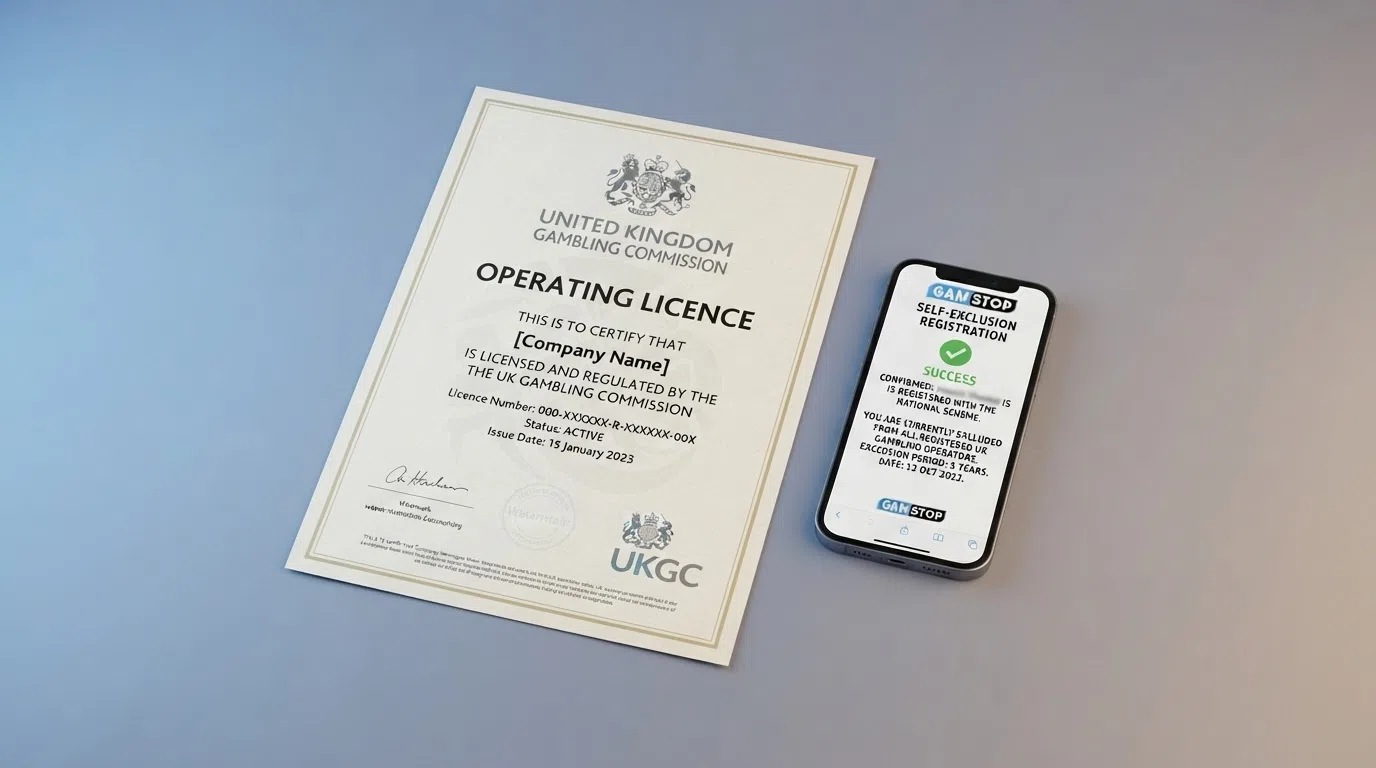
The two signals to check are the UKGC licence and the GamStop registration. The licence is verifiable on the public register at gamblingcommission.gov.uk. The GamStop registration is mandatory for every UKGC-licensed online operator, so a licence is sufficient evidence of GamStop membership. A site that is not on the register is not covered by any of the protections above.
UKGC licensing: what it means for your Google Pay deposit
The UK Gambling Commission is the regulator for commercial gambling in Great Britain, set up under the Gambling Act 2005. The Act’s three licensing objectives are preventing crime and disorder, keeping gambling fair and open, and protecting children and vulnerable persons. The Commission’s working instruments are the LCCP (Licence Conditions and Codes of Practice) and the RTS (Remote Technical Standards); every online casino serving GB players holds an operating licence and is bound by both.
The rules that touch the Google Pay deposit are the identity-verification rule (name, address and date of birth confirmed before the first deposit, in force since 7 May 2019), the credit card ban (in force since 14 April 2020, covering e-wallet-funded credit card payments too), and the mandatory financial-limit prompt (in force from 31 October 2025). The deposit itself, once cleared, sits in segregated customer funds. The player can complain to the operator, escalate to an ADR provider, and ultimately to the Commission if the operator fails to resolve the issue.
The point-of-consumption reform of 2014 — the Gambling (Licensing and Advertising) Act — is the rule that brought every casino serving GB players inside the Commission’s reach, regardless of where the operator is based. A Gibraltar-licensed or Malta-licensed operator serving GB players still needs a GB operating licence on top. The featured ten are all on the public register; the check at the cashier is a 30-second confirmation on gamblingcommission.gov.uk.
GamStop, self-exclusion and the protections you have
GamStop is the national multi-operator self-exclusion scheme. Since 31 March 2020, every UKGC-licensed online operating licence has included a mandatory condition to participate. The exclusion periods are six months, one year, five years, or five years with auto-renewal; the choice is the player’s, and the exclusion cannot be cancelled early. GamStop covers online operators only; it does not cover land-based venues, and it does not cover operators that are not UKGC-licensed.
The financial-vulnerability check sits alongside GamStop. From 28 February 2025, operators must run a light-touch check using publicly available data (CCJs, bankruptcy, IVA, DRO) when a player’s net deposits reach £150 in a rolling 30-day period. The check is the first of two financial-protection layers; the second — fuller financial risk assessments — has been announced but not yet commenced. The deposit-limit prompt, in force from 31 October 2025, is the third layer: the operator must offer the player the chance to set a financial limit before the first deposit, and only a gross deposit limit may be called a “deposit limit” from 30 September 2026.
The game-design rules from 31 October 2021 are the fourth layer. Auto-play is banned, spin speeds must be at least 2.5 seconds, features that speed up play are banned, losses disguised as wins are banned, reverse withdrawals are banned, and the session display must show total losses, total wins and time played. The slot stake cap from spring 2025 is the fifth layer, with its age-banded £5 and £2 ceilings. None of these layers is optional; together they are what a UKGC licence means in practice.
Non-GamStop and offshore casinos: what you risk
A non-GamStop casino is, by definition, an online casino that does not participate in the scheme, which means it does not hold a UKGC licence. The site may be licensed in Curaçao, Malta, Gibraltar or another jurisdiction; it may be unlicensed. The Commission’s enforcement focuses on the operators, not the players, and the typical response to a UK-facing unlicensed site is a cease-and-desist notice, search-engine delisting, domain-registrar pressure and payment-provider referral. There is no statutory ISP or DNS blocking of unlicensed sites at present; legislation has been proposed but not enacted.
The protections a player loses on an unlicensed site are the ones above. No GamStop membership, no UKGC complaints route, no ADR access, no British consumer redress if the operator withholds funds, and no deposit-limit prompt. The operator’s own house rules apply; the regulator’s rules do not. The site may also accept credit cards or cryptocurrencies in ways a UKGC-licensed operator cannot. None of this is a comment on whether the site is honest; it is a description of what the player has and has not got if it is not.
The penalty for the player is, on the evidence to date, none. The Commission’s enforcement actions target operators, advertisers and intermediaries. The player who gambles on an unlicensed site is not committing an offence; they are simply outside the UK regulatory framework. That is the worst-case description in honest terms: no protection, no penalty, and no recourse if something goes wrong.
Responsible gambling at Google Pay casinos
The responsible-gambling infrastructure at a UKGC-licensed Google Pay casino is more developed than at most regulated iGaming markets. The tools are mandatory, the limits are statutory, the self-exclusion scheme is national, and the help infrastructure (GamCare, the NHS gambling harm clinics, GambleAware, Gamblers Anonymous) is funded in part by a statutory levy on operators. The player is never more than a few clicks from setting a limit, taking a time-out, or self-excluding; the player who wants help outside the casino is never more than a phone call from a referral.
The prevalence data, taken from the Gambling Survey for Great Britain (Year 3, 2025), puts problem-gambling prevalence at approximately 2.4% of adults aged 18 and over (PGSI 8+), with a 95% confidence interval of 1.9%–2.8%. That figure is the headline rate; the rest of the PGSI distribution, including the at-risk categories, sits above it. The help services saw 52,000+ calls to the National Gambling Helpline in 2024-25, and 996 referrals to treatment and peer-based support in January 2026, up 48% on the same month the year before. The data does not say the population is in crisis; it says the people who reach out for help are reaching out in larger numbers.
Deposit limits, reality checks and time-outs
The deposit-limit prompt at the first deposit is the front door. The operator offers the player a limit; the player sets one; the limit is enforced from that moment. A decrease takes effect immediately; an increase has a 24-hour cooling-off period. From 30 September 2026, only a “gross deposit limit” — money paid in only — may be called a deposit limit at all, removing the confusion that a net-of-withdrawals limit can produce. Reality checks are pop-up reminders during a slot session; time-outs are short-term self-exclusions at a single operator (24 hours, 7 days, 30 days); operator-level self-exclusion is the longer version of the same. All of these sit behind the responsible-gambling or safer-gambling tab at every UKGC-licensed casino.
For a player who wants to use the tools well, the practical sequence is: set a financial limit before the first deposit, attach a reality-check interval to the session, and know the time-out path before the session begins. The 10× wagering cap and the 2.5-second spin speed do not need the player to do anything; they are the operator’s job. The deposit limit, the reality check and the time-out are the player’s.
Where to get help: GamCare, NHS clinics and gambling support services
GamCare runs the National Gambling Helpline (0808 8020 133) and is the front door for most UK players who want to talk to someone about their own gambling or someone else’s. The helpline took over 52,000 calls in 2024-25, and the January 2026 referral figure of 996 was up 48% on the same month the year before. GamCare’s website carries self-assessment tools, information for families, and a directory of local treatment. GambleAware funds the National Gambling Support Network and is the route into NHS gambling harm clinics in England, Scotland and Wales. Gamblers Anonymous runs peer-support meetings across the UK. The NHS clinics are free at the point of use, the waiting time for treatment is typically under two weeks, and the entry point is a GP referral or a direct contact with the local clinic.
For a player reading this page who is worried about their own play, the one-sentence version is: set a deposit limit before the first deposit, and if that does not feel like enough, call the helpline. The call is confidential, the call is free, and the person on the other end has had the same conversation with thousands of people before.
How we evaluated the Google Pay casinos on this page
The ranking on this page is editorial. The methodology is straightforward and is not weighted by any single hidden criterion.
The first check is the UKGC licence. Every operator in the featured ten is on the public register, with the operating company and account number recorded in the operator table above. The register was used as the authoritative source; the brand’s own footer licence number is a pointer to the register, not a substitute for it.
The second check is Google Pay acceptance. The deposit range, the minimum, the maximum, the fee and the speed were taken from the operator’s own terms page or from an authoritative review page where the terms page was not specific. The deposit-only nature of Google Pay at every operator in the set was confirmed in the same pass.
The third check is the welcome offer. The bonus type, the free-spin count, the wagering multiple, the max-cashout cap, the validity window and the qualifying deposit or stake were taken from the operator’s own terms page, with the review pages used to confirm where the terms page was ambiguous. The £10-deposit and £5-stake qualifiers at most operators are part of the offer; the absence of a qualifier at Sky Vegas and Paddy Power (no-deposit spins) is the reason those offers sit where they do.
The fourth check is player protection. GamStop, the LCCP conditions, the identity-verification rule, the credit card ban and the deposit-limit prompt apply to all ten operators by virtue of the licence. They are not in the ranking as separate criteria; they are the floor.
What the ranking does not measure is withdrawal speed in detail, game-library depth, mobile-app quality or customer-service responsiveness. The withdrawal column is the deposit-side limit only; the withdrawal timelines are operator-driven and would need a separate test pass. The ranking should be read as a starting point for the reader’s own shortlist, not as a head-to-head between any two of the ten.
What the numbers tell you about choosing a Google Pay casino in 2026
The four numbers that shape the choice in 2026 are the age-banded stake cap, the 10× wagering cap, the deposit-only reality of Google Pay, and the regulatory floor underneath every operator in the set. Each of them is a hard fact rather than a marketing claim, and each one does a specific job.
The stake cap — £5 per game cycle for players 25 and over, £2 for players 18 to 24 — is the cost-control mechanism that makes a slot session at a UKGC-licensed casino a known-quantity expense rather than an open-ended one. Two adults at the same casino face different maximum bets on the same slot, which is the most distinctive feature of the British regulatory model. The 10× wagering cap is the bonus-value floor: a bonus at any UKGC-licensed casino can be played through no more than 10× before its winnings are cash, and the majority of featured operators now offer 0× instead. The deposit-only reality of Google Pay is the operational fact the player has to plan around: the deposit is one tap, the withdrawal is a different method with a different timeline. The regulatory floor — UKGC licence, GamStop membership, identity verification, the deposit-limit prompt — is non-negotiable; the ten operators in the ranking all meet it, and the check at the public register is the 30-second confirmation the player should run before depositing anywhere.
The conclusion is not that one operator is best. The conclusion is that the regulatory floor is the same across the set, that the differences are in welcome-offer value and in the small set of caveats (Betfred’s Google Pay exclusion; William Hill’s £30 cap; Coral’s 10× wagering), and that the player who values wager-free spins, a low minimum and a fast withdrawal will find Midnite the cleanest fit, the player who values the largest no-deposit allocation will find Paddy Power and Sky Vegas the strongest, and the player who values the largest headline spin count will find Bet365 the most generous. The choice between them is a choice between what the offer rewards, and the answer is shaped by the player’s own pattern of play.
Frequently asked questions about Google Pay casinos in the UK
Do Google Pay deposits qualify for welcome bonuses at UK casinos?
At most UKGC-licensed Google Pay casinos, yes — the deposit counts as a qualifying deposit, the same way a debit-card deposit would. The exceptions are operators that exclude specific e-wallets from bonus eligibility; Betfred is the clearest example in the featured set, with the brand “often excluding” Google Pay from the welcome offer and recommending a debit card for the first deposit. The cashier terms will say which payment methods qualify, and that is the right place to check before depositing if the welcome bonus is the reason for the visit.
Are there any fees for using Google Pay at UK online casinos?
Neither Google nor the casino charges a fee for a Google Pay deposit at a UK online casino. The cost to the player is the bank’s own interchange on the underlying debit-card transaction, which the merchant absorbs. The casino’s withdrawal route — typically a bank transfer or a debit card refund — is also fee-free at the casino end, though the player’s bank may apply its own charges on receipt depending on the account type. There is no Google-imposed fee and no casino-imposed fee on the deposit side.
Can I use Google Pay at non-GamStop casinos in the UK?
Technically, the payment method will work at any site that has integrated it, including unlicensed sites. Practically, a non-GamStop casino is, by definition, an unlicensed one, and the player loses the UKGC’s protection framework: no GamStop, no UKGC complaints route, no ADR access, no British consumer redress, no deposit-limit prompt, no credit card ban. Google Pay’s own integration policy restricts the method to UKGC-licensed operators, so a non-GamStop site offering Google Pay is almost certainly doing so against the payment provider’s terms. The honest framing is that the deposit is possible, but the protection is not.
How safe is Google Pay for UK casino payments?
Safe at the payment-method level, safe at the regulatory level if the casino is UKGC-licensed. The tokenisation replaces the card number with a Device Account Number stored in the device’s Secure Element, and a dynamic security code per transaction means a stolen casino account cannot be used to extract a card. On the regulatory side, the UKGC’s identity-verification, segregated-funds and ADR rules apply, and the GamStop membership, deposit-limit prompt and credit card ban all sit on top. The check before depositing is on the public register at gamblingcommission.gov.uk.
What is the maximum deposit limit when using Google Pay at UK casinos?
There is no UK-wide statutory maximum. The maximum is set by the operator, and at the featured casinos it ranges from £5,000 (Bet365, Virgin Games) through to “no stated maximum” at 32Red. The player’s own bank may apply a lower daily limit on its debit card, and the operator’s responsible-gambling framework will intervene at the £150 net-deposit threshold for a light-touch financial vulnerability check. The maximum is the lesser of the operator’s own ceiling, the bank’s daily cap, and any limit the player has set on themselves through the deposit-limit tool.
Why can Google Pay deposits not be used for casino withdrawals?
Google Pay is built as a payment-initiation method, not a payout rail; it does not expose a verifiable destination account in the player’s name, which is what a casino’s payments team needs to process a withdrawal. The result is that almost every UKGC-licensed casino treats Google Pay as a deposit-only method and routes withdrawals to a bank transfer or a debit card refund. A small number of UKGC-licensed operators outside the featured set, including BoyleCasino, do support Google Pay for both, but the rest of the market has not. The honest framing is that the limitation is product-driven rather than technical, and the workaround is to register a withdrawal method at the same time as the Google Pay deposit.
Payments – trustedcasinos-notongamstop
Content created by the «trustedcasinos-notongamstop» team