
Casinos That Accept Solana in the UK: A 2026 Ranking Built on Real Bonus Terms
 Available in GB
Solana has become the crypto rail of choice for casino players who want deposits to land in seconds and fees that round to nothing. A SOL transfer settles in roughly one second at a cost of about 0.000005 SOL — a fraction of a cent. No card network, no bank queue, no e-wallet intermediary. The friction that makes ordinary casino deposits feel slow simply does not exist on this chain.
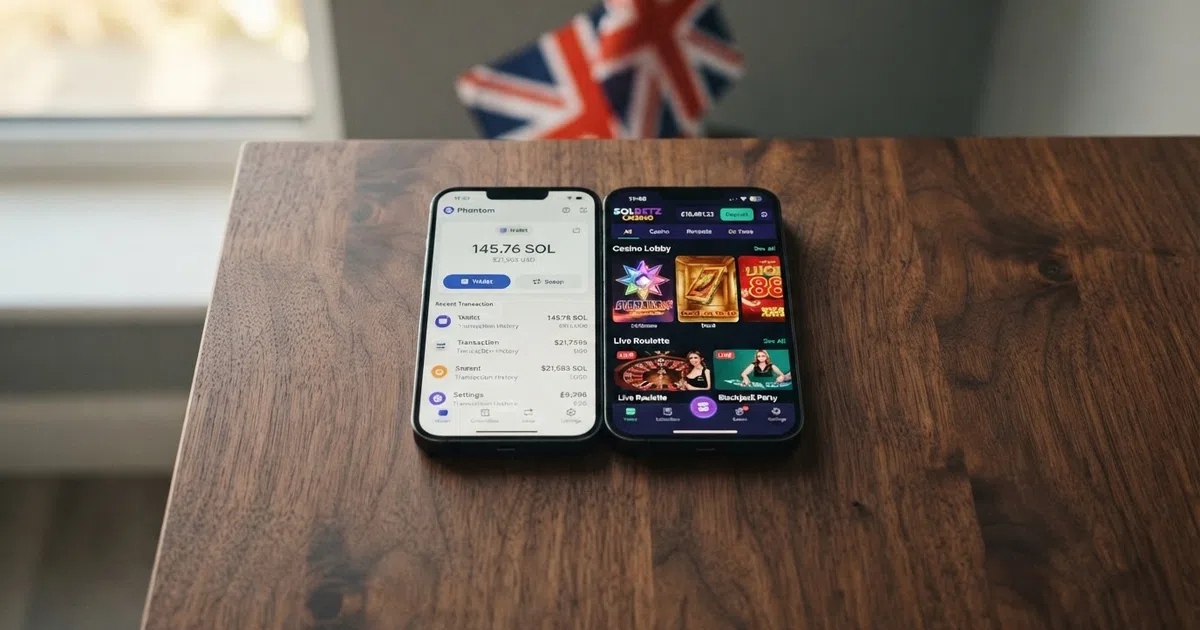
The catch lives elsewhere. Not one of the major crypto casinos accepting SOL holds a Gambling Commission licence. Every site a UK player can realistically deposit at — Stake, BC.Game, Cloudbet, BetPanda, CoinCasino, Metaspins, Wild.io, Flush, Winz.io, Jackbit — operates from Curaçao, Anjouan, Estonia or Tobique. The British regulatory frame does not reach them. GAMSTOP does not reach them. A Commission complaints route does not reach them. If a withdrawal stalls or a bonus term is disputed, the player has no British consumer redress to fall back on. The speed and the savings are real; the protection is not.
Current as of September 9, 2026 against the UK Gambling Commission’s public register of licence holders. Crypto market and operator data verified against casino T&Cs, BetRank, ClearCasinos, CoinCasinoHub, CryptoSlate, CryptoNews and Flush bonus reviews for the same period.
Why UK Players Turn to Solana Casinos — and What Has Changed
The appeal of Solana for gambling comes down to three mechanics that other rails struggle to match: speed, cost, and the absence of a credit-card ban. The April 2020 ban on credit cards for all remote gambling in Great Britain, including credit-card-funded e-wallet payments, closed off the fastest conventional deposit route. Players who wanted to fund play instantly moved toward debit cards, bank transfers and e-wallets — each of which carries its own friction. A bank transfer takes hours. A debit card deposit often blocks at the casino cashier under anti-fraud rules. An e-wallet can take a day to verify. None of these match what a blockchain rail with one-second confirmation can do.
What has changed is the regulatory weather. In February 2026, UKGC Executive Director Tim Miller told the Betting and Gaming Council’s AGM that the Commission had asked its Industry Forum to “explore what a ‘sensible’ pathway might look like for allowing cryptoassets to be used as a consumer payment option for licensed gambling in Great Britain.” Miller described the work as a “tentative first step” — language that signals genuine interest, not a timetable. No licensed crypto casino exists in Britain today, and none is expected before the framework materialises.
The result is a market where every Solana casino a UK player can actually use is offshore. The next four sections work through what that market looks like, what it offers, and what a UK player gives up to use it.
What Solana Brings to Online Casino Payments
Solana is a high-throughput blockchain that processes transactions in parallel rather than sequentially. The practical difference, for someone depositing at a casino, is that a SOL transfer reaches the recipient in roughly one second with “optimistic confirmation” — meaning the network considers the payment final enough to act on before the deepest block confirmation arrives. Bitcoin takes 30 to 60 minutes for three to six confirmations, depending on fee paid. Ethereum’s confirmation is faster than Bitcoin but its fees have ranged from $2 to $50 per transaction during congested periods, against Solana’s fraction-of-a-cent cost.
For casino play, the relevant comparison is not blockchain benchmarks but what happens at the cashier. A SOL deposit takes one network confirmation and a few seconds for the casino’s payment processor to credit the balance. A Bitcoin deposit takes block confirmations plus processing. A bank transfer takes a clearing cycle. The deposit that a player can fund in the morning and play with by lunchtime is the SOL one — and that is before factoring in the absence of network fees meaningful enough to register.
The onboarding experience is simpler too. A player creates a Phantom wallet, buys SOL on a regulated exchange, copies the casino deposit address, and sends. The whole loop — wallet creation, exchange purchase, first deposit — can be done in under an hour by a first-time user. Compared to the multi-day KYC gauntlet that some fiat-friendly e-wallets run, it is a different sport.
How Solana Compares to Cards, Bank Transfers and E-Wallets
The speed advantage of SOL over conventional payment rails is stark when measured at the cashier. Card payments for gambling go through three stages: card authorisation, payment processor routing, and casino crediting. A smooth card deposit takes 30 seconds to a minute; a flagged one takes longer and may not complete at all. Bank transfers can clear the same day via Faster Payments for deposits, but withdrawals take one to three business days. E-wallets such as PayPal or Skrill verify in a day and process deposits in minutes, but their fees and the credit-card-funded e-wallet ban leave gaps.
On cost, the SOL network fee is a rounding error. The 0.000005 SOL figure is so small it is measured in fractions of a US cent. Card deposits carry merchant processing fees the casino may absorb or pass on. E-wallets charge deposit and withdrawal commissions. Bank transfers are cheap at the network level but cost in time.
The qualitative trade-offs are less favourable to crypto. A card payment through a GB-licensed casino carries chargeback rights and access to ADR if a dispute cannot be resolved directly. A bank deposit carries the same protections, plus the financial institution’s own complaint escalation. E-wallets sit between — regulated in the UK, but with their own terms. A SOL deposit to an offshore casino carries none of these. The blockchain confirms the payment; nothing confirms the operator will pay out. That gap is the cost the speed and fee advantages do not cover.
Getting Started: Wallets, SOL Purchase and Your First Casino Deposit
A first SOL casino deposit is a four-step process. The whole thing can take under an hour, but each step has choices worth making deliberately.
Set up a Solana wallet. Phantom is the most widely used browser and mobile wallet for SOL. It supports the SPL token standard that Solana uses for fungible tokens and integrates with most crypto casino cashier pages. Alternatives include Solflare, Backpack and Trust Wallet. The wallet generates a seed phrase — a string of words that recovers the wallet if the device is lost. This phrase is the only thing standing between the player and permanent loss of funds; it must be stored offline, never photographed, never shared.
Buy SOL in the UK. The main entry points are FCA-registered cryptoasset firms, which from 25 October 2027 will be brought fully under the FCA’s regulatory perimeter under the FSMA 2000 (Cryptoassets) Regulations 2026 passed on 4 February 2026. Until that date, the UK’s cryptoasset regime operates in a transitional state. Reputable exchanges used by UK players include Kraken, Coinbase and Binance UK. The player will need to complete the exchange’s KYC process — this is unavoidable and is separate from any casino KYC. Buy enough SOL to cover the deposit plus a buffer for the casino’s minimum and any network costs.
Open the casino cashier and select SOL deposit. The casino generates a unique deposit address — a long string of characters — or, with newer protocols, a QR code. Copy the address or scan the code. The casino typically specifies a minimum deposit and may specify a memo or tag for shared wallets. The minimum at the casinos in this ranking ranges from $1 (Metaspins) to $50 (Jackbit) to 0.1 SOL (Winz.io).
Send the SOL from the wallet to the casino address. Open Phantom, paste the casino address, enter the SOL amount, confirm. The transaction reaches the casino in roughly one second. The casino’s payment processor may take an additional 30 seconds to credit the balance. The whole sequence — wallet confirm to balance visible — usually takes under two minutes.
The first-time pitfalls are mostly address errors and network confusion. SOL must be sent on the Solana network, not via Wormhole or another bridge. The address must be pasted exactly — a single mistyped character loses the funds permanently. Some casinos use a shared deposit address with a per-user memo; omitting the memo credits the wrong account or no account at all. A common-sense check: send a small test transaction first, confirm it lands, then send the full amount.
Ranking the Ten Solana Casinos by Real Deposit Terms in 2026
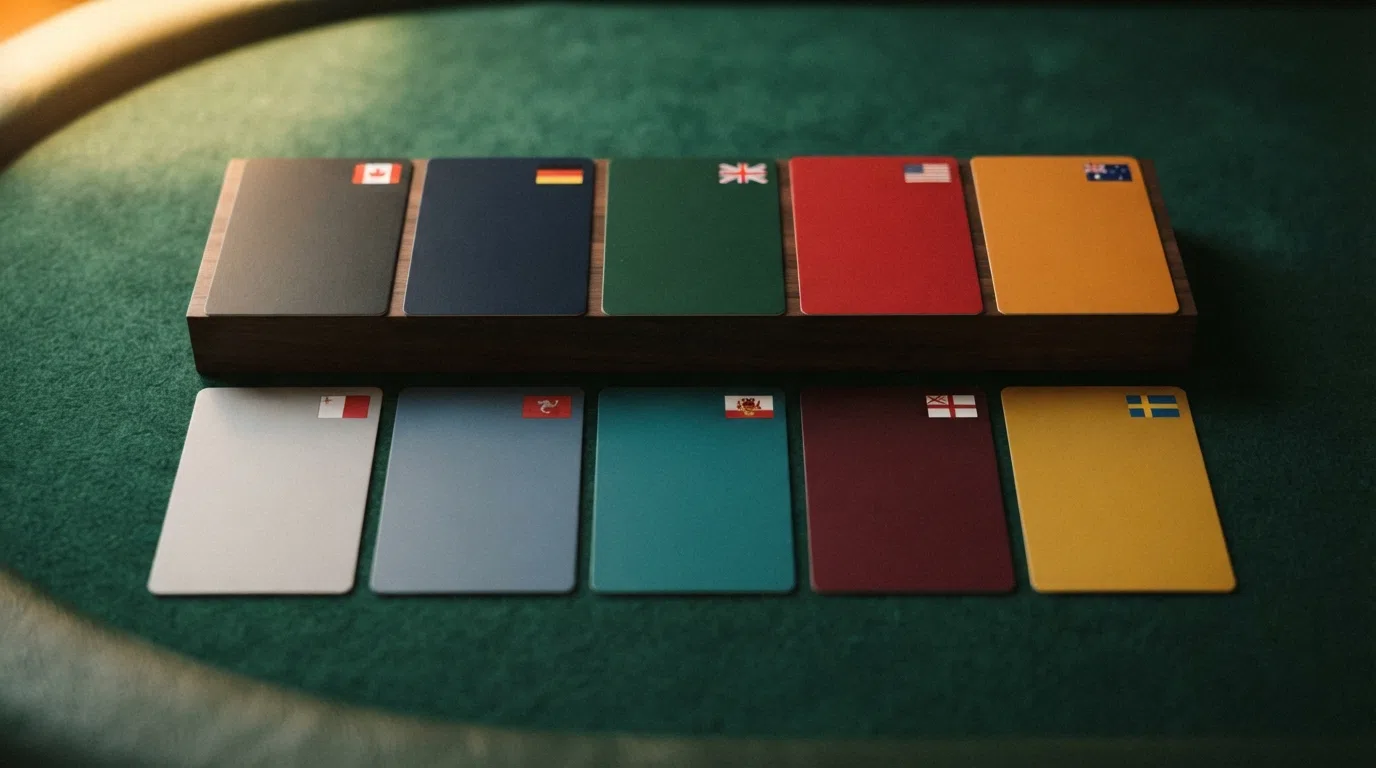
Every operator in this ranking is offshore and unlicensed in Great Britain. The table below compares the ten featured sites on licence jurisdiction, welcome bonus, wagering multiplier and game count. The wagering column is the most important number on the page: a 350% match with 40× wagering and a 7-day window costs more to clear than a 100% match with 30× and 30 days, even though the headline is three and a half times larger. The UKGC’s December 2025 cap of 10× wagering for licensed operators is the yardstick that makes this clear — the offshore operators below sit four to fourteen times above it.
| Casino | Licence jurisdiction | Welcome bonus | Wagering multiplier | Game count |
|---|---|---|---|---|
| Stake.com | Curaçao | No welcome bonus (3.5% lifetime rakeback) | 0× on rakeback | 4,200+ |
| BC.Game | Anjouan (UKGC revoked Dec 2024) | $4,000 + 400 free spins across 4 deposits (180%–360% match) | 40× | 6,500+ |
| Cloudbet | Curaçao (since 2013) | $2,500 welcome package (10% daily rakeback, cash drops, Cash Vault) | 0× | 3,000+ |
| BetPanda | Anjouan | 100% up to 1 BTC | Not confirmed | 6,000+ |
| CoinCasino | Curaçao | 200% deposit bonus | Not confirmed | 4,000+ |
| Metaspins | Curaçao | 100% up to 1 BTC | 40× | Not specified |
| Wild.io | Offshore | 350% welcome package | 40× on deposit + bonus | 7,000+ |
| Flush Casino | Offshore | Tier 1: 100% to $200 / Tier 2: 150% to $1,500 | 30× / 35× | Multi-provider |
| Winz.io | Estonian and Tobique | Wheel of Winz (up to €10,000) | 0× | 7,140+ |
| Jackbit | Offshore | 100 wager-free spins on Hot Chilli Bells | 0× on spins, 1× on deposit | 6,000+ |
The offshore status is not a footnote — it is the fact that governs every interaction a UK player has with these sites. There is no British complaints route if a withdrawal stalls, no GAMSTOP coverage, no statutory cap on stakes or wagering. The remainder of this section works through what each of the ten actually offers.
Stake.com
Stake has never sold itself on a welcome bonus. What it sells is a 3.5% lifetime rakeback on every bet, paid into the player’s account in real cash with no wagering requirement. For a high-volume SOL player — someone running hundreds of bets a week across slots, sports and live dealer — the rakeback model accumulates faster than any single welcome package. The daily $100,000 wager race and Friday $75,000 raffle add further value for active accounts. The game library runs to 4,200+ titles from Pragmatic Play, Evolution, Hacksaw, Nolimit City, Push Gaming and Relax Gaming.
The match against the page’s subject is direct. Stake accepts SOL with the same speed and fee structure as any other crypto rail. The Curaçao licence is the same one held by half the operators in this ranking. What Stake offers that the others do not is the longest track record at scale among crypto-native casinos — it has been operating since 2017 and has paid out to players across that span without (in the reviewed material) a major unresolved complaint pattern. For a UK player who values consistency over headline size, Stake is the steady choice.
BC.Game
BC.Game carries the biggest welcome number on this list and the most complicated bonus mechanic. The headline is up to $4,000 plus 400 free spins across four deposits, matched at 180% to 360% depending on which deposit. The catch is that bonus funds are credited as locked BCD tokens that unlock gradually — at a rate of wager × 1% × unlock rate — and the 40× wagering requirement has to be cleared within 14 days. Working through the BC.Game bonus is the topic of the calculation later in this page; the short version is that 14 days is a tight window for a bonus that large.
The licence history is the more significant fact. BC.Game held a UK Gambling Commission licence, which was revoked in December 2024. The operator now runs primarily under an Anjouan licence. For a UK player, the revocation signals that the regulator found grounds to remove the licence — the precise reasons are not in the reviewed material, but the practical effect is that BC.Game sits firmly outside the British framework today. The 6,500+ game library from 40+ providers is competitive; the bonus terms and the regulatory history are the points that need scrutiny.
Cloudbet
Cloudbet has operated since 2013, which makes it one of the oldest crypto casinos in continuous service. The welcome package is $2,500 distributed as 10% daily rakeback on the house edge, plus daily cash drops and a Cash Vault reward, paid out over 30 days. The critical detail is that the entire package carries zero wagering — everything is real cash, withdrawable the moment it lands. The minimum deposit is 0.001 BTC equivalent in any supported crypto, which translates to a small SOL amount.
This is the offer that stands apart from every other bonus on the list. Under the UKGC’s 10× wagering cap, no licensed British casino can match an offer that is genuinely zero-wagering on a $2,500 ceiling. Cloudbet’s model — paying back the house edge as cash — is a different kind of value proposition. The 3,000+ game catalogue is the smallest in this ranking, but for a player who understands that the bonus is the product rather than the games, it is enough. Cloudbet remains the standout for anyone prioritising bonus clarity over headline numbers, anchored by a decade of continuous service.
BetPanda
BetPanda runs a straightforward 100% match up to 1 BTC equivalent on the first deposit, with a 6,000+ game library powered by Pragmatic Play, Evolution, Hacksaw and Nolimit City. The published bonus terms in the reviewed material do not state the wagering multiplier or the bonus validity window — gaps a player needs to check on the operator’s site before committing funds. The Anjouan licence is the same regime BC.Game now operates under, which provides a reference point for how that jurisdiction handles disputes.
The pitch is catalogue depth and provider quality rather than headline bonus size. For a SOL player who values game variety over bonus mathematics, BetPanda offers a competitive 6,000+ lobby without the aggressive wagering structures of Wild.io or the 14-day pressure of BC.Game. The missing wagering and validity figures are the reason the operator does not rank higher — a player cannot compare what the page does not state. The verdict: a strong catalogue offset by opacity in the terms that matter most.
CoinCasino
CoinCasino’s distinctive pitch is the no-KYC sign-up — a player can register and deposit without submitting identity documents. The welcome offer is a 200% deposit bonus, and the game count runs to 4,000+ from Pragmatic Play and Evolution. The Curaçao licence is standard for this set; the no-KYC entry is the differentiator.
The trade-off sits at withdrawal. No-KYC at sign-up does not mean no-KYC ever. Most offshore operators request verification when a player requests a withdrawal above a threshold, when betting patterns trigger a flag, or at random. CoinCasino’s terms do not specify where the KYC line falls in the reviewed material. The 200% match is competitive on the headline; the missing wagering and validity data are the same gap that affects BetPanda. Ultimately, it offers the lowest barrier to entry for registration, though players should expect standard verification at the withdrawal stage.
Metaspins
Metaspins targets the small-stakes end of the SOL casino market. The $1 minimum deposit is the lowest in this ranking, the 12-cryptocurrency support includes SOL, and the 100% welcome match up to 1 BTC carries 40× wagering. The daily lootbox free spins, valued at $0.10 to $5 depending on VIP level, are an ongoing incentive beyond the welcome. The fiat on-ramp — buying crypto directly on the platform — is a feature for players who have not yet bought SOL on a separate exchange.
The withdrawal ceiling is 20 BTC per week, which is generous in absolute terms but could constrain a player running a high-volume strategy. The Curaçao licence is standard. For small-stakes play, Metaspins provides a manageable entry point where the 40× wagering is offset by the $1 minimum deposit floor.
Wild.io
Wild.io runs the most aggressive headline on the page — a 350% welcome package — and pairs it with the tightest constraints. The wagering is 40× on deposit plus bonus combined (not just on the bonus), the bonus window is seven days, and the per-coin max bet while wagering is 0.027 SOL. The 7,000+ game library is the largest catalogue in this ranking, and the 12-cryptocurrency support includes SOL alongside Bitcoin, Ethereum and other major assets.
The arithmetic is unforgiving. A 350% match on a meaningful deposit, with the bonus subject to 40× on the combined total and a 7-day clock, produces a turnover requirement that is hard to clear in the time available. The 0.027 SOL max bet limits how fast a player can work through that turnover. The verdict: the biggest number on the list and, for most players, the worst bonus mathematics in the ranking. The catalogue is real, the wagering is brutal.
Flush Casino
Flush runs the clearest tiered structure in the ranking. Tier 1 is 100% up to $200 with a $10 minimum deposit and 30× wagering on the combined deposit and bonus. Tier 2 is 150% up to $1,500 with a $200 minimum and 35× wagering. Both tiers expire after 30 days. The maximum bet while wagering is $5 — one of the few operators in the set to state this limit clearly in the bonus terms, which matters for players planning how fast they can clear the requirement.
The transparency on max bet is worth noting. Most offshore casinos do not state the max bet while wagering, which means a player can inadvertently breach an unwritten rule and forfeit the bonus. Flush putting $5 in the terms removes that risk. The game catalogue is multi-provider — Pragmatic Play, Evolution, Hacksaw and others — but specific counts are not in the reviewed material. Flush avoids the ambiguity of unwritten max-bet rules, giving players a clear framework for their play.
Winz.io
Winz.io is the only operator in the ranking with a dual licence structure — Estonian and Tobique — and the only one whose welcome offer is built around a wheel spin rather than a matched deposit. The Wheel of Winz pays out up to €10,000 in real cash with zero wagering. Weekly wheel spins continue the model beyond the welcome, with no wagering on any prize. The 0.1 SOL minimum deposit is the lowest SOL-specific minimum in the ranking. The catalogue runs to 7,140+ games from 60+ providers, with 800+ live tables — the deepest live-dealer offering in this set.
The wheel model means the actual value of the welcome depends on where the wheel lands. The maximum is €10,000; the minimum, for a Bronze tier deposit of €25, is smaller. The published terms do not state the average wheel payout. The verdict: a genuine zero-wagering welcome with the largest live-dealer library on the list, paired with a prize structure that introduces variance the matched-deposit model does not.
Jackbit
Jackbit’s welcome offer is the simplest in the ranking: 100 wager-free spins on Hot Chilli Bells, claimed within 24 hours of a $50 minimum deposit. The 0× wagering on the free spin winnings means whatever the spins pay out is paid as cash. The deposit itself carries 1× turnover before withdrawal — a minimal requirement, but worth noting as the only real-wager component of the offer. The 17+ cryptocurrency support is the widest in the ranking, and the 6,000+ game library is competitive.
The missing data points are the slot’s RTP, the value of each spin and any maximum cashout on the offer. Hot Chilli Bells is a Belatra title; its RTP is not in the reviewed material. The 24-hour claim window is tight. The verdict: the cleanest free-spins offer on the list for a player who moves quickly, with RTP and spin-value gaps that a player should verify before claiming.
Depositing with Solana: Near-Instant, Near-Free, and Entirely Offshore
The mechanics of a SOL casino deposit are consistent across the ten operators: connect a Phantom wallet, copy the casino’s deposit address, send the SOL, wait one second for network confirmation, wait up to a minute for the casino to credit the balance. The speed is the same everywhere. What differs is the minimum deposit, the maximum withdrawal ceiling, and the conditions under which the casino might delay or flag a payout.
How to Deposit SOL at an Online Casino: Step by Step
The deposit flow has four stages, each taking seconds to minutes.
The player opens the casino cashier and selects Solana from the deposit options. The cashier displays a unique deposit address — a 32-to-44-character string — and may show a QR code alongside it. The casino’s payment processor monitors the Solana blockchain for incoming transfers to that address. The player opens Phantom, pastes the address, enters the SOL amount, and confirms. The wallet displays the network fee — 0.000005 SOL, a fraction of a cent — and the estimated confirmation time. The player signs the transaction.
Solana confirms the transfer in roughly one second. The transaction appears on the blockchain explorer and in the casino’s payment processor within seconds. The casino’s system credits the player’s balance — this step is separate from network confirmation and can take 30 seconds to a few minutes depending on the operator’s processing cycle. The balance is now available for play.
The failure modes are address errors and network mismatches. A mistyped address is irreversible — the SOL goes to a wallet the player does not control, and no one can recover it. Sending SOL via a bridge or wrapped token to a native SOL address will not be credited. Some casinos use a shared deposit address with a per-user memo or tag; omitting it sends the funds to the casino’s pool without attributing them to the player’s account. A test transaction of the minimum deposit amount is the standard first-time-player precaution.
Withdrawal Speed: How Fast Your SOL Really Arrives
Solana’s network settles in one second. A casino withdrawal that depends only on the network should therefore arrive in seconds. In practice, the casino’s internal processing adds minutes to hours. The difference between “instant” and “instant after we check it” is the gap a player experiences.
The ten operators in this ranking handle withdrawals differently. Some advertise instant crypto withdrawals — the casino’s payment processor signs the transaction immediately, and the SOL arrives in the player’s Phantom wallet within a minute. Others process withdrawals in batches or hold them for manual review above a certain threshold. The reverse-withdrawal ban that applies to GB-licensed operators — which prevents a player from reversing a pending withdrawal to keep playing — does not bind offshore casinos, and some of the operators in this set allow reversal at their discretion.
The Metaspins withdrawal ceiling of 20 BTC per week is the most visible cap. For a SOL player running a small bankroll, 20 BTC (several hundred thousand pounds at current prices) is not a binding constraint. For a high-volume player, it could be. The KYC trigger is the other speed factor. Most offshore operators will not release a first withdrawal above a threshold — often a few hundred to a few thousand dollars — without identity verification. The review adds days.
Deposit Limits: From Micro-Stakes to High-Roller SOL Play
The minimum deposits across the featured set run from $1 at Metaspins to $50 at Jackbit, with 0.1 SOL at Winz.io and 0.001 BTC equivalent at Cloudbet. Stake and BC.Game do not publish specific SOL minimums in the reviewed material — a player has to check the cashier. The range means a SOL casino deposit is accessible at almost any bankroll level.
The UK statutory deposit limits do not apply here. GB-licensed operators must apply financial vulnerability checks at a £150 net deposit threshold over a rolling 30 days, and certain products carry statutory stake caps. The offshore operators in this ranking are not bound by either rule. A player can deposit $10,000 in a single transaction at most of them without triggering a mandatory check — though the operator’s own terms may impose review at a lower threshold.
The bonus qualification tiers interact with deposit size. Flush’s Tier 2 bonus requires a $200 minimum, which is four times its Tier 1 minimum. Winz.io’s wheel prize scales with the deposit tier — Bronze starts at €25. A player targeting a specific bonus needs to deposit at or above the relevant floor.
The Real Cost: Network Fees, Exchange Spreads and Hidden Charges
The SOL network fee is the smallest cost in the deposit chain. At 0.000005 SOL per transaction, the fee is so small it does not register against the deposit amount even for a micro-stake. A player depositing 0.1 SOL pays 0.000005 SOL to the network, leaving 0.099995 SOL credited. The rounding loss is invisible.
The real cost sits in the GBP-to-SOL conversion. A player buying SOL on a UK exchange pays the exchange’s spread — the difference between the mid-market price and the price at which the exchange will execute the trade. Spreads on major pairs range from 0.1% to 1% depending on the exchange and the payment method. A £1,000 deposit converted through a 0.5% spread costs £5 in hidden margin before the SOL is even sent to the casino. Converting back at withdrawal costs another spread.
None of the ten operators in this ranking imposes a SOL-specific deposit or withdrawal fee in the reviewed material. The casino earns from the house edge, not from payment processing. The hidden cost no one flags is SOL price volatility. If a player deposits 1 SOL when SOL is at $150 and withdraws a smaller amount at SOL at $120, the GBP value of the withdrawal has fallen by 20% even though the SOL amount is correct. Crypto balances are not pound balances, and the conversion runs both ways.
Payout Reliability and Direct-to-Wallet Withdrawals
Every operator in this ranking pays out directly to a player-controlled wallet, not to a bank account. The direct-to-wallet model is the structural advantage of crypto gambling — there is no intermediary that can freeze the payment, no correspondent bank that can delay it, and no chargeback that can reverse it. The transaction goes from the casino’s hot wallet to the player’s Phantom address, and it arrives in one second.
The reliability question is whether the casino actually signs the withdrawal. Off-chain, the operator’s own process is the only variable. Some operators run automated withdrawal systems that approve any payout up to a threshold. Others run manual review on every withdrawal, regardless of size. The fastest payouts in the reviewed material are advertised as instant by Cloudbet and Winz.io; the slowest are typically at operators where KYC is triggered on first withdrawal.
If a withdrawal is delayed or refused, the UK player has limited recourse. There is no Commission complaints route for offshore casinos, no approved ADR provider, and no British consumer redress. Section 33 of the Gambling Act 2005, which makes providing unlicensed gambling facilities a criminal offence, targets operators, not players. The player whose funds are withheld is a civil creditor in the operator’s home jurisdiction — Curaçao, Anjouan, Estonia or Tobique — and the practical path to recovery runs through the operator’s licence regulator or, ultimately, the courts of that jurisdiction. That is not a route a £200 dispute will pay for.
Solana Casino Bonuses: Bigger Headlines, Tougher Wagering
The bonus numbers at offshore SOL casinos are multiples of what UK-licensed operators can offer. Wild.io’s 350% match, BC.Game’s $4,000 ceiling, Flush’s tiered structure — none of these would be legal under the UKGC’s December 2025 rules, which cap wagering at 10× for licensed operators and ban mixed-product promotional offers entirely. The offshore operators are not bound by those rules, and the bonuses reflect it.
The cost of a bonus is the wagering requirement multiplied by the bonus amount, and the time the player has to clear it. A 350% match with 40× wagering on deposit plus bonus and a 7-day window is not a more generous offer than a 100% match with 30× on the bonus alone and 30 days to clear. The headline percentage is the marketing; the wagering multiplier and the validity window are the real price.
The Real Cost of a 40× Bonus: A Worked Example
Take BC.Game’s welcome package. The maximum bonus across four deposits is $4,000, matched at 180% to 360%, with a 40× wagering requirement on bonus funds and a 14-day window. Assume a player claims the full $4,000 and plays it on a slot with a 96% RTP at a stake of $0.10 per spin. The required turnover is $4,000 multiplied by 40, which is $160,000. At $0.10 per spin, that is 1,600,000 spins. At five seconds per spin, that is 8,000,000 seconds — roughly 2,222 hours of continuous play, or 92 days at 24 hours a day.
No player plays 24 hours a day for 92 days, and a 14-day window does not allow for it. The point of the calculation is not that anyone will clear this bonus by spinning — it is that the wagering requirement defines the cost. A player who clears 1% of the required wagering in a 14-day window has released 1% of the bonus. The rest is forfeited at the end of the window. The arithmetic rewards understanding the terms before the deposit.
The expected loss over the clearing period is $160,000 multiplied by (1 minus 0.96) — the house edge on a 96% RTP slot. That is $6,400 in expected loss against a $4,000 bonus. The bonus costs the player, on average, more than it pays. This is how offshore casinos fund 350% matches and $4,000 ceilings: the bonus is real, the wagering maths is realer.
Welcome Bonuses at Solana Casinos: What the Numbers Really Mean
The welcome offers across the featured ten run from zero (Stake) to 350% (Wild.io). The wagering multipliers run from 0× (Cloudbet, Winz.io, Jackbit free spins) to 40× (BC.Game, Metaspins, Wild.io). The validity windows run from 7 days (Wild.io) to 30 days (Cloudbet, Flush Tier 1) to ongoing (Stake rakeback). The comparison is not between percentages; it is between effective cost.
A zero-wagering bonus is a different product from a 40× bonus. The former pays real cash that the player can withdraw immediately; the latter pays bonus funds that must be cycled through the casino’s games forty times before withdrawal. The UKGC’s 10× cap exists because regulators concluded that wagering above that level imposes a cost on the player that the bonus does not offset. The offshore operators sit four to fourteen times above the cap, and the cost difference scales with it.
Free Spins on SOL Deposits: Who Offers Them and What They’re Worth
Free spins appear in three of the ten welcome offers. BC.Game includes 400 across four deposits, with the specific slot not stated in the reviewed material. Jackbit offers 100 wager-free spins on Hot Chilli Bells, claimable within 24 hours of a $50 deposit. Metaspins runs an ongoing daily lootbox with spins valued at $0.10 to $5 depending on VIP level. Winz.io includes free spins as wheel prizes with zero wagering.
The “wager-free” label on Jackbit’s spins is the meaningful distinction. A free spin with wagering on the winnings converts the spin payout into bonus funds that must be cleared; a wager-free spin pays out as real cash. The cost difference mirrors the welcome bonus comparison: a 100-spin offer with 40× wagering on winnings costs the player far more than a 100-spin offer with 0×.
The UK rules that do not bind these operators are the auto-play ban, the 2.5-second minimum spin speed, and the £5/£2 stake cap. At an offshore casino, a player can run spins at maximum speed, on auto-play, at any stake the slot allows. That changes the play experience — and the rate at which the wagering requirement is consumed.
No-Wagering and Low-Wagering Deals: The Offers That Actually Pay Out
Three operators in the ranking offer zero-wagering bonuses. Cloudbet pays a 10% daily rakeback on the house edge for 30 days, plus cash drops and Cash Vault rewards, all in real cash. Winz.io’s wheel prizes carry zero wagering, including the free spins. Jackbit’s free spins are wager-free with only 1× deposit turnover required.
Stake is the de facto fourth: its 3.5% lifetime rakeback is paid in real cash with no wagering. The value compounds over time for a regular player in a way a single welcome package cannot. The model is structurally different — it pays out of the house edge rather than out of a deposit match — but the player experience is similar: real cash lands in the balance and can be withdrawn.
Under the UKGC’s 10× cap, no licensed British casino can offer a $2,500 welcome at 0×. The arithmetic makes it impossible. The offshore operators can because they are not bound by the cap, and because their business model does not depend on British consumer protection to attract players. The value is real; the regulatory frame is the trade-off.
No-Deposit Bonuses: The Reality Check for UK Players
No-deposit SOL bonuses do not appear in the featured set. Every one of the ten operators requires a deposit to trigger the welcome offer. The economics explain why: a no-deposit bonus is a free bet funded entirely by the casino, with no corresponding deposit to offset the cost. Crypto casinos that offer no-deposit bonuses typically cap the winnings aggressively — a $50 free chip with a 100× wagering requirement and a $20 maximum cashout is more common than a genuine free-play offer.
A player who encounters a no-deposit SOL bonus at an operator outside this ranking should read the terms carefully. The maximum cashout, the eligible games, the wagering requirement, and the withdrawal conditions are where the cost lives. A $50 no-deposit chip with a $20 cashout cap and 100× wagering is worth exactly what the math says it is worth, not what the marketing headline implies.
What You Can Actually Play with SOL: Slots, Live Tables and the Gaps
SOL deposits work across the standard game catalogue at every featured operator. Slots, table games and live dealer titles are all available. The game counts run from 3,000+ at Cloudbet to 7,140+ at Winz.io, with most operators in the 4,000 to 7,000 range. The providers — Pragmatic Play, Evolution, Hacksaw, Nolimit City, Push Gaming, Relax Gaming, BGaming and others — are the same studios that power most of the licensed UK market. A SOL player at Wild.io is playing the same Nolimit City slots a UKGC-licensed player can access; the difference is the wrapper around the games, not the games themselves.
The gap is RTP transparency. GB-licensed operators must publish per-game RTP in a consistent format, and the UKGC’s rules around game design and player information are strict. Offshore operators are not bound by those rules, and per-title RTP is rarely surfaced in the casino’s own materials. A player who wants to check the RTP of a specific slot typically has to find it on the provider’s website or a third-party database, not on the casino’s game page.
Solana Slots: Classic, Video and Progressive Jackpot Play
The slot catalogues at the featured operators are large. Wild.io’s 7,000+ and Winz.io’s 7,140+ are the biggest; BC.Game’s 6,500+, BetPanda’s 6,000+ and Jackbit’s 6,000+ are competitive. The mix covers classic three-reel titles, video slots with feature buys, and progressive jackpots. The providers named in the reviewed material — Pragmatic Play, Hacksaw, Nolimit City, Push Gaming — are the studios whose slots dominate the UK market as well.
The UK rules that do not bind offshore operators are significant. The statutory stake cap of £5 for players aged 25 and over and £2 for players aged 18 to 24 — imposed by SI 2025/215 and in force since April and May 2025 — does not apply offshore. A player at BC.Game can spin a £5 slot at £100 per spin if the game allows it. The auto-play ban and the 2.5-second minimum spin speed also do not apply. The losses-disguised-as-wins ban — a rule that requires UK slot designers to remove celebratory sounds and visuals from losing spins — is irrelevant at an offshore casino using a game version that was not designed for the UK market.
The practical effect is a faster, less restricted play experience. The cost is the loss of the consumer protections the rules were designed to provide.
Table Games with SOL: Blackjack, Roulette and Beyond
The table game catalogues across the featured operators cover the standard range: blackjack, roulette, baccarat, poker variants, and dice games. Game-show titles from Evolution and Pragmatic Play Live are widely available. The limits vary by operator and by game; a SOL deposit converts to the game’s display currency at the time of bet placement, so a 0.1 SOL deposit at a $0.10 blackjack table funds 200+ hands at minimum stake.
Provably fair is the term that distinguishes some crypto casino table games from their fiat counterparts. A provably fair game uses cryptographic verification — typically a server seed, a client seed and a nonce combined through a hash function — to allow the player to confirm that the outcome was not manipulated after the bet was placed. Slots, which use a server-side random number generator without player-visible inputs, are not provably fair in the same way. The term matters for table games and for the “crash” and “dice” titles that some crypto casinos offer; it is less relevant for the slot-heavy catalogues the featured operators run.
Real-Money Play vs Demo Mode at SOL Casinos
Demo mode — playing a slot without betting real money — is standard at most crypto casinos for non-live titles. CoinCasino’s no-KYC sign-up lets a player try games before depositing, and the other operators generally offer demo play on slots without requiring registration. Live dealer games and progressive jackpots are real-money only; the streaming cost of running a live studio means demo play is not offered.
The RTP question is the one demo mode does not answer. A player can spin a slot at 1,000 demo credits and never see its RTP. The percentage is a long-run statistical measure; a short demo session does not produce enough spins to estimate it. The RTP has to come from the provider or a third-party source. At offshore casinos that do not surface it, the player has to look it up separately.
Game Providers: Who Powers the SOL Casino Lobby
The major providers across the featured set are Pragmatic Play, Evolution, Hacksaw Gaming, Nolimit City, Push Gaming, Relax Gaming and BGaming. These are the studios whose games fill the UK-licensed market as well. A SOL player at BC.Game is playing Pragmatic Play’s slots, Evolution’s live tables and Hacksaw’s high-volatility titles. The catalogue depth at operators like Winz.io (60+ providers, 7,140+ games) and BC.Game (40+ providers, 6,500+ games) reflects the breadth of the underlying studio market.
Provider transparency is the operator’s choice. Some operators publish their full provider list in the lobby footer or a dedicated page; others name only the headliners. A full list is a signal of operational maturity, since it suggests the operator’s platform can integrate and display the metadata. A short list is not necessarily a red flag, but it limits the player’s ability to assess the catalogue before depositing.
Solana vs the Crypto Casino Field: Where SOL Fits
Solana’s position in the crypto casino payment landscape is straightforward on the metrics that matter: faster than Bitcoin, faster and cheaper than Ethereum, narrower acceptance than either. The ten operators in this ranking all accept BTC and ETH alongside SOL, and several accept 12 to 17+ cryptocurrencies. A player who values SOL’s specific combination of speed and low fees can use it at all ten; a player who prioritises breadth of acceptance can default to BTC.
Solana vs Bitcoin and Ethereum for Casino Play
The comparison comes down to two numbers per coin: confirmation time and average fee per transaction.
| Cryptocurrency | Confirmation time | Average fee per transaction |
|---|---|---|
| Solana (SOL) | ~1 second (optimistic confirmation) | ~0.000005 SOL (fraction of a cent) |
| Bitcoin (BTC) | 30–60 minutes (3–6 confirmations) | Up to $50 |
| Ethereum (ETH) | Minutes (variable, gas-dependent) | $2–$50 |
The fee gap is the most striking line in the table. A SOL deposit costs a fraction of a cent regardless of network congestion. An ETH deposit can cost more in fees than the player intended to stake. A BTC deposit at peak congestion has cost players $30 to $50 on top of the deposit amount. For a player making frequent small deposits, the fee difference is the dominant variable.
The confirmation gap is a play-experience variable. A SOL deposit is funded in one second; a BTC deposit can take an hour before the casino credits the balance. The wait is a real cost, even if it does not show up on a fee receipt. ETH sits in the middle — faster than BTC, but with a fee structure that has made it uneconomical for small deposits at times.
The acceptance gap runs the other way. More casinos accept BTC than SOL; ETH is between. The ten operators in this ranking all accept SOL, but a player moving to a smaller or newer casino will find BTC acceptance is more common. The trade-off is speed and cost for breadth.
No-Account and No-Registration Solana Casinos
A genuinely no-account casino — one where a player deposits, plays and withdraws without ever creating an account — does not appear in this ranking. The closest is CoinCasino’s no-KYC sign-up, which removes the identity verification step but still requires registration. The “no-account” model that some Nordic-licensed operators pioneered — deposit via Trustly, play instantly, withdraw on demand — depends on bank-integrated verification that crypto deposits do not have.
The trade-off is sharp. No-account play eliminates the KYC barrier but also eliminates the operator’s ability to verify the player, which most regulators require at some point. A SOL casino that accepted deposits and paid out withdrawals with no player record would struggle to satisfy any licensing jurisdiction. The closest the crypto model comes is the no-KYC sign-up — register, deposit, play, and verify only when the operator’s terms require it.
Anonymity and Privacy: What SOL Casinos Actually Deliver
The privacy promise of crypto gambling is real but narrower than the marketing suggests. A SOL deposit is pseudonymous — the wallet address is visible on the blockchain, but the wallet owner is not identified unless the owner chooses to be. The casino sees the wallet address and the deposit amount. It does not see the player’s name, address or bank details.
The KYC layer comes at withdrawal. Most operators in this ranking require identity verification before releasing funds above a threshold. CoinCasino’s no-KYC sign-up means the KYC is deferred, not removed. The blockchain transparency runs the other way: every SOL transaction is permanently recorded on a public ledger, and anyone — including law enforcement — can trace the flow of funds from a known wallet.
For a UK player, the practical privacy level is between a fully identified fiat deposit and a fully anonymous cash payment. The wallet is pseudonymous; the casino’s records link the wallet to the player’s account; the blockchain records the transaction forever.
Multi-Crypto Platforms: Using SOL Alongside Bitcoin, Ethereum and Altcoins
Every operator in this ranking is a multi-crypto platform. Metaspins and Wild.io support 12 cryptocurrencies including SOL; Jackbit supports 17+; Winz.io supports 12. The variety means a player is not locked into SOL for deposits and withdrawals — a deposit in SOL can be withdrawn in BTC, ETH or another supported coin, at the casino’s prevailing conversion rate.
The conversion rate is where the cost sits. A casino that lets a player deposit SOL and withdraw BTC is running a conversion at some spread, and the spread is the operator’s revenue on the exchange. The reviewed material does not state per-operator conversion fees, so a player who plans to deposit and withdraw in different coins should check the cashier terms before committing.
SPL token support — the Solana token standard for non-SOL assets — is a niche feature. A few casinos accept SPL tokens alongside native SOL, which lets a player deposit Solana-based tokens (USDC on Solana, for example) without bridging to another chain. The feature is not universal; the standard at most operators is native SOL.
Playing Solana Casinos on Mobile: Browser-First, App-Light
SOL casino play on mobile is almost entirely browser-based. None of the ten operators in this ranking runs a dedicated mobile app with SOL support in the reviewed material, and the app-store restrictions on gambling apps without local licensing make a native iOS or Android app unlikely. What works is the mobile browser — Chrome on Android, Safari on iOS — loading the casino’s responsive site.
Mobile Browser Play: The Default for Solana Casinos
Every operator in this ranking uses standard HTML5 web platforms that adapt to mobile screens. The experience is the same as on desktop, with the lobby, cashier and game launchers all accessible. The mobile version is not a stripped-down site; it is the full casino in a smaller window. The Phantom wallet extension lives in the desktop browser; on mobile, Phantom runs as a standalone app and the deposit flow becomes wallet-app to casino-browser, with the address copied between them.
Mobile-specific UX differences exist. The slot games scale to portrait orientation; the live dealer tables run in landscape. Game lobbies are scrollable rather than tabbed. The cashier fits the deposit address and amount on a single screen. The performance on a modern phone is indistinguishable from desktop; on older devices, the live dealer streams may buffer at higher resolutions.
Dedicated Casino Apps with SOL Support
Dedicated casino apps with SOL support are the exception rather than the rule. Apple’s App Store and Google Play restrict real-money gambling apps to operators licensed in the user’s jurisdiction, which excludes every offshore SOL casino from the UK storefronts. Some operators offer Android APK downloads from their own sites; the install requires the user to allow installs from unknown sources, which is a friction most players do not want.
The browser model is the deliberate design choice. No download, no storage, no operating-system version compatibility — the player opens the site and plays. The trade-off is the absence of push notifications, home-screen presence, and the slightly deeper OS integration that a native app provides. For a player making a few deposits a week, the trade-off is invisible.
Mobile Deposits and Withdrawals: Wallet-to-Wallet on the Go
The mobile SOL deposit flow is wallet-app to casino-browser. The player opens Phantom, copies the casino deposit address, enters the SOL amount, and confirms. The casino credits the balance within seconds. Withdrawals run the other way: the player enters the Phantom address in the casino cashier, confirms the amount, and the casino signs the transaction. The SOL arrives in the Phantom wallet within a minute on most operators.
The mobile-specific risks are clipboard interception — a malicious app reading the deposit address from the clipboard before the player pastes it — and wallet-app switching, where the player has to alt-tab between Phantom and the casino browser. The mitigations are simple: verify the address in the casino cashier after pasting, and clear the clipboard after the transaction. Phantom does not currently flag clipboard swaps, so the verification has to be manual.
New Solana Casinos in 2026: Fresh Platforms, the Same Offshore Pattern
The newest SOL casino launches follow a familiar pattern. A new platform appears with a multi-crypto deposit list (BTC, ETH, SOL, USDT and several altcoins), a Curaçao or Anjouan licence, a 200% to 400% welcome headline, and a game library built on the same provider integrations the established operators use. The differentiator is usually the bonus size and the UX polish, not the underlying product.
The Newest Solana Casino Launches in 2026
The reviewed material does not carry specific launch dates for new Solana-accepting casinos in 2026 beyond the established ten. The pattern that holds is licensing — the Anjouan and Curaçao jurisdictions remain the dominant choices for new entrants, with the occasional Estonian or Tobique licence for operators that want a second regulatory anchor. The welcome bonuses at newer platforms tend to be more aggressive than at the established operators, which is a function of the need to attract a player base rather than a signal of underlying generosity.
How to Assess a New Solana Casino Before You Deposit
The vetting process for a new operator is the same as for any other offshore site. Four checks cover most of the risk.
Verify the licence. The casino’s footer will name a jurisdiction and a licence number. The player should look up the licence on the regulator’s own register, not on the casino’s site. Curaçao’s register is public; Anjouan’s is less accessible. A licence that does not exist in the register is a red flag.
Check the bonus terms before depositing. Wagering multiplier, validity window, maximum bet while wagering, eligible games, and any maximum cashout. The terms page should state these. If it does not, the player cannot make an informed decision and should not deposit.
Search for player complaints. Forums, review aggregators and community threads show what the operator does when a withdrawal is delayed. A pattern of unresolved complaints is a red flag; a pattern of resolved complaints is a positive signal.
Test customer support before committing funds. A live chat or email response within minutes, with a specific answer, is a basic competence check. An unresponsive support channel is a sign that the operator is not investing in player experience.
What New Platforms Offer That Established Names Do Not
New SOL casinos compete on three fronts: bonus size, UX polish, and crypto-native features. The headline percentage at a new launch is often 50% to 100% higher than at an established operator. The UX tends to be modern — the platform is built on current web technology rather than retrofitted to a legacy system. And crypto-native features — Web3 wallet connect, on-chain verification, native SPL token support — are more common in newer builds than in the established operators whose platforms predate those standards.
The trade-off is track record. An operator that launched six months ago has six months of operating history. An operator that has been running since 2013 — Cloudbet — has a decade. The decade-long record is not a guarantee, but it is information. The new platform’s aggressive bonus and modern UX are real; the absence of an operating track record is also real. A player who values the bonus might prefer the new platform; a player who values the track record should stick with the established names.
The Legal Reality for UK Solana Casino Players in 2026
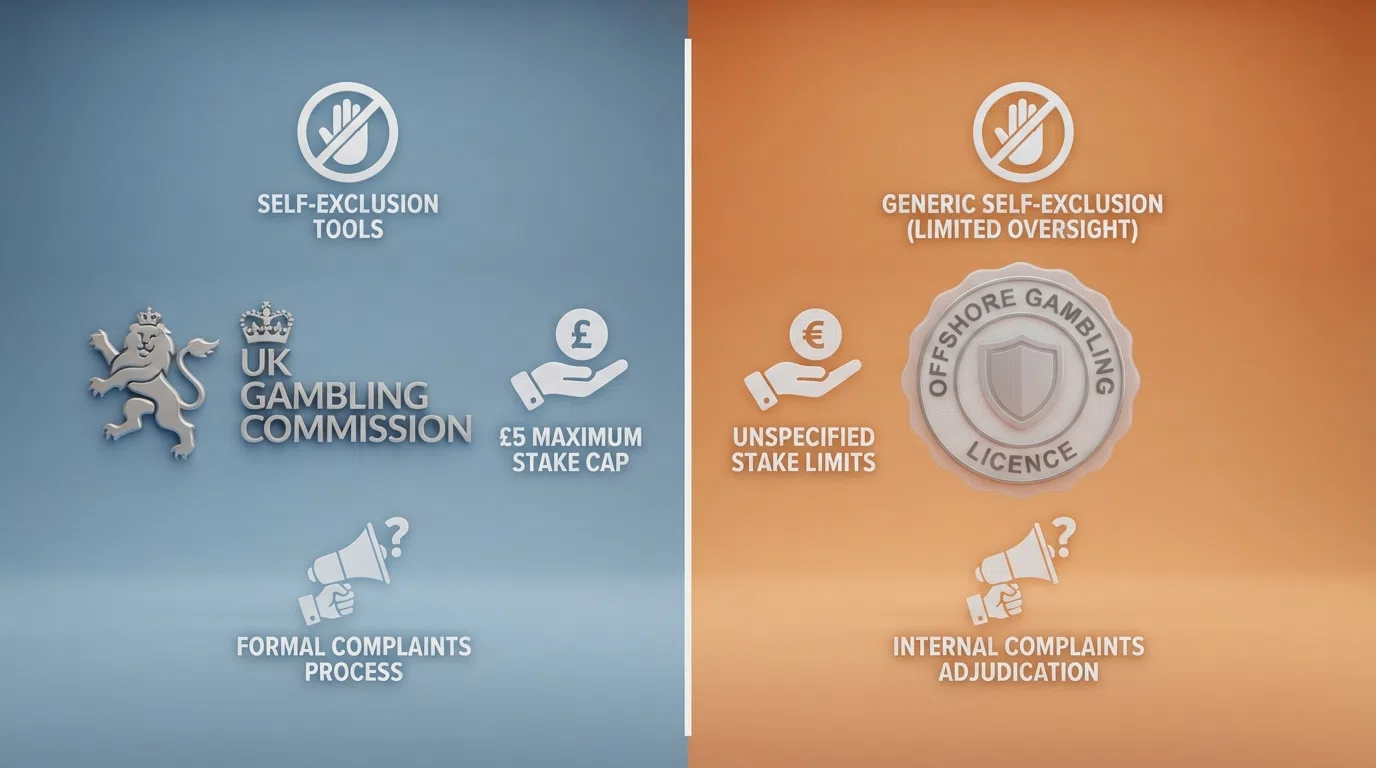
The legal position of a UK player depositing at an offshore SOL casino is a single fact: no British regulatory protection applies. The UK Gambling Commission does not license any of the ten operators in this ranking. The protections that GB-licensed operators are required to provide — GAMSTOP, the complaints route, statutory stake caps, the £150 financial vulnerability check threshold — do not extend to offshore sites. The UKGC’s 2026 exploration of a crypto pathway is the first signal that this might change, but there is no timetable and no licensed SOL casino in Britain today.
Why No Solana Casino Holds a UK Gambling Commission Licence
The Gambling Act 2005, extended to remote operators by the Gambling (Licensing and Advertising) Act 2014, requires any operator providing gambling facilities to GB customers to hold a GB operating licence from the Gambling Commission, regardless of where the operator is based. The Commission’s current position on crypto payments requires licensees to demonstrate how crypto-related AML risks are mitigated under Licence Condition 12.1.1, including a full source-of-funds history. The Commission has stated it will not consider operating licence applications with a crypto funding element without that documentation at the application stage.
The second barrier is the duty rate. Remote Gaming Duty rose from 21% to 40% from 1 April 2026. A licensed operator earning on SOL play pays 40% of gross gaming yield to HMRC. The economics of running a licensed crypto casino in Britain — paying 40% duty, satisfying the Commission’s AML requirements, integrating GAMSTOP, applying stake caps, offering ADR — are structurally different from running an offshore operation that pays a flat licence fee in Curaçao and operates under its own house rules. No major crypto casino has concluded that the British licence is worth the cost.
Section 33 of the Gambling Act 2005 makes providing unlicensed gambling facilities a criminal offence — up to 51 weeks’ imprisonment, an unlimited fine, or both. The sanction targets operators, not players. The Commission’s enforcement approach runs through disruption: 3,140 disruption notices issued, 447,778 URLs referred to search engines, 287,961 URLs removed, and a 32% average fall in engagement across 160 disrupted sites between April 2024 and June 2025. The Commission does not currently hold statutory ISP or DNS blocking powers; legislation has been proposed but not enacted.
GAMSTOP and Solana Casinos: What UK Players Need to Know
GAMSTOP has been a mandatory condition of every GB online operating licence since 31 March 2020. The exclusion periods are six months, one year, five years, or five years with auto-renewal, and the exclusion cannot be cancelled early. A player who has registered with GAMSTOP is blocked from every GB-licensed gambling site for the chosen period.
The block does not extend to offshore casinos. None of the ten operators in this ranking participates in GAMSTOP. A UK player with a GAMSTOP exclusion can deposit SOL at Stake, BC.Game, Cloudbet, or any of the other featured sites without being flagged, blocked or contacted. The self-exclusion tool that exists to help a player control their gambling does not reach the offshore market.
For a player who relies on GAMSTOP as their primary self-exclusion mechanism, this is the most important fact on the page. The exclusion is real at licensed sites; it is not real offshore. The practical protection has to be built from other tools — operator-level self-exclusion where available, device-level blocking software, and personal discipline.
Safety and Trust Signals at Offshore Crypto Casinos
The trust signals at an offshore SOL casino are different from those at a UK-licensed operator. The Commission’s public register, GAMSTOP, the ASA, and the approved ADR providers are all British institutions that the offshore market does not connect to. What remains is the operator’s licence, its track record, the player community’s sentiment, and the technical integrity of the platform.
A Curaçao or Anjouan licence is a starting point, not a guarantee. The licence means the operator has met the jurisdiction’s minimum requirements — incorporation, capital, a fit-and-proper test on the directors — and is subject to the regulator’s enforcement within those limits. The enforcement capacity of Curaçao and Anjouan is narrower than the UKGC’s, and the consumer protection framework is less developed. A player should verify the licence directly on the regulator’s site, not on the casino’s footer.
Track record matters. Cloudbet has been operating since 2013, Stake since 2017. The length of operation is a signal: an operator that has been paying out to players for a decade has demonstrated a working withdrawal process over many years. A new operator with a six-month history has not. Player-forum sentiment and review-aggregator ratings are the other track-record data point. A pattern of unresolved withdrawal complaints is a red flag; a pattern of resolved complaints is a positive signal.
Provably fair systems — the cryptographic verification of game outcomes — are a technical trust signal. A provably fair game allows the player to confirm that the outcome was not manipulated after the bet was placed, using a hash function that combines server and client seeds. The mechanism is real and verifiable. It is also narrow: it verifies the game outcome, not the operator’s solvency, not the withdrawal process, not the bonus terms. A provably fair casino can still refuse to pay out a legitimate winning.
The BC.Game precedent is instructive. BC.Game held a UKGC licence, which was revoked in December 2024. The operator now runs primarily under an Anjouan licence. The revocation signals that the regulator found grounds to remove the licence — the precise reasons are not in the reviewed material, but the fact of the revocation is on the public record. A UK player choosing to deposit at BC.Game is choosing an operator that the Commission considered unfit to hold a British licence.
KYC and Verification: What Offshore SOL Casinos Actually Ask For
The KYC spectrum at offshore casinos runs from none at sign-up to full document checks at withdrawal. CoinCasino’s no-KYC registration sits at one end: a player can create an account and deposit without submitting identity documents. The other operators in the ranking fall at various points along the spectrum, with most requesting verification — government-issued ID, proof of address, and sometimes source-of-funds documentation — at the first withdrawal above a threshold, or when betting patterns trigger a flag.
The documents typically requested are a passport or driving licence for ID, a utility bill or bank statement for address, and sometimes a payslip or wealth declaration for source of funds. The review takes hours to days depending on the operator. Some operators run automated KYC checks that complete in minutes; others route every verification request to a manual review team.
The contrast with the UKGC’s framework is the absence of the financial vulnerability check. GB-licensed operators must apply a financial vulnerability check at a £150 net deposit threshold over a rolling 30-day period. The check is a mandatory interaction designed to identify players showing signs of gambling harm. Offshore casinos are not bound by this requirement. A player at BC.Game, Stake or Cloudbet can deposit £10,000 in a week without any mandated check, because the operator is not required to run one.
The UKGC’s Crypto Pathway: What Could Change and When
Tim Miller’s February 2026 speech at the BGC AGM was the first public signal that the UKGC sees a possible route to licensed crypto gambling. The Commission has asked its Industry Forum to “explore what a ‘sensible’ pathway might look like for allowing cryptoassets to be used as a consumer payment option for licensed gambling in Great Britain, subject to the licensing objectives.” Miller described the work as a “tentative first step” and explicitly rejected “arbitrary” deadlines.
What a “sensible pathway” might include is not defined. The elements that a licensed crypto casino would have to satisfy — AML compliance under Licence Condition 12.1.1, source-of-funds verification, consumer protection standards, integration with GAMSTOP and the ADR framework — are all visible in the existing regulatory structure. Whether the Commission would accept a lower source-of-funds threshold for crypto deposits, or a different KYC framework, or a modified duty treatment, is not yet known.
The FCA’s cryptoasset regime, underpinned by the Financial Services and Markets Act 2000 (Cryptoassets) Regulations 2026 passed on 4 February 2026, will bring broad cryptoasset activities under the FCA’s regulatory perimeter from 25 October 2027. This is separate from gambling regulation but will affect the crypto-to-fiat exchanges UK players use to buy SOL. The combination of the FCA regime and the UKGC’s exploration of a crypto pathway creates the conditions for a licensed SOL casino to emerge, but neither timeline is short and neither is confirmed.
The gap between regulatory intention and operator appetite is the 40% Remote Gaming Duty. Until the duty rate, the AML requirements, and the consumer protection standards are aligned with what an operator can profitably offer, the offshore market will remain the only UK-facing SOL casino option.
Staying in Control at Offshore Crypto Casinos
The responsible-gambling framework that protects UK players at GB-licensed casinos does not extend offshore. The statutory stake caps, the GAMSTOP coverage, the £150 financial vulnerability check, the auto-play ban, the 2.5-second minimum spin speed, the reverse-withdrawal ban — none of these apply at the ten operators in this ranking. A UK player who chooses to deposit at an offshore SOL casino takes on the responsibility that the regulatory framework would otherwise carry.
Deposit and Session Limits: Setting Your Own Boundaries Offshore
The practical alternative to mandated limits is self-imposed discipline. A player can set a hard deposit ceiling — the amount they are prepared to lose entirely — and stop when it is reached. The ceiling is a personal decision, not an operator setting. The tools that some offshore operators offer voluntarily — deposit caps, session timers, reality checks — are worth finding in the account settings, but they are not universal, and the player cannot rely on the operator to enforce them.
Wallet-level limits are a structural tool. A player can maintain a separate SOL wallet for gambling, funded only from a designated bank account, with a balance cap that triggers a stop when reached. The wallet is the player’s; the operator cannot see it or influence it. The discipline is the player’s; the wallet is the mechanism.
Time-boxed sessions are the other structural tool. A player can set a session length — 30 minutes, an hour, two hours — and stop when the time expires, regardless of the game state. The offshore casino’s reality-check reminders, where they exist, are helpful. The decision to stop when the reminder fires is the player’s.
UK Support Services: GamCare, GambleAware and Where to Turn
The UK support services are available regardless of where a player gambles. GamCare runs the National Gambling Helpline on 0808 8020 133, a freephone number available 24 hours a day. In the most recent reporting period, GamCare handled over 130,000 calls and online messages, made 7,100 referrals into further treatment, and ran 8,100 treatment sessions, with an average wait time of 1.3 days. The treatment completion rate through the National Gambling Treatment Service is 93% improvement.
GambleAware funds the research, prevention and treatment infrastructure. The 2024/25 NGSN statistics show 11,960 clients treated — an 11% year-on-year increase. NHS gambling harm clinics operate in England, Scotland and Wales, providing specialist treatment within the health service. Gamblers Anonymous UK runs peer-support groups across the country. The support network is real and accessible; the cost of using it is a phone call.
The prevalence context matters. The Gambling Survey for Great Britain (2025) found 47% of adults had gambled in the past four weeks. The 2024 Treatment and Support Survey found 30% of adults experiencing gambling problems want treatment, support or advice — up from 17% in 2020. An estimated 4.3 million adults in Great Britain are affected by a family member’s or friend’s gambling. The numbers are large; the help is free.
Self-Exclusion Beyond GAMSTOP: What Is Available Offshore
GAMSTOP does not reach offshore casinos. A player who wants to exclude themselves from the offshore SOL casino market needs a different set of tools.
Operator-level self-exclusion is the first option. Most offshore casinos offer some form of account closure or self-exclusion in the responsible-gambling section of the account settings. The exclusion is operator-specific — it covers Stake or BC.Game, not the offshore market as a whole. A player who wants comprehensive exclusion needs to request it at every operator they use.
Device-level blocking software is the second option. Gamban and Gamblock are the two main products; they block access to gambling sites at the device level, regardless of the site’s jurisdiction. The software is subscription-based and runs on the player’s device. It does not require the casino’s cooperation. A player who installs Gamban on their phone and laptop is blocked from accessing the offshore casino market through those devices, even if the casino does not know the software exists.
Wallet-level exclusion is the third option. A player can stop using the crypto wallet that funds their casino deposits — empty it, change the seed phrase, or simply stop funding it. The casino’s deposit address is no longer reachable from a funded wallet, and the player cannot deposit until the exclusion is lifted deliberately. The mechanism is crude but effective.
How We Evaluated These Solana Casinos
The ten operators in this ranking were identified from UK-facing crypto casino affiliate pages, player forums and crypto-gambling review sites. Each operator was cross-referenced against the UK Gambling Commission’s public register of licence holders, last updated 29 July 2026, to confirm that none holds a GB operating licence. The evaluation criteria were licence jurisdiction, bonus terms (headline value, wagering multiplier, validity window, restrictions), SOL payment support and minimum deposits, game catalogue depth and provider quality, and track record including any regulatory actions.
The data was drawn from operator T&Cs, BetRank, ClearCasinos, CoinCasinoHub, CryptoSlate, CryptoNews, Flush, Casino Guru, TSAS.ca, CoinBettors, and BonusCheckr. We also reviewed content from CoinCodex, CryptoSlate, CryptoNews, Coinspeaker, TimesOfCasino and Coingabbar for industry trends and market comparisons. The regulatory context was drawn from the Gambling Commission’s public register, the Commission’s own guidance on blockchain and cryptoassets, and the UK regulation skill covering the Gambling Act 2005, the Gambling (Licensing and Advertising) Act 2014, and the relevant LCCP conditions.
This evaluation does not endorse offshore gambling. It does not assign weighted scores where the research material does not carry consistent per-operator data. It does not claim any of these operators are safe or recommended for UK players. The ranking compares the offers as they are published; the regulatory reality is a separate fact that the reader has to weigh.
What UK Players Should Actually Do About Solana Casinos in 2026
The core trade-off is uncomplicated. SOL casinos offer faster deposits, lower fees and bigger bonus headlines than any GB-licensed operator can match. The zero-wagering offers at Cloudbet, Winz.io and Stake’s rakeback model, and Jackbit’s wager-free spins, are genuinely better than anything available on the licensed British market. A player who has decided to deposit SOL at an offshore casino is choosing the best version of a product the licensed market does not provide.
What the player gives up is the British protection framework. No GAMSTOP coverage. No Commission complaints route. No British consumer redress if a withdrawal stalls. No statutory stake caps. No financial vulnerability check. No auto-play ban. No spin-speed minimum. The list is the value the UKGC’s regulatory structure provides to players at licensed operators, and it is the value an offshore casino player forfeits.
The practical guidance is straightforward. If a player chooses to play at an offshore SOL casino, the deposit should be limited to what they can afford to lose entirely. The operator’s licence should be verified on the regulator’s own register, not trusted from the casino’s footer. The bonus terms — wagering, max bet, validity — should be read before the deposit, not after. The KYC trigger should be understood so the first withdrawal is not the moment the player discovers the verification requirement. And the support services — GamCare, the National Gambling Helpline on 0808 8020 133, the NHS gambling harm clinics — are available regardless of where the player gambles, and should be used if the play stops being fun.
The forward look is constrained. The UKGC’s crypto pathway exploration is real, but Tim Miller’s language was careful — a “tentative first step,” no “arbitrary” deadlines. The FCA’s cryptoasset regime reaches full scope in October 2027. The Remote Gaming Duty sits at 40%. No licensed SOL casino exists in Britain today, and none is visible on the horizon. The market a UK player is choosing to enter in 2026 is the same market that has existed for several years: fast, cheap, bonus-heavy, and entirely outside the British licensing system. The decision is the player’s; the information should be the player’s too.
Frequently Asked Questions
Do I risk criminal charges for playing at these sites?
No. Section 33 of the Gambling Act 2005 criminalises providing unlicensed gambling facilities — it targets operators, advertisers and intermediaries, not players. No UK player has been prosecuted for depositing at an offshore casino. The enforcement record (3,140 disruption notices, 447,778 URL referrals, 287,961 removals) runs against the supply side. What a UK player loses by playing offshore is regulatory protection, not liberty.
Are Solana casinos covered by GAMSTOP self-exclusion?
No. GAMSTOP has been mandatory for every GB-licensed operator since 31 March 2020, with exclusion periods from six months to five years. None of the ten featured operators holds a GB licence, so none participates in GAMSTOP. A player with a GAMSTOP exclusion can deposit SOL at Stake, BC.Game, Cloudbet, or any other featured site without being blocked, flagged or contacted. For players who rely on GAMSTOP as their primary self-exclusion mechanism, this is the most important fact on the page.
Do I need to complete KYC verification at Solana casinos?
It depends on the operator. CoinCasino promotes no-KYC sign-up, so registration and first deposit require no documents. The other operators in the ranking typically request identity verification — government-issued ID, proof of address, sometimes source-of-funds documentation — at the first withdrawal above a threshold, or when betting patterns trigger a flag. The KYC trigger varies by operator and is stated in each casino’s terms. The UKGC’s £150 net deposit financial vulnerability check does not apply offshore.
How fast are Solana casino withdrawals compared to bank transfers?
The SOL network settles in roughly one second. A casino withdrawal that is processed immediately arrives in the player’s Phantom wallet within a minute. A bank transfer from a GB-licensed casino takes one to three business days. The gap is real, though it narrows once the casino’s internal processing time is added: some offshore operators run manual review on every withdrawal, which adds hours. The fastest payouts in the featured set are advertised as instant by Cloudbet and Winz.io; the slowest depend on the operator’s KYC and review processes.
What are Solana’s casino fees compared to Bitcoin and Ethereum?
The SOL network fee is approximately 0.000005 SOL per transaction — a fraction of a US cent. Ethereum fees have ranged from $2 to $50 per transaction during congested periods. Bitcoin fees have reached $50 at peak congestion. For a player making frequent small deposits, the fee difference is the dominant variable: a £20 ETH deposit can cost more in fees than in stake. The trade-off is acceptance: more casinos accept BTC than SOL, though the ten operators in this ranking all accept SOL directly.
Is it safe to gamble with Solana at offshore crypto casinos?
“Safe” in this context means different things. The technical layer is safe: SOL transactions are cryptographically secure, the Phantom wallet is non-custodial, and direct-to-wallet withdrawals remove the intermediary risk that fiat payment processing carries. The regulatory layer is not safe in the GB sense: no operator holds a UKGC licence, so no British consumer protection applies. The financial layer depends on the operator: a track-record operator with a decade of payouts is safer than a new entrant with six months of history. The honest answer is that the technology is sound and the regulatory protection is absent, and a UK player has to weigh the two against their own risk tolerance.
Is Solana Still Accepted at UK-Facing Casinos in 2026?
Yes — at every major offshore crypto casino serving international players. The ten operators covered in this ranking all accept SOL alongside Bitcoin, Ethereum and other assets. The relevant question is not whether SOL is accepted somewhere, but whether any of those sites is licensed in Great Britain.
The answer, verified against the UK Gambling Commission’s public register, is that none of them is. The register lists every operator authorised to provide gambling facilities to GB customers. The ten operators in this ranking — Stake, BC.Game, Cloudbet, BetPanda, CoinCasino, Metaspins, Wild.io, Flush, Winz.io and Jackbit — are not on it. They hold licences from Curaçao, Anjouan, Estonia or Tobique. BC.Game is a specific case: it previously held a UKGC licence, which was revoked in December 2024, and the operator now runs primarily under an Anjouan licence.
The UKGC’s February 2026 statement on a “sensible pathway” for crypto payments at licensed operators is the first time the regulator has signalled it sees a possible route through. The language matters. Miller called the work a “tentative first step” and explicitly rejected “arbitrary” deadlines. There is no timeline for when — or if — a licensed British casino might begin accepting SOL. Until that changes, the entire UK-facing Solana casino market is offshore by definition.
Live Dealer Games: Can You Play with Solana?
Live dealer gaming is available across the featured set. Winz.io’s 800+ live tables is the deepest offering; BC.Game, Stake, BetPanda, CoinCasino and the others run Evolution and Pragmatic Play Live studios. The experience with a SOL deposit is functionally identical to play with a fiat balance — the deposit converts to the casino’s display currency at the cashier, and the live tables accept bets in that currency regardless of the funding source.
Latency and streaming quality are functions of the player’s connection and the provider’s infrastructure, not the deposit method. A SOL player on a 4G mobile connection has the same live dealer experience as a card player on the same network. The game-show titles — Crazy Time, Monopoly Live, Mega Wheel — are widely available, as are the standard blackjack and roulette tables with varying minimums.
Payments – trustedcasinos-notongamstop
Content created by the «trustedcasinos-notongamstop» team