
Where to Play Relax Gaming Slots in the UK — Ranked, Licensed and Decoded
 Available in GB
Last verified: September 9, 2026 · against the UK Gambling Commission public register

A Relax Gaming casino is a UK-licensed operator whose lobby carries slots developed or distributed by Relax Gaming — the studio behind Money Train, Book of 99, Temple Tumble and the Dream Drop progressive network. Filtering by provider matters because the studio’s catalogue, RTP behaviour and bonus mechanics differ from generic slot floors: a player who wants a specific Money Train sequel, a slot running at 99.00% RTP, or a chance at the Dream Drop jackpot needs to know the casino actually hosts those titles, not just a generic “3,000+ games” claim.
The ranking below is built on five criteria. Every featured operator holds a UKGC operating licence — verified, not assumed. Bonuses are judged against the January 2026 10x wagering cap and the presence (or absence) of zero-wagering terms. Relax Gaming catalogue depth covers slot count, Dream Drop access and live-casino availability. Withdrawal terms and payment-method coverage are read against the operator’s own published T&Cs, not affiliate paraphrases. Mobile usability is checked without a dedicated app where the operator does not ship one.
The list reflects the featured set researched for this page. Other UKGC-licensed operators carry Relax Gaming content; the UKGC public register at gamblingcommission.gov.uk is the definitive list and the only place to confirm a licence before depositing. Six columns appear in the table: the casino, its UKGC licence, the welcome offer, the wagering requirement on the bonus, the free-spins allocation, and the bonus validity. Empty validity cells are marked n/a.
| Casino | UKGC Licence | Welcome Offer | Wagering on Bonus | Free Spins | Bonus Validity |
|---|---|---|---|---|---|
| Videoslots | Yes (public register) | 100% up to £50 + 11 bonus spins | 10x | 11 bonus spins | n/a |
| MrQ | Yes (Lindar Media Limited) | 200 bonus spins on Big Bass Splash (10p) | 0x | 200 | 17 minutes |
| PlayOJO | Yes (SkillOnNet Limited) | 50 free spins on Big Bass Bonanza (10p) | 0x | 50 | n/a |
| LeoVegas | Yes (LeoVegas Gaming plc) | 50 wager-free spins on Big Bass Splash | 0x (1x on deposit to qualify) | 50 | 7 days deposit/wager; 3 days to use spins |
| Casumo | Yes (Casumo Services Limited) | 50% up to £100 | 10x | Daily free spin on login (up to 100) | 7 days |
| Bet365 | Yes (Hillside UK Gaming ENC) | Up to 500 free spins | 0x | Up to 500 (10 selections of 5/10/20/50) | 30 days claim; 24h between selections |
| Paddy Power | Yes (PPB Counterparty Services / Flutter) | 60 no-deposit spins + 200 on £10 deposit and wager | 0x | 60 + 200 | 7 days |
| William Hill | Yes (WHG International Limited) | 200 free spins on Big Bass Splash (10p) | 10x on winnings | 200 | 4 minutes |
| 888 Casino | Yes (888 UK Limited) | 100% up to £100 | 10x | None | 90 days |
| Sky Vegas | Yes (Bonne Terre Limited / Flutter) | 200 free spins on £10 deposit | 0x | 200 | n/a |
Videoslots
Videoslots runs a library of more than 8,500 games — the deepest floor on this page — and Relax Gaming sits inside it alongside a daily Battle of Slots tournament structure. The welcome package is a 100% match up to £50 plus 11 bonus spins, with wagering of 10x on the bonus amount. The casino publishes per-game RTP data on its site, which is unusual for the UK market and useful for any player comparing the published RTP against what the slot actually returns. The gaps: the maximum cashout from the welcome offer and the stake value of one bonus spin are not publicly stated, so a player should check the terms page before assuming any figure.
For a player who values library depth and published RTP over headline bonus size, Videoslots is the natural fit. For a player who wants a withdrawable welcome offer, the wagering terms and the absence of 0x-wagering terms on the main match push this toward the back of the queue.
MrQ
MrQ’s welcome offer is 200 bonus spins on Big Bass Splash, valued at 10p each, with zero wagering on winnings. The qualifier is a £10 first deposit; once the spins are credited, the player has 17 minutes to use them. Winnings are paid as real cash with no play-through and no cashout cap — a structural difference from the deposit-match offers, where the bonus amount itself is locked behind a multiplier. The operator holds a UKGC licence through Lindar Media Limited.
This is the strongest wager-free structure on the page for a player who values cash they can withdraw the same day. The 17-minute window is tight, and the spin value is 10p, so the headline spin count is the working number, not a multiplier applied to a higher stake.
PlayOJO
PlayOJO’s welcome offer is 50 free spins on Big Bass Bonanza at 10p per spin, again with zero wagering. A £10 first deposit unlocks the spins; winnings carry no cashout cap. The UKGC licence is held through SkillOnNet Limited, and Relax Gaming titles are part of the broader provider list. The honest gap: the bonus validity window is not publicly stated, so the player should confirm the use-by date on PlayOJO’s own terms page before depositing.
PlayOJO is the straightforward pick for a player who wants a clean wager-free structure without studying the small print. Fifty spins at 10p is smaller than MrQ’s 200, but the offer is uncomplicated — no qualifier beyond a £10 deposit, no cashout ceiling.
LeoVegas
LeoVegas offers 50 wager-free spins on Big Bass Splash, but the unlock is different from the others: the player wagers £10 on the platform before the spins are credited. Wagering on the free-spin winnings is 0x, and the deposit itself carries a 1x wager to qualify. The validity runs in two stages: 7 days to make the deposit and complete the £10 wager, then 3 days to use the spins once they are credited. The UKGC licence is held through LeoVegas Gaming plc.
The 1x-wager qualifier is a small but real friction that the marketing copy usually buries. A player who reads the offer as “50 free spins for a £10 deposit” may be surprised when the £10 must actually be staked, not merely deposited. The two-stage clock also matters: a player who waits a week and then asks for the spins finds the offer already expired.
Casumo
Casumo is the first deposit-match entry after the wager-free offers. The welcome is a 50% match up to £100 at 10x wagering on the bonus, with a 7-day validity and a £20 minimum deposit. Alongside the match, Casumo runs a daily free spin on login that can reach up to 100 free spins — a separate mechanic that adds value across a longer horizon. The game library runs to 3,500+ titles with Relax Gaming included, and the UKGC licence is held through Casumo Services Limited.
The 50% match is smaller than 888’s 100% match at the same £100 ceiling, so a player depositing £100 receives £50 in bonus money at Casumo versus £100 at 888. What Casumo adds is the daily spin mechanic, which over a week can approach 7 free spins on top of the match.
Bet365
Bet365’s welcome package runs up to 500 free spins, released in 10 selections of 5, 10, 20 or 50 spins each. Wagering is 0x. The player has 30 days to claim, and each selection must be triggered individually with at least 4 minutes between them. The qualifier is a £10 lifetime deposit on the account — a low bar. The platform also carries the Dream Drop progressive network alongside Relax Gaming content, which is worth noting for any player who specifically wants a shot at the jackpot. The UKGC licence is held through Hillside (UK Gaming) ENC.
The release structure is the catch. Five hundred free spins spread across ten selections across a month is not a single bolt of bonus value — it is a programme that runs in stages. A player who does not log in daily leaves spins unclaimed, and unclaimed selections expire.
Paddy Power
Paddy Power is the only no-deposit entry in the featured set. The welcome is 60 no-deposit free spins plus a further 200 free spins after a £10 deposit and wager. Wagering on both tranches is 0x, and winnings are paid as cash. The spins must be used within 7 days. The UKGC licence is held through PPB Counterparty Services Limited, and Relax Gaming content is integrated via the Flutter deal that also covers Betfair.
For a player who wants to try the lobby before committing any money, the 60-spin no-deposit tranche is the only such offer on the page. The follow-up 200-spin tranche then functions as a normal deposit-triggered offer. The two tranches reading as one combined “260 spins” headline in some marketing is the thing to be aware of: only the first 60 are no-deposit.
William Hill
William Hill’s welcome is 200 free spins on Big Bass Splash at 10p each, unlocked by a £10 deposit and wager. This is the only spin offer on the page with a play-through on winnings — 10x — and a £30 maximum cashout attached. The validity is 72 hours from credit. The UKGC licence is held through WHG (International) Limited.
The 10x wagering on winnings plus a £30 ceiling reshapes what “200 free spins” is worth. A player who runs the bonus through to cashout faces two frictions: a playthrough that consumes a slice of any win, and a ceiling that caps the upside regardless of how the spins land. It is the structural opposite of MrQ’s no-wagering, no-cap offer.
888 Casino
888 Casino runs a straight 100% deposit match up to £100 with no free spins attached. Wagering is 10x on the bonus within a 90-day validity window, and there is a £100 maximum cashout from the offer. The minimum deposit is £10. The UKGC licence is held through 888 UK Limited, and Relax Gaming content is part of the catalogue.
The 90-day validity is the longest on the page and the practical reason 888 sits where it does in the ranking — a player who wants to clear a match slowly has room to do so. The £100 cashout cap mirrors the £100 bonus ceiling, which means the offer can pay out its face value at most.
Sky Bet / Sky Vegas
Sky Vegas’s welcome is 200 free spins for a £10 deposit, with zero wagering. The UKGC licence is held through Bonne Terre Limited, a Flutter Entertainment entity alongside Paddy Power. Relax Gaming content is included among the games. The gaps: bonus validity and maximum cashout from the offer are not stated in the terms, so the player should check the operator’s own terms for the use-by date and any cashout ceiling before treating the 200-spin headline as the full picture.
The structure is comparable to MrQ and Paddy Power’s deposit tranche at the headline level — 200 wager-free spins for £10 — and the player choosing between them is choosing on factors other than the offer itself: app versus browser, payment method, and the operator’s KYC friction on a first withdrawal.
What Separates the Best Sites on This Page
The ranking on this page rests on five criteria, applied to every operator before it was admitted to the list:
- UKGC licensing. Non-negotiable. Every featured operator holds a UK Gambling Commission operating licence, verified on the public register. A casino without a UKGC licence is not eligible for this ranking, regardless of how generous the welcome offer looks.
- Bonus fairness. Measured against the January 2026 10x wagering cap and the presence of zero-wagering terms. An offer asking more than 10x play-through is not UKGC-compliant and does not appear here. An offer with 0x wagering ranks ahead of a similar offer with 10x wagering on equivalent stake value.
- Relax Gaming catalogue depth. Slot count, Dream Drop access and live-casino availability. An operator that carries the Money Train series, Temple Tumble and the Dream Drop network ranks above one that carries a handful of Relax Gaming titles buried in a 4,000-game floor.
- Withdrawal terms and payment-method coverage. Pending periods, cashout caps, and whether PayPal, Trustly and the major debit-card schemes are supported. Research did not carry per-operator withdrawal-speed figures, so this criterion is qualitative.
- Mobile usability without a dedicated app. The full slot catalogue must run in a modern mobile browser. An operator that ships an app is not penalised; an operator that requires an app is.
The Slot Catalogue: Types, Features and the Titles Players Search For
Relax Gaming’s UK-facing catalogue has three layers. The first is the in-house range — slots Relax Gaming designs and develops under its own name, including the Money Train series, Temple Tumble, Book of 99, Iron Bank, Beast Mode and Snake Arena. The second is Silver Bullet, a partner programme launched in 2018 that gives third-party studios one-time integration to Relax Gaming’s distribution platform, opening access to 640+ third-party games alongside the in-house titles. The third is Powered By Relax, a lighter integration option that lets operators cherry-pick individual titles without committing to the full Silver Bullet stack. A player looking at a UK casino lobby may see Relax Gaming branding on in-house titles, Silver Bullet branding on a subset of third-party games, and nothing at all on Powered By Relax titles, which can look like any other provider in the menu.
A second mechanic shapes the slots in practice: Relax Gaming publishes its slots with operator-selectable RTP tiers, typically two or three configurations. The default or “top” tier carries the headline RTP the studio publicises; a lower tier carries a smaller RTP, often in the 94% range, and is the configuration many operators actually deploy. UK players typically see a mid-tier RTP rather than the maximum the studio publishes, which is worth knowing when a review claims a slot is running at 99.00% — the casino may have it set lower.
The flagship titles players search for cluster around the Money Train series (the studio’s most-recognised mechanic, with extreme volatility and large max-win figures), Temple Tumble (a high-volatility slot with 46,656 ways to win and a feature structure that pays frequent small hits), Book of 99 (the studio’s highest-RTP title, a 99.00% return-to-player that puts it in the top tier of any slot in any market), Iron Bank (a heist-themed high-volatility slot with a 49,999x max win), Beast Mode (a high-volatility title at 96.15% RTP) and Snake Arena (a snake-and-knight grid slot at 96.00% RTP with a 10,000x max win). The full RTP and volatility comparison follows in the table below.
The Highest-Paying Slots in the Catalogue, Ranked by RTP
Book of 99 is the outlier. At 99.00% RTP, it sits in a band no other Relax Gaming title in this set reaches — the rest of the catalogue clusters between 96.00% and 96.50%, a gap that costs real money over a session. The arithmetic is straightforward: at the UK’s £5 per-spin cap, a slot at 99.00% RTP returns 99p for every £1 wagered on average, while a slot at 96.10% returns 96.1p on the same stake. Across 1,000 spins at £5, that is a 2.9 percentage-point spread applied to £5,000 in total wager — £50 in expected loss on the 99.00% slot versus £195 on the 96.10% slot, a £145 difference for the same number of spins. The expected-loss calculation prescribed for this page, applied to a £5-per-spin session at Book of 99’s RTP versus Money Train 4’s RTP, is the figure that makes the gap concrete.
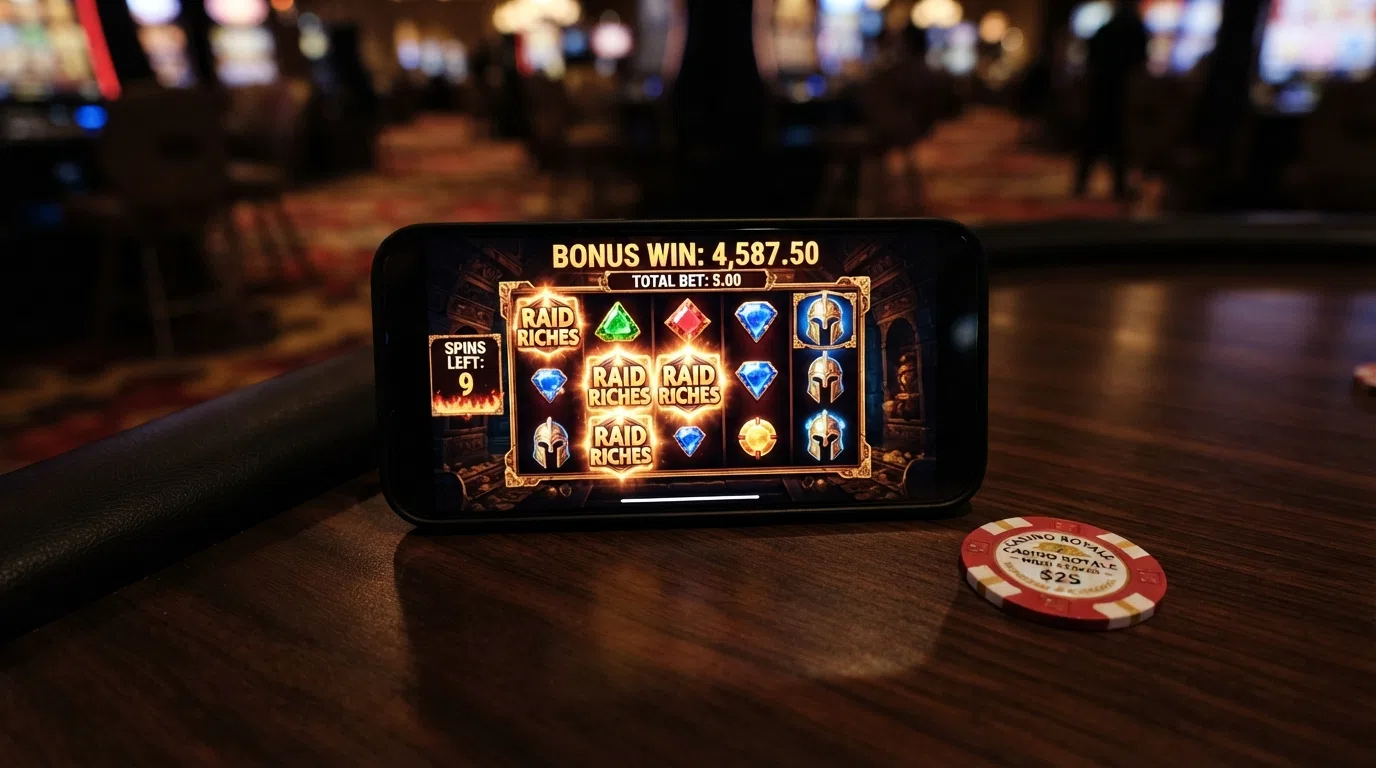
The slot comparison table is below. Volatility classes follow the studio’s own categorisations: “extreme” for the Money Train sequels, “high” for the rest.
| Slot Title | RTP | Volatility | Max Win |
|---|---|---|---|
| Book of 99 | 99.00% | High | 5,000x |
| Money Train 2 | 96.40% | Extreme | 50,000x |
| Temple Tumble | 96.25% | High | 46,656 ways |
| Iron Bank | 96.20% | High | 49,999x |
| Temple Tumble 2 Dream Drop | 96.20% | High | 20,000x |
| Beast Mode | 96.15% | High | — |
| Money Train 3 | 96.10% | Extreme | 100,000x |
| Money Train 4 | 96.10% | Extreme | 150,000x |
| Snake Arena | 96.00% | High | 10,000x |
The expected cost of a session, working from the table: a 1,000-spin session at £5 per spin on Book of 99 produces an expected loss of £50, against £195 on Money Train 4. The player trading RTP for max-win headline is paying £145 for the privilege of chasing a 150,000x figure. Whether that is a sensible trade depends on the bankroll and the session length — but the trade is real, and it is the one a player should make with eyes open.
Dream Drop: The Progressive Jackpot That Links the Titles
Dream Drop is Relax Gaming’s shared progressive jackpot network. A pot that grows as players across licensed operators wager on linked titles, the jackpot is available on a growing list of Relax Gaming slots — the one the research names explicitly is Temple Tumble 2 Dream Drop, which runs at 96.20% RTP with high volatility and a 20,000x max win on the base game, separate from the progressive prize.
The practical catch for bonus hunters: Dream Drop progressive titles are routinely excluded from welcome-bonus wagering at UK operators. A player clearing a deposit match is typically not simultaneously qualifying for Dream Drop contributions, so the jackpot chase and the bonus playthrough are two separate activities. A session designed to clear a bonus and a session designed to chase the jackpot look different in shape, and the bonus terms usually force the choice one way or the other.
About the Provider: The Studio Behind These Reels
Relax Gaming was founded in 2010 by Jani Tekoniemi and Patrik Österåker, starting as a two-person studio in a market that already had its dominant suppliers. Sixteen years later, the studio is part of the Evolution Group, acquired via NetEnt in 2021 for €295 million — a transaction that folded the studio into the largest B2B supplier in the live-casino space. The acquisition gave Relax Gaming access to Evolution’s distribution muscle and a clear path into the US market through Evolution’s existing American licences, but the studio’s UK-facing operations have continued to run from their own licence stack.
The licence stack covers four regulators: the UK Gambling Commission, through the Gibraltar entity Relax Gaming Gibraltar Ltd; the Malta Gaming Authority; the Alderney Gambling Control Commission; and the Romanian ONJN. A UK player is interacting with the UKGC-licensed layer, which is what makes the games available in a UKGC-licensed casino lobby in the first place. The other licences let the studio supply the same games into other regulated markets without re-engineering.
The distribution model is the second part of the studio’s story. Relax Gaming runs three layers: in-house slots under the Relax Gaming brand, the Silver Bullet aggregation platform (launched 2018, with one-time integration opening 640+ third-party games to operators) and Powered By Relax, a lighter integration option for operators who want to pick individual titles. The Silver Bullet model is what the research describes as “exclusive” at Unibet, where Silver Bullet access gives the operator a wider Relax-Gaming-distributed catalogue than competitors and a published 97.45% lobby RTP across the games on that platform.
The UK footprint is broad. Relax Gaming content is live with Paddy Power and Betfair through the Flutter deal that has been in place since 2020, with Unibet offering exclusive Silver Bullet access, and with Casumo, LeoVegas, Videoslots, MrQ and Bet365 carrying in-house and third-party titles under their own UKGC licences. The studio is not a niche supplier in the UK — its games are part of the standard catalogue at every major operator on this page.
New Casinos and New Slots: What’s Arriving
The honest answer: the research carries no specific new-operator launch dates or upcoming Relax Gaming slot release dates. Inventing any would publish a fiction, so this section flags what to watch instead.
The UKGC public register at gamblingcommission.gov.uk is where a new operator carrying Relax Gaming content will appear once licensed. The register is searchable by business name, trading name or domain, and it is the only definitive source for whether a new site is authorised to serve GB players. The provider’s own news channel is where new title releases and Dream Drop additions will be announced first. Any new slot carrying the Dream Drop branding will also surface in the Dream Drop-specific marketing at operators that carry the network.
The cross-reference for a player evaluating a new site is the section on UK licensing below. A site that is not on the public register, that does not participate in GamStop, or that accepts cryptocurrency is not eligible for the same protections as the operators on this page, regardless of the catalogue it advertises.
Why Your 2026 Relax Gaming Bonus Is Smaller Than It Looks
The UK Gambling Commission capped bonus wagering requirements at 10x the bonus amount, effective 19 January 2026, under LCCP Social Responsibility Code 5.1.1. The cap is a structural change to what a UK welcome bonus can ask. Before 2026, a 35x or 40x play-through on a deposit match was standard; after the cap, anything above 10x is non-compliant. The cap is the reason every featured operator on this page runs at 0x or 10x wagering — there is no offer above 10x to find, because the regulator has removed it.
The cap changes what a welcome bonus is worth. A £100 deposit match at 10x wagering requires £1,000 in total wager before the bonus converts to withdrawable cash. At a 96.20% RTP slot, the expected loss across £1,000 in wager is £38 — the player pays £38 in expected house edge to release £100 in bonus money, a net gain of £62 in expected value. Compare that to a 0x-wagering free-spin offer: 200 spins at 10p with 0x wagering returns £20 in stake value and whatever the spins pay out as cash, with no play-through, no cashout cap, and no bonus balance to clear. The 0x structure is smaller in headline value but cheaper in real cost, and the comparison is the one a player should run before assuming the bigger number is the better one.
The UKGC’s own rationale for the cap, from its 2026 consultation documents, is that the cap “decreases the likelihood of harm, reduces complexity, and improves transparency while maintaining consumer choice.” That last clause matters: the regulator is not banning bonuses, it is capping the friction attached to them. A player can still prefer a large deposit match over a smaller wager-free spin package, but the cost of clearing the match is now bounded, and the comparison between offers is meaningful rather than obscured by a 40x multiplier.
The cross-product incentive ban, also effective 19 January 2026, is the second piece of the new framework. Operators can no longer bundle a casino free-spin offer with a sports-betting deposit requirement — a single incentive must sit within a single product. A welcome offer that asks the player to place a sports bet to unlock casino free spins is non-compliant, and the operators on this page have not structured their offers that way.
The terms that still matter after the cap are the ones the cap does not address. Game eligibility restricts which slots contribute to wagering, and a Relax Gaming slot may or may not qualify depending on the operator’s terms. Maximum cashout caps still apply to selected offers — 888 Casino’s £100 cap on a £100 match is the clearest example on the page. Validity windows still apply, ranging from 48 hours at MrQ to 90 days at 888 Casino. The cap puts a ceiling on play-through; the rest of the terms still determine what the player actually receives.
No-Deposit Offers and Free Money
Paddy Power’s 60 no-deposit free spins are the only no-deposit offer in the featured set. The spins are credited on registration, with 0x wagering and a 7-day validity. They are followed by a separate 200-spin tranche that requires a £10 deposit and wager — the no-deposit element is the first 60 only.
No-deposit bonuses are rare in the UKGC market for structural reasons. The 10x wagering cap applies to deposit bonuses, but the regulator’s framework around inducements to gamble without any customer commitment treats no-deposit offers as a higher-risk category. A casino offering free money to a player who has not deposited is offering that player a chance to win real money at no cost, and the risk profile is different from a deposit-triggered offer. The result is that most UKGC-licensed operators limit no-deposit offers to small spin packages, and many skip them entirely. Paddy Power’s 60-spin offer sits at the upper end of what the UKGC market routinely provides.
The distinction between a no-deposit bonus and a deposit-triggered free-spin package with zero wagering is worth keeping clear. A no-deposit offer pays out real money from real spins with no commitment from the player; a deposit-triggered 0x offer pays out real money from real spins with a £10 commitment. The headline spin count is not comparable between the two without that qualifier.
Free-Spins Offers: Which Ones Actually Pay Out
The free-spin landscape across the featured set splits into three groups by what the spins are actually worth at cashout. At the top: MrQ (200 spins at 10p, 0x wagering, no cap, 48 hours), Bet365 (up to 500 spins across 10 selections, 0x wagering, 30-day claim window), Paddy Power (60 no-deposit plus 200 on deposit, 0x wagering, 7 days), PlayOJO (50 spins at 10p, 0x, no cap) and Sky Vegas (200 spins, 0x). In the middle: Videoslots (11 bonus spins bundled with a deposit match, 10x on the bonus, validity n/a), and LeoVegas (50 spins, 0x on winnings, 1x on the qualifying deposit). At the bottom: William Hill (200 spins at 10p, 10x on winnings, £30 maximum cashout, 4 minutes).
The 10p-per-spin standard is the working figure across the set where research states a value. At 10p, 200 spins represents £20 in total stake — not the headline value of “200 free spins”, which marketing copy can otherwise inflate by suggesting a higher per-spin value that the research does not carry. The MrQ 200-spin offer, the William Hill 200-spin offer and the PlayOJO 50-spin offer all sit at 10p per spin; the headline counts differ, but the stake value is the same per spin.
The slot titles the free spins are locked to are also worth flagging. MrQ, LeoVegas and William Hill anchor their spins to Big Bass Splash; PlayOJO anchors to Big Bass Bonanza. Neither title is among the Relax Gaming slots profiled on this page. A player who takes a free-spin offer at any of these operators is not sampling Relax Gaming content — they are playing Pragmatic Play’s Big Bass series. The Relax Gaming catalogue sits elsewhere in the lobby and requires a funded session to access.
Deposit-Match Bonuses and Their Real Cost
Three operators in the featured set offer deposit-match welcome bonuses rather than wager-free spin packages: Casumo (50% up to £100 at 10x wagering, 7-day validity, £20 minimum deposit), 888 Casino (100% up to £100 at 10x wagering, 90-day validity, £100 cashout cap, £10 minimum deposit) and Videoslots (100% up to £50 plus 11 bonus spins at 10x wagering, validity n/a). The arithmetic of clearing a £100 match at 10x wagering versus claiming 200 wager-free spins worth £20 in stake is the working comparison.
The £100 match at 10x requires £1,000 in wager before the bonus balance is withdrawable. At a 96.20% RTP slot, expected loss across £1,000 is £38, leaving the player with a £100 bonus minus a £38 cost, net £62. The 200 wager-free spins at 10p return £20 in stake plus whatever the spins pay out, with no play-through. At an average slot return, 200 spins at 10p on a 96.20% RTP slot returns roughly £19.24 in expected payout, with the £20 stake already spent. The expected value of the wager-free package is the slot’s return — around £19 — versus the expected value of the deposit match at £62. The deposit match wins on paper.
The real comparison depends on what the player would do with the bonus balance. A player who would play through £1,000 in wager anyway is better off with the deposit match. A player who would not play that volume is better off with the wager-free spins, because the bonus is not free until the play-through is complete. The marketing copy presents the deposit match as the larger offer, and on headline value it is. Whether it is the better offer depends on the player’s session plan.
Bonus Codes and How Long You Have to Use Them
No bonus code is required for any featured operator’s welcome offer at the time of research. All offers activate on the qualifying deposit or wager, without a code entry step. Affiliate sites may still surface code fields for tracking purposes, but the underlying operator does not gate the welcome on a code.
The validity windows across the set vary widely. MrQ gives 17 minutes to use the spins. LeoVegas runs two clocks: 7 days to make the deposit and complete the £10 wager, then 3 days to use the spins once credited. Casumo gives 7 days to clear the match. Bet365 gives 30 days to claim, with 24 hours between selections. William Hill gives 4 minutes from credit. 888 Casino gives 90 days — the longest on the page. The rest are not stated in the research, and an unstated window does not mean indefinite; the operator’s own terms page is the source.
The 17-minute window at MrQ is the tightest on the page. A player who deposits on a Friday evening and returns on Monday morning finds the spins already expired. The 90-day window at 888 Casino is the most generous. The choice between the two is partly a choice about how a player intends to use the offer — a player who wants to play immediately has no problem with a 17-minute window; a player who wants to think about it needs the 90-day one.
Try Games for Free: Demo Mode and What It Teaches
Relax Gaming slots are widely available in demo mode at the featured operators. A demo session runs the slot with a virtual balance, usually without registering an account, and the player faces none of the financial consequences of a real-money session. The £5/£2 per-spin stake cap that the UKGC applies to real-money play does not bind in demo mode, so a player testing a high-volatility slot can run a single spin at any stake to see the bonus round trigger, the symbol drops, and the feature cascade.
What a demo session teaches is the slot’s volatility feel — how quickly a virtual balance depletes, how often the bonus round triggers, and how a high-volatility title like Money Train 4 behaves between feature hits. A demo session on a 96.10% RTP, extreme-volatility slot will show the long quiet stretches between big wins that define the experience; a demo session on Temple Tumble at 96.25% will show the more frequent small hits that high-volatility-with-ways-to-win produces.
What a demo session cannot teach is the casino. The RNG and the RTP behave the same with real money, and the bonus-round mechanics are identical. But a demo session says nothing about the operator’s withdrawal speed, KYC friction, support quality, or how the casino handles a disputed cashout. The casino is half the product, and demo play covers only the slot side.
The distinction between demo mode and a no-deposit bonus is also worth keeping clean. Demo mode is a virtual balance with no withdrawal; a no-deposit bonus is a real-money play with withdrawal conditions. Paddy Power’s 60 no-deposit spins are the only no-deposit real-money play in the featured set. A player who treats demo mode as a no-deposit offer is comparing two different products.
Free Play vs Real Money: What Actually Changes
The slot is the same slot. The RNG, the RTP over a large sample, the bonus-round mechanics, the symbol weights, the paytable — none of these change between demo mode and a funded account. The slot build served on demo is the same slot build served on real money, and the mathematics is the same.
What changes is the player. A demo session has no financial weight: a depleted virtual balance is a number on a screen, and a £500 virtual win is the same screen. A real-money session carries the weight of actual loss and actual win, and the psychology of playing with money that cannot be replaced is the variable that demo mode cannot simulate. The £5/£2 per-spin stake cap also binds in real money, replacing the demo’s unlimited virtual stake with a hard ceiling. A player testing a feature-buy mechanic at £100 per buy in demo cannot repeat that stake in a UKGC-licensed casino.
What demo play cannot tell the player is anything about the casino hosting it. Withdrawal speed, KYC friction, support response time, dispute resolution — these are properties of the operator, not the slot, and a demo session covers none of them. The slot review tells the player what the game is worth; only a real-money session at the chosen operator tells the player what the casino is worth.
Live Dealer Games: What a Slots-First Provider Actually Offers
Relax Gaming is primarily a slots and aggregation provider, and its live-casino product is not a headlining title in the UK market the way its slots are. No UK-facing page in the research covered Relax Gaming’s live offering in depth, and the studio’s live-dealer footprint in GB-licensed casinos is thinner and less documented than its slot catalogue. A player who lands on a Relax Gaming casino for the slots may find a live lobby run by a different provider entirely, or may find a smaller live-casino selection than the slot count suggests.
The live-casino search terms players run — live roulette, live blackjack, a live studio — are not addressed by Relax Gaming’s UK product in the way the slot catalogue addresses the slot search terms. The honest statement is that per-operator availability of Relax Gaming live tables was not established by the research, and a player whose priority is live-dealer play should check the live lobby of any featured operator before signing up. The slot ranking on this page does not imply a corresponding live-dealer ranking, because the data does not support one.
RNG Tables vs Live Dealers: Which One You’ll Find
RNG table games — automated roulette, blackjack and baccarat — are part of the Relax Gaming catalogue alongside the slots, and they reach UKGC-licensed operators through the same supply chain. A UK player looking for a quick blackjack hand without a live stream can find Relax Gaming RNG tables in many of the lobbies on this page, served by the same UKGC-supplier relationship that delivers the slots.
The regulatory equivalence under the UKGC is worth noting: every game supplied to a UKGC-licensed operator, whether RNG or live-dealer, undergoes the same fairness testing and RTP auditing. The studio’s licence covers the games; the operator’s licence covers the deployment. A player trusting the slot catalogue has the same basis for trusting the RNG tables, and the regulator does not distinguish between the two for fairness purposes.
The research did not establish which featured casinos carry Relax Gaming live tables versus RNG tables. The general distinction holds — RNG tables are automated and faster, live tables involve a real dealer and a slower pace — but the operator-by-operator split on Relax Gaming’s live offering is not in the data, and the writer does not attribute specific tables to specific operators here.
Playing on a Phone: Mobile Access Without a Dedicated App
Relax Gaming slots run in modern mobile browsers, so iOS and Android players can access the catalogue without downloading software at most featured operators. The browser experience is touch-optimised, supports portrait and landscape play, and serves the same slot build that runs on desktop — meaning the RTP and the behaviour are identical across devices. The £5/£2 per-spin stake cap applies identically on mobile, because the UKGC regulates the stake, not the device.

A few major UK high-street brands ship dedicated apps alongside the browser experience, and the research does not list which featured casinos ship an app versus browser-only. The general split is that operators with strong sportsbook heritage tend to ship apps (Bet365, Paddy Power, Sky Bet, William Hill), while casino-first operators more commonly run browser-only (PlayOJO, MrQ, Videoslots). This is a generalisation, not a per-operator rule, and the player should check the operator’s site directly to confirm app availability before assuming either way.
The honest qualification is that the app-versus-browser distinction does not change what the player receives. A spin on Money Train 4 in the Bet365 app is the same spin, with the same RTP and the same RNG, as a spin on the same title in the MrQ browser. The choice between app and browser is a choice about user interface, not a choice about the underlying game.
Phone vs Desktop: Does the Device Change the Payout?
RTP and RNG behaviour are identical across devices. The same slot build is served on every platform, and the mathematics does not change. A player switching from a laptop to a phone sees the same game, the same symbols, the same paytable, and the same expected return over a large sample. The stake cap applies on every device.
The practical differences are in the session experience. Smaller screens and touch targets affect dense grid slots like Money Train 4, where the bonus-round UI packs more information into a tighter space — a desktop monitor gives more room to read the running win total and the remaining spin count than a phone in portrait mode. Battery drain is a real consideration for long sessions on a phone, and a player who runs 1,000 demo spins on a phone without a charger will end the session with a depleted device. Data usage on mobile networks versus Wi-Fi is the third practical difference: a long session on a mobile network burns through a data allowance that the same session on Wi-Fi does not touch.
None of these change the slot. They change the player, and the player choosing between devices is choosing on convenience, not on payout.
Deposits, PayPal and Withdrawals at These Casinos
PayPal is the highest-intent payment method in this cluster, and the research does not carry a per-operator breakdown. PayPal is widely supported at UKGC-licensed casinos, and the standard pattern is that PayPal deposits are eligible for the welcome offer and PayPal withdrawals are processed faster than debit-card withdrawals — but the per-operator specifics should be confirmed on each featured casino’s banking page before depositing. A player who wants PayPal specifically should treat the operator’s banking page as the source, not this page.
The alternative deposit routes players search for are Paysafecard (a prepaid voucher, useful for players who want to cap their spend at the voucher value), Trustly (a bank-transfer gateway that processes deposits and withdrawals through the player’s bank) and Pay by Phone (a mobile-billing deposit that charges the deposit to the player’s phone bill, typically with a £10 daily cap). Availability of each varies by operator; a player with a specific payment method in mind should check the operator’s banking page.
The minimum-deposit floor across the featured set is £10 in most cases, with Casumo at £20. A £5 deposit is not generally available at the operators reviewed, and the marketing copy that implies otherwise usually refers to a free-spin offer rather than a cash deposit. The £10 floor is the standard and the player should plan accordingly.
Fast withdrawals are a function of two stages: the operator’s pending period (the time between the player requesting a cashout and the operator releasing the funds) and the payment processor’s settlement time (the time between the operator releasing the funds and the funds arriving in the player’s account). The research carries no per-operator duration figures, so the writer does not attribute a specific withdrawal speed to any operator here. The general pattern is that e-wallets settle faster than debit cards and that the operator’s pending period is the variable the player has the most leverage over — submitting KYC documents before the first withdrawal request removes the verification delay.
Why Your First Cashout Is Slow: Verification Explained
UKGC-mandated identity verification — KYC — is the primary cause of first-withdrawal delay at every casino on this page, and it is a regulatory requirement, not operator discretion. The operator must verify the player’s identity, address and payment method before processing a first withdrawal, and the operator cannot shortcut the check without breaching its licence conditions.
The documents typically requested are a photo ID (passport, driving licence or national ID card), proof of address (a utility bill or bank statement dated within the last three months) and payment-method verification (a photo of the debit card showing the first six and last four digits, or a screenshot of the e-wallet account). Submitting these documents at deposit, rather than waiting until the first withdrawal request, removes the post-win wait — the verification is complete before any cashout is requested, and the first withdrawal can be processed without the KYC delay.
Source-of-funds checks under AML rules are a second, less common delay. For larger withdrawals — the threshold varies by operator but is typically several thousand pounds — the operator may request evidence of the funds being used to play, such as a payslip or a bank statement showing the deposit source. The request is uncommon for normal play but a player who wins a large progressive prize or accumulates a balance well above the deposit history should expect the request.
The two-stage structure of every cashout — the operator’s pending period followed by the payment processor’s settlement time — is the model every operator on this page uses. The research carries no per-operator duration figures, and the writer does not attribute a specific pending period to any operator. The general pattern is that submitting KYC documents in advance is the single most effective step a player can take to shorten the first cashout.
Crypto Deposits and the Offshore Reality
No UKGC-licensed casino accepts cryptocurrency deposits in 2026. The prohibition is regulatory, not commercial: the UKGC’s framework around anti-money-laundering and source-of-funds verification is incompatible with the anonymity that cryptocurrency transactions provide, and the operator cannot meet its KYC and AML obligations while processing Bitcoin deposits. A site accepting Bitcoin for Relax Gaming slots is not licensed by the UKGC, and the only licences under which such a site typically operates are Curaçao, Anjouan or Costa Rica.
What a player gives up offshore is the entire UK player-protection framework. No UKGC dispute resolution means no independent adjudicator if the operator withholds a withdrawal. No GamStop integration means the self-exclusion register does not block the site. No stake caps means the £5/£2 per-spin ceiling does not apply, and the player can wager above the UK limit. No UK player-protection framework means the safer-gambling tools the UKGC mandates — deposit limits, reality checks, time-outs, self-exclusion — are not required to be in place. The offshore site may offer some of these voluntarily, and the offshore site may operate fairly, but the player is trusting the operator’s own house rules rather than a regulator’s enforced standards.
The distinction between a casino accepting crypto and Relax Gaming’s own licensing status is worth keeping clear. Relax Gaming is UKGC-licensed and its games reach offshore casinos through the operator’s licence, not the provider’s. The studio is not policing the operator’s market. A player seeing a Relax Gaming slot at an offshore crypto casino is seeing a game that Relax Gaming has licensed to the offshore operator, not a UK-licensed product that Relax Gaming is distributing directly.
Crypto vs Pounds at the Cashier: What the Difference Means
Fiat deposits in GBP at a UKGC casino come with fund segregation, AML-protocol oversight and UKGC-mediated dispute resolution. The player’s funds are held in segregated accounts, separate from the operator’s operating capital, and the operator cannot use deposited funds to meet its own liabilities. The AML framework requires the operator to know the source of the funds and to report suspicious activity. The UKGC’s dispute resolution process provides an independent adjudicator if the player and the operator cannot resolve a complaint directly. None of these exist at an offshore crypto casino, where the operator is the only authority over the player’s funds.
The anonymity trade-off cuts both ways. A crypto casino that skips KYC also offers no recourse if the operator withholds a withdrawal. The player who values anonymity at the deposit stage gives up the dispute-resolution path at the withdrawal stage, and the operator’s discretion over the player’s funds is unconstrained by a regulator. The same property that makes crypto attractive at deposit — no verification — makes it risky at withdrawal.
Crypto carries a volatility risk unique to the medium. A Bitcoin deposit that falls against sterling before the player wagers has already cost the player before the first spin. A player depositing the sterling equivalent of £500 in Bitcoin and seeing the Bitcoin price drop 10% before playing has lost £50 to currency movement alone, separate from the slot’s expected house edge. The combination of slot volatility, crypto volatility and the absence of UK oversight is a layered risk profile that fiat play at a UKGC casino does not carry.
Five Checks to Run Before You Register
- Check the UKGC public register by business name, trading name or domain at gamblingcommission.gov.uk/public-register. It is the only definitive source for whether an operator holds a UKGC licence. A site claiming to be UK-licensed but absent from the register is not what it claims to be.
- Check the bonus wagering requirement. Since January 2026, no UKGC-compliant welcome offer can ask for more than 10x play-through. Any offer asking more is non-compliant and the operator is either offshore or breaching its licence conditions.
- Confirm Relax Gaming slots are actually in the lobby. A casino can hold a UKGC licence and not carry Relax Gaming titles. The slot catalogue should be checked before depositing, not after.
- Check the withdrawal policy for pending periods, cashout caps and payment-method eligibility. The fine print determines what a win is actually worth at cashout.
- Verify GamStop participation. Every UKGC-licensed casino must be part of GamStop. A site claiming UK regulation while absent from the GamStop register is not eligible for the protections the regulator requires.
Where a First-Time Player Should Start
A first session is best spent on a slot that teaches the mechanics without punishing the bankroll. Temple Tumble, at 96.25% RTP with a 46,656-ways-to-win structure, pays frequent small hits and extends a session further than an extreme-volatility title like Money Train 4, where the long quiet stretches between bonus rounds consume a bankroll quickly. The first session is for learning — when the bonus round triggers, what the feature cascade looks like, how the balance behaves — and Temple Tumble is a better classroom than the Money Train sequels for that purpose.
Demo mode gives the first-time player a free run at any of the slots on the page, without registering an account and without binding the £5/£2 per-spin cap. The demo session teaches the bonus-round triggers and feature mechanics without risking any of the UK stake cap. A first-time player who runs a demo session on Temple Tumble, then on Book of 99, then on Money Train 4 will arrive at a real-money session with a working understanding of what each slot does and what each one costs to play.
The choice of operator for a first-time player runs through the wager-free offers. MrQ, PlayOJO, LeoVegas, Bet365 and Sky Vegas all run welcome offers with 0x wagering on winnings, which means a first-deposit win is withdrawable immediately rather than locked behind a 10x play-through. The first-time player who values the ability to withdraw a small win without studying bonus terms is better served by a 0x offer than by a deposit match, even at a smaller headline.
The Legal Position: UK Licensing, GamStop and the Offshore Trap
The UK Gambling Commission is the sole regulator of commercial gambling in Great Britain — England, Scotland and Wales. Northern Ireland operates under separate gambling legislation and is not covered by the UKGC. The framework sits on the Gambling Act 2005, as amended, and the UKGC’s LCCP sets the conditions each licensed operator must meet.
A UKGC operating licence requires segregated player funds (the operator holds deposits in accounts separate from its own operating capital), fair-game auditing (every game supplied to a UKGC-licensed operator is tested for fairness and RTP), GamStop participation (the operator must be part of the national self-exclusion scheme), mandatory KYC checks (the operator verifies player identity before play and before withdrawal) and compliance with the bonus wagering cap and the cross-product incentive ban introduced in January 2026. A licence is not a marketing badge — it is a set of enforceable conditions, and the UKGC’s enforcement record is the proof that the conditions carry weight.
The public register at gamblingcommission.gov.uk/public-register is the player’s verification tool. Any licence can be checked by business name, trading name or domain. A player who sees a casino advertising UK regulation can confirm the claim in thirty seconds by searching the register. The register is updated continuously, and any suspension, penalty or licence condition is published.
The distinction between Relax Gaming’s own UKGC supplier licence and the operating licences held by the casinos carrying its games is a two-layer structure. Relax Gaming holds a supplier licence through its Gibraltar entity, Relax Gaming Gibraltar Ltd, which authorises it to provide games to UKGC-licensed operators. The operators themselves hold operating licences that authorise them to offer gambling to GB players. Both layers must be in place for a legal UK Relax Gaming experience: the provider’s licence governs the games, the operator’s licence governs the deployment, and the player is interacting with both.
GamStop: How Self-Exclusion Blocks Every Licensed Site
GamStop is the national online self-exclusion scheme, and every UKGC-licensed operator must participate. Registration is free, takes minutes, and the player chooses a self-exclusion period of 6 months, 1 year or 5 years. Once registered, the player is blocked from every UKGC-licensed online casino, including every operator on this page, for the duration of the chosen period. The block is enforced at the operator level, and a registered player cannot deposit, wager or access the lobby at any participating casino.
The exclusion periods are not advisory. A player who registers for 5 years cannot reverse the exclusion early, and the 5-year period runs from the date of registration. The 6-month and 1-year periods also run to completion. The design is intentional: a player registering for self-exclusion is making a commitment, and the commitment is enforced by every licensed operator simultaneously.
What GamStop does not cover is the offshore market. A self-excluded player searching for “non-GamStop casinos” will find offshore sites that are not part of the scheme, and the UKGC’s framework does not extend to those sites. The practical risk is that a self-excluded player seeking to bypass the block finds an offshore site that accepts the registration and offers no UK player protections. The same player is also blocked from land-based venues only if the venue participates in a separate land-based self-exclusion scheme, which is a different registration.
No-Verification Sites and the Offshore Trap
A no-verification casino is, in practice, an offshore operator licensed in Curaçao, Anjouan or Costa Rica that skips the UKGC-mandated KYC checks. The “no verification” claim is a marketing label for the absence of UK regulation, and the absence of KYC means the absence of every player protection the UKGC requires: no fund segregation, no independent dispute resolution, no GamStop participation, and no guarantee that the games run at their published RTP rather than a reduced configuration. The provider’s licence does not cover the operator’s market — Relax Gaming’s UKGC supplier licence means it cannot knowingly supply unlicensed operators targeting GB players, but the studio’s games reach offshore casinos through the operator’s own licensing arrangements, and the studio is not policing the operator’s market.
A player drawn to a no-verification offer is weighing the convenience of skipping KYC against the loss of every UK protection. The casino that does not verify the player is also the casino that does not segregate the player’s funds, does not answer to the UKGC on disputes, and does not block the player through GamStop. The marketing copy presents the absence of verification as a feature; the regulatory view is that it is the absence of a framework.
The specific risks compound. A player who wins at a no-verification casino and requests a withdrawal has no independent adjudicator if the operator declines. A player who self-excludes through GamStop and then plays at a no-verification casino has bypassed the very mechanism designed to protect them. A player who deposits at a no-verification casino and sees the slot running at a lower RTP than published has no audit trail and no recourse. The convenience at the deposit stage is paid for at every other stage.
The Rules That Cap Every Spin, Stake and Bonus
The online slots stake limits in Great Britain are £5 per spin for adults aged 25 and over, and £2 per spin for adults aged 18 to 24. The £5 limit became effective on 9 April 2025; the £2 limit on 21 May 2025. The cap applies to every Relax Gaming slot at every UKGC-licensed casino — a hard ceiling on the per-spin stake, regardless of the slot’s max-win headline or the player’s bankroll. The cap is enforced at the operator level, and a UKGC-licensed casino cannot offer a stake above the limit on any slot.
The bonus wagering cap of 10x the bonus amount became effective on 19 January 2026 under LCCP Social Responsibility Code 5.1.1. The cap applies to all deposit-triggered bonuses, and the cap on play-through is the structural change that has reshaped the welcome-offer market on this page. An offer asking 35x or 40x play-through was standard before 2026; an offer asking more than 10x is non-compliant after it.
The cross-product promotional incentive ban, also effective 19 January 2026, prevents operators from bundling a casino free-spin offer with a sports-betting deposit requirement. A single welcome incentive must sit within a single product. The ban is the second half of the 2026 bonus framework, and the reason no operator on this page structures its welcome as “deposit and bet £10 on sports to unlock 100 casino free spins.”
The Remote Gaming Duty rate of 40%, effective from 1 April 2026, is an operator-side tax. The RGD does not directly cost the player — the operator pays the duty on its gross gaming yield — but it shapes the commercial environment in which bonuses and RTP tiers are set. A higher RGD compresses operator margins, and the compression flows through to the offers the operator is willing to make and the RTP configurations the operator is willing to deploy. The player does not see a 40% RGD line on a deposit receipt, but the framework in which the deposit is taken is shaped by it.
Playing Safely: Tools, Help Lines and the Numbers Behind Them
Every UKGC-licensed operator must provide a set of safer-gambling tools, and the player can use them at any time without contacting support. Deposit limits cap the amount a player can deposit in a day, a week or a month; session time limits end a session after a player-set duration; reality-check pop-ups appear at player-set intervals during play; time-outs block access to the account for a player-set cooling-off period; and self-exclusion via GamStop blocks access at every UKGC-licensed casino for 6 months, 1 year or 5 years. The tools are mandatory, and a UKGC-licensed operator that does not provide them is breaching its licence.
The prevalence data behind the tools is the reason they exist. Approximately 2.4% of adults in Great Britain — an estimated 1.3 million adults — scored 8 or more on the Problem Gambling Severity Index (PGSI) according to the Gambling Commission’s GSGB Year 3 survey in 2025. A further 13.1% of adults — approximately 6.8 million — were classified as experiencing any level of gambling problems (PGSI 1+) in GambleAware’s 2024 Treatment and Support Survey. The figures are large, and they are the justification for the UKGC’s stake caps, bonus caps and self-exclusion framework.
The year-on-year trend is rising. GamCare’s National Gambling Helpline made 996 referrals to treatment and peer-based support services in January 2026, a 48% increase from 674 in January 2025. The share of adults who gamble and experience any level of problems and want treatment, support or advice nearly doubled from 17% in 2020 to 30% in 2024. The infrastructure is growing because demand is growing, and the safer-gambling tools the UKGC mandates are the first line of response.
Where to Get Help: The Helpline, the Charities and the Register
The National Gambling Helpline, on 0808 8020 133, is free, confidential and available 24 hours a day, seven days a week, by call, live chat or WhatsApp. It is operated by GamCare, the UK’s leading gambling-harm charity, which provides counselling, financial guidance and treatment referrals. GamCare made 996 referrals to treatment in January 2026 alone, a 48% year-on-year increase that reflects both rising demand and the charity’s expanded capacity.
BeGambleAware is the public-facing signposting service funded by the industry that directs players to the right support. A player who is unsure which service fits their situation can start at BeGambleAware, which routes the enquiry to GamCare, the National Gambling Support Network or another appropriate provider. GamStop, at gamstop.co.uk, is the national self-exclusion register — free to register, blocks every UKGC-licensed casino for 6 months, 1 year or 5 years, and is the single most effective step a player can take to set a backstop.
The National Gambling Support Network treated 11,960 clients in 2024/25, an 11% year-on-year increase. The support infrastructure is growing because demand is growing, and the network of services behind the helpline number is the place a player reaches when they call.
How We Ranked These Casinos
The data sources behind this ranking are the operator websites for welcome-offer terms, checked against each brand’s own published T&Cs; the UKGC public register for licence verification of every featured operator; and independent slot-data trackers plus studio-published data (Relax Gaming official site, GamingSoft Blog) for RTP and volatility figures. The cross-referencing between operator terms and the public register is the verification step that distinguishes this ranking from a marketing summary.
The ranking criteria are UKGC licence status (a non-negotiable threshold every featured operator passes), bonus fairness (evaluated against the January 2026 10x wagering cap and the presence or absence of 0x-wagering terms), Relax Gaming slot-catalogue depth and Dream Drop access, and withdrawal terms with payment-method coverage. The criteria are applied qualitatively, and the ranking reflects a snapshot of operator offers at the time of research.
The limitations are honest. This ranking reflects a featured set of ten operators, not the full UKGC-licensed market carrying Relax Gaming content. Other licensed operators exist, and the UKGC public register is the authoritative source for licence verification — a player who finds a UKGC-licensed casino not on this page can check it on the register and evaluate the bonus terms independently. The ranking is not a scoring system with weightings, percentages or numerical scores; it is a qualitative ordering based on the criteria above, and the writer has not invented any quantitative scheme the research does not support.
What Your Next Move Should Be
The central trade-off the data on this page reveals is between 0x-wagering free-spin offers and deposit-match bonuses. The 0x-wagering offers at MrQ, PlayOJO, LeoVegas, Bet365, Paddy Power and Sky Vegas leave the player with withdrawable cash from the first win, regardless of the spin count or the slot title. The deposit-match bonuses at Casumo, 888 Casino and Videoslots offer larger headline amounts that cost more to clear, and the expected-loss calculation in the bonus section above shows that the 0x structure is more efficient for a player who would not wager the full bonus amount regardless.
The RTP reality is the second trade-off. Choosing a Relax Gaming slot for its RTP — Book of 99 at 99.00% — rather than its max-win headline — Money Train 4 at 150,000x — changes what a session costs. The expected-loss calculation, applied to a 1,000-spin session at the £5 per-spin cap, shows Book of 99 returning £50 in expected loss against Money Train 4’s £195, a £145 difference for the same number of spins at the same stake. The max-win figure is a marketing number; the RTP is the number the slot actually pays back.
The one action that costs nothing and protects everything is to register with GamStop before depositing anywhere. The registration is free, takes minutes, and sets a backstop no UKGC-licensed casino can override. A registered player can still choose not to self-exclude by selecting the minimum exclusion period, but the option exists, and the framework is in place if it is ever needed.
The closing judgement is that the UK framework makes 2026 a safer year to play Relax Gaming slots than any year before. The 10x wagering cap, the £5 spin limit, the mandatory GamStop participation and the cross-product incentive ban together reshape the welcome-offer market in favour of the player. The operator that fits the session style is a function of whether the player values withdrawable cash today (0x spins) or a larger bonus to clear over time (a deposit match). The slot is a function of whether the player values RTP (Book of 99) or max-win (Money Train 4). Both choices are real, both are supported by the data on this page, and neither is forced.
Frequently Asked Questions
What is the difference between Silver Bullet and Powered by Relax?
Silver Bullet is Relax Gaming’s aggregation platform, launched in 2018, that gives third-party studios one-time integration to 640+ casino games and lets operators access the full aggregated catalogue. Powered By Relax is a lighter integration option that lets operators select individual third-party titles without committing to the full Silver Bullet stack. Silver Bullet gives broader access; Powered By Relax gives narrower, operator-selected access.
How do I verify an operator’s UKGC licence before I deposit?
Search the UK Gambling Commission’s public register at gamblingcommission.gov.uk/public-register by business name, trading name or domain. The register is updated continuously and lists every licensed operator along with any licence conditions, suspensions or penalties. A site claiming UK regulation but absent from the register is not what it claims to be.
Does PayPal work at the casinos listed here?
PayPal is widely supported at UKGC-licensed casinos, and the standard pattern is that PayPal deposits qualify for welcome offers and PayPal withdrawals settle faster than debit-card withdrawals. The research did not carry a per-operator PayPal breakdown, so each featured casino’s banking page is the source for whether PayPal is available, what the minimum deposit is, and whether PayPal withdrawals are supported.
Is a wager-free offer always worth more than a deposit match?
Not always. A wager-free offer is worth more for a player who would not wager the full bonus-clearance volume required by a deposit match; a deposit match at 10x wagering is worth more for a player who would play through that volume anyway, since the expected value of the bonus exceeds the expected cost of the play-through. The honest answer depends on the player’s session plan, not on the headline figure.
Do non-GamStop sites really carry Relax Gaming slots?
Yes, but through offshore operator licences rather than Relax Gaming’s own UKGC supplier licence. Relax Gaming’s games reach offshore casinos via the operator’s own licensing arrangements, and the studio is not policing the operator’s market. A non-GamStop site carrying Relax Gaming slots is an offshore site without UK player protections, regardless of which studio supplies the games.
Why do two casinos show different payout percentages for the same slot?
Relax Gaming publishes its slots with operator-selectable RTP tiers — typically two or three configurations. The default or top tier carries the headline RTP the studio publicises; a lower tier carries a smaller RTP, often in the 94% range, and is the configuration many operators actually deploy. Two casinos showing different payout percentages for the same slot are running different RTP configurations, and the player cannot tell which is in play without checking the casino’s published game rules.
Providers – trustedcasinos-notongamstop
Content created by the «trustedcasinos-notongamstop» team