
Aviator at UK casinos: a working guide to the crash game after the Spribe licence fight
 Available in GB
Data current as of September 9, 2026 · Licence claims verified against the UK Gambling Commission public register.
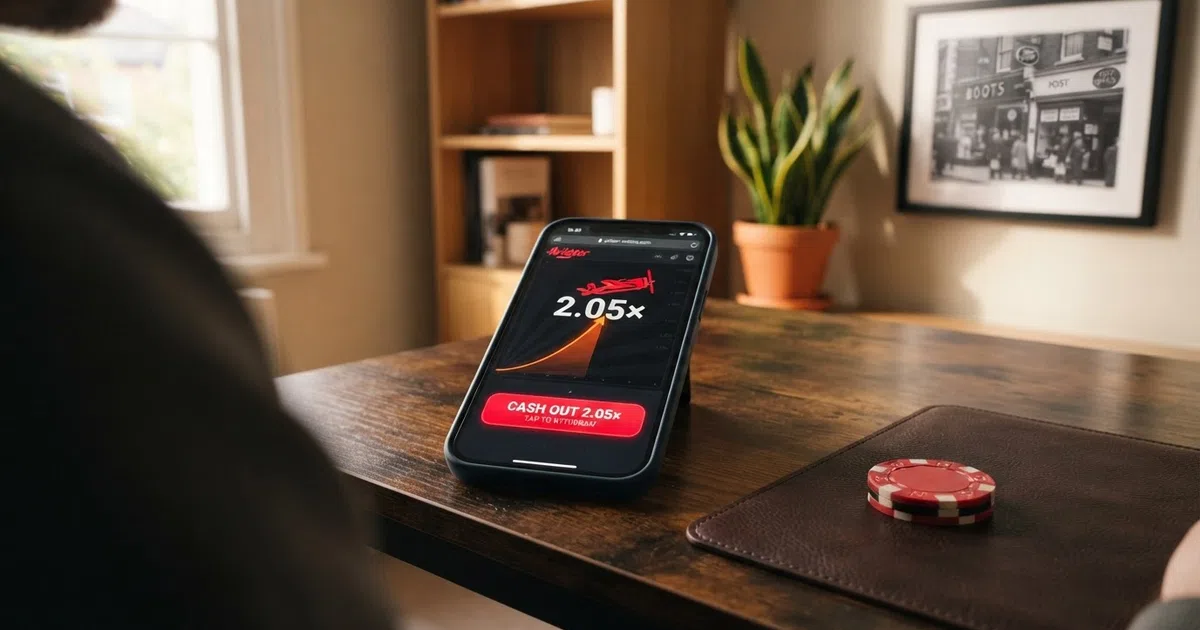
Aviator is the rare casino game that travels by plane instead of reel. The plane takes off, a multiplier climbs, and you have to cash out before it flies away. Get the timing right and a £10 stake becomes £15, £25, or more; flinch a second too late and the round ends with nothing. Released by Spribe in February 2019, the game turned that single decision into an entire product category — the “crash game” — and made the developer one of the most-licensed studios in iGaming. Then, on 30 October 2025, Spribe’s UK gambling software licence was suspended. The suspension lifted on 30 March 2026, but the comeback has been less than clean. This page is the post-suspension guide to playing Aviator at UK-licensed casinos in 2026: how the game actually works, which UK operators carry it, what the bonus landscape looks like under the December 2025 wagering cap, and what a player loses by going offshore.
Why Aviator is not a slot — and why that matters for UK players
Calling Aviator a “slot” is the single most common mistake in the market, and in the UK it carries a price. The distinction is not cosmetic; it decides which stake cap applies, which bonuses cover the game, and which regulatory rules shape a session. The UK introduced a statutory £5/£2 online slots stake cap under SI 2025/215 — a cap that does not, deliberately, extend to crash games. A player who thinks they are playing a slot may budget around a £5 ceiling that never binds them; a player who thinks they are playing a crash game when it is actually a slot may bet above the legal line without realising it. Getting the category right is the first job.
What exactly is Aviator? The crash game explained
A crash game is a category of fixed-odds betting built around a single, rising multiplier. Each round begins with a countdown. Players place their bets, the round starts, and a multiplier — 1.00× and climbing — ticks upward in real time. The game ends the moment the multiplier “crashes” at some unpredictable point. Anyone who cashed out before the crash wins their bet multiplied by the value shown on screen at the moment of cash-out; anyone still in loses the entire stake.
Aviator is the title that defined the format. Its visual hook is a red plane taking off, and “fly away” is the in-game term for the crash — the moment the multiplier stops climbing. Released in February 2019, the game has a theoretical return-to-player of 97%, which means a 3% house edge. The bet range runs from £0.10 to £100 per bet, with two simultaneous bets allowed per round, so a player can split a session across two positions if they want. The maximum multiplier is operator-capped — commonly at 10,000× the stake — but the figure that actually matters for the round-to-round experience is the average, which sits well below that ceiling.
What separates Aviator from a slot is not just the visual metaphor but the decision structure. A slot spins and resolves; the player’s only input is the stake. In a crash game the player sets a stake and then a *second* variable: when to leave. That second decision is the whole game. Aviator also layers in social mechanics — a live bets feed showing other players’ wagers, in-game chat, and a “Rain” feature that drops free bets into the chat for anyone watching to grab — and a provably fair verification system that uses SHA-512 hashing with three seeds (one server, two client) so any round can be checked after the fact.
Aviator game rules: how one round plays out
A round of Aviator is short. The interface shows a countdown, a bet panel, and the multiplier area with the plane. Before the countdown ends, a player clicks to place one or two bets, each between £0.10 and £100. When the round starts, the multiplier begins climbing from 1.00×, ticking upward at a variable rate. A cash-out button sits beside each active bet, and a player presses it whenever they want to lock in the current multiplier. If both bets are still live when the plane flies away, both lose.
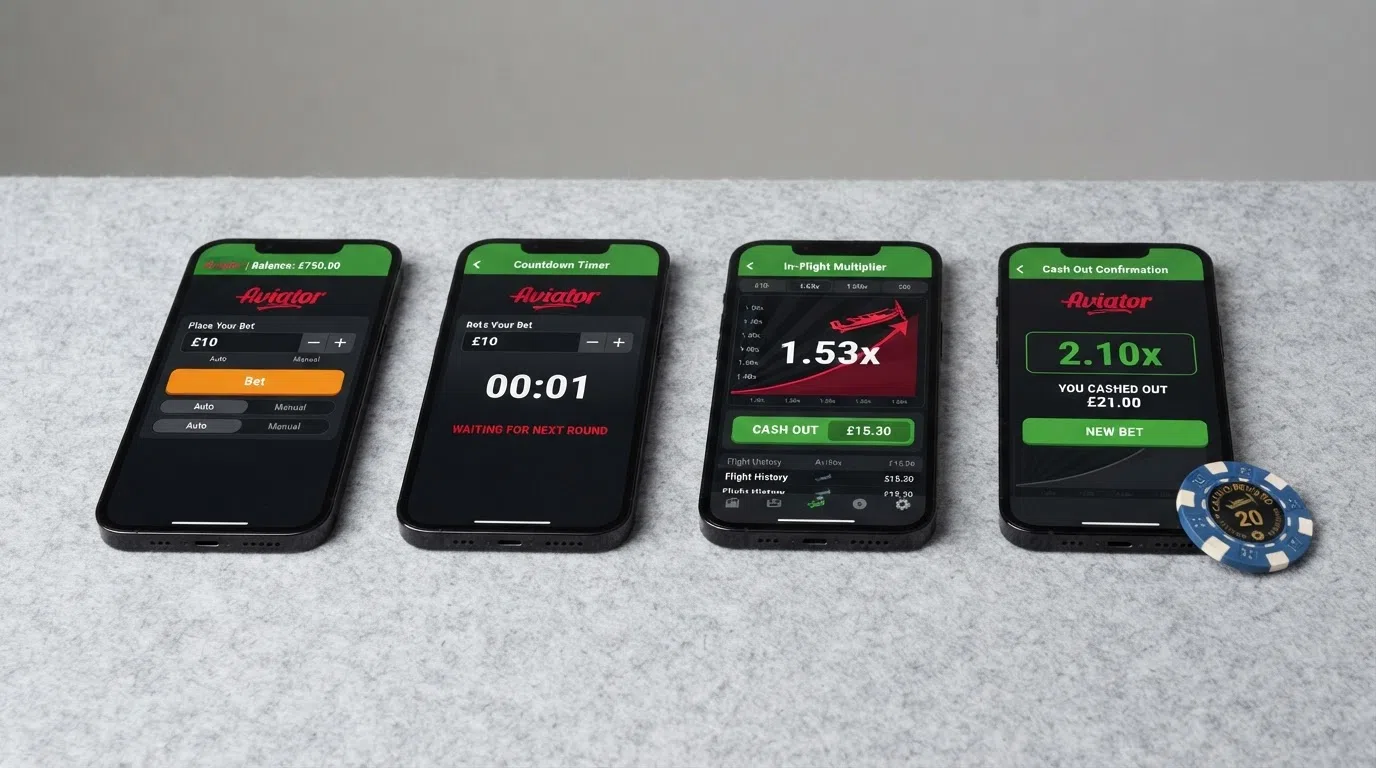
The cash-out step has two modes. Manual cash-out is the default — the player watches and decides. Auto cash-out lets the player pre-set a target (say, 1.75×) and the system locks in the win automatically the moment the multiplier reaches it. Auto-cashout is not a strategy; it is a discipline tool. It removes the temptation to hold out for one more tick, which is also the moment a crash tends to take the round. A player can run one bet on auto-cashout at 1.50× and a second on manual, which is the dual-bet setup: a conservative hedge plus a swing for the fences. That structure costs nothing extra — both bets are live simultaneously in the same round — but the second bet, if it survives, multiplies by whatever multiplier was live at the moment of cash-out.
The social layer runs throughout. The live bets feed on the side of the screen shows other players’ stakes and when they cashed out. The chat scrolls with messages, and “Rain” free bets drop into the conversation periodically — small credit amounts that any watching player can claim before they expire. None of this changes the math of the round. The crash point is independently determined before the plane takes off, and the 3% house edge holds regardless of what the chat says.
Slot, live game, or something else? The category that confuses UK regulation
For UK players the category question is more than a taxonomy exercise. The £5/£2 online slots stake cap introduced under SI 2025/215 — £5 per game cycle for players 25 and over, £2 for those aged 18 to 24 — applies to online slots, defined under the regulations as games that use reels or equivalent representations and whose outcomes are determined by those representations. Aviator is not built on reels. Its outcome is a multiplier that crashes at a specific point, with no spinning symbols. It falls outside the statutory definition of a slot.
The practical effect: a UK player at a licensed casino can wager up to £100 per bet on Aviator without breaching any stake cap, because the £5/£2 ceiling does not bind them. The same player sitting at a slot is limited to a fraction of that. Some casinos market Aviator as a “live game” because the chat, the live bets feed and the host-style presentation feel like a live-dealer product. They are not live games under UK regulation either — a live game requires a real dealer or croupier running the round in real time, and Aviator’s round is generated by software, with a chat moderator at most. The framing is marketing, not law. The regulatory category is “crash game,” and the rules that apply are the ones for instant-win fixed-odds products: a stake cap if one is set (none is, for crash), and the general consumer protections that apply to all remote gambling.
The distinction matters most in two places. First, a player who reads “online slots stake cap” and assumes it covers everything in the lobby may misjudge their own position. Second, a casino that labels Aviator as a “slot” in its bonus terms is more likely to apply the slot stake cap to it; a casino that labels it correctly as a crash game will not. The category line in the terms and conditions is the place to look.
Spribe: the Estonian studio behind Aviator and its UK licence fight
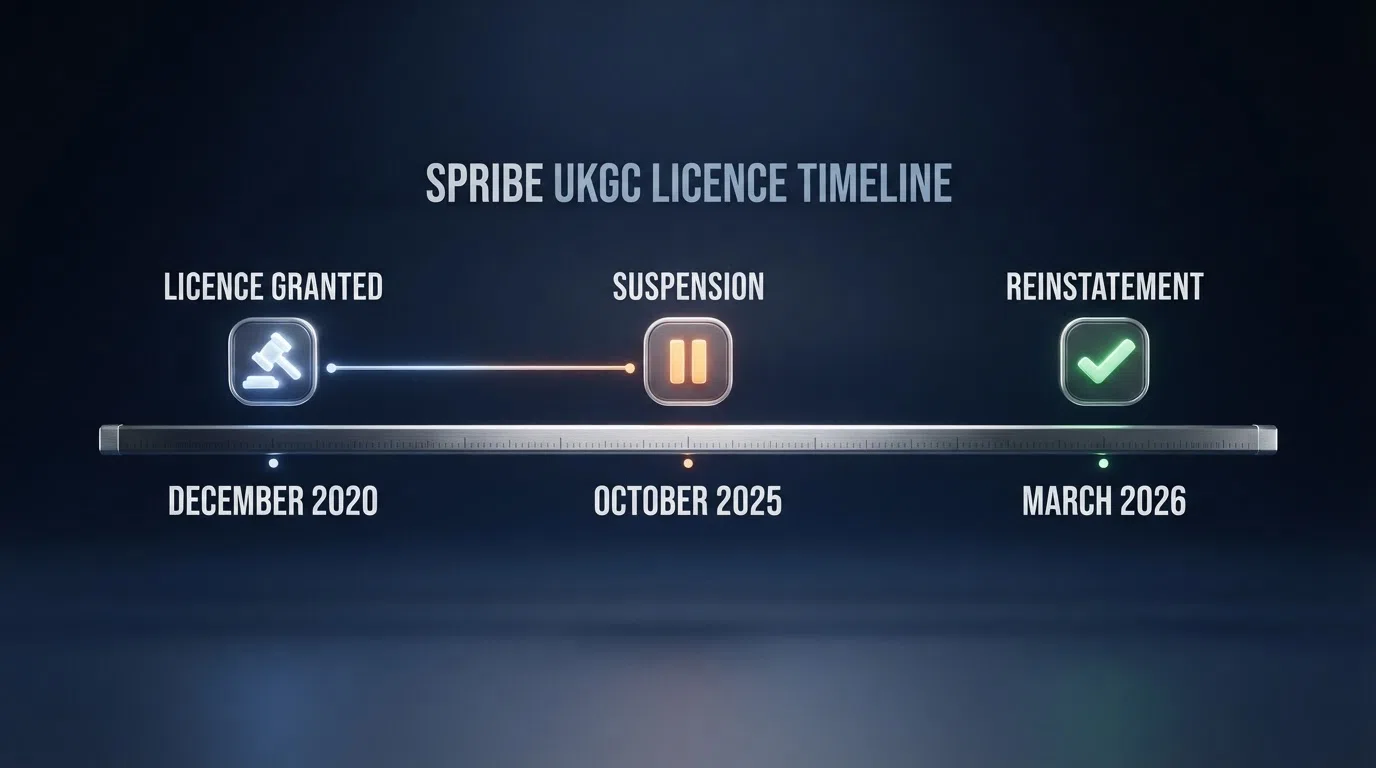
Spribe OÜ is an Estonian company that has been making casino games since the late 2010s. Aviator, released in February 2019, is its breakout product. Spribe obtained a UK gambling software licence in December 2020 and has held it (with the interruption described below) ever since. The studio is licensed across multiple jurisdictions and runs a catalogue that includes other crash and arcade-style titles, but Aviator accounts for the bulk of its UK-facing traffic.
The trouble began on 30 October 2025, when the UK Gambling Commission suspended Spribe OÜ’s UK gambling software licence (account 57302, licence reference 057302-R-333085-003) over hosting non-compliance. Spribe held a software licence, which authorises the supply of game software to licensed operators — but it was hosting the games on its own servers, which under the UK framework requires a separate game-host licence. The Commission treated this as a serious gap in compliance, not a paperwork error, and the suspension ran for five months.
Spribe described the issue as “an oversight in the licence application process”, and on 30 March 2026 the Commission lifted the suspension. The Gambling Software Remote licence is once again listed as Active on the public register, with a quoted line: “On 30 March 2026 the suspension of Spribe OÜ’s licence was lifted. The Licensee is now permitted to provide gambling facilities in reliance on its gambling software licence.” A separate entry, for the Game Host (Casino) Remote licence, is still listed as “Application or variation in progress” — a pending status that the register uses when a process has started but has not concluded.
Alongside the licensing question, Spribe has been defending its brand in the UK courts. On 1 August 2025 the UK High Court granted Spribe an interim injunction against Aviator LLC, a Georgian company, preventing it from launching or marketing a copycat crash game branded “Aviator” in the UK market. The trial is expected in late 2026 or early 2027. The injunction does not change anything for a player at a UK-licensed casino, but it is part of the reason no one else is using the name in the meantime.
Games like Aviator: JetX, Spaceman and the wider crash-game field
The crash-game field did not start with Aviator and did not end with its suspension. While Spribe’s licence was off, the UKGC-licensed lobbies filled the gap with substitutes, and most of those substitutes have stayed. JetX, by SmartSoft Gaming, and Spaceman, by Pragmatic Play, are the two names that appear most often as Aviator alternatives. Big Bass Crash, a branded crash title from the Pragmatic Play / Reel Kingdom stable, also showed up in the period. As one industry source noted, “Aviator’s return to UK-licensed sites has been gradual, and through early 2026, many UK-regulated casinos ran alternatives like JetX or Spaceman instead.”
The mechanic is broadly the same — multiplier climbs, player cashes out, plane (or rocket, or fisherman) disappears. The differences are mostly in the visual layer and the RTP: JetX and Spaceman sit in the 96–97% range, broadly comparable to Aviator, with some variation by operator. None of the alternatives uses Spribe’s provably fair SHA-512 system, so the verification angle is weaker across the field. A player who is choosing between these games for the verification alone is choosing Aviator; a player choosing for the experience and not the verification has plenty of options in any UKGC-licensed crash lobby.
What the substitutes tell you is that the demand for crash content in the UK does not depend on a single studio. The category is mature enough that three or four providers can fill it. That is also why the Spribe licence fight, while a real event for the studio, has not starved the UK market of crash games. The market ran on substitutes through the suspension and has continued to carry them afterwards.
Aviator RTP, volatility and what they actually mean for your balance
The 97% RTP figure is the number the marketing leads with, and it is the number most often misread. A 97% return-to-player means that, across an enormous number of rounds, the game returns £97 of every £100 wagered. It does not mean any individual session returns £97 of a £100 deposit. The £3 that goes missing is the house edge, and it is taken uniformly: roughly 3p from every £1 wagered, every round, regardless of outcome.
Volatility is the part that shapes what a session actually feels like. Crash games are high-volatility products. A round can crash at 1.01× — a near-instant loss — or it can climb to 50×, 100×, or higher before crashing. The distribution is wide. Long runs of small multipliers are punctuated by occasional large ones, and the player who hits a 50× round early may be up for the session despite twenty losing bets before it. The reverse is also true: a session can hit forty 1.2× rounds in a row and still feel flat, because the small wins do not cover the cumulative stake.
The operator-capped maximum multiplier — commonly 10,000× the stake — is the ceiling, not the expectation. A round that reaches 10,000× is an extreme event. Most rounds crash well before 10×. A player who sizes their bets to chase the ceiling is paying for the privilege of watching the plane take off, over and over, while the 3% house edge quietly trims their balance. The 97% RTP is the average; the variance around that average is what a bankroll has to absorb.
The multiplier trap: why timing the Aviator crash is harder than it looks
Search the web for “Aviator strategy” and the results are a parade of systems. Cash out at 1.5× every time. Double your stake after every loss and recover on the next win. Watch the last twenty multipliers and bet the opposite. None of them changes the 3% house edge. Each round is independently determined by the provably fair system before the plane takes off, and the SHA-512 hashing with three seeds — one server, two client — means the outcome is not adjusted in real time based on who is betting what. Past multipliers predict nothing, because the system was not designed to use them.
The Martingale — doubling the stake after each loss to recover on a single win — looks clever in a spreadsheet and fails in a session. The 3% house edge compounds, and the doubling requires a bankroll large enough to absorb a long losing streak. A player doubling from £1 needs £1,024 to survive ten consecutive losses, and a crash-game losing streak of ten rounds in a row is not unusual. The auto-cashout feature is the closest thing Aviator has to a discipline tool, and it works as advertised: it locks in the win at the chosen multiplier. What it does not do is generate an edge. The player who sets auto-cashout at 1.10× and runs fifty rounds will, on average, lose 3% of total turnover. The player who sets it at 2× and runs fifty rounds will also lose 3% of total turnover. The set-and-forget version just makes the loss quieter.
The dual-bet structure — one conservative auto-cashout, one manual swing — is a risk-management approach rather than a strategy. It spreads a round’s exposure across two positions and lets the player take a small win consistently while leaving room for a larger one. It does not change the math. What it changes is the shape of the session, which is a legitimate preference but not an edge. Anyone selling a system that promises to beat Aviator is selling the 3% house edge back to the player who just paid it.
The best Aviator casinos in the UK: ranked and rated
The ranking below covers ten UKGC-licensed operators with crash-game lobbies. Aviator’s return to UK-licensed casinos has been “patchy” and “inconsistent” through at least April–June 2026, which means not every brand on this list has the game live at the time of reading. The list is ranked on a combination of licence status, crash-game catalogue depth, and the welcome-offer terms that apply to a UK player in 2026 — assessed against the UKGC’s 10× wagering cap, in force since 19 December 2025. Every operator listed holds an active UKGC operating licence, verified against the public register at gamblingcommission.gov.uk.
A note on Aviator availability: Spribe’s software licence is active again and the game can be hosted legally, but the game-host licence is still listed as “Pending” on the register. Several operators on this list have restored Aviator to their lobbies; others are still running substitutes or have not confirmed restoration. The write-ups flag this where it matters.
How these Aviator casinos compare at a glance
| Casino | UKGC Licence | Welcome Offer | Free Spins | Wagering | Bonus Validity |
|---|---|---|---|---|---|
| Betway | Active (Super Group) | Deposit & stake £10 | 125 free spins | 10× | 7 days |
| bet365 | Active (Hillside UK Gaming) | Stake £10 | Up to 200 free spins | 30× (legacy) | 7 days |
| LeoVegas | Active (LeoVegas Gaming plc, MGM Resorts) | Deposit £10 | 50 free spins on Big Bass Splash | 0× (wager-free) | 7 days to claim / 3 days to use |
| Sky Vegas | Active (Bonne Terre Ltd, Flutter, licence 65519) | Deposit & play £10 | 250 free spins (50 no-deposit + 200) | 0× (wager-free) | Standard terms |
| 32Red | Active (Kindred Group) | Deposit & stake £30 on slots | 320 free spins on Big Bass Splash | 0× (wager-free) | 30 days |
| Unibet | Active (Platinum Gaming Ltd, Kindred Group) | Deposit & stake £10 on slots | 200 free spins on Big Bass Bonanza | 10× | 48h spin expiry / 30-day wagering |
| Parimatch | Active (BV Gaming Ltd) | Opt in, deposit £10, wager £5 | Up to 200 free spins (50 × 4 cycles) | 0× (wager-free) | 7 days |
| Midnite | Active (Dribble Media Ltd) | Wager £20 | 100 free spins on Big Bass Splash | 0× (wager-free) | 14 days to claim / 7 days to use |
| William Hill | Active (WHG International Ltd, licence 39225) | Casino offer varies | 30 free spins no deposit | 40× (legacy) | Not confirmed |
| BetVictor | Active (BV Gaming Ltd) | Varies by promotion | — | — | — |
Two columns in this table sit at a legacy figure that predates the UKGC’s 10× wagering cap. bet365’s 30× and William Hill’s 40× both come from listing sources that pre-date the December 2025 cap. Both operators are bound by the 10× ceiling on any bonus they offer in 2026, so the figures shown in the table should be read as historical reference points; the current terms at the operator’s site are what apply to a new player. The audit-recommended check is the operator’s own bonus terms page at the time of claiming.
Betway — established UK name with a deep crash-game lobby
Betway’s UK operation sits under the Super Group umbrella and has held an active UKGC licence for years. The welcome offer is straightforward: deposit and stake £10, receive 125 free spins on selected slots. The wagering requirement is 10× on the spin winnings, sitting exactly at the UKGC’s cap, and the spins are valid for 7 days from credit. The crash-game catalogue includes Spribe titles, which means Aviator is potentially available — though the post-suspension return has been gradual, and a player should check the lobby at the time of signing up. The 10× wagering figure is a useful comparison point: Betway sits at the cap, not above it, which is the cleanest non-wager-free structure in the table.
For a player who values a long-established UK brand and a simple bonus, Betway delivers. The 125 free spins are not on Aviator, and the wagering requirement means any winnings need to be played through ten times before withdrawal — a constraint, but a standard one under the post-December 2025 framework.
bet365 — the crash-game heavyweight with proprietary titles
bet365, the UK’s largest operator by handle, runs one of the deepest crash-game lobbies in the market, including proprietary titles alongside the Spribe catalogue. The welcome offer is stake £10, get up to 200 free spins on selected slots, with a 7-day validity window and a reported max cashout of £100 from the offer. The wagering figure from listing sources is 30× — a pre-cap figure that almost certainly does not apply in 2026; the current terms on the bet365 site are what bind a new player under the UKGC’s 10× ceiling.
The strength of bet365 in this category is depth. Where smaller operators stock one or two crash titles, bet365 runs a full crash-game section with internal brands alongside the third-party providers. A player who wants choice — different visual themes, different volatility profiles, different bet ranges — will find it here. The wagering figure is the historical reference; the live terms at sign-up are the operative ones.
LeoVegas — MGM-backed with wager-free spins and Spribe in the lobby
LeoVegas Gaming plc holds the UKGC licence and sits inside the MGM Resorts group. The welcome offer is the cleanest in the table: deposit £10, receive 50 wager-free spins on Big Bass Splash, valued at £0.10 per spin for a total of £5. The wagering is 0×, which means winnings from the spins are withdrawable as cash — no playthrough. The spins must be claimed within 7 days and expire 3 days after credit, and there is no cap on the winnings from the wager-free spins.
The wager-free structure is the strongest cashout term in the ranking. The £5 total value of the spins is modest compared to other operators, but a player who values clean withdrawal over raw spin count gets more from 50 wager-free spins than from 250 spins at 40× with a cashout cap. LeoVegas lists Spribe among its providers; Aviator availability is not confirmed for every lobby and should be checked before signing up. The mobile-first design of the brand is also worth noting for players who will play on a phone.
Sky Vegas — Flutter’s mass-market brand, but Aviator is absent
Sky Vegas, under Bonne Terre Ltd (Flutter Entertainment, licence 65519), is one of the biggest casino brands in the UK by player volume. The welcome offer is heavy on the spin count: deposit and play £10, receive 200 free spins plus 50 no-deposit spins, totalling 250. The spins are wager-free, and the standard terms apply.
The catch for a reader looking at this page: Sky Vegas does not carry Aviator. Industry sources are explicit on this — “you will not find Aviator on Sky Vegas” — and the brand is included in this ranking because it is the largest UK operator without the game, which is itself useful information for a player deciding where to sign up. The 250 wager-free spins are a strong offer for slot play; for crash-game play, Sky Vegas is not the destination. A player who wants wager-free spins *and* Aviator needs a different operator.
32Red — Kindred’s UK veteran, strong wager-free offer
32Red, part of the Kindred Group, has been a UK-facing brand since the early 2000s. The welcome offer is deposit and stake £30 on slots, receive 320 free spins on Big Bass Splash (valued at £0.10 per spin, £32 total). The wagering is 0× — wager-free — and the spins are valid for 30 days from claim, the longest window in this ranking. There is no cap on winnings from the wager-free spins.
The trade-off is the deposit-and-stake threshold: £30, against the £10 that most other operators require. A player who would deposit £30 anyway gets 320 wager-free spins and a 30-day window to use them. The 32Red crash-game catalogue leans on Microgaming and NetEnt titles; Aviator availability is not confirmed. For a player who values the cleanest wager-free structure and the longest validity window, 32Red is the headline pick — provided the £30 threshold is acceptable.
Unibet — Kindred’s other UK brand, solid crash section
Unibet UK, under Platinum Gaming Ltd (Kindred Group), runs a crash-game section that includes Spribe titles. The welcome offer is deposit and stake £10 on slots, receive 200 free spins on Big Bass Bonanza (valued at £0.10 per spin, £20 total), with 10× wagering — at the UKGC cap, not above it. The validity structure is the tightest in the table: spins expire 48 hours after credit, and the wagering window is 30 days. The 48-hour spin expiry is the shortest, and a player who does not log in within two days of credit loses the spins.
A payment restriction applies to the bonus: only debit card or Trustly deposits qualify for bonus eligibility. E-wallet deposits via other methods (Skrill, Neteller, PayPal) typically do not trigger the welcome offer. For a player who already plans to deposit by debit card and can log in within 48 hours, the 200 spins at 10× wagering are competitive. Aviator availability should be confirmed at the lobby before signing up.
Parimatch — wager-free spins across repeat deposits
Parimatch, under BV Gaming Ltd, structures the welcome offer as a multi-cycle wager-free package. Opt in, deposit £10, wager £5, claim 50 free spins; repeat the cycle up to three more times for 200 spins in total. The wagering is 0× — winnings are cash, withdrawable immediately. The 7-day offer validity covers the whole cycle. Spribe is listed among the providers, and the catalogue is competitive with the larger brands.
The structure rewards a player who comes back for three more rounds of deposit-and-wager. A player who deposits once and walks away gets 50 spins; a player who completes the full cycle gets 200. The wager-free terms apply across all four cycles, and there is no cap on the winnings. For a player who plans to play four sessions in a week, Parimatch offers the best per-cycle structure; for a single-session player, the 50-spin floor is modest.
Midnite — esports-born brand with a no-wagering welcome
Midnite, under Dribble Media Ltd, is a newer UKGC entrant with an esports orientation. The welcome offer is wager £20, receive 100 free spins on Big Bass Splash (valued at £0.10 per spin, £10 total), with 0× wagering and no cap on winnings. The structure is two-tier: 14 days to claim the offer from registration, then 7 days to use the spins once claimed.
The crash-game catalogue leans on Pragmatic Play and Hacksaw Gaming titles; Aviator availability is not confirmed. For a player who values a clean no-wagering welcome and is happy to play slots for the bonus, Midnite is a competitive option. The 14-day claim window is the longest in the table for the claim step, which gives more breathing room than the 48-hour spin expiry at Unibet.
William Hill — the high-street giant with a legacy wagering structure
William Hill, under WHG (International) Ltd (licence 39225), is Britain’s most recognised bookmaker brand. The casino welcome offer runs in two parts: a sports-side Bet £10 Get £30 in free bets, and a casino offer that, per listing sources, includes 30 free spins no deposit with 40× wagering and a £150 max cashout. The 40× figure is almost certainly a pre-cap legacy number; the UKGC’s 10× cap, in force since 19 December 2025, binds any current bonus. The terms shown on the William Hill site at the time of claiming are what apply.
The crash-game catalogue at William Hill includes Microgaming, NetEnt, Evolution and Playtech titles; Aviator availability is not confirmed. The brand value is the high-street recognition, the long UK history, and the cross-product offering (sports, casino, bingo) under one licence. A player who values the brand and is willing to check the current terms against the 10× cap will find a familiar product.
BetVictor — crash lobbies confirmed, offer details thin this run
BetVictor, under BV Gaming Ltd, is a long-standing UK brand where Aviator has been sighted in the crash-game lobby by industry sources. The welcome offer varies by promotion, and the specifics — free-spin count, wagering, validity — were not confirmed for this research run. The crash catalogue is built on NetEnt, Microgaming, Pragmatic Play and Evolution titles; the depth is competitive with the larger operators.
For a player whose primary criterion is Aviator availability, BetVictor is one of the few operators in this ranking with a confirmed sighting. The absence of confirmed bonus details in the table reflects the research gap rather than a negative judgement; the operator is included on the strength of the crash-lobby confirmation. The current welcome terms on the BetVictor site are what bind at sign-up.
UK casino offers for Aviator: what the rules let you claim in 2026
The UK welcome bonus in 2026 is a free-spin package tied to a named slot title. There is no UKGC-licensed operator offering an Aviator-specific welcome bonus, and the mechanics of the bonus system make that unlikely to change. Free spins are credited on specific slot games, and crash games are excluded from nearly every welcome package in the market. The closest a UK player gets to an Aviator bonus is a wager-free free-spin package on a slot, with the welcome offer used to build a bankroll before playing crash games on a separate, unbounsed deposit.
Welcome bonuses: free spins, not cash matches — and rarely for Aviator
The shape of the UK welcome bonus in 2026 is a small deposit, a fixed number of free spins, and a wagering requirement on the spin winnings. The spin values are usually £0.10, the count runs from 50 to 320, and the wagering requirement sits at either 0× (wager-free) or 10× (the UKGC’s hard cap, in force since 19 December 2025 ). The slots chosen for the welcome spins are dominated by the Big Bass series — Big Bass Splash, Big Bass Bonanza — because the games are popular, broadly understood, and have RTPs in the 96% range that give the player a reasonable session.
The reason crash games are absent from welcome offers is the contribution rate. Most UK welcome bonuses apply their wagering requirement to the spin winnings, which is a clean calculation for slot play. A crash game introduces a cash-out decision that complicates the wagering math, and operators resolve the complication by excluding crash games from bonus play altogether. A few operators permit a low contribution — 0–20% — but the practical effect is the same: a player clearing a bonus on a crash game makes almost no progress on the wagering requirement.
What this means in practice: a UK player who wants the welcome bonus should treat the spins as a slot product, take the cashout from wager-free offers directly, or use the 10× wagering requirement on standard offers as a fixed cost. The spins themselves are not a path to Aviator play. The bankroll built from the bonus is.
Wagering on Aviator: why crash games are the worst bonus-clearing choice
Bonus wagering is a turnover-based clearance system. A player at 10× wagering on a £10 bonus must place £100 of qualifying bets before the bonus is cleared and the winnings are withdrawable. The contribution rate — the percentage of each bet that counts toward the wagering — varies by game type. Slots at most UK operators contribute 100%; every £1 wagered on a slot counts as £1 toward the requirement. Crash games at most UK operators contribute 0–20%, and many operators exclude them entirely.
The math for a player who tries to clear a bonus on Aviator is brutal. A £10 bonus at 10× wagering requires £100 of qualifying bets. If Aviator contributes 0%, the £100 in Aviator bets does not move the wagering requirement at all. If it contributes 20%, £100 in Aviator bets counts as £20 toward the requirement, and the player needs £500 of total Aviator turnover to clear the bonus. At an average stake of £5 per round, that is 100 rounds of Aviator to clear a £10 bonus, and the 3% house edge on the way through is roughly £15 of expected loss. The bonus pays £10; the clearing costs £15. The player comes out behind.
The practical guidance, which holds across the entire UK market: use wager-free free-spin offers on slots and withdraw the winnings as cash, or use standard wagered offers on slots for the clearing period, or play Aviator without a bonus attached. The crash-game contribution rate is the single most important number in the bonus terms, and the standard answer is that crash games do not help.
Ongoing promotions and reloads: what regular Aviator players can expect
Beyond the welcome offer, the UK bonus landscape for crash-game players is thin. Reload bonuses follow the same structure as welcome offers — small deposit, free spins on a slot, wagering requirement — and the same exclusion of crash games from the contribution calculation. Cashback offers, where a percentage of net losses is returned as cash, are more crash-game friendly, and several of the operators in this ranking run cashback or loss-rebate promotions on selected games. The terms vary by operator and by promotion, and the eligible games list is the place to look.
The Aviator-specific “Rain” feature is the one ongoing promotion that runs inside the game itself. Rain drops free bets into the chat at intervals, and any watching player can claim them. The amounts are small — typically a few pence to a few pounds per drop — and the claim window is short, but the feature is built into the game and runs continuously at any casino hosting Aviator. It is not a substitute for a welcome offer, but it is the only promotion that pays a player for being in the game rather than for a separate qualifying deposit.
The UKGC’s December 2025 rules also banned mixed-product promotional offers — bonuses that require a player to play across product types (slots, bingo, sports, casino) to unlock a reward. The rule closes off a class of cross-product promotions that previously existed. A casino bonus can no longer require slot play to unlock an Aviator session, which is the right outcome for the player but also removes a category of bonus that some players valued. The current UK bonus landscape is narrower and more legible than the pre-2025 version, which most players will read as a fair trade.
Play Aviator for free: demo mode and practice, no deposit needed
Aviator runs in demo mode at most casinos that host the game. The demo is the full game: same interface, same bet range (£0.10 to £100 per bet ), same dual-bet structure, same provably fair verification. The only difference is the currency — virtual credits instead of real money — and the absence of a cash-out to a real wallet. The Rain feature, the live bets feed, and the in-game chat are all part of the demo at some operators and absent at others; the social layer is the part most often stripped out of free play.
Demo mode vs real-money play: what changes when you switch
The interface does not change. The multiplier rises at the same rate, the plane takes off and crashes at the same independently determined point, and the SHA-512 verification is the same on both sides. What changes is the player. A demo round costs nothing, and the absence of a financial consequence changes the decision structure: a player in demo will hold out for a higher multiplier because there is no real loss, will cash out at the first sign of weakness in real money because the loss is concrete, and will react to a losing streak differently because there is no real bankroll to defend.
The Rain feature and the social layer are real-money features in practice. Free bets dropped into the chat during a demo session typically do not pay out, because there is no real-money wallet to credit; the same Rain drop in a cash session credits a few pence to a few pounds. The live bets feed in demo often shows other demo players’ virtual stakes, which is informational but not socially dense. A player who wants to test the social layer has to play for real.
The discipline case for demo is straightforward. Set the auto-cashout at a specific multiplier, run fifty rounds, and see the variance. Try the dual-bet structure with one conservative and one manual. Watch the live bets feed to see what other players are doing — most cash out at 1.20× to 1.50×, which is consistent with the long-run math. None of this teaches the player to beat the game, but it teaches the player to play the game with intent rather than impulse. That is what demo is for.
Where to play Aviator for free in the UK
- Spribe’s own website: the most direct demo source — no registration, no deposit, full game interface.
- UKGC-licensed casinos with Aviator in the lobby: most operators that host the game offer a demo mode accessible from the game tile without signing in; identity verification is not triggered for demo play with no stake.
- Crash-game review and aggregator sites: many carry a simulator version of Aviator that runs in-browser, useful for comparing interface and mechanics without the casino-lobby context.
- Mobile browser: the HTML5 build runs the same demo on phone or desktop — no app, no install, no storage cost.
Demo access is broadly available in the UK, and a player who wants to learn the interface before risking real money can do so in under five minutes. The KYC rules that bind real-money play — identity verified before any gambling, in force since 7 May 2019 — do not apply to demo at most operators, because there is no gambling without a stake. A player who wants to verify the KYC stance of a specific operator before signing up can do so in the operator’s help documentation.
Aviator on mobile: no app to install, no experience lost
Aviator is a browser game. There is no dedicated iOS or Android app, no download from the App Store or Google Play, and no APK to install from the operator’s site. The game runs in HTML5, which means any modern mobile browser opens it directly inside the casino’s page. The interface is portrait-mode optimised, with the bet panel and cash-out button positioned for one-thumb access, and the chat and live bets feed stack below the multiplier area in a layout that holds on a 5-inch screen as well as on a 6.7-inch one.
Mobile browser vs casino app: what you actually need
A player who wants Aviator on a phone has two routes: open the casino site in a mobile browser and play from there, or install the operator’s own casino app and play through it. Both routes deliver the same game with the same 97% RTP and the same features. The browser route requires no install and uses no storage; the app route adds push notifications for offers and may load faster on repeat visits, at the cost of a download. There is no “Aviator app” to install, and any listing for one is a wrapper around the browser build or a knock-off.
The mobile experience holds up on cellular connections. The HTML5 build is lightweight enough to run on 3G, which is now unusual but still relevant in edge-of-network areas; 4G is the comfortable baseline. The frame rate is smooth on any phone built in the last five years, and the bet panel responds without lag. The one thing that does not translate perfectly is the live bets feed: the scroll of other players’ wagers is fast in a real session, and a player watching it on a small screen can miss the early rounds. The feed is informational, not strategic, so the cost of missing it is low.
The choice between browser and app is a player preference, not a functional one. A player who already has the bet365, Betway, LeoVegas or William Hill app installed for sports or casino play can launch Aviator from the same app. A player who does not want another app on their phone can use the browser. The game is the same on both sides.
Aviator at crypto casinos: what UK players need to know
The crypto casinos that market Aviator to UK players are almost all unlicensed for the UK market. A platform that accepts cryptocurrency, skips or delays KYC, and markets aggressively to UK customers is operating outside the UK Gambling Commission’s reach. The UKGC has no specific rule prohibiting crypto deposits — a licensed operator can accept Bitcoin, Ethereum, or stablecoins if it converts them to GBP at the point of deposit and runs the same KYC and affordability checks it would for a fiat customer. In practice, almost no UK-licensed casino does this. The crypto Aviator sites that UK players see advertised in Telegram channels, on affiliate blogs, and in YouTube pre-rolls are Curaçao- or MGA-licensed platforms without a UKGC licence.
The UK crypto-gambling reality: why most Aviator crypto sites sit offshore
The gap between the marketing and the licence is the whole story. A UK player on an offshore crypto site gets fast withdrawals, near-anonymous signup, and the game. They do not get GAMSTOP, the UKGC complaints process, ADR escalation, segregation of player funds, financial vulnerability checks, deposit limits enforced by the operator, or any statutory recourse if the operator withholds funds. The credit card ban, in force since 14 April 2020, does not apply offshore. The KYC requirement, in force since 7 May 2019, does not apply offshore. The financial vulnerability check at £150 net deposit in a rolling 30-day period, in force since 28 February 2025, does not apply offshore. None of the UK protections follow the player to an unlicensed site.
The legal position of a UK player who gambles on an unlicensed site is that there is no criminal penalty for the player. The risk is the loss of every protection that the UKGC framework provides, which is also the reason the framework was built. If the operator refuses to pay out a winning, the player has no ADR provider to escalate to, no UKGC complaints process to file, and no UK court with straightforward jurisdiction over a Curaçao-licensed entity. The “no criminal penalty” framing sounds permissive; the experience of trying to recover £5,000 from an offshore site that has gone quiet is not.
The honest position: a UK player who values the UK protections — GAMSTOP, the financial vulnerability check, ADR, segregation of player funds, the credit card ban, the KYC framework — should play at a UKGC-licensed casino and accept that crypto deposits are not on the menu. A UK player who values crypto deposits and the speed and anonymity they offer is making a trade, and the trade is the loss of every UK protection. The math of the trade is not close. The 3% house edge on Aviator is the same in both places, and the player who loses the UK protections is paying a real cost for the privilege of playing a game they could play at a licensed casino with a debit card.
Is Aviator legal in the UK? The Spribe licence saga and what it means
Aviator is legal in the UK. It is a software product, not a banned game, and it is not on any restricted-game list under the Gambling Act 2005 or the Commission’s rules. What makes Aviator available at a UK-licensed casino is the provider’s UKGC authorisation: Spribe’s Gambling Software Remote licence, active since December 2020 and reinstated on 30 March 2026 after the October 2025 suspension. The current status is a half-restored one — the software licence is active, the separate game-host licence is still pending — and the practical effect is that Aviator can be supplied to UK-licensed operators but the hosting is not yet fully licensed in its own right.
UKGC licensing: what a Gambling Commission licence actually guarantees
A UKGC operating licence is the legal permission to provide gambling facilities to customers in Great Britain. The Gambling Act 2005 sets three licensing objectives: preventing gambling from being a source of crime or disorder, ensuring gambling is conducted in a fair and open way, and protecting children and other vulnerable persons from being harmed or exploited. Every licensed operator is required to meet these objectives through the Licence Conditions and Codes of Practice (LCCP), which cover the consumer-protection rules that the rest of this page has been describing — KYC, deposit limits, financial vulnerability checks, the credit card ban, the wagering cap, the GAMSTOP integration, the ADR provider membership, the segregation of player funds in a protected account.
The public register at gamblingcommission.gov.uk is the place to verify any operator’s status. Search by company name or licence number, and the register shows the licence type, the current status (Active, Suspended, Revoked), the account holder, and any pending applications or variations. Every operator in this ranking has been verified against the register, and the licence numbers in the table and write-ups are taken from the register. A player who wants to re-check at any time can do so in a few seconds.
The Commission’s enforcement toolkit is built around disruption rather than prosecution. Between April 2024 and June 2025 the Commission issued 3,140 disruption notices, referred 447,778 URLs to search engines for delisting, and saw 287,961 of those URLs removed. The toolkit includes cease-and-desist letters, payment-provider referrals (the Commission asks payment processors to cut off unlicensed operators), domain suspension (going through the domain registrar), and search-engine delisting. What it does not include — and this is the part that surprises most readers — is statutory ISP or DNS blocking. Blocking legislation has been proposed, not enacted. A UK player can reach an unlicensed site by typing the address into a browser; the Commission has no power to make that address stop resolving at the network level.
Licensed vs unlicensed Aviator casinos: the protections you lose
| Protection | UKGC-Licensed Casino | Unlicensed Offshore Casino |
|---|---|---|
| GAMSTOP self-exclusion | Mandatory (since 31 March 2020) | None |
| Financial vulnerability check at £150 net deposit | Required (since 28 February 2025) | None |
| KYC before first deposit | Required (since 7 May 2019) | None or delayed |
| Credit card deposits | Banned (since 14 April 2020) | Permitted |
| ADR complaints route | Mandatory (IBAS or equivalent) | None |
| Escalation to UKGC | Available | Not available |
| Segregated player funds | Required | Not required |
| Section 33 offence (operator side) | N/A — operator is licensed | Up to 51 weeks’ imprisonment, unlimited fine |
| Player-side penalty | None | None (no criminal liability for the player) |
The right column is not a hypothetical. Every cell in that column is a protection that an unlicensed site does not have to provide and typically does not provide. The player-side penalty cell is the one most often misread: there is no criminal offence in playing on an unlicensed site, but the absence of a player-side penalty is not a green light. It is the absence of the only thing that would have made the player’s loss into something other than a private commercial dispute with an offshore entity that has no UK footprint.
The supply-side consequence is sharper. Section 33 of the Gambling Act 2005 makes it a criminal offence to provide gambling facilities in Great Britain without a licence, punishable by up to 51 weeks’ imprisonment, an unlimited fine, or both. The Commission pursues the operators, not the players. For a UK player, the practical guidance is that a licensed casino gives them every tool the UK system has built, and an unlicensed site gives them the game and nothing else.
The UK rules that shape your Aviator session: caps, bans and checks
The specific UK regulatory measures that apply to an Aviator session fall into three groups. The first group is the rules that do not apply: the £5/£2 online slots stake cap under SI 2025/215 covers online slots only and does not extend to crash games, so the per-bet ceiling on Aviator is the operator’s own limit (£100 in the standard Spribe build ) rather than a statutory cap. The auto-play ban, which has been in force for online slots since 31 October 2021, is also scoped to slots, and Aviator’s round-by-round bet placement means auto-play does not apply to a crash game in any case — the player places each bet manually.
The second group is the rules that do apply. The credit card ban, in force since 14 April 2020, extends to all remote gambling, including Aviator, and includes credit-card-funded e-wallet deposits. The KYC requirement, in force since 7 May 2019, requires the operator to verify the player’s identity (name, address, date of birth) before any gambling. The financial vulnerability check, triggered at £150 net deposit in a rolling 30-day period since 28 February 2025, is the operator’s first affordability touchpoint — a publicly available data check that flags whether the player is in financial distress. The deposit limit prompt, in force from 31 October 2025, requires the operator to ask the player to set a deposit limit before the first deposit; a “gross deposit limit” option must be offered with at least equal prominence (RTS 12, original compliance date 30 June 2026, extended to 30 September 2026).
The third group is the tax and levy structure, which is invisible to the player but shapes the market. The Remote Gaming Duty on online casino operators rose from 21% to 40% on 1 April 2026, one of the sharpest rate increases in the Commission’s history. The statutory levy, in force from 6 April 2025, takes 1.1% of gross gambling yield from remote casino operators and splits the proceeds 50% to treatment, 30% to prevention, 20% to research. Players pay no tax on gambling winnings in the UK, and the operator-side taxes and levies do not appear as line items on a player’s statement. They are the cost of running a licensed site, and they are one of the reasons unlicensed offshore sites can offer bonuses that look more generous — the operator tax burden is zero, and the player protection infrastructure is also zero.
Playing Aviator safely: UK tools, limits and where to get help
The UK has built a comprehensive responsible-gambling infrastructure, and the tools are stronger than most players realise. The operator-side tools — deposit limits, reality checks, time-outs, session limits — are mandatory at every UKGC-licensed casino and configurable from the player’s account page. GAMSTOP, the national multi-operator self-exclusion scheme, has been mandatory at every UKGC-licensed remote operator since 31 March 2020, with exclusion periods of 6 months, 1 year, 5 years, or 5 years with auto-renewal. A player who registers with GAMSTOP is excluded from every UKGC-licensed casino and bingo site for the chosen period, and the exclusion cannot be cancelled early. The financial vulnerability check at £150 net deposit in a rolling 30-day period is the operator’s first check, and the financial risk assessments that the Commission has signalled — Stage 1 thresholds at £5,000/£2,500 net deposits in 24 hours — are the heavier-touch follow-up that has been announced but not yet commenced.
The prevalence numbers are real but small. The Health Survey for England 2024 found 0.4% of adults at the problem-gambling threshold (PGSI 8+) and 5% at the at-risk-or-problem threshold (PGSI 1+), with men at 7% and women at 3%. The 0.4% figure is the number of adults whose gambling is causing significant harm; the 5% figure includes at-risk players whose gambling is not yet at the problem threshold but who would benefit from intervention. The split by gender is one of the more consistent findings in the survey data: problem gambling skews male, by roughly two to one.
Where to get help: UK problem-gambling support services
- GamCare: runs the National Gambling Helpline (0808 8020 133) — the primary UK gambling-harm support service, free and confidential, available 24 hours a day.
- GambleAware: the commissioning body for prevention, treatment and research — funds the National Gambling Treatment Service.
- National Gambling Treatment Service: treated 11,960 clients between April 2024 and March 2025, with the “problem gambling” rate falling from 87% at initial assessment to 27% at final assessment.
- NHS gambling harm clinics: operating in England, Scotland and Wales — referral through the GP or directly.
- Gamblers Anonymous: peer-support groups meeting across the UK — the fellowship model, run by members for members.
The National Gambling Treatment Service numbers are worth reading closely. The 87%-to-27% fall in the “problem gambling” rate between initial and final assessment is the strongest single-figure evidence that the treatment pathway works, and the 11,960 client count is the scale of the demand. The service is free at the point of use, the referral is confidential, and the typical engagement is a structured treatment plan rather than a one-off conversation. A player who recognises the signs in themselves — chasing losses, gambling beyond the budget, hiding play from family — can reach the helpline in under a minute.
How we chose and ranked these Aviator casinos
The selection and ranking is built on four checks, applied in order. First, UKGC public-register verification: every operator in this ranking holds an active UKGC operating licence, confirmed against the register at gamblingcommission.gov.uk at the time of writing. Operators whose licences were suspended, revoked, or not found on the register are not included. Second, crash-game catalogue depth: the ranking favours operators with a Spribe integration or a comparable crash-game section, because Aviator availability depends on the operator having the technical and commercial relationship to host the game. Third, bonus fairness, assessed against the UKGC’s 10× wagering cap: wager-free offers are ranked above 10× offers, and 10× offers are ranked above legacy figures that exceed the cap. Fourth, Aviator availability, where it could be confirmed through industry sources: BetVictor is included partly on the strength of a confirmed Aviator sighting; Sky Vegas is included despite a confirmed non-availability, because the brand’s market position is itself useful information for a player comparing options.
What this ranking does not measure is the player-experience variables that vary by account: withdrawal speed on a specific day, the responsiveness of customer support on a specific ticket, the behaviour of a specific bonus at a specific stake. Those are real, they matter, and they are not systematically tested here. The ranking is a starting point, not a verdict. A player who has had a good or bad experience at one of these operators should weight that experience in their own decision.
Aviator in the UK in 2026: worth the wait?
The state of play in 2026 is this: Aviator is legal at UK-licensed casinos, the Spribe software licence is active again, and the game can be supplied to UK operators. The game-host licence is still pending on the UKGC register, which is why the return has been gradual and inconsistent rather than a single switch-on. A player who wants to play Aviator today will find it at some of the operators in this ranking and will find substitutes (JetX, Spaceman, Big Bass Crash) at the rest. The list above is the place to check the current lobby before depositing, because the Aviator-or-not status changes more often than any other variable in this market.
The bonus landscape is honest about its limits. No UKGC-licensed casino offers an Aviator-specific welcome bonus, and crash games are the worst category for clearing standard wagering requirements because of the 0–20% contribution rate. The best move for a UK player is to use a wager-free free-spin welcome offer (LeoVegas, 32Red, Sky Vegas, Parimatch, Midnite), take the cashout, and play Aviator on a separate, unbounsed deposit. The welcome offer is a slots product; Aviator is a crash product; the two do not mix, and the UK bonus rules are now structured to prevent them from being mixed.
The safety verdict is straightforward. A UK player at a UKGC-licensed casino gets GAMSTOP, deposit limits, the financial vulnerability check, KYC, ADR, segregation of player funds, and the credit card ban. A UK player at an unlicensed offshore casino gets none of these. The crypto anonymity and faster withdrawals that an offshore site offers are not a free upside — they are the price of the lost protections, and the price is paid in the event that something goes wrong. The licensed route is the right route, and the range of crash games at UKGC-licensed casinos is wide enough that no UK player needs to go offshore to find a crash game in 2026.
Aviator itself is a well-designed game. The 97% RTP is transparent and at the high end of the crash-game field. The provably fair SHA-512 verification is the strongest in the category and the closest the industry has to a player-side audit. The interface is fast, the dual-bet structure is genuinely useful, and the social layer is a real differentiator. The game earned its popularity. The UK availability question should resolve once the game-host licence is granted, and the day that happens is the day the lobbies that have been running substitutes add the original. Until then, the crash-game field at UKGC-licensed casinos is deep, and a UK player who wants to play today has the means to do so. The wait is for full availability, not for a legal game.
Frequently asked questions about Aviator at UK casinos
Why was Aviator suspended from UK casinos and is it back?
Spribe OÜ’s UK gambling software licence was suspended on 30 October 2025 because the company was hosting games on its own servers without the separate game-host licence that the UK framework requires for that activity. The Commission lifted the suspension on 30 March 2026, restoring the software licence to active status, but a separate game-host licence application is still listed as pending on the UKGC public register. The result is that Aviator can legally be supplied to UK-licensed operators again, but the rollout has been gradual and inconsistent, and several operators are still running substitute crash games while the full picture settles.
What is the maximum win on the Aviator game?
The maximum multiplier is operator-capped, most commonly at 10,000× the stake, which would translate to a £1,000 win on a 10p bet, a £10,000 win on a £1 bet, and a £1,000,000 win on a £100 bet at the maximum stake. The 10,000× figure is the ceiling rather than the expectation: most rounds crash well before 10×, and the long-run math is the 3% house edge, not a path to the ceiling. The practical maximum a player should plan around is the 1.50× to 3.00× range where most rounds resolve and where the dual-bet structure is most useful.
Is there a reliable way to beat Aviator, or is it pure chance?
Aviator is a fixed-odds game with a 3% house edge, and the provably fair SHA-512 verification means each round is independently determined before the plane takes off. No system, pattern, or strategy changes the 3% edge: the Martingale loses to compounding losses, the 1.5× auto-cashout delivers the same long-run return as any other multiplier, and the past-multiplier patterns are not used by the game’s randomness system. The dual-bet structure and the auto-cashout feature are discipline tools, not edges. The honest answer is that the game is closer to pure chance than to skill, and the 3% is the cost of playing.
Can I play Aviator on my phone without downloading an app?
Yes. Aviator has no dedicated mobile app and runs in any modern mobile browser via HTML5 on both iOS and Android, including on 3G and 4G connections. The interface is portrait-mode optimised, the bet panel and cash-out button are positioned for one-thumb access, and the RTP and features are identical to the desktop build. A player who wants push notifications for offers can install the operator’s own casino app and launch Aviator from inside it, but the game itself does not require a download.
Will a new-player promotion cover Aviator spins, or does the game get skipped?
Free spins at UKGC-licensed casinos are tied to specific slot titles — the Big Bass series dominates the current welcome offers — and crash games are excluded from the welcome bonus at most operators, with a small contribution rate of 0–20% at the rest. A UK player who wants to play Aviator on a welcome bonus is asking the operator to do something most have stopped doing, and the practical move is to use the welcome offer on slots, take the cashout (wager-free or after the 10× clearance), and play Aviator on a separate unbounsed deposit.
Slots – trustedcasinos-notongamstop
Content created by the «trustedcasinos-notongamstop» team