
Where the Biggest Jackpot Slots Actually Pay Out — and Which UK Casino Holds Your Money Safely
 Available in GB
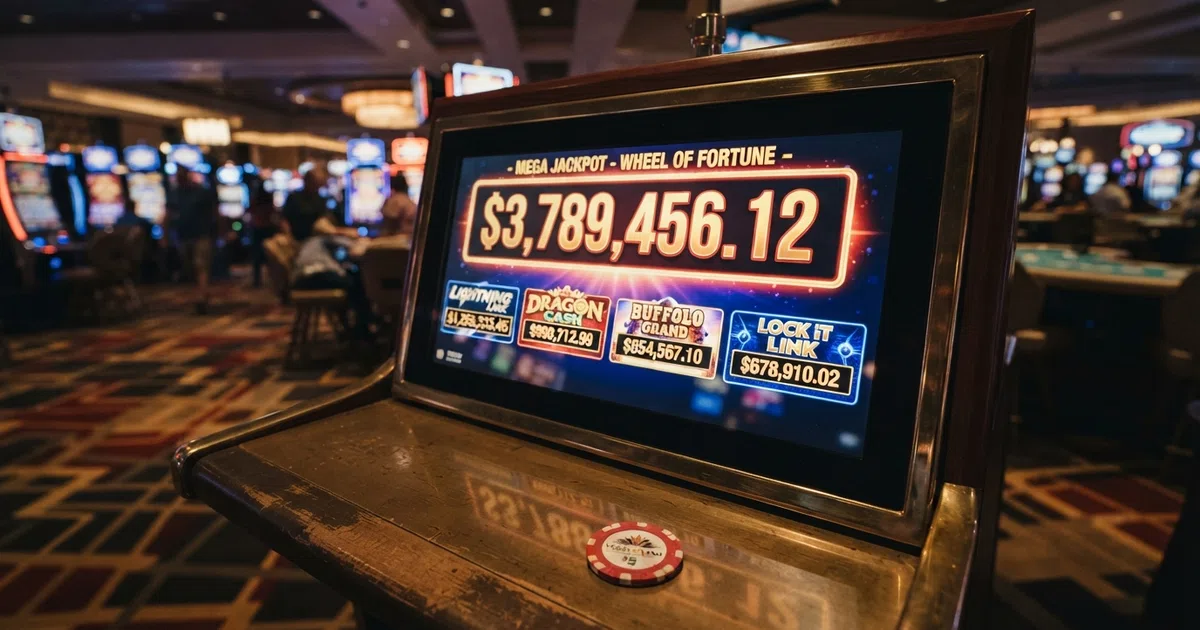
The seven-figure ticker at the top of a Mega Moolah thumbnail is a promise. It is also, in the strict arithmetic sense, a lie. The headline number sits in front of a base game whose RTP can run eight to ten points below a standard slot, because every spin diverts a slice of the wager to the prize pool that funds that promise. The pool is real — a Betfred customer turned £1.50 into £11,498,211.89 in June 2025, and Jon Heywood walked away with £13,212,882 from Betway in 2015 — but the expected value of any single spin is shaped by the base game, not the ticker. The job of this page is to separate the two, compare the ten UKGC-licensed casinos that carry the most prominent progressive networks, and put a number on what the welcome offers actually cost you before you deposit a penny.
Data current as of September 9, 2026 and verified against the UK Gambling Commission’s public register of operating licence holders.
What Jackpot Slots Are — and Why the Biggest Prizes Hide in the Fine Print
A jackpot slot is a slot machine with an extra prize layer on top of the base game. That layer is funded by diverting a percentage of every wager — typically 1% to 8% — into a pool that pays out either on a fixed schedule or when a random trigger fires. The base game still runs its own paytable, with its own symbols, its own bonus rounds, and its own RTP. What changes is that a slice of each bet is no longer competing for line wins; it is feeding the prize that sits above the reels.
That structural split is the reason a progressive jackpot slot can advertise a seven-figure headline prize while delivering a base-game RTP of 88% to 92% — several points below a non-jackpot slot. The “headline RTP” you sometimes see quoted on a review site averages the jackpot contribution across all players and stretches it across millions of spins. What any individual player experiences, session to session, is the base game. The Mega Moolah base RTP sits at 88.12% — lower than almost any non-jackpot slot in a UK lobby — and the headline figure only makes sense as a long-run statistical average, not as a session expectation.
Progressive jackpots come in three rough size bands. Mini and Minor tiers — often seeded at £10 to £1,000 — hit multiple times per day or week on networked games, and their contribution to a casino’s marketing is modest because the prizes are modest. Major tiers run into five-figure sums and trigger on a longer cycle. The odds of triggering the top progressive tier are very long. The Mega Moolah Mega jackpot seeds at £1,000,000; the current ticker (whatever it reads today) reflects every spin played across every casino on the network, less the last payout.
Fixed vs. Progressive — The Two Jackpot Worlds Explained
A fixed jackpot pays the same multiple regardless of how much has been staked across the network. If the slot advertises a £50,000 fixed jackpot, that is what you win when the trigger condition lands — there is no pool that grows, no seed that resets, and no contribution rate driving a steadily inflating prize. Fixed jackpots are simpler to understand and easier to budget against, because the prize is a known quantity at the moment you start spinning.
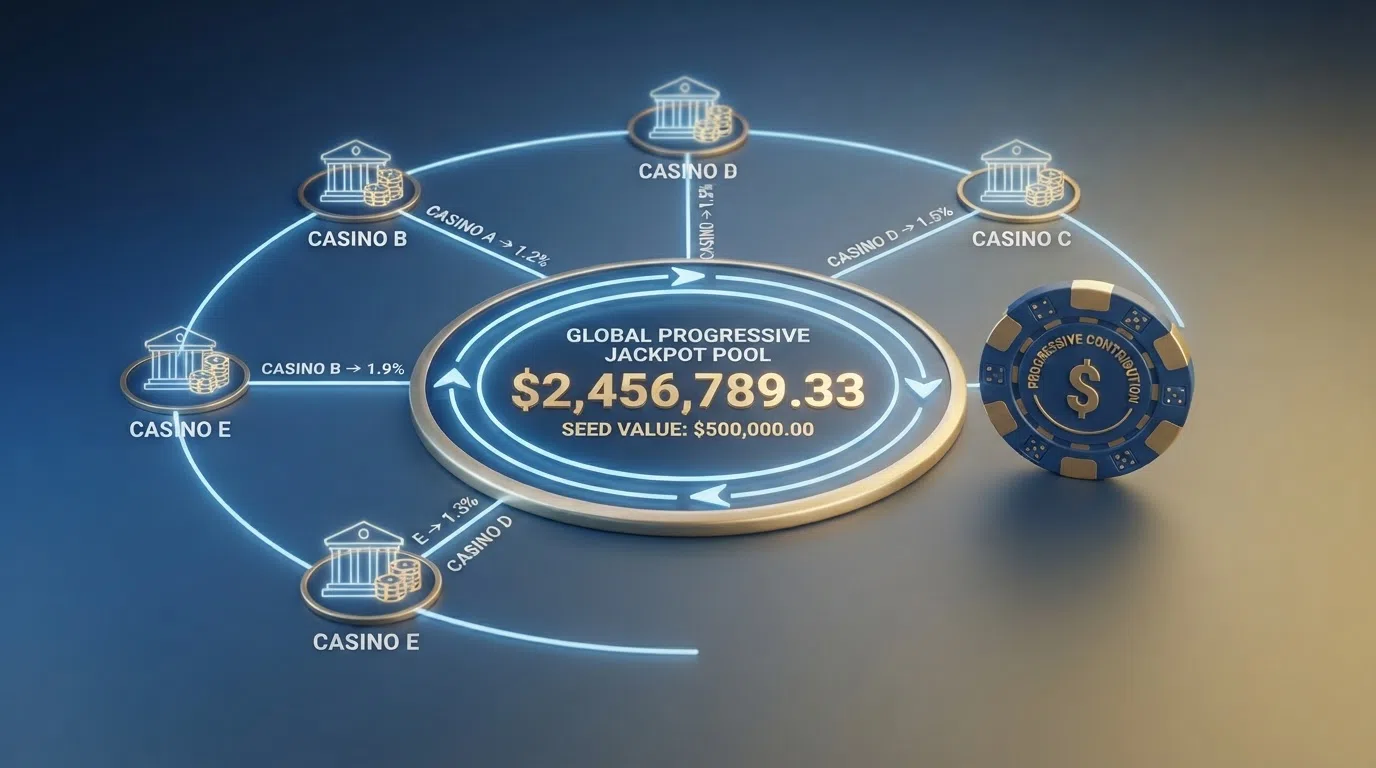
A progressive jackpot works differently. The seed is the floor: the amount the provider or operator deposits into the pool when it resets after a win. For Mega Moolah, the Mega tier seeds at £1,000,000. From that floor, a slice of every qualifying bet adds to the pool, and the ticker you see in a casino lobby is the current sum of that contribution. Networked progressives pool bets from dozens — sometimes hundreds — of casinos running the same title, which is why Mega Moolah’s Mega tier grows faster than any standalone prize could. Standalone progressives, by contrast, draw from a single casino’s player base and the pool climbs more slowly; the same title can show different jackpot figures at different casinos depending on which network configuration the operator has licensed.
RTP, Volatility and the Hidden Cost of a Big Jackpot
The split between base-game RTP and jackpot-contribution RTP is the single most important number a jackpot-slot player can read. A non-jackpot slot with a 96% RTP returns 96p per pound staked, on average, over the long run. A progressive slot with an 88% base RTP — Mega Moolah’s actual figure — returns 88p per pound on the base game, with the additional 1% to 8% diverted to the pool that funds the headline prize. You are not getting 88% RTP plus a jackpot. You are getting an 88% base game and a lottery ticket.
Volatility shapes the experience further. A high-volatility jackpot slot pays out infrequently and in uneven bursts, with long dry spells punctuated by bonus rounds or near-miss jackpot activations. A low-to-medium volatility progressive — Mega Fortune, for instance, with a 96.60% RTP and low-to-medium volatility — delivers a steadier experience at the cost of a less dramatic peak prize. The two are not interchangeable: high volatility means a larger gap between what you might win on any given session and what you will actually win, and the headline jackpot is the apex of that gap, not its representative value.
What the published headline RTP figure includes is the expected jackpot value averaged across every spin by every player on the network. What the player actually sees, session to session, is the base game, with all its dry spells and small wins, plus the lottery-ticket probability of a seven-figure payout. The two numbers describe the same slot from different distances, and reading the wrong one is the most common way a player overestimates what a jackpot slot is worth to their bankroll.
Where Jackpot Slots Live — Casinos, Lobbies and Today’s Top Picks
Every UKGC-licensed casino has a jackpot section in its lobby, but they are not all built the same. A casino with 300+ jackpot titles will surface progressive tickers across dedicated rows — “Daily Jackpots”, “Mega Jackpots”, “Must Drop” — with the current pool figure displayed above each thumbnail. A casino with 20 jackpot titles buries them under a single tab and the tickers refresh only when the lobby reloads. The structural difference is not aesthetic; it determines whether a player can browse, compare, and pick a title by current pool value or whether they take whatever the operator has decided to feature.
The UK online slots market generated £773m in gross gambling yield in Q1 2026, with 4.8m average monthly active accounts — a 12% year-on-year increase in GGY. The volume of play that number represents is the engine behind every progressive ticker in a UK lobby, and the operators that have invested in surfacing their jackpot sections are the ones capturing a disproportionate share of it.
10 UK Casinos Where Big Jackpot Slots Deliver in 2026
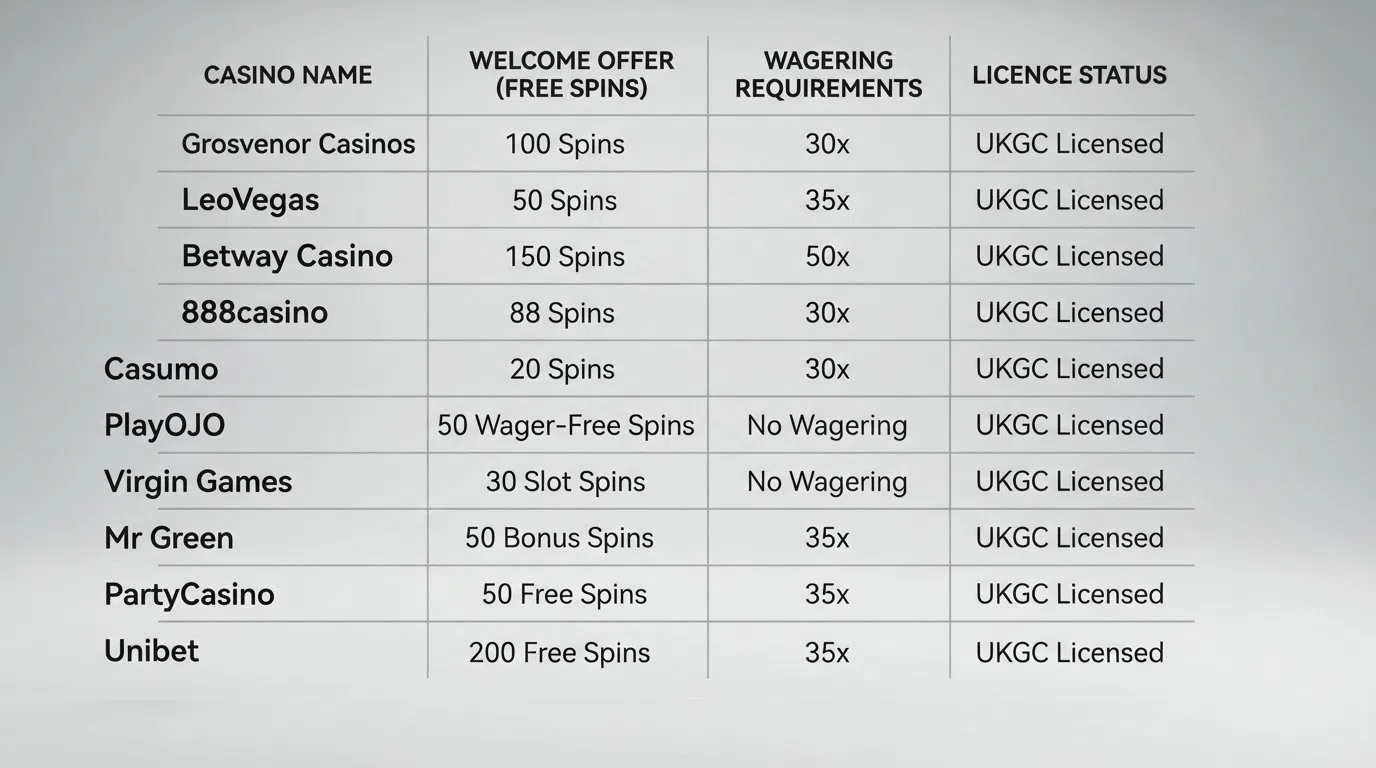
The ten operators below are ranked on jackpot-slot library breadth, welcome-offer terms, wagering requirements, and UKGC licence standing. The table summarises what the rest of this section develops in prose; how to read it is straightforward — the licence column shows what is on the UKGC register, the welcome-offer column carries the headline number only, and the deposit-free column tells you whether the offer is gated by a stake or genuinely free. The “Wagering” column reflects the multiplier applied to bonus funds (or to free-spin winnings, where applicable); “Validity” is the window in which the offer must be accepted and used; and “Free Spins” gives the count attached to the welcome package, including any no-deposit component.
| Operator | UKGC Licence | Welcome Offer | Free Spins | Wagering | Validity | Deposit-Free? |
|---|---|---|---|---|---|---|
| Bet365 | Active | Stake £10, up to 200 free spins | Up to 200 | 0× | 7 days | No |
| Sky Vegas | 065519-R-339675-002 | 70 no-deposit + 200 deposit spins | 270 (70 + 200) | 0× | 3 / 7 days | Yes (70 spins) |
| Betfred | 039544-R-319290-009 | Stake £10, up to 200 free spins | Up to 200 | 0× | 7 days | No |
| Paddy Power | Active (Flutter) | Play £10, 160 free spins | 160 | 0× | 7 days | No |
| BetMGM | Active (Entain) | Stake £10, 100 free spins on Big Bass Splash | 100 | 0× | 3 days | No |
| Ladbrokes | Active (Entain) | Stake £10, £30 bonus | — | 10× on bonus | 30 days | No |
| Jackpotjoy | Active (Gamesys / Bally’s) | Play £10, 30 free spins | 30 | 0× | 30 days | No |
| Virgin Games | Active (Gamesys / Bally’s) | Play £10, 30 free spins | 30 | 0× | 30 days | No |
| Mr Vegas | Active (Videoslots) | 100% up to £200 + 11 spins | 11 | 10× on bonus | 60 days | No |
| Dream Jackpot | Active (White Hat) | 100% up to £100 + 25 spins | 25 | 10× on bonus | 30 days | No (separate 5 no-deposit spins with 10× and £50 cap) |
Bet365 — No-Wagering Free Spins on a Vast Slot Library
Bet365’s welcome offer is straightforward: stake £10 on qualifying slots, receive up to 200 free spins with no wagering on winnings, and use them within seven days. The wagering figure is zero, the spin value is £0.10, and the absence of a stated cashout cap means whatever the spins produce is withdrawable. The provider roster behind the lobby is one of the broadest in the UK — Playtech, NetEnt, Games Global, Blueprint, Pragmatic Play, Play’n GO, and Big Time Gaming — which means Mega Moolah, the Jackpot King network, Divine Fortune, and the Pragmatic daily-drop titles all sit under the same login. The trade-off is a tight seven-day validity window: miss it, and the spins lapse.
The verdict: Bet365 suits a player who wants the widest single-account access to jackpot networks and is happy to use the spins within a week. The zero-wagering structure means the free-spin winnings are yours in cash, not bonus funds.
Sky Vegas — 70 No-Deposit Spins Plus a Deposit Bonus
Sky Vegas is the only featured operator offering a genuinely deposit-free welcome component. The package runs in two parts: 70 free spins credited without a deposit, followed by a further 200 spins after a £10 stake. Both batches carry zero wagering, the spin value is £0.10, and the no-deposit spins must be used within three days while the deposit spins carry a seven-day window. The provider lineup includes Blueprint Gaming’s Jackpot King network alongside NetEnt and Pragmatic Play. Sky Vegas holds UKGC licence 065519-R-339675-002 under Bonne Terre Limited, part of Flutter Entertainment.
The verdict: Sky Vegas is the right choice for a player who wants to test a jackpot lobby before committing cash. The three-day no-deposit window is tight — log in, claim, and play within 72 hours, or the spins lapse — but the offer is the most accessible deposit-free entry in the featured set.
Betfred — The Operator Behind the UK’s Biggest-Ever Jackpot-Slot Payout
The welcome offer is familiar: stake £10, get up to 200 wager-free spins at £0.10 each, with a seven-day window. The differentiator is provenance. On 5 June 2025, a Betfred customer turned a £1.50 Mega Moolah stake into £11,498,211.89 — the largest jackpot-slot payout in Betfred’s 58-year history and one of the largest ever recorded at a UK-licensed site. The provider depth — Playtech, Games Global, NetEnt, Blueprint, IGT, and Pragmatic Play — gives the lobby the same breadth as the bigger brands, and the operator’s jackpot pedigree is unmatched in the featured set. Betfred holds UKGC licence 039544-R-319290-009.
The verdict: Betfred is the brand for a player who values jackpot-track-record over spin count. The Mega Moolah win confirms the operator pays out, the seven-day window is standard, and the zero-wagering structure keeps the offer simple.
Paddy Power — 160 Wager-Free Spins and the Jackpot King Network
Paddy Power’s offer sits in the middle of the featured set: 160 free spins at £0.10 each, zero wagering, seven-day validity, no stated cashout cap. The qualifier is “play £10”, which the operator’s terms interpret generously — qualifying play across eligible slots triggers the full spin count. The provider mix includes Playtech, NetEnt, Blueprint (with the Jackpot King network), Red Tiger, Pragmatic Play, and Evolution, which means the Jackpot King progressive system sits alongside the NetEnt and Games Global networks under the same login. Paddy Power is part of Flutter Entertainment, the same group as Sky Vegas.
The verdict: Paddy Power suits a player who wants Jackpot King access bundled with a competitive spin count. The Flutter backing gives the operator the scale to surface a deep jackpot section, and the zero-wagering structure keeps the offer readable.
BetMGM — 100 Free Spins on a Curated Provider Lineup
BetMGM’s 100 free spins are tied to Big Bass Splash — a Pragmatic Play title — rather than spread across the lobby. The stake requirement is £10, the wagering is zero, the spin value is £0.10, and the validity window is three days from acceptance. Three days is the tightest in the featured set, and a player who does not log in within 72 hours of claiming the offer loses the spins. The provider lineup behind the wider lobby is strong: NetEnt, Games Global, Blueprint, Pragmatic Play, Play’n GO, Big Time Gaming, and Nolimit City, with Entain as the operating group.
The verdict: BetMGM is the choice for a player who plans to claim and play immediately. The three-day window is a hard filter, but the provider roster means the wider jackpot section — Mega Moolah, Jackpot King, daily drops — sits one or two clicks beyond the headline offer.
Ladbrokes — A Traditional Cash Bonus in a Free-Spins Market
Ladbrokes is the only featured operator offering a cash-match bonus rather than free spins. The structure: stake £10, receive a £30 bonus, with 40× wagering on the bonus funds and a 30-day validity window. The £30 bonus, after 10× wagering, requires £300 of qualifying play before the bonus converts to withdrawable cash — a much more accessible playthrough than the pre-2026 standards. The provider lineup is broad: Playtech, NetEnt, Games Global, Blueprint, and Pragmatic Play. Ladbrokes is part of the Entain group.
The verdict: Ladbrokes suits a player who prefers a cash bonus to free spins and is willing to work through a 40× playthrough. The 30-day window is generous, but the 40× wagering is the heaviest in the featured set by a wide margin, and a player evaluating “best value” should treat the £30 headline as worth less than 30 wager-free spins at £0.10.
Jackpotjoy — 30 Wager-Free Spins on Proprietary Jackpot Titles
Jackpotjoy’s offer is the smallest spin count in the featured set — 30 free spins at £0.20 each — but the per-spin value is double the standard £0.10, and the wagering is zero. The 30-day validity is the joint-longest in the set. The differentiator is the proprietary Gamesys catalogue: Double Bubble, Rainbow Riches, and other titles that carry jackpots you will not find on a NetEnt- or Games-Global-led lobby. Blueprint’s Jackpot King is integrated alongside the Gamesys proprietary titles, giving the lobby a mix of exclusive and networked progressives. Jackpotjoy is part of Gamesys, now under Bally’s Corporation.
The verdict: Jackpotjoy suits a player who values the Gamesys proprietary titles over volume. The 30-day window is forgiving, the £0.20 spin value doubles the per-spin yield versus the standard £0.10, and the exclusive titles are a genuine differentiator.
Virgin Games — 30 Wager-Free Spins With a Curated Slot Selection
Virgin Games runs the same Gamesys engine as Jackpotjoy, with the same 30 free spins at £0.20, zero wagering, and a 30-day window. The selected titles — Cleopatra, Da Vinci Diamonds, and Rainbow Riches — sit alongside the broader Gamesys proprietary catalogue, with Blueprint’s Jackpot King and NetEnt completing the provider backbone. The structure is identical to Jackpotjoy; the differentiator is the specific title selection and the Virgin brand positioning. Virgin Games is part of Gamesys under Bally’s Corporation.
The verdict: Virgin Games is interchangeable with Jackpotjoy on offer mechanics, and the choice between them comes down to which title selection the player prefers. A player who wants Rainbow Riches with their 30 spins will find it here; a player who wants Double Bubble will find it at Jackpotjoy.
Mr Vegas — A 100% Deposit Match With the Broadest Provider Count
Mr Vegas is the widest provider roster in the featured set: 11 named studios, including Hacksaw Gaming, Yggdrasil, and Big Time Gaming alongside the more familiar NetEnt, Games Global, Pragmatic Play, Play’n GO, Red Tiger, and Blueprint. The welcome offer is a 100% match up to £200 plus 11 wager-free spins, with 10× wagering on the bonus funds and a 60-day validity — the longest window in the set. Mr Vegas is operated by Videoslots Limited.
The verdict: Mr Vegas suits a player who wants a cash match with the longest possible validity window and values provider breadth over spin count. The 10× wagering on the bonus funds is the statutory maximum, and a player depositing the full £200 and working through £2,000 of qualifying play over 60 days has a realistic shot at converting the bonus. The 11 wager-free spins are a small sweetener rather than the main event.
Dream Jackpot — 60+ Providers and a £50 No-Deposit Cashout Cap
Dream Jackpot is the broadest-lobby operator in the featured set — 60+ providers — and the welcome offer pairs a 100% match up to £100 with 25 bonus spins at 10× wagering on the bonus funds and a 30-day validity. Separately, the operator runs 5 no-deposit spins with a 10× wagering requirement and a £50 cap on winnings — a genuine deposit-free entry, but heavily restricted. Dream Jackpot is operated by White Hat Gaming, and Mega Moolah and Divine Fortune are both available in the lobby.
The verdict: Dream Jackpot suits a player who wants the widest possible single-lobby access to jackpot networks and is willing to navigate two separate offers. The £50 cap on the no-deposit spins is a hard ceiling on what the deposit-free component can deliver, and the 10× wagering on the headline match is the same cost as Mr Vegas — but with a lower cap (£100 versus £200) and a shorter window (30 days versus 60).
The Jackpot Engines That Power Every Big Win
Every progressive ticker in a UK casino lobby is fed by one of a handful of provider networks, and recognising the network tells you what kind of jackpot you are playing for. The five studios whose jackpot engines dominate UK lobbies are Games Global, NetEnt, Playtech, Pragmatic Play, and Blueprint Gaming. Each runs a different architecture, charges a different contribution rate, and pays out at a different cadence.
Games Global — the studio that absorbed Microgaming’s progressive catalogue — operates the Mega Moolah network, which carries four tiers (Mini, Minor, Major, Mega) and has paid out more than €130m in progressive prizes across its history. The Mega tier seeds at £1,000,000 and the title’s base-game RTP sits at 88.12% — the lowest in this section, because the contribution rate is at the high end of the 1% to 8% range. NetEnt runs two flagship progressives: Divine Fortune, with a 96.59% RTP and three tiers (Minor, Major, Mega), and Mega Fortune, with a 96.60% RTP and a seed exceeding £1,000,000. Both run at lower contribution rates, which is why their base-game RTPs sit nearly eight points above Mega Moolah’s. Playtech’s Age of the Gods series links multiple titles into a shared progressive pool. Pragmatic Play runs daily-drop jackpots that must pay before a timer expires. Blueprint Gaming runs the Jackpot King network, the most visible UK-native progressive system.
Progressive Jackpot Mechanics — Networked, Standalone and How the Pool Grows
The seed is the floor — the amount the provider or operator deposits into the pool when it resets after a win. Mega Moolah’s Mega tier seeds at £1,000,000, which is why the ticker never dips below seven figures. The contribution rate is the slice of every wager that flows into the pool, typically 1% to 8% depending on the title and tier. A networked progressive pools contributions from every casino running the title, which is why Mega Moolah’s Mega tier grows faster than any standalone prize could — thousands of players across dozens of casinos all feeding the same pool. A standalone progressive draws from a single casino’s player base, and the pool climbs more slowly; the same title can show different jackpot figures at different casinos depending on the network configuration the operator has licensed.
Fixed, Daily, Mystery — The Other Jackpot Types That Fly Under the Radar
Not every jackpot is a progressive. Fixed jackpots pay a set multiple regardless of the network state — if the slot advertises £50,000, that is the prize, full stop. Daily jackpots and the must-hit-by mechanic guarantee a payout within a time window: the prize must drop before a threshold value or a clock runs out, which means the pool resets on a predictable cycle rather than a random one. Mystery and random jackpots trigger independently of reel symbols — a separate RNG determines the winner, and the bonus round is not gated by a specific symbol combination. The practical difference: a mystery jackpot can fire on any spin, regardless of what the reels show, which means the trigger is invisible to the player until it happens.
The Slot RTP Table — How the Biggest Jackpot Titles Compare
The table below compares the five most significant jackpot titles in the UK market. RTP here means the base-game figure, not the headline average that includes the jackpot contribution. A reader who only reads the published RTP is reading a number that averages the prize across millions of spins; a reader who reads the base-game RTP is reading the number their session will actually feel.
| Slot Title | Provider | RTP (Base) | Volatility | Jackpot Type |
|---|---|---|---|---|
| Mega Moolah | Games Global | 88.12% | Medium | Progressive (4 tiers) |
| Divine Fortune | NetEnt | 96.59% | Medium | Progressive (3 tiers) |
| Mega Fortune | NetEnt | 96.60% | Low-to-Medium | Progressive |
| Fishin’ Frenzy Jackpot King | Blueprint | 93.85% | High | Progressive (Jackpot King network) |
| Fishin’ Frenzy The Big Catch Jackpot King | Blueprint | n/a | n/a | Progressive (Jackpot King network) |
The spread between the highest and lowest base-game RTP in this table is 8.48 percentage points — Mega Moolah at 88.12% versus Mega Fortune at 96.60%. That gap is the cost of the headline prize. A player who chases the Mega Moolah Mega tier is paying roughly 8p per pound staked, on average, for the privilege of holding a 1-in-50-million-to-1-in-100-million ticket. A player who plays Mega Fortune is paying closer to 3.4p per pound for a smaller-but-still-seven-figure seed. The two experiences are not interchangeable, and the table makes the cost legible in a way the marketing does not.
Jackpot King — Blueprint’s Progressive Network and Every Slot That Feeds It
The Jackpot King network is the most visible UK-native progressive system, and it runs on Blueprint Gaming’s proprietary engine. The mechanics: a bonus round triggers on any qualifying Jackpot King slot, and inside that round the player spins a separate wheel for a chance at the King Tier — the network’s top progressive. The King’s Treasure feature adds a collection mechanic on top of the wheel spin. Fishin’ Frenzy Jackpot King (93.85% base RTP) and Fishin’ Frenzy The Big Catch Jackpot King (93.32% base RTP) are two of the most prominent titles in the network, both at high volatility. Compared to the Games Global and NetEnt networks, Jackpot King seeds at a lower figure and pays out on a shorter cycle — the prizes are smaller but the trigger frequency is higher.
The Provider Studios Behind the Biggest Jackpots
Games Global manages the Mega Moolah network, which includes the Betway 2015 and Betfred 2025 record payouts. NetEnt operates Divine Fortune and Mega Fortune, which feature base-game RTPs near 97%. Playtech’s Age of the Gods series shares progressive pools across multiple titles. Pragmatic Play provides daily-drop jackpots with fixed 24-hour payout windows, while Blueprint Gaming’s Jackpot King network is a staple in many UK lobbies. Verification of an operator’s licence is the primary step for any player, as performance and payout processes vary by site.
Why Your Jackpot-Slots Bonus Is Smaller Than It Looks
The headline number on a welcome offer — “up to 200 free spins” or “100% up to £200” — is a starting figure, not a receipt. The real cost of an offer is the combination of wagering requirements, contribution rates, validity windows, and max-cashout caps, and each of those is a mechanism the operator uses to convert a generous-sounding headline into a smaller actual value.
From 19 January 2026, no UKGC-licensed online casino can offer a bonus — including free-spin winnings — that carries a wagering requirement higher than 10× the bonus amount. The cap is statutory, not commercial, and it has flattened the market. Most of the free-spins offers in the featured set now carry 0× wagering, which is the lowest possible figure and the cleanest possible structure: whatever the spins win is yours in cash, withdrawable, with no playthrough. The 10× cap still applies to cash bonuses — Mr Vegas and Dream Jackpot both run 35× on their bonus funds, but those multipliers apply to the bonus amount only, not to deposits, and a £200 bonus at 35× means £7,000 of qualifying play before the bonus converts.
The expected cost of clearing a representative offer can be put in numbers. Take a £200 bonus with 10× wagering — the maximum allowed under the new cap. The required turnover is £200 × 10 = £2,000. At a typical progressive-slot base-game RTP of 90% (the midpoint of the 88–92% range), the expected loss is £2,000 × (1 − 0.90) = £200. Statistically, the bonus is paid for by the player’s losses during playthrough; the “free” £200 is, in expectation, the £200 the player gives back. That is the cost of the offer in plain arithmetic, and it is the reason zero-wagering free spins dominate the post-2026 market — they cost the player nothing to convert, because there is no playthrough to fund.
No-Deposit Free Spins on Jackpot Slots — What They Actually Deliver
A genuinely deposit-free offer is the rarest thing in the UK market. Of the ten featured operators, two run a deposit-free component: Sky Vegas (70 no-deposit spins, 0× wagering, three-day validity) and Dream Jackpot (5 no-deposit spins, 10× wagering, £50 cashout cap). The two are not equivalent. Sky Vegas’s 70 spins cost the player nothing to convert and have no stated cashout cap, which means whatever the spins produce is withdrawable in full. Dream Jackpot’s 5 spins are subject to a £50 cap on winnings, which means anything above that figure is forfeit — the offer is a small taste of the lobby rather than a path to a real payout.
Most “no-deposit” claims elsewhere in the market are deposit-gated offers with misleading labels — “no deposit needed” attached to a free bet that only credits after a first deposit, or “no deposit bonus” attached to a free-spin package that requires a qualifying stake. Genuine no-deposit offers remain scarce, as operators shift toward stake-gated promotional structures.
Free-Spins Offers Compared — Wagering, Spin Value and Validity
| Operator | Free Spins | Wagering | Spin Value | Validity | Deposit-Free? |
|---|---|---|---|---|---|
| Bet365 | Up to 200 | 0× | £0.10 | 7 days | No |
| Sky Vegas | 270 (70 + 200) | 0× | £0.10 | 3 / 7 days | Yes (70 spins) |
| Betfred | Up to 200 | 0× | £0.10 | 7 days | No |
| Paddy Power | 160 | 0× | £0.10 | 7 days | No |
| BetMGM | 100 | 0× | £0.10 | 3 days | No |
| Jackpotjoy | 30 | 0× | £0.20 | 30 days | No |
| Virgin Games | 30 | 0× | £0.20 | 30 days | No |
| Mr Vegas | 11 | 0× (spins only) | Not specified | 60 days | No |
| Dream Jackpot | 25 | 35× on bonus | £0.10 | 30 days | No |
Zero-wagering spins dominate the post-January 2026 landscape, and the table shows the shape of that dominance. The wagering column reads 0× for every operator except Mr Vegas and Dream Jackpot, and even those two carry 0× on the spin component — the 35× applies to the cash-match bonus, not to the spins themselves. Spin value clusters at £0.10, with Jackpotjoy and Virgin Games at £0.20 — a per-spin yield that doubles the headline value if the spins are used in full. Validity windows split into two clusters: tight (3–7 days for the high-spin-count offers) and generous (30–60 days for the low-count or cash-match offers). The deposit-free column is the one place the table thins out: only Sky Vegas offers a genuinely free component at scale, and only Dream Jackpot offers a separate no-deposit trial.
Bonus Codes, Promo Mechanics and the Terms That Trip Players Up
The mechanics of claiming a welcome offer are operator-specific, but the failure modes are common. The most frequent reasons a bonus is voided: playing a non-qualifying game during the wagering period (some slots contribute 0% to playthrough), exceeding the max-bet cap during wagering (typically £5 or £2 depending on age, per the stake-cap regulations), or failing to complete the wagering before the validity window closes. The mixed-product ban — in force from 19 January 2026 — has closed off the old cross-sell offers that bundled a sports free bet with casino free spins; the two are now separate products with separate opt-ins and separate terms.
A reader who wants the offer to convert cleanly should read the qualifying-games list before spinning, check the max-bet figure against their usual stake, and set a calendar reminder for the validity window. The terms sheet is rarely more than two pages, and the difference between a bonus that converts and one that is voided usually sits in the small print of the first page.
Demo Mode vs. Real Jackpot Spins — What You Trade Away
Demo mode lets you play a slot without risking real money. The reels, the paylines, the bonus rounds, the RTP — all identical to the real-money version. What demo mode does not give you is a shot at the real progressive jackpot. The random trigger that fires the Mega Moolah Mega tier only fires on real-money spins because the contribution rate only runs on real-money wagers. A player who spins Mega Moolah in demo mode for an hour will see the base game, the bonus rounds, the cadence of near-miss jackpot activations, and the volatility — but they will not see a progressive ticker move, and they will not be eligible for the prize.
That limitation is what makes demo mode useful for learning the mechanics and useless for chasing the headline. A player who wants to understand how a jackpot slot behaves — how often the bonus round fires, how the volatility feels, how the reels respond to a 5×3 layout — gets a faithful preview in demo. Demo mode offers a risk-free environment to calibrate expectations before staking real capital.
No-Download Instant Play — Browser-Based Jackpot Slots Without an App
Every modern jackpot slot runs in an HTML5 browser client, which means no download is required on desktop or mobile. The downloadable casino client — once a fixture of the UK online gambling landscape — is now a legacy format, and the featured operators all run their jackpot sections through the browser. A player who wants to spin Mega Moolah on a phone can do so in under a minute: open the casino site, log in, navigate to the jackpot section, tap the thumbnail, set the stake, and spin. There is no app to install, no client to update, and no compatibility check beyond a current browser version.
Performance varies by device and connection, but the games themselves are built to run on mid-range hardware and modest mobile connections. The heaviest graphics in the jackpot catalogue — the 3D-rendered bonus rounds on Age of the Gods titles, the animated wheel on Jackpot King — load within seconds on a 4G connection and run without stuttering on a phone from the last three or four years.
The Most Popular Free Jackpot Titles Worth Trying Before You Stake
The four titles that consistently appear in demo mode across UK-licensed casinos are Mega Moolah, Divine Fortune, Mega Fortune, and the Jackpot King network’s flagship slots. Spinning each in demo reveals something the review cannot: the cadence of bonus-round triggers on Mega Moolah is sparse and high-impact; Divine Fortune runs closer to a standard slot with a progressive overlay; Mega Fortune’s base game is the steadiest of the four; and Jackpot King titles feel like Blueprint’s high-volatility catalogue with a jackpot round bolted on. A player who spends thirty minutes with each in demo before staking real money arrives at the lobby with a calibrated sense of which title suits their session budget.
Funding Your Jackpot Play — Deposits, Withdrawals and What UK Rules Allow
UKGC-licensed casinos accept a standard set of payment methods: debit cards, e-wallets (PayPal, Skrill, Neteller), bank transfer, Apple Pay, and Google Pay. The minimum deposit is typically £10. Credit cards have been banned for all remote gambling in Great Britain since 14 April 2020, and the ban extends to credit-card-funded e-wallet payments — a deposit funded via a credit card through PayPal is still a credit-card deposit for regulatory purposes. Anonymous play is not possible at a licensed GB site; identity is verified before the first deposit.
A progressive jackpot win is paid as a lump sum — there is no instalment option, and no operator can withhold a verified win. What a seven-figure payout triggers is an enhanced verification process: source-of-funds checks, identity re-verification, and (for sums at the upper end) a compliance review. The delay is regulatory, not operational. The Commission’s licence conditions require prompt payout of verified winnings, and a UKGC-licensed operator cannot sit on a progressive prize.
Real-Money Progressive Play — How Your Stake Feeds the Jackpot
Every real-money spin on a progressive slot diverts a slice of the wager — 1% to 8% depending on the title and tier — to the prize pool. The rest of the wager funds the base game. The max-bet requirement on some progressive titles — the condition that a player must stake maximum coins or all paylines to qualify for the jackpot — interacts awkwardly with the UK’s age-banded stake cap: £5 for players 25 and over, £2 for players 18 to 24. A player who would otherwise stake £6.25 to qualify for the Mega Moolah Mega tier is capped at the statutory limit, which means the qualifying spin for that player is any spin at the maximum allowed stake, not the maximum the game offers.
The average UK online slots player now completes 124 spins per session — down from 136 a year earlier — a modest contraction in session length that may reflect the stake-cap era. The GGY figures and account-count figures that surround it — £773m in Q1 2026, 4.8m average monthly active accounts — describe a market that is generating more revenue from a slightly smaller per-session footprint, which is the mathematical signature of players staking more per spin rather than spinning more often.
Jackpot Slots on Every Screen — Mobile, Apps and Instant Play
The jackpot-slots experience is now device-agnostic. HTML5 browser clients run identically on iOS and Android, and the desktop experience is no longer the “real” version that mobile imitates — it is one of two equally native formats. The featured operators all run their jackpot sections through the browser, with no download required on any platform. A subset offer dedicated iOS and Android apps, but the apps are wrappers around the same HTML5 client, and the difference is a home-screen icon rather than a different game.
The downloadable PC and Mac client is a declining format, and most of the featured operators have stopped maintaining one. The browser-based instant-play experience is the default, and the lobby navigation — jackpot sections, progressive tickers, search filters — is built mobile-first and scaled up for desktop.
Mobile-Specific Jackpot Features — Touch Controls, Portrait Mode and Progressive Tickers
On a phone, the spin button sits under the thumb, the bet-size adjuster is a single tap away, and the payline display collapses into a toggle. Portrait-mode progressive tickers update in real time over a mobile connection, refreshing every few seconds when the lobby is active and pausing when it is not. Graphics-heavy jackpot slots — Age of the Gods with its 3D-rendered bonus rounds, Jackpot King with its animated wheel — run without stuttering on mid-range hardware, though data usage climbs with session length on a cellular connection. A player on a 4G phone should expect roughly 50–100 MB per hour of jackpot-slot play, depending on the title and animation density.
Bitcoin, Crypto and UK Jackpot Slots — What Is Actually Available
Crypto casinos carry progressive jackpot slots and market them to UK players, but they do not hold a Gambling Commission licence. Operating without a GB licence is a criminal offence under section 33 of the Gambling Act 2005, and the Commission’s enforcement is disruption-based: 3,140 disruption notices issued, 447,778 URLs referred to search engines, 287,961 URLs removed in the April 2024 to June 2025 period. There is no statutory ISP blocking power in place today, but the regulatory direction is towards tighter enforcement.
A player who chooses to play at an unlicensed crypto casino from Great Britain commits no criminal offence themselves, but they lose every protection the UK framework provides. There is no GAMSTOP coverage — the self-exclusion register does not extend to unlicensed sites. There is no alternative dispute resolution (ADR) route, no Commission complaints process, and no recourse if the operator refuses to pay a progressive win. The bitcoin-denominated progressive pools can be larger than their fiat equivalents, and the marketing leans on that fact, but the prize is only as real as the operator’s willingness to release it.
Can You Improve Your Odds at Jackpot Slots?
No. The odds of triggering a Mega-tier progressive are set by the game’s RNG and the contribution architecture, and no player action changes them. Bet-sizing affects the per-spin cost, not the per-spin probability. Payline selection affects the line-win payout, not the jackpot trigger. The max-bet myth — the belief that betting maximum “activates” the jackpot — is a misreading of how some progressive slots structure their eligibility. On a title that requires max-bet to qualify for the jackpot, betting below the maximum means the progressive round is not accessible on that spin; it does not mean the probability of the trigger is lower. The trigger is either eligible on the spin or it is not.
What a player can control is the cost per spin, the number of spins per session, and the share of session budget that goes to the base game versus the lottery-ticket probability of a seven-figure payout. The age-banded stake cap — £5 for 25+, £2 for 18–24 — limits the first of those. The session-spin average — 124 spins per UK slots session in Q1 2026 — is a reference for the second. The base-game RTP — 88% to 92% for the big progressive titles — is the reference for the third. Ultimately, the progressive ticker serves as a volatile lottery ticket atop your base-game session budget.
How Progressive Jackpots Trigger — Random, Must-Hit-By and Mystery Mechanics
Three trigger mechanisms cover the vast majority of progressive slots. The random-trigger model fires the jackpot round on any qualifying spin regardless of symbol outcome — the RNG simply selects a winner at the configured probability, and the reels do not need to land on a specific combination. Must-hit-by jackpots guarantee a payout before a threshold value, which means the pool resets on a predictable cycle rather than a random one, and a player can calculate roughly when the next drop is due. Mystery jackpots are independent of the reels entirely — a separate RNG selects the winner, and the bonus round can fire on any spin, with the trigger invisible to the player until it happens. None of the three respond to player timing. The spin that wins is the spin that wins, and the one before it or after it is statistically identical.
The Best-Time-to-Play Myth and Other Jackpot Fallacies
A progressive that has not paid out in months is not “due”. Each spin is independent of every other spin, and the RNG does not track how long it has been since the last payout. The myth of higher hit rates at off-peak hours — the idea that a casino is “looser” at 3 a.m. when fewer players are active — has no basis in the mathematics of networked progressives; the pool grows at the same rate per spin regardless of when those spins happen. Switching games, taking a session break, or resetting the bet size changes nothing about the next spin’s probability. The only thing that changes is the player’s session budget.
How Often Progressive Jackpots Actually Pay Out
The odds of triggering the top progressive tier are very long. To put that in session terms: at 124 spins per session (the UK average), a player would need roughly 400,000 to 800,000 sessions of continuous play to expect a single Mega-tier hit. The Mini and Minor tiers are a different story — they fire multiple times per day or per week on networked games, and their contribution to a casino’s marketing is modest precisely because the prizes are modest. Games Global has paid out more than €130m in progressive prizes across the network’s history, distributed across thousands of Mini and Minor hits and a much smaller number of Major and Mega payouts.
A player who is deciding whether jackpot slots are worth their session budget should weight the realistic outcome — a base-game session at 88–92% RTP — rather than the headline outcome. The progressive ticker is a bonus event, and a session budget that treats it as one will outlast a session budget that treats it as the point.
A Player’s Cheat Sheet — Five Rules for Smarter Jackpot-Slot Play
- Check the base-game RTP before the headline jackpot figure. The published RTP includes the jackpot contribution averaged across millions of spins; the base-game RTP is the number your session will feel. The five titles in the comparison table above span 88.12% to 96.60% on the base game — that 8.48-point spread is the real cost of the headline prize.
- Know your stake cap. The UK imposes £5 per game cycle for players 25 and over and £2 for players 18 to 24. A player who would otherwise stake more to qualify for a progressive’s max-bet condition is capped at the statutory limit, and the qualifying spin becomes any spin at the maximum allowed stake.
- Treat the jackpot as a bonus event, not the reason to spin. Budget for the base game. The progressive ticker is a lottery ticket on top of the session, and a session budget that absorbs the base-game cost will outlast one that chases the headline.
- Verify the licence before you deposit. The UKGC public register is free, instant, and the only reliable way to confirm a casino is legal in Great Britain. A player who skips this step has no way to distinguish a licensed operator from an unlicensed one.
- Set a deposit limit and a session timer. The mandatory safer-gambling tools at every UKGC-licensed casino are there because the product is designed to keep you spinning. 614,738 consumers are currently registered with GamStop, with under-25 registrations up 26% year-on-year. The tools exist for a reason.
New Jackpot Slot Releases and Fresh Casino Sites in 2026
The progressive-jackpot landscape evolves on two tracks: new titles from the established providers and new casino sites that launch with a jackpot focus. The recent launch calendar from the major studios has focused on network extensions rather than headline new mechanics — additional Jackpot King titles from Blueprint, new Age of the Gods variants from Playtech, and refreshed daily-drop jackpots from Pragmatic Play. The June 2025 Betfred payout confirmed that Mega Moolah — a title now more than two decades old — remains the network that pays the largest prizes, and there is no public indication of a new Mega-tier network launching in the UK market in 2026.
New UKGC-licensed casino sites continue to launch, and the featured set in this article does not attempt to be exhaustive. A player evaluating a new site should check three things before depositing: the licence status on the UKGC public register, the provider roster (does the lobby carry Games Global, NetEnt, and Blueprint titles?), and the withdrawal terms (is there a stated payout timeline, and is it consistent with the operator’s own published terms?). The same wagering-cap and credit-card-ban rules apply to every UKGC-licensed site, regardless of launch date, and a new site is not exempt from the regulatory floor.
How UK Regulation Protects Your Jackpot Play
The Gambling Commission is the single statutory regulator for all commercial gambling in Great Britain, and every operator serving GB customers — wherever it is based — must hold a GB licence under the Gambling (Licensing and Advertising) Act 2014. The licensing objectives, set out in section 1 of the Gambling Act 2005, are preventing crime, ensuring fair and open conduct, and protecting children and other vulnerable persons.
The game-design rules that shape every jackpot slot a UK player sees came into force on 31 October 2021. Auto-play is banned. Spin speed may not be faster than 2.5 seconds per game cycle. Features that speed up play are banned. Losses disguised as wins are banned. Reverse withdrawals are permanently banned. Operators must display total losses, wins, and time played during a slots session. The age-banded stake cap — £5 for 25+, £2 for 18–24 — came into force in April and May 2025 under SI 2025/215, and the 10× wagering cap on bonuses came into force on 19 January 2026. Each of these rules constrains what a UKGC-licensed operator can offer, and the absence of any of them is itself a red flag.
How to Verify a UKGC Licence in Under a Minute
The UKGC public register is at the Commission’s website, and a search by operator name or licence number returns the entry in seconds. The licence-number format for remote operators is a six-digit core number with suffixes — Sky Vegas’s 065519-R-339675-002 and Betfred’s 039544-R-319290-009 are the examples carried in the comparison table above. A valid entry shows the operator’s legal name, the licence status (active, suspended, or revoked), the licence type, and the date the licence was granted. A missing entry, a suspended status, or an offshore registration masquerading as a UK licence is the signal to walk away.
The licence number should appear on the operator’s own site, usually in the footer or the terms-and-conditions page. A player who cannot find it within two clicks should treat the omission as a warning rather than an oversight. Trustpilot reviews and affiliate-site endorsements are not substitutes for regulatory verification; only the public register is authoritative.
RNG Certification, Audit Seals and How to Spot a Rigged Game
Independent test houses — eCOGRA, Gaming Laboratories International, iTech Labs, and others — audit the random number generators that power UK-facing jackpot slots, and the audit seals appear on casino footers and game info panels. An eCOGRA seal indicates that the game’s RNG has been tested against statistical standards for randomness and that the payout percentages have been verified against the developer’s stated figures. The seal does not guarantee a win; it guarantees that the game behaves as described.
The UKGC’s technical standards go further than a private audit. The Commission can fine, suspend, or revoke a licence for non-compliance, and the compliance enforcement arm operates independently of any commercial relationship between the operator and the test house. A rigged game at a UKGC-licensed site is not just an audit failure; it is a regulatory offence with criminal-law consequences under section 33 of the Gambling Act 2005. That is the structural difference between a licensed and an unlicensed operation, and it is the reason the licence check is the single most important action a player can take before depositing.
Staying in Control While You Chase the Big One
The UK online slots market generated £773m in gross gambling yield in Q1 2026, with 4.8m average monthly active accounts. Those numbers describe a market that is large, growing, and deliberately designed to keep players spinning. The progressive ticker is the most visible retention mechanic in a UK casino lobby, and it works: a 1-in-50-million-to-1-in-100-million ticket per spin is statistically insignificant per session, but the possibility of a seven-figure payout is psychologically enormous, and the design of the lobby is built around that asymmetry.
The mandatory safer-gambling tools at every UKGC-licensed casino exist to counter that design. Deposit limits, reality checks, time-outs, and self-exclusion are not optional, and the operator must prompt the player to set a financial limit before the first deposit. The help infrastructure outside the casino is broader. GamCare’s National Gambling Helpline — 0808 8020 133 — is free, confidential, and available 24/7. GamStop registered 614,738 consumers in the first half of 2026, with under-25 registrations up 26% year-on-year. The NHS operates gambling-harm clinics in England, Scotland, and Wales. Among online help-seekers to the National Gambling Support Network, 46% cited casino slots as their primary activity — the highest share on record.
GamStop, GamCare and Where to Get Help
- GamStop is the national online self-exclusion scheme. Registration covers all GB-licensed gambling sites for a period of six months, one year, or five years (with an option for five years with auto-renewal). The exclusion cannot be cancelled early. GamStop does not cover unlicensed sites, which is one of the reasons the licence check matters.
- GamCare’s National Gambling Helpline is 0808 8020 133 — free, confidential, 24/7, with live chat available. The helpline made 996 referrals to treatment and peer-based support services in January 2026, up 48% year-on-year.
- NHS gambling-harm clinics operate in England, Scotland, and Wales. Referral is typically through a GP or directly through the clinic; the helpline can advise on the local route.
How We Selected and Ranked These Jackpot-Slots Casinos
The ten operators in the comparison table were evaluated on five criteria: UKGC licence status (verified against the public register), jackpot-slot library breadth (number of progressive titles in the lobby), welcome-offer terms (wagering multiplier, spin value, validity window, deposit requirement), provider roster depth (the studios whose jackpot engines sit behind the lobby), and the presence or absence of a genuinely deposit-free component. The licence check is the gating criterion: an operator without an active UKGC licence does not appear in the ranking regardless of other merits. The offer terms are weighted more heavily than the library count, because a 200-spin welcome with 0× wagering and a 7-day window delivers more tangible value than a 500-spin welcome with 40× wagering and a 3-day window.
The ranking does not measure: withdrawal speed (per-operator data is not systematically available in the public domain), customer-support responsiveness (out of scope for this page), live-chat quality (out of scope), or loyalty-programme value (out of scope). The data sources are the UKGC public register for licence verification, operator websites for current offer terms, and the provider product pages for game specifications. The offers were verified against the operators’ published terms at the time of writing; a player who revisits any of these offers should re-check the terms, because promotional structures change.
What the Best UK Jackpot-Slots Casino Means for Your Money
The word “best” in a comparison like this one is a function of what a player values. The widest provider roster belongs to Dream Jackpot (60+ studios). The only genuinely deposit-free spins belong to Sky Vegas (70 no-deposit, 0× wagering). The longest validity window belongs to Mr Vegas (60 days). The strongest jackpot pedigree belongs to Betfred — the operator behind the UK’s largest-ever jackpot-slot payout. The highest per-spin value belongs to Jackpotjoy and Virgin Games (£0.20 versus the standard £0.10). The lowest wagering across the set is 0×, shared by eight of the ten operators on the free-spin component. The heaviest wagering is Ladbrokes’s 40× on a £30 cash bonus — a structure that costs more in expected playthrough than any other offer in the set.
The trade-off every jackpot-slots player faces is the one the RTP table makes legible: a higher base-game RTP (Mega Fortune at 96.60%) delivers a steadier session with a smaller peak prize; a lower base-game RTP (Mega Moolah at 88.12%) delivers a harsher session with a larger peak prize. Neither is objectively better. A player who wants the longest possible session per pound should weight base-game RTP heavily. A player who wants the lottery-ticket experience of a seven-figure payout should weight the progressive tier and the contribution rate. The two are not the same game, and the choice between them is the choice the page cannot make for the reader.
The single action every reader should take before depositing: verify the UKGC licence on the public register, set a deposit limit, and check the base-game RTP of the slot they intend to play. The licence verification takes under a minute. The deposit limit takes a few seconds to set. The base-game RTP is a number on the game’s info panel or on the provider’s product page. None of the three requires trust in the operator; all three are checks the player runs themselves. Everything else on this page is comparison. Those three are the floor.
Frequently Asked Questions
What are the real odds of hitting a Mega Moolah-sized progressive jackpot?
The Mega tier on Mega Moolah triggers at similar odds. The Mini and Minor tiers fire far more frequently — multiple times per day or week on networked games — and the Major tier sits between the two. The base-game RTP of 88.12% reflects the contribution to the pool, not the trigger probability itself; the trigger is governed by a separate random mechanism that fires on any qualifying spin regardless of symbol outcome.
Can you trigger a progressive jackpot while playing in demo mode?
No. Demo mode uses the same RNG and the same base game, but the contribution rate only runs on real-money wagers, and the progressive trigger is only eligible on real-money spins. A player who spins Mega Moolah in demo for an hour will see the base game, the bonus rounds, and the volatility cadence, but the progressive ticker will not move and the prize will not be payable. Demo mode is for learning the mechanics; the real jackpot requires a real stake.
What is the maximum I can stake per spin on UK jackpot slots?
The UK imposes an age-banded stake cap: £5 per game cycle for players 25 and over (in force from 9 April 2025), and £2 per game cycle for players 18 to 24 (in force from 21 May 2025). The cap is statutory under SI 2025/215 and applies to the total staked within a game cycle. Two adults at the same casino can face different maximum bets on the same slot depending on their age band.
Are jackpot slot winnings taxed in the UK?
No. Players pay no tax on gambling winnings in the UK; player-side betting duty was abolished in 2001. The tax burden sits entirely on operators — Remote Gaming Duty rose from 21% to 40% from 1 April 2026 — and a jackpot win paid by a UKGC-licensed casino is paid in full to the player, with no withholding and no tax reporting obligation on the player’s side.
What happens if I play jackpot slots at a casino without a UKGC licence?
Operating without a GB licence is a criminal offence under section 33 of the Gambling Act 2005. Players on unlicensed sites commit no offence themselves, but they lose every protection the UK framework provides: no GamStop coverage, no alternative dispute resolution, no Commission complaints route, and no guarantee that a progressive win will be paid. The Commission’s enforcement is disruption-based rather than ISP-blocking, which means unlicensed sites remain accessible, but the absence of regulatory protection is the cost.
Why can I not use a credit card at UK jackpot slots sites?
Credit cards are prohibited for all remote gambling in Great Britain under LCCP licence condition 6.1.2. This prohibition applies to all credit-funded payment methods, including e-wallet transactions. Players typically use debit cards, bank transfers, or established digital payment services like PayPal or Apple Pay, with standard minimum deposits of £10.
Winners, Payouts and the Question Every Player Asks — Do They Really Pay?
Yes. The two largest UK progressive-jackpot payouts in the public record — Jon Heywood’s £13,212,882 at Betway in 2015 and the unnamed Betfred customer’s £11,498,211.89 in June 2025 — were both verified, publicly announced, and processed within standard compliance timelines for seven-figure wins. Payout records confirm the progressive networks deliver as promised.
A progressive win is paid as a lump sum at every UKGC-licensed site — there is no instalment option, and no operator can withhold a verified win. What a seven-figure payout does trigger is an enhanced verification process: source-of-funds checks, identity re-verification, and (for sums at the upper end) a compliance review that can take days rather than hours. The casino does not delay payment to keep the money; it delays payment to satisfy its own regulatory obligations. Once those are met, the funds clear. While the Commission’s licence conditions require prompt payout of verified winnings, this is a regulatory requirement for the operator, not a deposit guarantee for the player. Players should verify their chosen operator’s standing and understand that all gaming carries inherent risk.
Withdrawal Speed and Jackpot Payouts — Does a Progressive Win Take Longer?
Standard withdrawals at UKGC-licensed casinos typically clear within 24 to 72 hours for verified accounts, depending on the payment method. A progressive jackpot win clears on the same timeline once verification is complete, but the verification itself takes longer for a seven-figure sum. Source-of-funds checks — the requirement to demonstrate where the deposit money came from — are standard for any withdrawal above certain thresholds, and a jackpot win at the upper end will trigger a full compliance review. The Commission’s licence conditions require prompt payout of verified winnings, and a UKGC-licensed operator cannot delay a verified progressive prize without regulatory consequence.
Per-operator withdrawal-speed data is not systematically available in the public domain, and the ranking in this article does not weight it. A player who wants a faster payout timeline should check the operator’s own published withdrawal times and consider an e-wallet (PayPal, Skrill, Neteller) over a bank transfer, which typically clears faster for smaller sums.
Slots – trustedcasinos-notongamstop
Content created by the «trustedcasinos-notongamstop» team