
Where CashtoCode Actually Works in the UK — and What It Costs
 Available in GB
Data current as of September 9, 2026 and verified against the UK Gambling Commission’s public register and each operator’s current published terms.
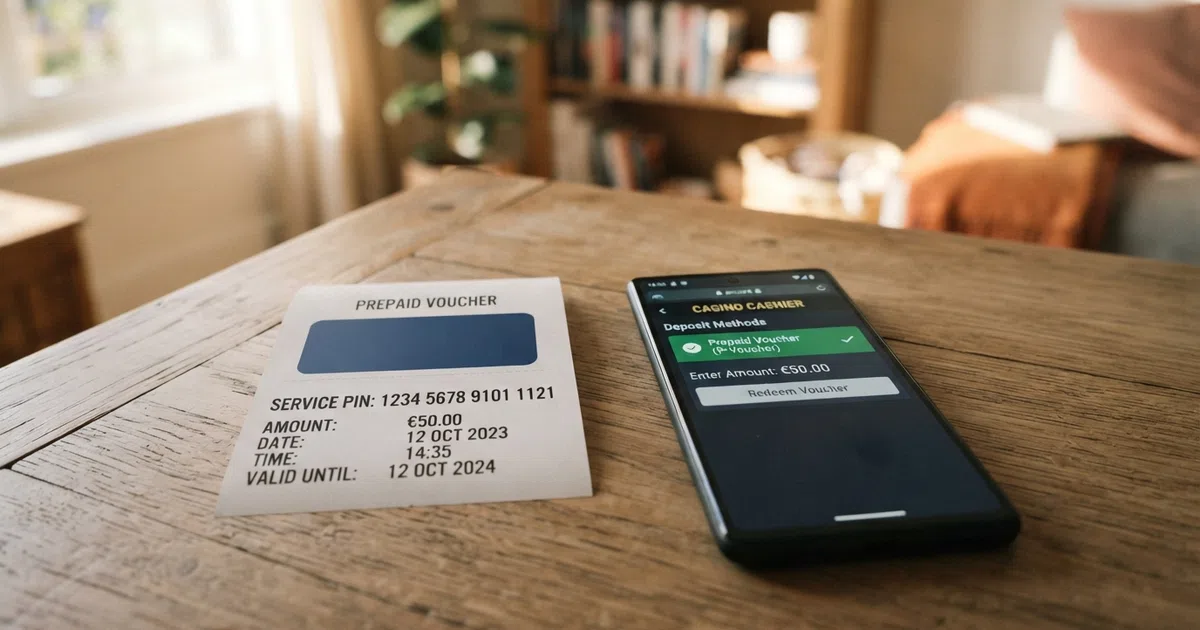
CashtoCode sells a single, sharp promise: walk into a shop, hand over cash, walk out with a number, and that number becomes casino credit without your bank ever seeing the transaction. For a UK player who wants gambling spend off the statement, that is the whole pitch. The reality is more textured. CashtoCode is fast and fee-free at the deposit, but it is deposit-only — when you win, the cash has to leave through a bank transfer or e-wallet, and the casino still knows exactly who you are before you place a single bet. This page is a working guide to the UK casinos that take CashtoCode today, what they offer, and what the method actually costs a player who is not just making a one-off deposit.
CashtoCode Is the Cash Deposit Method That Keeps Your Bank Statement Clean
CashtoCode is a cash eVoucher system. A player buys a voucher at a UK retail counter or online, receives a unique 16-digit PIN, and enters that PIN in a casino cashier. The casino credits the account instantly. No bank account is involved at the deposit, no card is swiped, and no third-party payment processor logs the transaction against a player’s name. The full lifecycle sits inside the CashtoCode network: customer pays cash at the till, the cashier generates a PIN, the PIN redeems for casino credit.
The operator that runs the system describes its offer in deliberately broad terms, describing licensed partner sites where the PIN can be redeemed without naming any individual casino or staking a claim on its availability today. That vagueness is the first thing a UK player runs into: the official language is “exclusive partners” rather than “every UK casino,” and the partner list shifts.
Two things separate CashtoCode from a debit card or an e-wallet. The first is the bank-statement effect — the deposit does not appear as a gambling transaction from your bank, because no bank was involved. The second is the no-credit-card compliance point: UK rules have banned credit cards for gambling since April 2020, and a cash voucher is, by construction, not credit. Both properties matter to a player whose card statement they would rather not annotate with casino entries.
The privacy, though, runs out the moment you open an account. The UK Gambling Commission mandates strict Know Your Customer verification before any gambling takes place. The casino collects photo ID, proof of address, and (depending on the operator) a source-of-funds check, all before the first wager. A CashtoCode deposit buys privacy from the bank, not from the regulator. The casino knows your name from registration; the bank knows nothing about the deposit; the regulator knows everything about the account. That is the actual triangle.
How a Cash eVoucher Turns into Casino Credit
The flow is short enough to hold in one head. Buy a voucher, get a PIN, type the PIN in, see the balance change. The interesting parts are at the edges.
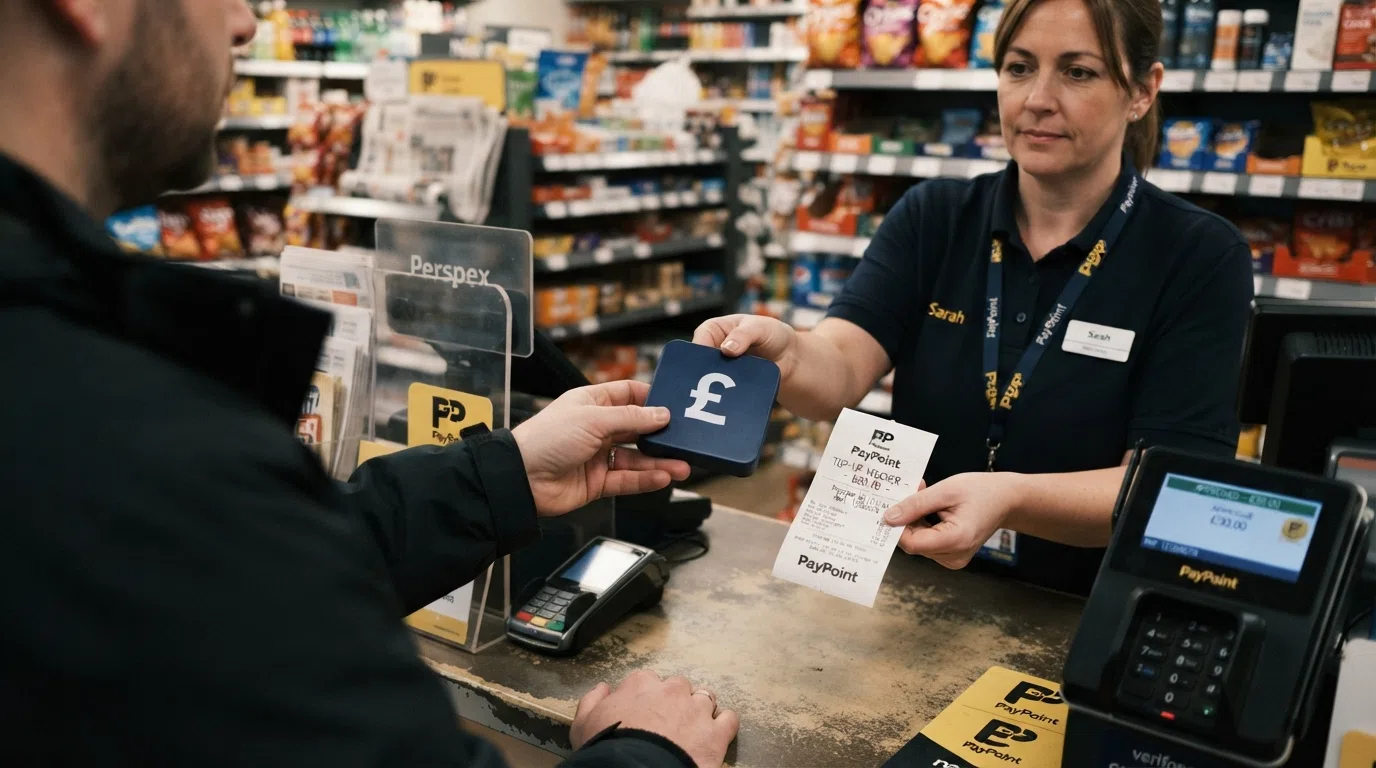
A voucher can be bought two ways. In person, a player visits any UK PayPoint retailer — there are over 28,000 across the country — asks for a CashtoCode voucher for a chosen amount, pays cash, and walks out with a receipt that carries the PIN. Online, a player visits the CashtoCode site or the CashtoCode Go app, selects a denomination, and pays through a partner payment route; the PIN arrives by email or in-app. The retail route is the one that delivers on the cash-to-PIN promise; the online route is closer to a prepaid card top-up and carries its own trace.
Once the PIN is in hand, the player signs in to a participating casino, opens the cashier, selects CashtoCode from the deposit methods, enters the PIN and the amount, and confirms. The transaction processes in seconds and the deposit carries no fee at the player level. The casino receives the funds, the voucher is marked used, and the account balance updates.
CashtoCode’s per-transaction floor is £20 and ceiling is £250 in the UK, which means a single voucher does not stretch to a large deposit. Players funding bigger sessions stack multiple vouchers in sequence, and that is supported. There is no upper daily cap at the voucher level beyond the single-transaction ceiling.
Common Deposit Limits
| Method | Min Deposit | Max Deposit |
|---|---|---|
| CashtoCode | £20 | £250 |
| Bank Transfer | £10 | £5,000+ |
| E-Wallet | £10 | £1,000+ |
Which UK Casinos Actually Accept CashtoCode Right Now
The honest answer to “which UK casinos take CashtoCode” is a short confirmed list and a long list of plausible names. As of the most recent verification, two operators in the featured set accept CashtoCode as a directly confirmed payment method: Videoslots, with a minimum deposit of £10 and a maximum of £1,000, and NetBet, with a minimum of £20. Both appear in multiple independent confirmations and in their own cashier interfaces.
A second tier of names is listed as CashtoCode partners by affiliate review sites such as Casino.Guru, which means the operator is in the broader CashtoCode network but has not been individually re-verified for UK availability in this research pass. 888 Casino sits in this band. The claim is plausible — 888 is a major UK-licensed brand with broad payment coverage — but the player should not treat the listing as a guarantee that CashtoCode will appear in the cashier today, because partner lists are not updated in real time.
The remaining operators in the featured set — Mr Green, PlayOJO, Betway, Bet365, William Hill, Betfred, LeoVegas — are UKGC-licensed casinos where CashtoCode acceptance is not confirmed via direct search. They may well take it; UKGC rules do not prevent a licensed operator from supporting cash vouchers, and the major brands tend to offer broad payment coverage. But the audit trail stops at “not confirmed in this research pass,” and a player who arrives at one of these sites planning to use CashtoCode should check the cashier before registering.
The list fluctuates because payment-method availability at UK casinos is a live, commercial decision. Operators add and drop methods as commercial terms change, as processing partners shift, and as compliance teams review method-by-method. A name that accepted CashtoCode in 2024 may not in 2026, and the partner list is updated on its own schedule. The short confirmed list is the safer place to start; the longer list is worth checking the cashier for.
Getting Started with CashtoCode: What You Need Before You Deposit
Three things need to be in place before the first voucher is bought. A funded voucher is obvious; the other two are where players trip.
The first is a casino account. Even at a CashtoCode-friendly casino, registration is required, and registration triggers UKGC KYC — photo ID, proof of address, and in some cases a source-of-funds document. The verification has to be completed before the first wager, and at most operators the deposit itself can be made while verification is still pending, but the winnings cannot be withdrawn until the documents are cleared. Players who plan to use CashtoCode because they want to keep gambling off the bank statement should know that the account is not anonymous to the casino.
The second is a withdrawal method. CashtoCode is deposit-only. There is no route from casino balance to a cash-voucher payout; the cash would have to travel from the casino’s bank to a retail outlet, which is not how the system works. Every CashtoCode user has to set up a bank transfer or e-wallet as a withdrawal route, and that route has to be in place from the first session — not the day a big win lands. The setup itself usually requires KYC on the receiving side too.
The third is a starting budget that fits the voucher band. The per-transaction floor is £20 and the ceiling is £250. A player planning a £500 session needs two vouchers; a player planning a £2,000 month needs at least eight, sequenced across deposits. The arithmetic is simple but it is not negligible. The minimum practical starting budget — enough for a meaningful session rather than a one-spin test — is roughly £40 to £100, which covers two to four vouchers.
The CashtoCode Trade-Off: Privacy at the Deposit, Paper Trail at the Cashout
A short list, because the trade-off is concrete rather than subtle:
- Privacy at the deposit — no bank account is involved, no card is swiped, and the bank statement carries no gambling entry. For a player whose statement is shared or who simply prefers the discipline of cash, this is the headline benefit and it is real.
- No-credit compliance — CashtoCode is, by design, a cash-based route. UK rules have banned credit cards for gambling since April 2020, and a cash voucher is unambiguously not credit. The compliance angle is automatic.
- Instant processing, zero fees — deposits land in seconds, and there is no player-facing fee at the voucher or the cashier. The merchant model is built on the operator side, not the user side, and the cost does not surface to the player.
- Deposit-only, with a mandatory withdrawal route — payouts must go through a bank transfer or e-wallet, which is itself traceable. The privacy covers the deposit, not the cashout, and a player who values both will find CashtoCode delivers one half of the promise.
- KYC still applies — UKGC verification runs before gambling starts, regardless of the deposit method. The casino knows who you are; the bank does not know what you deposited; the regulator knows the full account.
The bottom line: CashtoCode is the right choice for those wishing to keep gambling off bank statements, though it remains visible to casinos. There is no method that delivers anonymity at a UKGC-licensed site, and any user seeking to hide their activity from the regulator is outside the scope of the licensed market entirely.
How Depositing with CashtoCode Actually Works (and Why You Still Need a Withdrawal Plan)
The deposit workflow is short, the speed is real, and the fee is genuinely zero. The part the marketing pages tend to underplay is the withdrawal side, which is where CashtoCode’s deposit-only architecture turns the method into a one-way street: cash in, bank transfer or e-wallet out.
A standard UK CashtoCode deposit goes like this. The player visits a participating casino, signs in, opens the cashier, and selects CashtoCode. The cashier prompts for a PIN. The player enters the 16-digit code from the voucher, confirms the amount (within the £20–£250 per-transaction band), and submits. The transaction processes in seconds and the casino balance updates. There is no fee on the player side, no surcharge from the casino in any of the confirmed names, and no hold for fraud review on a clean voucher.
What the same casino will not do is send cash back through CashtoCode. The system has no mechanism for an operator to push a payout to a retail counter; the architecture is one-way. When a player wants to cash out, the casino offers bank transfer, debit card, or an e-wallet such as PayPal or Skrill, and the player has to verify the receiving account. Verification on the receiving side usually means the e-wallet or bank account is in the player’s name — another de-anonymisation step the bank-statement privacy does not protect.
The practical consequence: a CashtoCode player should have a verified withdrawal method on file before the first deposit. The withdrawal method does not need to be funded or even active — it needs to be in the account, in the player’s verified name, and ready to receive a payout. Setting it up after a big win means waiting on KYC on the second account as well as the first, and the payout sits in the queue until both clear.
Buying the Voucher: Retail, Online, and the PayPoint Network
The retail route is the one that delivers the cleanest version of the cash-to-PIN promise. PayPoint operates over 28,000 retail locations across the UK — corner shops, newsagents, convenience stores, petrol stations — and the vast majority of them can issue a CashtoCode voucher. The transaction takes a couple of minutes: the player asks for a CashtoCode voucher for a chosen amount between £20 and £250, pays cash at the till, and walks out with a printed receipt that carries the PIN. The receipt is the voucher; losing it before redemption is, in practice, losing the funds.
The online route goes through the CashtoCode website or the CashtoCode Go app. A player selects a denomination, pays through a partner route, and receives the PIN by email or in-app. The convenience is real, especially for players who do not have a PayPoint nearby, but the trade-off is that “cash voucher” becomes a slight misnomer — the online purchase is a digital top-up paid by card or e-wallet, not by cash. The PIN still redeems the same way at the casino cashier, and the deposit still does not appear on a bank statement as a gambling transaction, because the funding source for the voucher is the voucher purchase, not a direct casino deposit.
The £20–£250 per-voucher range is the same across both routes. A player who needs more than £250 in a single session stacks vouchers; these amounts are cumulative and straightforward for the user.
Entering the PIN in the Casino Cashier: A Step-by-Step Walkthrough
The cashier flow is short, but the exact screens vary by operator. At Videoslots, the cashier lists CashtoCode alongside the other deposit methods; selecting it brings up a field for the PIN, an amount selector (with a £10 minimum, below the voucher floor — see the limits section), and a confirm button. The balance updates in seconds. At NetBet, the cashier flow is similar, with a £20 minimum. Both operators process the deposit without sending the player to a third-party page; the PIN entry is the whole flow.
The two practical points. First, the PIN is single-use; once redeemed, it cannot be reused, and a player who buys a voucher and changes their mind has no way to convert the PIN back to cash. Second, the cashier is the only place the PIN is entered — never on a separate CashtoCode-branded page, never via a link in an email. Phishing pages exist that mimic the CashtoCode brand, and the correct flow is the casino’s own cashier, with the operator’s domain in the address bar.
Minimum and Maximum Deposit Limits at UK CashtoCode Casinos
The limits are a stack, not a single number, and the stack sometimes produces an oddity worth understanding.
At the bottom, CashtoCode itself sets a per-voucher floor of £20 and ceiling of £250 in the UK. A single voucher cannot be smaller or larger than that band. At the top, the casino sets its own minimum deposit and maximum deposit per transaction. Videoslots accepts CashtoCode deposits from a £10 minimum up to a £1,000 maximum. NetBet accepts CashtoCode from a £20 minimum.
The Videoslots £10 minimum sits below the CashtoCode £20 floor, and the way that works is that the player enters a PIN, the cashier accepts any amount within the casino’s own range, and the voucher is redeemed for whatever the player requests, with the remainder (if any) lost or retained by the operator depending on the terms. In practice, a player depositing £10 at Videoslots via CashtoCode is redeeming a £20 voucher for a £10 credit, and the £10 difference is effectively absorbed. The arrangement is operator-specific; a player should not assume the same mechanic at every CashtoCode-accepting casino.
For larger deposits, multiple vouchers in sequence are the route. The £250 single-voucher ceiling does not cap total daily deposits, and the casino’s own maximum per transaction (Videoslots £1,000) is the binding figure.
Fees: What CashtoCode Costs the Player (Spoiler: Nothing)
At the player level, CashtoCode carries no fee. The deposit is free, the voucher purchase at a PayPoint costs no more than the face value, and no operator in the confirmed CashtoCode-accepting set charges a surcharge on the deposit side. The free-to-player model is not a marketing concession; it is how the system is built. CashtoCode earns from the merchant side, charging casinos and other merchants a processing fee per transaction, and the cost is recovered from the operator’s margin rather than the player’s deposit.
The comparison point that matters is the e-wallet alternative. PayPal, Skrill, and Neteller all charge deposit fees at some UK casinos, and the fees vary by operator and by promotion. A player who uses an e-wallet because it offers instant deposits and a degree of payment-method privacy can pay a small percentage on every transaction. A player who uses CashtoCode pays nothing, and that free-to-player structure is one of the method’s clearer advantages over the e-wallet options on raw cost.
Where fees can appear, and this is rare, is on the online voucher purchase route. A player who buys a CashtoCode voucher online through a partner payment processor may pay a small processing fee at the purchase step, depending on the funding source. The fee is not from CashtoCode itself; it is from the upstream payment method. The PayPoint retail route does not have this issue, because the payment is cash at the till.
Instant Deposits, Delayed Withdrawals: The Real Speed Picture
The speed story is two paragraphs long, and the contrast is the point.
The deposit side is genuinely instant. A clean CashtoCode PIN redeems in seconds, the casino balance updates in real time, and there is no pending period, no fraud-review hold, and no delay tied to the payment method. From the player’s perspective, a CashtoCode deposit is one of the faster routes available at a UK casino, alongside Apple Pay and a verified e-wallet.
The withdrawal side is the opposite, and the reason is structural. CashtoCode cannot carry a payout, so the casino routes the withdrawal through whatever method the player has on file — bank transfer, debit card, or e-wallet. Bank transfers typically take a few business days at UKGC-licensed casinos; e-wallet withdrawals are faster, often same-day or next-day, but require the e-wallet to be in the player’s verified name. Either way, the withdrawal is governed by the receiving method’s speed, not CashtoCode’s, and a player who values cashout speed should have a verified e-wallet in place from the start.
The asymmetry — seconds in, days out — is the single most important thing to know about CashtoCode. The deposit experience is one of the best; the withdrawal experience is, by construction, the experience of whatever method the player uses to receive the payout. The right setup is a CashtoCode deposit paired with a verified e-wallet or fast bank transfer for withdrawals, both configured before the first voucher is bought.
Deposit Bonuses Tied to the Payment Method: What CashtoCode Qualifies For
The good news is short. At UKGC-licensed casinos, CashtoCode deposits qualify for the standard welcome offers at every confirmed CashtoCode-accepting operator. There is no bonus-exclusion policy that singles out cash vouchers, and a CashtoCode deposit triggers the same welcome package as a debit card or e-wallet deposit would.
The qualifier is the UK’s 10x wagering cap. Since 19 December 2025, the UKGC’s updated LCCP rules have capped wagering requirements on bonus funds at 10x. That is the ceiling, not the floor, and operators that historically ran 35x or 50x wagering have restructured their offers. Videoslots’ 100% up to £200 + 11 wager-free spins is one of the legacy structures that still appears in some form — the 35x wagering on the bonus component is a figure from before the cap and is treated here as the operator’s own published term, not a current regulatory norm.
The more important distinction is between “the deposit method qualifies” and “the bonus terms are worth it.” A CashtoCode deposit will not be excluded from a welcome offer at any UKGC-licensed casino, but the offer itself still has to be evaluated. A 10x wagering requirement on a £50 bonus means £500 of slot play before withdrawal; a 0x wagering requirement on a free-spin win means the winnings are cash the moment they land. The CashtoCode decision does not change the bonus arithmetic; it only determines whether the method is available at the cashier.
Why Your 2026 Casino Bonus Looks Different When You Pay with CashtoCode
The 10x wagering cap has rewritten the UK bonus market, and CashtoCode depositors feel the rewrite the same way everyone else does: the headline numbers on welcome offers are smaller, the wagering multiples are shorter, and the competition has moved from “highest percentage match” to “most generous free spins with zero wagering.”
The 10x cap took effect on 19 December 2025 under the UKGC’s updated LCCP rules. From that date, any bonus fund issued to a UK player carries a maximum wagering requirement of 10x the bonus amount. Operators that previously ran 35x or 50x wagering have had to restructure; the most common response has been to shift the headline offer away from large deposit matches and toward free-spin packages, where the wagering can be set to zero. A wager-free free-spin win is, in effect, the cleanest way to comply with the new cap while still offering a competitive welcome.
CashtoCode deposits qualify for these restructured offers. The cash voucher does not affect the bonus terms in either direction. What the cash voucher does affect is the player’s experience at the cashier, and for a player choosing between two comparable welcome offers, the deposit-method experience is the tiebreaker.
For a worked example, take Betway’s 100% match bonus up to £50 at 10x wagering, the kind of offer the 10x cap was designed to enable. The bonus amount is £50 (the maximum on a £50 deposit, since the match is 100%). Wagering required: £50 × 10 = £500 in eligible slot play. At the UK statutory maximum stake of £5 per spin (the age-25+ band), that is £500 ÷ £5 = 100 spins. At a five-second-per-spin pace, that is 100 × 5 = 500 seconds, or roughly 0.14 hours of play. The full bonus can be cleared in under ten minutes of slot action at the maximum allowed stake — a figure that would have been impossible under the old 35x regime, where the same bonus would have required 350 spins and nearly half an hour of play. The cap has not just lowered the multiplier; it has shrunk the time commitment by an order of magnitude.
Welcome Bonuses That Accept CashtoCode Deposits
Five welcome offers in the featured set are worth examining, each picked because it illustrates a different way the post-cap UK market is competing.
Videoslots runs a 100% match up to £200 plus 11 wager-free spins on Starburst or Pink Elephants 2. The headline figure is high; the 35x wagering on the bonus component is the operator’s own published term and sits well above the new 10x cap, which suggests the offer structure predates the December 2025 change. The 11 wager-free spins are the part of the offer that fully complies with the post-cap norm, and they are the cleaner read on the package’s real value.
NetBet offers 100 free spins on Big Bass Splash for a £20 CashtoCode deposit, with 0x wagering on the spin winnings. The player deposits £20, plays the spins, keeps whatever the spins return, and can withdraw immediately. This is the cleanest match between a CashtoCode deposit and a post-cap UK welcome offer: small denomination, no wagering, no friction.
Betway offers a 100% match up to £50 at 10x wagering — exactly at the new UK cap — plus 150 free spins on a £20 stake. The match is modest, the wagering is the statutory maximum rather than above it, and the spin package is generous. For a player evaluating post-cap offers, this is the offer that demonstrates the new norm.
Bet365’s “10 Days of Free Spins” promotion distributes up to 500 free spins across the first ten days after registration, with 0x wagering on the spin winnings. The headline is the largest spin count in the featured set; the substance is a steady drip rather than a single drop, which means a player who logs in daily gets the full value. The 0x wagering is the post-cap compliance move.
William Hill rounds out the set with 200 free spins at 0x wagering — a clean, no-strings package from a high-street name. The wager-free structure has become the default for the spin-led offers, and William Hill’s package is a representative example of where the UK market has settled.
Free Spins That Come with a CashtoCode Deposit
Free spins are where the post-cap UK market does most of its competing, and the offers in the featured set are a useful tour of the structure.
NetBet’s 100 free spins on Big Bass Splash for a £20 deposit carry 0x wagering on the spin winnings. The player deposits, plays the spins, and can withdraw the return immediately. This is the most frictionless offer in the set and the one that pairs most naturally with a CashtoCode deposit, because both sides of the offer are small-denomination and clean.
Videoslots’ 11 wager-free spins on Starburst or Pink Elephants 2 are smaller in count but equally clean on the wagering side. The bonus component of the Videoslots welcome (the 100% match up to £200) carries 35x wagering, which is above the post-cap norm; the spin component is 0x, which is the post-cap norm. A player reading the offer as two separate products will reach a different conclusion than a player reading it as a single package.
Mr Green’s 200 free spins on a £10 deposit carry 10x wagering on the bonus funds — the maximum allowed under the post-cap regime. The spin count is high, the deposit threshold is low, and the wagering is at the regulatory ceiling rather than below it. The offer is generous on the surface and exactly compliant underneath.
Bet365’s “10 Days of Free Spins” up to 500 total spins, distributed daily, carry 0x wagering on the spin winnings. The structure rewards daily logins, and a player who misses a day forfeits that day’s allocation. The headline 500-spin figure is the ceiling, with the actual count depending on the operator’s promotional terms.
PlayOJO’s 50 wager-free spins on Big Bass Bonanza for a £10 deposit carry 0x wagering. PlayOJO’s brand positioning is built around the “no wagering” promise, and the welcome offer is the clearest expression of that positioning.
William Hill’s 200 free spins at 0x wagering complete the set, with a clean structure from a high-street brand.
Wagering Requirements: What the UK’s 10x Cap Means for Your Bonus
The 10x cap is the single most important change to the UK bonus market in recent years, and the practical effect is best understood by contrast with what came before.
Under the pre-cap regime, a typical 100% match bonus with high wagering requirements on the bonus and deposit would have required a substantial amount of slot play to clear. The same bonus at 10x wagering on the bonus only would require £1,000. The cap does not just lower the multiplier; it changes which quantity the multiplier is applied to. Operators have responded in two ways: by applying the multiplier to the bonus only (not the bonus + deposit), and by shifting the offer from a deposit match toward free spins, which can be issued with 0x wagering.
The 10x figure is the ceiling, not the floor, and the floor is closer to 0x than to 10x in the current UK market. The competitive play is on wagering-free spin offers, and the offers with residual wagering (Betway’s 10x match, Mr Green’s 10x spin-winnings) sit at the cap rather than above it. A player evaluating offers should look at the wagering multiple first, the wagering base (bonus only vs. bonus + deposit) second, and the headline figure third. Two offers with the same headline can have very different real values once the wagering structure is applied.
Bonus Terms to Read Before You Deposit with CashtoCode
Three small-print mechanics survive the 10x cap, and a player who reads them before depositing will not be surprised after.
Game contribution weightings describe how different game types count toward wagering requirements. Slots typically contribute 100% — every £1 wagered on a slot counts as £1 toward the requirement. Table games, live dealer games, and some specialty games contribute much less, often 10% to 20%, meaning a £10 wager on blackjack counts as £1 to £2 toward the bonus. For a player whose bonus play happens on slots, the weightings are largely irrelevant; for a player who splits time between slots and tables, they are the difference between a fast clear and an impossible one.
Maximum win caps on bonus funds limit how much a player can win from bonus play. Some UK bonuses cap the withdrawable return from a free-spin or bonus-fund offer at a fixed amount (for example, £100 from a free-spin package). The 10x cap does not affect maximum win caps, and a player reading the offer should check both the wagering and the cap. Wager-free spins typically do not carry a cap, which is one of the structural reasons they have become the dominant offer type.
Expiry windows set the time limit for bonus activation and completion. A typical UK bonus requires activation within seven days of deposit and completion of wagering within 30 days. Missing the window forfeits the bonus and any winnings tied to it. The windows are tighter than the headline numbers suggest, and a player who accepts a bonus and returns a week later often finds the bonus has already expired.
The CashtoCode Casino Line-Up: Who Accepts It, What They Offer, and How They Compare
The ten operators below are the featured set, ranked by CashtoCode acceptance status first and bonus value second. The reasoning is straightforward: a casino that does not take the method is not in the running for a CashtoCode-specific page, regardless of how generous the welcome offer is, and the table reflects that priority.
| Operator | CashtoCode Accepted | UKGC Licence | Welcome Bonus | Wagering | Free Spins |
|---|---|---|---|---|---|
| Videoslots | Yes (Min £10, Max £1,000) | Yes (Active) | 100% up to £200 + 11 Wager-Free Spins | 35x (Bonus), 0x (Spins) | 11 (Starburst / Pink Elephants 2) |
| NetBet | Yes (Min £20) | Yes (Active) | 100 Free Spins on Big Bass Splash | 0x (Spins) | 100 |
| 888 Casino | Listed as CashtoCode partner | Yes (Active) | Multi-tier welcome package | — | — |
| Mr Green | Not confirmed via direct search | Yes (Active) | 200 Free Spins on £10 deposit | 10x (Bonus) | 200 |
| PlayOJO | Not confirmed via direct search | Yes (Active) | 50 Wager-Free Spins | 0x | 50 |
| Betway | Not confirmed via direct search | Yes (Active) | 100% up to £50 | 10x | 150 (Stake £20) |
| Bet365 | Not confirmed via direct search | Yes (Active) | 10 Days of Free Spins (up to 500) | 0x (Spins) | 500 |
| William Hill | Not confirmed via direct search | Yes (Active) | 200 Free Spins | 0x (Spins) | 200 |
| Betfred | Not confirmed via direct search | Yes (Active) | Stake-based free spins | — | — |
| LeoVegas | Not confirmed via direct search | Yes (Active) | Deposit match or spins | — | — |
The two operators at the top of the table — Videoslots and NetBet — are the only names where CashtoCode acceptance has been confirmed via direct verification rather than partner-list inference. Both hold active UKGC licences, both offer welcome packages compatible with a CashtoCode deposit, and both are the right starting points for a player who wants to be sure the method will appear in the cashier. The remaining eight operators are UKGC-licensed and offer competitive welcome packages, but their CashtoCode status is not directly confirmed, and a player planning to use the method at one of them should check the cashier before registering.
Videoslots — The Most CashtoCode-Forward Casino in the UK
Videoslots sits at the top of the table for a reason. It is the only UK-licensed operator in the featured set with a directly confirmed CashtoCode minimum of £10 — below the £20 voucher floor, which means the casino absorbs the difference and the player can fund a session from any voucher denomination. The maximum of £1,000 per transaction is well above the single-voucher ceiling of £250, and the player stacks vouchers to reach it. The wide limit band is the structural reason Videoslots is the cleanest CashtoCode destination in the UK.
The welcome offer is a 100% match up to £200 plus 11 wager-free spins on Starburst or Pink Elephants 2. The match component carries 35x wagering on the bonus, which is the operator’s published term and sits above the post-cap 10x norm; the 11 spins are 0x, which is the post-cap norm. For a player who values the spin component, the offer is clean; for a player who values the match component, the wagering is the trade-off.
Videoslots is a long-established UKGC-licensed operator with a slot library numbering in the thousands, and the CashtoCode integration runs through the same cashier as the operator’s other payment methods. For a UK player who wants the CashtoCode deposit to be the simplest part of the session, Videoslots is the strongest fit in the featured set.
NetBet — 100 Free Spins for a £20 CashtoCode Stake, Zero Wagering
NetBet’s offer is the cleanest pairing of a CashtoCode deposit and a post-cap UK welcome package. The minimum CashtoCode deposit is £20, which sits at the voucher floor and means the player funds the bonus with a single voucher. The welcome offer is 100 free spins on Big Bass Splash, with 0x wagering on the spin winnings.
The 0x wagering is the part that matters. A player who deposits £20, plays the 100 spins, and wins £40 from the spin returns can withdraw the £40 immediately, without clearing a wagering requirement, without waiting on a bonus expiry window, and without the small-print friction that larger welcome offers tend to carry. The structure is small-denomination, single-voucher, no-strings, and it is the most natural fit for a CashtoCode-specific deposit.
NetBet is a UKGC-licensed operator with a broad slot catalogue, and the CashtoCode deposit is confirmed in the cashier. For a player who wants the wager-free spin experience without funding a large deposit, NetBet is the second stop after Videoslots in the CashtoCode-accepting set.
888 Casino — Listed as a CashtoCode Partner with a Multi-Tier Welcome Package
888 Casino appears on CashtoCode partner lists maintained by affiliate review sites, including Casino.Guru. The listing means 888 is in the broader CashtoCode network, but the research pass did not surface a direct confirmation of CashtoCode in the current 888 UK cashier, and the specifics of the welcome offer are not pinned down in detail. The available description points to a multi-tier welcome package rather than a single deposit match.
For a player considering 888, the practical move is to verify CashtoCode in the cashier before registering, because partner-list status and cashier-level availability are not the same thing. 888 is a UKGC-licensed legacy brand with a large game selection and a long UK presence, and the operator’s general quality does not depend on the CashtoCode question. But on a page organised around CashtoCode acceptance, 888 sits in the partner-listed band rather than the directly confirmed band, and that distinction matters for a player who does not want to register at one site and discover the method is not actually in the cashier.
Mr Green — 200 Free Spins on a £10 Deposit, CashtoCode Status Unconfirmed
Mr Green’s welcome offer is among the more generous free-spin packages in the featured set: 200 free spins on a £10 first deposit, with 10x wagering on the bonus funds. The 10x figure is the post-cap maximum, not above it, and the offer is fully compliant with the December 2025 LCCP rules.
CashtoCode acceptance at Mr Green was not confirmed via direct search in this research pass. Mr Green is a UKGC-licensed operator with a broad game catalogue and a strong mobile offering, and the brand is in the broader payment-method conversation at most UK operators. But for a player who plans to fund a session with a CashtoCode voucher, the cashier check is the right move before registering.
For a player who values the spin count and is open to an alternative deposit method, the Mr Green offer is competitive. The 10x wagering is the trade-off — the same as Betway’s match offer, applied to the bonus fund rather than the deposit match.
PlayOJO — 50 Wager-Free Spins, No Wagering, No Nonsense
PlayOJO’s brand positioning is built on the “no wagering” promise, and the welcome offer is the clearest expression of that positioning: 50 wager-free spins on Big Bass Bonanza for a £10 deposit, with 0x wagering on everything. A player who wins £30 from the spins can withdraw the £30 immediately, and there is no bonus fund, no wagering requirement, and no expiry window to track.
CashtoCode acceptance at PlayOJO was not confirmed via direct search. PlayOJO is a UKGC-licensed operator with a clean reputation and a focused slot catalogue, and the no-wagering structure makes the offer easy to evaluate: a £10 deposit funds 50 spins, and the return is the return.
For a player who values wager-free play above spin count, PlayOJO is the cleanest offer in the featured set. The no-wagering offer is transparent and easy to track, making it a strong contender for CashtoCode depositors who prioritize clarity over bonus size.
Betway — 100% Match to £50 with a Clean 10x Wagering Structure
Betway’s welcome offer is the most direct illustration of the post-cap 10x regime. The offer is a 100% match up to £50 at 10x wagering, plus 150 free spins on a £20 stake. The match component is the UK cap on a deposit match: 100% up to a modest ceiling, with the wagering set at the maximum the new rules allow. The spin component is a separate, parallel offer with its own terms.
A player who deposits £50 to claim the full match bonus, then plays the 150 free spins, is running two bonus structures side by side. The match bonus requires £500 of slot play to clear (50 × 10); the spins are a separate allocation. The mechanic is more complex than a single-package offer, but each part is at the regulatory ceiling rather than above it, and the offer is fully compliant with the December 2025 rules.
CashtoCode acceptance at Betway was not confirmed via direct search. Betway is a UKGC-licensed operator with a long UK presence, and the welcome offer is competitive within the post-cap norm. Betway is a UKGC-licensed operator with a competitive welcome package, and for a player who prefers a traditional match bonus, it remains a balanced choice.
Bet365 — 500 Free Spins Over 10 Days, Zero Wagering on Winnings
Bet365’s “10 Days of Free Spins” promotion distributes up to 500 free spins across the first ten days after registration, with 0x wagering on the spin winnings. The structure is a daily drip — a player who logs in on each of the first ten days receives the full 500-spin allocation, and a player who misses a day forfeits that day’s spins.
The headline figure is the largest in the featured set, and the 0x wagering keeps the offer clean. The trade-off is the daily-login requirement, which rewards consistent play and penalises the player who treats the welcome offer as a one-off. For a player who plans to log in daily for the first ten days, the offer is generous; for a player who expects a single deposit to deliver the full 500 spins, the structure does not match the expectation.
CashtoCode acceptance at Bet365 was not confirmed via direct search. Bet365 is the UK’s largest sportsbook brand and a UKGC-licensed casino operator, and the welcome offer is the most volume-heavy in the featured set. Bet365 is a premier sportsbook with a substantial spin package, and while the daily-login requirement adds a layer of consistency, it offers high potential value for the dedicated player.
William Hill — 200 Free Spins with Zero Wagering, a Veteran Brand
William Hill’s welcome offer is 200 free spins with 0x wagering on the spin winnings. The structure is clean, the wager-free mechanic keeps the spin returns as cash, and the brand carries a decades-long UK high-street presence that adds a layer of trust for players who value the legacy operators.
CashtoCode acceptance at William Hill was not confirmed via direct search. William Hill is a UKGC-licensed operator, and the welcome offer is competitive within the post-cap norm. For a player who values the combination of a high-street name and a wager-free spin package, William Hill is a reasonable fit, with the same cashier check that applies to the rest of the unconfirmed set.
Betfred — Stake-Based Free Spins, Details Light
Betfred’s welcome offer is built around a stake-based free-spin mechanic, where the size of the free-spin package depends on the player’s first deposit. The research pass did not pin a specific spin count or a specific stake-to-spin ratio, and the offer details are qualitative rather than confirmed in numbers.
CashtoCode acceptance at Betfred was not confirmed via direct search. Betfred is a UKGC-licensed operator with a strong UK high-street presence, and the stake-based mechanic is a familiar structure in the UK market. For a player who is open to the stake-based format and willing to verify the CashtoCode availability in the cashier, Betfred is a plausible fit; for a player who wants the offer specifics before registering, the cashier and the operator’s own promotions page are the right places to look.
LeoVegas — The Mobile-First Contender with a Qualitative Welcome Offer
LeoVegas is best known for its mobile-first platform, which has won industry awards and built a reputation for the quality of its phone-based play. The welcome offer is described qualitatively as a deposit match or a spin package, and the research pass did not pin a specific offer figure.
CashtoCode acceptance at LeoVegas was not confirmed via direct search. LeoVegas is a UKGC-licensed operator, and the mobile-first positioning makes it a natural fit for a player who plans to play primarily on a phone. For a player who values the mobile experience and is open to verifying the CashtoCode availability, LeoVegas is worth a look; for a player who wants the welcome offer specifics before registering, the cashier and the operator’s own promotions page are the right sources.
The Games You Can Actually Play with a CashtoCode Deposit
A CashtoCode deposit funds the same casino lobby as any other payment method. The games do not know, and do not care, how the deposit was funded; the cashier route is invisible to the slot reels, the live dealer tables, and the bingo rooms. What the deposit method does affect is the bonus terms on certain game types, and that is where the practical considerations sit.
The dominant category at every CashtoCode-accepting casino is slots. The slot libraries at the two directly confirmed operators are large — Videoslots carries thousands of titles — and the variety covers the full range of volatility, theme, and mechanics. Free-spin offers, which dominate the post-cap welcome packages, are almost always slot-specific, and a player claiming a spin offer is using it on the slot catalogue rather than across the full game library.
Live dealer tables are fully accessible to CashtoCode depositors. Blackjack, roulette, baccarat, and game-show formats are all available at the major UK-licensed operators, and the experience is identical to a debit-card-funded session. The practical difference is the bonus contribution weighting: most welcome offers apply 100% contribution to slots and a much smaller percentage to live dealer games, which means a player who splits time between slots and tables will clear the wagering requirement more slowly than the headline figure suggests.
Blackjack and roulette are the anchor table games, and both are available at every UKGC-licensed operator in the featured set. The contribution weightings apply, and a player who plans to clear a bonus on table games alone will find the wagering requirement effectively much higher than the headline number.
Slots: The Main Event at CashtoCode Casinos
Slots are where the bulk of CashtoCode deposits land, and the slot libraries at the two confirmed operators are the right reference point. Videoslots carries thousands of titles across every category — classic three-reelers, video slots, progressive jackpots, megaways mechanics, branded games. NetBet carries a smaller but still broad library, with the Big Bass series (the title behind the 100 free spins) sitting among the most popular.
The free-spin offers that dominate the post-cap UK welcome packages are almost always slot-specific. A 100-spin offer is a 100-slot-spin offer, and the eligible games are usually a small named list rather than the full library. The Big Bass Splash, Big Bass Bonanza, Starburst, and Pink Elephants 2 titles that appear across the featured welcome offers are slot titles, and the spins are restricted to those games. A player who wants to play a different slot will need to fund it from the cash balance, not from the spin allocation.
The UK statutory stake limits cap every spin. For players aged 25 and over, the maximum stake is £5 per spin; for players aged 18 to 24, the maximum is £2 per spin. The limits apply to all online slots at UKGC-licensed casinos, regardless of the deposit method, and a player who tries to stake above the limit will find the bet rejected. The limits are part of the regulatory framework, not a casino-level decision, and there is no way around them at a UKGC-licensed site.
Live Dealer Games: Blackjack, Roulette, and the Real-Table Experience
Live dealer tables at UKGC-licensed casinos are streamed from studios, run by real dealers, and operate on real cards, real wheels, and real dice. The experience is designed to replicate a land-based casino floor, and the game selection covers the anchor table games plus a growing list of game-show formats. Blackjack and roulette are the most popular, with baccarat and various poker variants available at the larger operators.
For a CashtoCode depositor, the live dealer access is identical to a debit-card-funded session. The deposit method is invisible to the live table software, and the betting interface is the same. The only practical difference is the bonus contribution weighting: live dealer games typically contribute 10% to 20% of the wagering requirement, which means a £10 wager on live blackjack counts as £1 to £2 toward clearing a bonus. A player who wants to clear a welcome bonus on live dealer games will find the effective wagering requirement much higher than the headline number, and the post-cap 10x figure starts to look like 50x to 100x on live play.
The UK statutory stake limits apply to live dealer games as well as slots, with the same £5 (age 25+) and £2 (age 18-24) maximums. The limits were introduced for online slots specifically, but live dealer tables fall within the broader regulatory framework at most UKGC-licensed operators.
CashtoCode on Mobile: No Dedicated App, No Problem
CashtoCode does not require a dedicated app, and that is one of the method’s quiet advantages on mobile. The voucher PIN enters the same casino cashier on a phone as on a desktop, and the deposit flow is actually simpler on a phone because the PIN is a short code rather than a card number, an expiry date, and a CVV.
The mobile flow runs through the casino’s mobile browser or native app, whichever the player prefers. Both work. The CashtoCode Go app sits on the purchase side of the flow rather than the casino side, and it is a convenient way to buy a PIN from a phone before redeeming it at the casino cashier. A player who wants the entire flow on one device can buy the PIN through CashtoCode Go, switch to the casino’s mobile interface, and complete the deposit in seconds.
For the player who prefers a single-device flow without an app, the mobile web browser is the universal fallback. Every UKGC-licensed casino in the featured set runs a mobile-responsive website, and the CashtoCode deposit works identically on the mobile site as on the desktop site. The PIN is entered into the cashier, the deposit processes in seconds, and the balance updates.
The Mobile Deposit Flow: Voucher to Casino Balance on Your Phone
The mobile deposit flow is the same as the desktop flow, with the cashier rendered in a mobile-optimised layout. A player opens the casino on a phone, signs in, opens the cashier, selects CashtoCode, enters the PIN, and confirms. The deposit processes in seconds, and the balance updates on the mobile interface.
The CashtoCode Go app is the most convenient way to source the PIN from a phone. A player opens the app, selects a denomination, pays through a partner route, and receives the PIN in-app. Switching to the casino’s mobile interface and entering the PIN takes seconds, and the whole flow runs on a single device.
The alternative is to buy the voucher at a PayPoint retailer and enter the printed PIN at the mobile cashier. This is the more “cash” version of the flow, and it is the right choice for a player who wants the bank-statement privacy to be reinforced by the cash purchase at the retail counter. The mobile cashier does not care which way the PIN was sourced; it redeems the code the same way.
New CashtoCode Casinos: What Is Fresh in 2026 and What to Watch For
The new-casino landscape for CashtoCode in the UK is thin in the verified sense. The two directly confirmed operators — Videoslots and NetBet — are long-established brands, not new entrants, and the names in the broader partner list are mostly established operators rather than fresh launches. The research pass did not surface a newly launched UKGC-licensed casino with confirmed CashtoCode acceptance.
That does not mean new CashtoCode casinos do not exist. UKGC licensing is open to new applicants, and a new operator can launch with a broad payment-method portfolio that includes CashtoCode. But the verification trail is short, and a player joining a new casino on the strength of a CashtoCode claim should verify the claim in the cashier before buying a voucher.
The risks of a brand-new platform are not unique to CashtoCode, but they are worth naming. A new operator has a short track record, and the operational history that lets a player judge withdrawal reliability, customer support quality, and bonus-term enforcement is simply not there yet. The UKGC licence is the right starting point, but it is a floor rather than a ceiling, and a new licensee can hold a valid licence while running an under-resourced operation.
What to Check Before You Join a Brand-New CashtoCode Casino
A short list of checks, because the points are concrete:
- Verify the UKGC licence number on the Commission’s public register. Every UKGC-licensed operator has a unique licence number, and the register lists the licence status, the operating company, and the licence type. A new casino that does not appear on the register is not legally operating in the UK, regardless of what the website claims.
- Check the ownership group and its track record. A new casino launched by an established operator (for example, a new brand from a known gaming group) carries the parent’s track record with it. A new casino launched by an unknown operator carries the unknown with it. The Companies House record for the operating company is the right place to look.
- Confirm CashtoCode is listed in the cashier before depositing. A CashtoCode logo on a landing page or an affiliate review is not the same as a CashtoCode option in the cashier. The cashier is the authoritative source, and a player who cannot find CashtoCode in the cashier should not buy a voucher.
- Read the withdrawal terms carefully. New casinos sometimes have tighter cashout caps, longer pending periods, or stricter bonus terms. The T&Cs page is the right place to check, and the key figures are the minimum withdrawal, the maximum withdrawal per transaction, and the bonus wagering requirements.
- Look for the ADR provider. UKGC-licensed casinos must offer access to an Alternative Dispute Resolution provider for unresolved complaints. The ADR name is usually in the T&Cs and on the responsible gambling page, and its presence is a sign of a properly licensed operation.
New-Casino Welcome Bonuses: Bigger Numbers, Same 10x Cap
New casinos compete on headline bonus figures, and the competition often shows up as a larger free-spin count or a higher deposit match than the established brands offer. The trade-off is the track record, and the 10x wagering cap means the real difference between new-casino offers and established-casino offers is in the spin count and the zero-wagering structure rather than the headline percentage.
A new casino offering a larger package of free spins at 0x wagering is, in real terms, more generous than an established casino offering a smaller free-spin package at 0x wagering. A new casino offering a 500% match up to £100 with 10x wagering is, in real terms, less generous than it sounds, because the £100 bonus is the maximum, the 10x wagering is the regulatory cap, and the player who deposits £20 to claim 100% up to £100 actually receives a £20 bonus requiring £200 of slot play to clear. The percentage is the headline; the effective value is the bonus amount times the wagering multiple.
The wager-free structure is the real differentiator, and it is the structure a player should look for first. A new casino offering 200 wager-free spins is, on the wagering terms alone, more attractive than a new casino offering 500 spins at 10x. The spin count matters, but the wagering structure matters more.
CashtoCode and Crypto: Anonymity Is Not What You Think
CashtoCode and Bitcoin both promise privacy, and the comparison is natural. The reality is that neither delivers full anonymity at a UKGC-licensed casino, because UKGC’s KYC requirements apply regardless of the payment method. A player who deposits with CashtoCode is identified to the casino at the account level. A player who deposits with Bitcoin is identified to the casino at the account level. The privacy benefit of both methods sits at the bank-statement level, not the account level, and the regulatory framework is the same for both.
The intersection of CashtoCode and crypto at UKGC-licensed casinos is small. Most UKGC-licensed operators do not accept cryptocurrency, and the operators that do typically restrict it to specific game categories or specific bonus terms. A player who wants to fund a session with both a cash voucher and a crypto deposit is unlikely to find both options at the same UK-licensed casino, and the practical result is a choice between the two methods rather than a combination.
The honest framing is this: CashtoCode is about hiding the deposit from the bank statement, not from the regulator. Bitcoin at a UKGC-licensed casino is about the same thing, with the same KYC wall. A player whose priority is hiding gambling from the bank has a genuine choice between the two; a player whose priority is hiding gambling from the casino does not, because UK regulation does not allow that outcome at a licensed site.
Casinos That Accept Both CashtoCode and Bitcoin
The research pass did not pin a specific list of UK-licensed casinos that accept both CashtoCode and Bitcoin. The intersection of the two payment methods is small at the licensed end of the market, and the operators that do accept both tend to be larger brands with broad payment portfolios. A player who wants both options should check the cashier at the established multi-payment operators, with the understanding that the cashier is the authoritative source and the partner-list claims are not.
The practical reality is that a player who wants to use CashtoCode to deposit and crypto to withdraw is operating outside the typical UKGC-licensed flow. Most licensed operators route withdrawals through the same method as the deposit, and a withdrawal request in Bitcoin at a CashtoCode-funded casino is likely to be rejected or require a separate verification. The regulatory friction of crypto withdrawals at UKGC-licensed casinos is real, and a player planning around it should expect the friction rather than be surprised by it.
For most players, the cleaner read is that CashtoCode and crypto serve overlapping but distinct use cases. CashtoCode is the right method for a player who wants cash-based privacy at a UKGC-licensed casino with a familiar withdrawal route. Crypto is the right method for a player who is comfortable with the regulatory friction and wants the payment-method privacy that comes with blockchain settlement. The two do not combine into a single “anonymous” experience at a licensed site.
Is Your CashtoCode Casino Actually Legal? UK Licensing Explained
Every casino in the featured set holds a UK Gambling Commission licence, and that single fact is the most important thing a UK player should check before depositing. The UKGC is the single statutory regulator for Great Britain (excluding Northern Ireland), and a UKGC remote operating licence is the only legal authorisation to offer online casino services to GB consumers. An operator without the licence is operating illegally in the UK, regardless of what the website claims, and a player at an unlicensed site has no recourse under UK law.

The licence mandates a set of player protections that a player can rely on. Funds segregation — the operator must keep customer deposits in a separate account from operating funds, so a player can recover their balance if the operator becomes insolvent. Dispute resolution — the operator must offer access to an Alternative Dispute Resolution provider for unresolved complaints. Fair-game testing — the games must be independently tested and certified for randomness. Anti-money-laundering checks — the operator must verify player identity before gambling, which is the basis for the KYC requirement.
The UKGC’s public register is the right place to verify any licence. A player can search by operator name or licence number, and the register returns the licence status, the operating company, the licence type, and any conditions or actions attached. A licence listed as “active” means the operator is currently authorised; a licence listed as “suspended” or “revoked” means the operator is not.
GamStop is mandatory for every UKGC-licensed operator. The national self-exclusion scheme lets a player exclude themselves from every UKGC-licensed gambling site with a single registration, and the exclusion periods range from six months to five years. For those opting for total exclusion, GamStop remains the standard path.
UKGC-Licensed CashtoCode Casinos: The Only Safe Choice
The legal position is binary. A UK player gambling online has two options: a UKGC-licensed casino with the full regulatory framework, or an unlicensed operator with none of it. The featured set sits entirely in the first category, and that is not an accident — a page that recommends offshore or unlicensed operators for a payment method that is explicitly designed around privacy would be recommending the player give up the privacy the method promises, because the offshore operator has no KYC framework to defeat.
The UKGC licence means a player has recourse. If a licensed operator refuses to pay out a legitimate winning, the player can complain to the operator, escalate to the ADR provider if the complaint is unresolved, and ultimately complain to the UKGC, which can investigate and take action against the licence. The process is not instant, and the outcome is not guaranteed, but the framework exists and it is the reason UK players play at UKGC-licensed sites rather than offshore alternatives.
A player who wants to verify a CashtoCode casino’s UKGC licence can search the Commission’s public register. The search returns the licence number, the operating company, the licence type, and the current status. A casino that does not appear on the register, or that appears with a status other than “active,” is not a safe place to deposit.
GamStop and Self-Exclusion: What CashtoCode Casino Players Need to Know
GamStop is a free, national self-exclusion scheme that covers every UKGC-licensed operator. A player who registers with GamStop is excluded from opening accounts, depositing, and gambling at every UKGC-licensed casino, sportsbook, and bingo site for the chosen exclusion period. The exclusion periods are six months, one year, or five years, and a player cannot reverse the exclusion once it is in place.
The exclusion is total within the licensed market. A CashtoCode deposit at a UKGC-licensed casino does not bypass GamStop, because the casino’s KYC process identifies the player at the account level regardless of the payment method. A player who has registered with GamStop and tries to open a new account at a UKGC-licensed casino will be blocked at the registration step.
The distinction between GamStop and individual-operator self-exclusion matters. GamStop covers the entire licensed market; individual-operator self-exclusion covers a single site. A player who wants to take a break from a specific casino can use the operator’s own self-exclusion tool, which is faster to set up and easier to reverse. A player who wants to take a break from all UK-licensed gambling should use GamStop, which is harder to set up and impossible to reverse during the exclusion period.
For a player in active recovery from a gambling problem, the support resources are listed later in this page. The practical first step is GamStop, and the longer first step is the helpline and the clinical support that sit behind it.
Non-GamStop and Offshore CashtoCode Casinos: The Risk You Take
Offshore casinos that accept CashtoCode and operate outside the UKGC framework do exist, and they appear in UK-facing search results because the operators target UK search terms. The marketing pitch is straightforward: no GamStop, no UKGC stake limits, no affordability checks, and often a bigger bonus than the licensed market offers. The reality is that the pitch is a list of missing protections rather than a list of player benefits.
An offshore casino does not offer fund segregation under UK rules, which means a player who wins and the operator becomes insolvent has no UK-law recourse. An offshore casino does not offer an ADR provider, which means a player who has a complaint has no independent escalation route. An offshore casino does not apply the UKGC’s stake limits, which means a player can stake more per spin than the UK allows. The bigger bonus is funded by the missing protections, and the player is the one paying for them.
For a player who is considering an offshore option, the relevant question is not “will this casino pay out” but “what happens when it does not.” The answer at a UKGC-licensed site is the ADR provider and the UKGC. The answer at an offshore site is the operator’s own customer support and the legal system of the jurisdiction where the operator is licensed, which is often a jurisdiction with weaker player protections than the UK.
The recommendation is straightforward: stay with the licensed market. The featured set is licensed, and the offshore alternative is not worth the risk for any player who values the protections the UK framework provides.
KYC and Verification: Why Your CashtoCode Deposit Does Not Make You Anonymous
The KYC reality is the most important thing a CashtoCode user needs to understand, and it is the one that the method’s marketing tends to underplay. CashtoCode hides the deposit from the bank statement. It does not hide the player from the casino, and the casino is required by UK regulation to know exactly who the player is before any gambling takes place.
The verification process typically starts at registration. A new player submits a name, date of birth, address, and email, and the casino runs age verification against the operator’s own records and, in many cases, against third-party databases. Photo ID (passport or driving licence) and proof of address (utility bill or bank statement) are requested before the first withdrawal, and many operators request them before the first deposit. The verification is required by the UKGC’s LCCP rules, and an operator that fails to verify can lose its licence.
A CashtoCode deposit is invisible to the bank, but the casino account is fully identified to the casino, to the UKGC, and to any law enforcement request that flows through the UKGC. The privacy the method offers is real, but it is privacy from one specific party (the bank), not from the operator or the regulator. For those seeking bank-statement privacy, CashtoCode is an ideal tool; complete anonymity remains outside the scope of licensed UK play.
How to Spot a Rogue CashtoCode Casino Before You Deposit
A rogue casino is one that holds out as legitimate but fails to deliver on the basic player protections. The signs are not subtle, and a five-minute check before depositing is enough to identify them.
The first check is the UKGC public register. A search for the operator name or the licence number listed on the casino’s website should return an active licence. A casino that does not appear on the register, or that lists a licence number that does not match any active licence, is operating illegally in the UK. A casino that displays a UKGC logo without a verifiable licence number is making a claim that does not survive the register search.
The second check is the operator’s track record. A search for the casino name plus “withdrawal problems” or “complaints” returns a useful signal. The UKGC’s enforcement record, the player complaint forums, and the affiliate review sites all carry signal. A pattern of unresolved complaints about withheld withdrawals is the strongest single indicator of a rogue operator.
The third check is the CashtoCode availability in the cashier. A casino that claims to accept CashtoCode on an affiliate page but does not list the method in the cashier is making a claim that does not survive the cashier check. The cashier is the authoritative source, and a player who cannot find CashtoCode in the cashier should not buy a voucher.
The fourth check is the ADR provider. A UKGC-licensed casino must offer access to an ADR provider for unresolved complaints. The ADR name is usually in the T&Cs and on the responsible gambling page. A casino that does not name an ADR provider is not meeting the basic UKGC requirements, and the absence is a red flag.
Playing Safely: Responsible Gambling Tools at CashtoCode Casinos
The responsible gambling framework at UKGC-licensed casinos is the most comprehensive in the regulated market, and the tools are mandatory. Every licensed operator offers deposit limits, reality checks, time-out periods, self-exclusion, and access to support resources, and the UKGC audits compliance.
For a CashtoCode user, the deposit limit is the most directly applicable tool. A player can set a daily, weekly, or monthly deposit cap at the account level, and the casino enforces the cap by blocking deposits that would exceed it. A cash-voucher user has a structural advantage at the deposit limit: there is no overdraft, no credit card, and no automatic top-up, which means a player who hits the daily cap cannot bypass it by using a different funding source. The cap is the cap, and the next voucher has to wait until the cap resets.
Reality checks are session-time reminders that pop up at intervals the player sets (typically every 30, 60, or 90 minutes). The reminder shows the session duration and the net win or loss, and the player can choose to continue or take a break. The tool is light-touch, and the effectiveness depends on the player acting on the reminder.
Self-exclusion at the operator level is a single-site exclusion, and GamStop is the market-wide exclusion. The two are complementary: Those seeking a hiatus from a single site can use the operator’s exclusion; those needing market-wide support should use GamStop. The two are not interchangeable, and the GamStop exclusion is the more powerful of the two.
Deposit Limits: The Tool That Works Best with a Cash Voucher
The deposit limit is the most effective RG control for a CashtoCode user, and the structural match is worth understanding. A player who funds a session with a debit card has an overdraft facility, a credit card backup, and multiple bank accounts that can serve as funding sources. A player who funds a session with cash vouchers has a finite number of pre-purchased PINs, and once they are used, the session is over until more vouchers are bought.
The UKGC’s affordability-check framework adds a second layer. At a £150 net deposit threshold (calculated over a 30-day rolling window), the operator is required to conduct a financial vulnerability check. The check may involve source-of-funds documentation, a discussion with the player, and a risk assessment. The trigger is automatic, and the operator cannot waive it.
For a CashtoCode user, the £150 threshold interacts with the £20–£250 per-voucher range in a useful way. A player who sets a weekly deposit cap of £100 will hit the cap after four or five vouchers, and the cap resets at the weekly interval. A player who sets a daily cap of £50 will hit the cap after two or three vouchers, and the cap resets at midnight. The cap is the most reliable control, and the cash-voucher funding model makes it harder to bypass than a debit card or e-wallet.
The interaction with the affordability check is worth noting: a player who deposits £150 in a 30-day rolling window will trigger the check, and the operator may request source-of-funds documentation. The documentation is intrusive by design, and the check is part of the UKGC’s harm-prevention framework. A player who anticipates hitting the threshold should be prepared to provide the documentation, and a player who wants to avoid the check should set a deposit limit that keeps the rolling total below £150.
Where to Get Help: UK Gambling Support Resources
The UK support ecosystem is free, confidential, and independent of the casino. A player who feels their gambling is becoming a problem has multiple routes, and the first step is the easiest: a phone call.
GamCare operates the National Gambling Helpline on 0808 8020 133, available 24 hours a day, every day. The helpline is staffed by trained advisers who can talk through the situation, signpost to local support, and help a player set up self-exclusion. The call is free, the advice is confidential, and there is no obligation to take any specific action.
BeGambleAware provides information, self-assessment tools, and access to support services through its website. The self-assessment tool helps a player gauge the severity of their gambling, and the support directory lists local services across the UK. The site is operated by the gambling industry-funded charity, and the resources are independent of any individual operator.
GAMSTOP is the national self-exclusion scheme, and a player can register online in a few minutes. The exclusion covers every UKGC-licensed gambling site, and the minimum exclusion period is six months. A player who registers with GamStop cannot reverse the exclusion during the period, and the scheme is the most powerful single tool available to a player who has decided to stop.
NHS gambling clinics operate in several UK regions, providing specialist treatment for gambling harm. The clinics are part of the NHS, the treatment is free, and a GP referral is the typical route. The clinics offer cognitive-behavioural therapy, peer support, and treatment for co-occurring conditions like anxiety and depression.
The prevalence data provides useful context. The most recent Gambling Survey for Great Britain (GSGB) data places the PGSI 8+ rate — the threshold for problem gambling on the Problem Gambling Severity Index — at approximately 2.7% of the adult population. The figure is a population average, not a personal risk score, and a player who is concerned about their own gambling should not read the figure as a reassurance or a warning. The support resources above are the right next step for any player who feels their gambling is becoming a problem.
How We Selected and Ranked the CashtoCode Casinos on This Page
The methodology is short and the criteria are visible. The featured set was sourced from CashtoCode’s own partner listings, cross-referenced against the UKGC’s public licence register, and filtered for operators with an active UKGC remote operating licence. Each operator’s CashtoCode acceptance was verified through casino cashier checks and affiliate review data, with the verification status noted in the table — “Accepted” for directly confirmed operators, “Listed as CashtoCode partner” for partner-list-only status, and “Not confirmed via direct search” for the rest.
The ranking priority was given to confirmed CashtoCode acceptance over unconfirmed listings. The reasoning is structural: a casino that does not take the method is not in the running for a CashtoCode-specific page, regardless of how generous the welcome offer is, and a player looking for a CashtoCode-accepting casino needs the table to reflect that priority. Within the accepted band, the bonus value, the wagering structure, and the breadth of the game catalogue were the tiebreakers.
The evaluation is qualitative. It is based on publicly available terms as of the research date, and it does not account for promotional changes that may have occurred after the research pass. The featured set is a snapshot, not a permanent ranking, and a player who returns to the page in six months should expect the table to have shifted, particularly in the bonus columns.
Two specific limits on the methodology. First, the UKGC licence verification is a floor rather than a ceiling. A valid licence is necessary for inclusion, not sufficient for a recommendation, and the table includes operators that meet the floor without ranking them as “best” in any absolute sense. Second, the bonus terms are evaluated against the post-cap 10x wagering regime, and operators with legacy offer structures (such as Videoslots’ 35x match component) are listed with their published terms rather than with a normalised figure.
What Every UK Player Should Take Away from This CashtoCode Casino Guide
Four points, each tied to a decision a player can make today.
CashtoCode is a fast, fee-free deposit method that keeps gambling off the bank statement. The speed is real (seconds), the fee is genuinely zero (no player-facing cost), and the bank-statement privacy is the headline benefit. The two confirmed CashtoCode-accepting operators in the featured set — Videoslots and NetBet — are the right starting points for a player who wants the deposit experience to be the simplest part of the session.
The privacy is at the deposit, not at the account. UKGC KYC runs before any gambling, the casino knows the player’s identity from registration, and the regulator has full visibility. A CashtoCode user is private from the bank, not from the casino, and a player who needs more than that is outside the licensed market and the protections it provides.
The withdrawal friction is the method’s real cost. CashtoCode is deposit-only, and the cashout has to route through a bank transfer or e-wallet that the player has verified in advance. The setup is one-time, but the friction is structural, and a player who values cashout speed should have a verified e-wallet in place from the first deposit.
The 10x wagering cap has changed the comparison. Welcome offers in the UK now compete on wager-free spin count and on deposit-match value within the 10x ceiling. The headline percentage match matters less than the wagering structure, and a wager-free free-spin offer is, in real terms, more attractive than a higher-percentage match with longer wagering. The featured table is ordered with that priority in mind.
The featured operators split into two tiers. Videoslots and NetBet are the directly confirmed CashtoCode-accepting operators, and they are the right first stops. The remaining eight operators are UKGC-licensed and offer competitive welcome packages, but their CashtoCode status is not directly confirmed, and a player who plans to use the method at one of them should check the cashier before registering. The page is a starting point, not a guarantee, and the cashier is the final word on whether the method is available at a specific operator.
Frequently Asked Questions
Can I withdraw my winnings using CashtoCode?
No. CashtoCode is a deposit-only system, and there is no route for an operator to send a payout to a retail counter or a voucher PIN. Withdrawals must go through a bank transfer or an e-wallet that the player has verified in the casino account, and the receiving method is in the player’s verified name. The setup is one-time, and a player who plans to cash out should configure the withdrawal method before the first deposit.
What should I check before depositing at a CashtoCode casino?
Verify the UKGC licence on the Commission’s public register, confirm CashtoCode is listed in the cashier (not just on an affiliate page), read the welcome offer’s wagering terms, and check the withdrawal method requirements. A licensed operator with CashtoCode in the cashier and a verified withdrawal route is the safe starting position. The ADR provider for unresolved complaints is another check worth making, and it is usually listed in the T&Cs.
Is CashtoCode better than Paysafecard for UK casino deposits?
Both are prepaid, both keep the deposit off a bank statement, and both are deposit-only. The differences are the retail network (CashtoCode through PayPoint, Paysafecard through its own network) and the per-transaction limits, which vary by brand. For most UK players, the choice comes down to which retail network is more accessible locally and which is more reliably accepted at the chosen casino. The privacy and fee profile are similar.
Do CashtoCode deposits qualify for wager-free spins?
Yes, at the operators that offer them. Wager-free spins are an offer feature, not a payment-method feature, and a CashtoCode deposit triggers the same welcome offer as a debit card or e-wallet deposit. The wagering structure is set by the operator and the offer terms, and the UK’s 10x cap (effective December 2025) has pushed the market toward wager-free spin offers. NetBet, PlayOJO, Bet365, and William Hill all offer wager-free spin packages in the featured set.
What happens if I win a jackpot with a CashtoCode deposit?
The jackpot is credited to the casino balance and paid out through the player’s verified withdrawal method, in line with the operator’s standard terms. The CashtoCode deposit does not affect the payout, and the jackpot is not subject to any special treatment based on the funding method. The KYC verification has to be complete before the payout, and the withdrawal processing time depends on the receiving method (typically one to three business days for bank transfer, faster for verified e-wallets).
Can I use CashtoCode at an online casino without submitting ID documents?
No. The UKGC requires KYC verification before any gambling, and the verification is mandatory at every UKGC-licensed operator regardless of the deposit method. CashtoCode hides the deposit from the bank statement, but the casino still needs photo ID and proof of address before the first withdrawal, and most operators require the documents before the first deposit. A player who cannot or will not complete the verification cannot withdraw, and the deposit method does not change that requirement.
Is CashtoCode Still Active at UK Online Casinos?
Yes, but the framing of the question is telling. Searches for “what happened to CashtoCode” tend to come from players who tried it once, came back later, found it missing from their usual casino, and wondered whether the method itself had shut down. It has not. The CashtoCode infrastructure — the PayPoint retail network, the PIN generation, the partner system — is operational in the UK in 2026.
What has changed is the operator-level picture. UKGC regulatory tightening has made payment-method availability a moving target, and several operators that previously listed CashtoCode in their cashier have re-evaluated. The result is a thinner confirmed list than the affiliate pages imply. The official site describes the network in present tense and references licensed partner sites, which is the right read: the system is running, the partner list is what it is.
For a UK player today, the practical question is not “is CashtoCode alive” — it is — but “does the specific casino I want to use accept it.” That is a cashier-level check, not a network-level one. The two directly confirmed names in the featured set are the starting point; everyone else is a verify-before-deposit situation.
CashtoCode Card vs. eVoucher vs. CashtoCode Go: Which Version Are You Using?
CashtoCode runs three product variants, and a UK player picking one for casino deposits should know which does what.
The classic eVoucher is the cash-to-PIN product: buy a voucher at a PayPoint or online, get a single-use 16-digit code, redeem it at the casino cashier. This is the version every UK CashtoCode-accepting casino supports, and it is the version this page refers to unless stated otherwise.
The CashtoCode card is a reloadable prepaid card. It functions more like a prepaid debit card than a voucher, with a balance that can be topped up and used for multiple transactions. UK availability is limited; the card is more common in continental European markets than in the UK, and it is not the version to look for if the goal is the cash-to-casino flow.
CashtoCode Go is the mobile app version of the eVoucher purchase. It lets a player buy a PIN from a phone, pay through a partner route, and redeem immediately at a mobile casino cashier. The voucher is still a single-use PIN; the app is just a more convenient way to buy it. For UK players, CashtoCode Go is the online purchase route, not a separate product, and it sits alongside the PayPoint retail route.
For a UK casino depositor, the choice is effectively between the PayPoint retail route (the cleanest cash experience) and the online or app route (more convenient, slightly less “cash” in the literal sense). Both produce the same kind of PIN, both are accepted at the same casinos, and both carry the same per-transaction limits.
CashtoCode vs. Paysafecard, Boku, and Debit Card: Which Payment Method Wins?
The four-way comparison is a useful way to land the recommendation, because each alternative has a clear strength and a clear weakness.
CashtoCode vs. Paysafecard: both are prepaid, both keep the deposit off a bank statement, both are deposit-only. The differences are the retail network and the redemption model. CashtoCode runs through PayPoint; Paysafecard runs through its own network of retailers. CashtoCode’s per-transaction band is £20–£250; Paysafecard’s is similar but with different brand-specific limits. For a UK player, the choice between them often comes down to which retail network is more accessible locally and which is more reliably accepted at the chosen casino.
CashtoCode vs. Boku: Boku is a pay-by-phone deposit method, and the comparison is mostly about limits. Boku’s per-transaction ceiling is lower than CashtoCode’s, and it is aimed at small, casual deposits rather than full sessions. For a player who wants to fund a meaningful session, CashtoCode is the more capable option; for a player who wants to deposit £10 from a phone in two taps, Boku is the more convenient one.
CashtoCode vs. debit card: this is the comparison where the trade-off is sharpest. A debit card carries a bank-statement entry for every deposit, and that entry is visible to anyone with access to the statement. But a debit card can also receive withdrawals, and a player who uses a debit card for both sides of the transaction keeps the payout route simple. CashtoCode keeps the deposit clean but forces a separate withdrawal method; a debit card keeps the deposit visible but unifies the flow. Those prioritizing statement privacy will find CashtoCode offers a distinct advantage. For a user seeking a single, simple payment method for both directions, the debit card wins.
No-Deposit Bonuses at CashtoCode Casinos: Are There Any?
The honest answer: no no-deposit bonus was found in the featured CashtoCode-accepting set, and no no-deposit bonus specific to the CashtoCode payment method was found in the broader UK market.
That is not quite the same as saying no-deposit bonuses do not exist. UK casinos do run no-deposit offers, typically small free-spin packages (10 to 50 spins) for new sign-ups, and the offers appear and disappear on a promotional calendar. What was not found in this research pass is a no-deposit offer that specifically names CashtoCode as a qualifying method, or a no-deposit offer at one of the two CashtoCode-confirmed operators that would pair with a subsequent CashtoCode deposit.
For a player hunting a no-deposit bonus, the practical move is to treat it as a separate question from the payment method. A no-deposit offer at a UKGC-licensed casino will be available regardless of how the player plans to fund later deposits, because the no-deposit offer is paid in free spins or bonus funds, not in a deposit match. The 10x wagering cap applies to any bonus funds issued, including no-deposit bonuses, and the same wager-free or low-wagering logic that applies to deposit-triggered offers applies here too.
The clearest reading: CashtoCode is a deposit method, not a bonus-qualification criterion, and the no-deposit question is its own search.
Real-Money Play vs. Demo Mode: Can You Try Before You Deposit?
Demo mode — sometimes called “fun mode” or “play for free” — is available at most UKGC-licensed casinos, and the availability is method-agnostic. A player can open a slot in demo mode, play with virtual credits, and test the mechanics without committing a real-money deposit. The demo mode is not gated behind registration at most operators, although the casino may require an account before allowing demo play on certain titles.
The KYC gate sits between demo play and real-money play. A player who wants to move from demo to real money has to register an account, complete the KYC verification (photo ID, proof of address), and then make a deposit. The verification has to clear before the first real-money wager, and the CashtoCode deposit can be made while verification is still pending at most operators, but the winnings cannot be withdrawn until the documents are approved.
For a CashtoCode-specific player, the practical question is whether to buy a voucher before trying the games. The answer depends on the player’s risk tolerance. A £20 voucher is the minimum CashtoCode deposit, and a player who wants to test the casino before committing can open demo mode first, play a few titles, and then fund the real-money session. The cost of the wrong choice is the face value of the voucher, which is lost if the player does not redeem it. For most players, the demo-first approach is the lower-risk path.
Bingo, Scratchcards, and the Rest: What Else Can You Play?
Beyond slots and live dealer tables, the CashtoCode-accepting casinos offer a broader game catalogue that includes bingo rooms, scratchcards, instant-win games, and virtual sports. The availability varies by operator, and the bonus contribution weightings vary by game type.
Bingo rooms are available at some UKGC-licensed operators in the featured set, with the larger brands running dedicated bingo platforms alongside the casino. Scratchcards and instant-win games sit in a similar category to slots in terms of mechanics — a fixed-price ticket, an instant outcome, a fixed or progressive prize — and they are typically available at the same operators that carry the slot catalogue. Virtual sports cover simulated events (horse racing, football, greyhounds) with betting markets that operate on a fixed schedule.
For bonus play, these game types typically contribute at a lower rate than slots. Bingo and scratchcards may contribute 50% to 100% depending on the operator, while virtual sports often contribute 0% to 20%. A player who plans to clear a welcome bonus on a mixed-game session should check the contribution weightings for each category, because the effective wagering requirement varies significantly across game types.
Android and iOS: Is There Any Difference for CashtoCode Users?
The CashtoCode payment flow is identical on Android and iOS. The PIN is entered into the casino’s cashier, the deposit processes in seconds, and the balance updates. There is no OS-specific restriction, no platform-exclusive issue, and no difference in the deposit mechanics.
The differences between Android and iOS sit on the casino app side rather than the CashtoCode side. Some UK casino apps are Android-only or web-only on iOS, depending on the App Store policies and the operator’s app distribution choices. A player who prefers a native casino app should check the operator’s app availability on their device before relying on a native app experience. A player who is comfortable with the mobile web browser can use CashtoCode at any UKGC-licensed operator regardless of the OS.
The browser-based play is the universal fallback. Every UKGC-licensed casino in the featured set runs a mobile-responsive website, and the CashtoCode deposit works through the mobile browser without requiring a native app. For a player who wants the simplest mobile deposit experience, the browser-based path is the most reliable.
Mobile-Specific Bonuses: Do They Exist for CashtoCode Deposits?
Mobile-exclusive bonuses are rare in the UK market, and no mobile-specific CashtoCode offer was found in this research pass. The welcome offers described in the operator section above apply regardless of the device the player uses, and the post-cap UK bonus market does not differentiate between mobile and desktop deposits.
The closest thing to a mobile-specific offer is the operator’s general mobile-app promotion, which is rare and typically tied to the app download rather than the payment method. A player who sees a mobile-exclusive offer should read the terms carefully, because the offer is usually tied to a specific deposit method (often Apple Pay on iOS) and may not apply to a CashtoCode deposit.
For a CashtoCode depositor, the practical move is to claim the standard welcome offer and ignore the mobile-specific promotions unless the terms clearly include CashtoCode. The standard offer is the offer that applies, and the mobile channel does not change the bonus arithmetic.
No-Account and Pay-N-Play CashtoCode Casinos: Do They Exist in the UK?
The pay-n-play model, popular in Scandinavia and parts of Europe, lets a player deposit and start gambling without a traditional registration. The model relies on Trustly and BankID for instant identity verification, and it works in jurisdictions where BankID is a universal digital identity layer. The UK does not have a BankID equivalent, and the UKGC’s KYC requirements do not allow the pay-n-play model as it operates elsewhere.
The closest UK equivalent is the fast-verification casino, where a player can register and start playing with minimal friction, but the document upload and ID verification are still required at some point in the process. The “no account” promise is not available at any UKGC-licensed casino, and a player who has seen pay-n-play marketing from European operators should know the model does not translate to the UK market.
For a CashtoCode user, the implication is that registration is unavoidable, and the KYC process will run on the first deposit. The cash-voucher payment does not shortcut the registration, and the privacy benefit is at the bank-statement level rather than the account level. A player who values the pay-n-play experience is outside the UKGC framework, and the offshore risks described above apply.
Payments – trustedcasinos-notongamstop
Content created by the «trustedcasinos-notongamstop» team