
Classic Slots Online UK: The Best UKGC-Licensed Casinos for Three-Reel Reels
 Available in GB
The old three-reel fruit machine never went away. It migrated, first from the pub corner to the betting-shop terminal, then from the browser tab to the phone screen, and it kept the same symbols the whole way: cherries, bars, sevens. UK players still gravitate to it. Online slots generated £773 million in gross gambling yield in the second quarter of 2026, up 12% year-on-year, with 4.8 million average monthly active accounts, and a meaningful slice of that play is on the stripped-back format that pays a single line and asks for nothing clever from the punter.
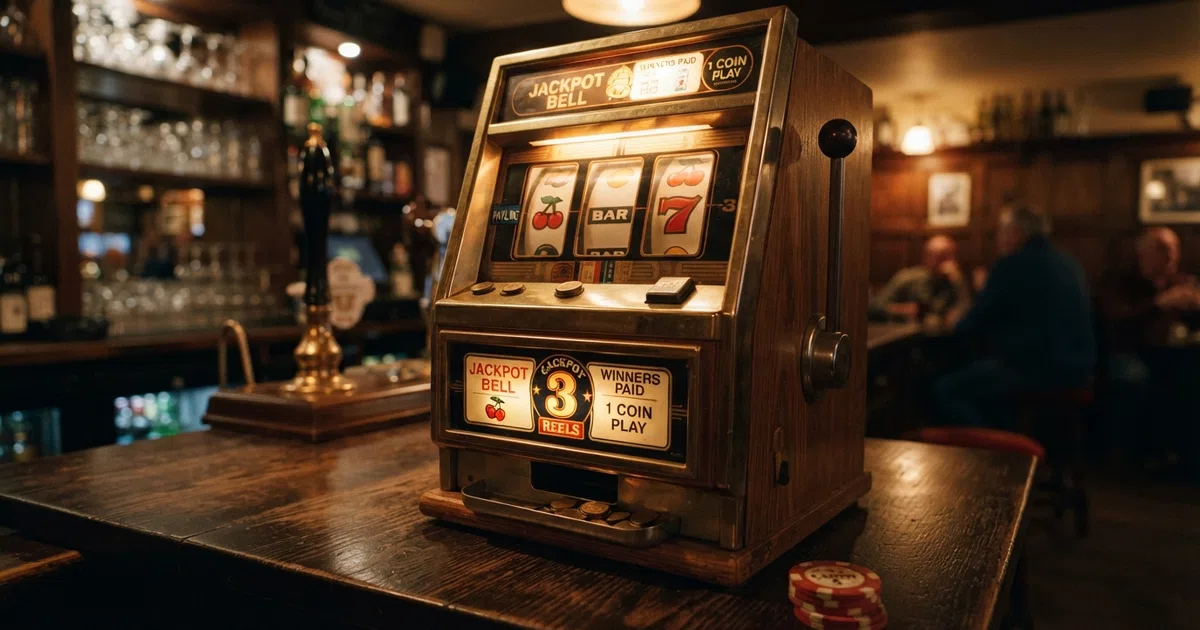
This page ranks the ten UKGC-licensed casinos that stock the deepest classic-slots lobbies, maps the UK rules that govern every spin, and works out what a session on the highest-RTP title actually costs in real money. The comparison is current as of September 9, 2026 and checked against the Gambling Commission public register.
What Classic Slots Are, and Why the Old-School Reel Still Thrives in 2026
A classic slot is, at its core, a three-reel machine with a single horizontal payline down the middle. Three matching symbols across that line pays the top prize. Two matches pay less. Zero matches pays nothing. There are no cascading reels, no expanding wilds, no narrative bonus round, no level-up system. The math is legible on first contact, which is part of the appeal for a player who finds a modern video slot’s feature density exhausting.
The format did not survive because nostalgia is profitable, though nostalgia is profitable. It survived because the house edge on a well-built classic slot is lower than almost anything else on a casino floor. A 99.0% return-to-player is not a marketing claim on Mega Joker, it is a published number, and it sits well above the 94–96% range most video slots occupy. Classic slots attract players who have done the multiplication and decided they would rather play a tighter game for longer than a looser game they cannot follow.
The market knows it. Every operator in the comparison below stocks classic slots deliberately, in a category usually labelled “fruit” or “retro” or “vintage.” The terminology drifts, the reels do not.
How Classic Slots Differ from Video Slots, and Why It Matters
The divide is structural, not aesthetic. A video slot is built around a bonus feature: free spins, pick-me rounds, expanding reels, multiplier trails. The base game is a waiting room. A classic slot is built around the base spin. There is no waiting room. The whole product is the result of one lever-pull.
That difference shows up in three places a player can feel. The first is pace: a classic slot has no feature to unlock, so there is no incentive to grind. The second is session length: without a bonus round to chase, a player is more likely to leave after the bankroll is gone rather than after the bankroll is gone *and* a feature they paid for never triggered. The third is variance: a classic slot pays small, often. A video slot pays rarely, and large. The player who wants a long, quiet session picks the classic. The player who wants one shot at a life-changing payout picks the video slot. Each format serves a different appetite, and pretending otherwise is how players end up playing the wrong game for the wrong reasons.
How to Play Classic Slots: Reels, Paylines and the Spin Button
A three-reel classic slot has three vertical reels, each showing three symbols when stopped, and one payline running across the centre. Stake selection happens before the spin. The player chooses a coin value and a coin count; the total is the stake. The spin button starts the cycle. The reels stop, left to right. If three matching symbols sit on the payline, the payout table, printed on the screen above or below the reels, shows the win. If not, the next spin starts.
UK regulation sets a floor on how fast that cycle can run. The Remote Technical Standards cap spin speed at 2.5 seconds per game cycle, ban auto-play, ban losses disguised as wins, and ban reverse withdrawals. The cap means a fast-fingered player cannot accelerate through a session by hammering the spin button; the game itself imposes the rhythm. Auto-play would let a player set a loss limit and walk away, which the regulator decided was an abdication of the player’s own decision-making. Reverse withdrawals, the option to cancel a withdrawal request and put the money back in play, was banned because it was being used to recover from impulsive deposits. Each rule is a small intervention, and the cumulative effect is a slower, more conscious session than the offshore alternative allows.
Where UK Players Find Classic Slots Online in 2026
UKGC-licensed casinos come in three shapes for the purposes of this page. The dedicated casino, run by a brand whose entire identity is the slots lobby. The bingo-casino hybrid, where classic slots sit in a tab alongside bingo rooms and scratch cards. The sportsbook casino, where the casino product is an extension of a betting brand and the classic-slots category is a smaller, curtained-off section.
All three shapes carry classic slots, and all three are subject to the same Gambling Commission licence, the same stake caps, the same GamStop coverage. The differences are product-level, not regulatory. A dedicated casino like Sky Vegas or 32Red will run a deeper classic-slots lobby with more provider variety. A bingo-casino hybrid like Gala Bingo or JackpotJoy will lean harder on its proprietary platform. A sportsbook like Betway or BoyleSports will carry a respectable selection without making classic slots the centrepiece.
The full comparison follows in the next section. What is worth knowing here is that a UKGC licence is a floor, not a differentiator, and the actual choice between operators comes down to the bonus, the catalogue depth, the wagering terms, and the cashout cap.
Playing Classic Slots for Real Money: Stakes, RTP and What Your Bet Buys
The UK rules the stake. A player aged 25 or over can wager up to £5 per game cycle. A player aged 18 to 24 is capped at £2 per game cycle. Those caps took effect on 9 April 2025 and 21 May 2025 respectively, and they apply to every online slot at every UKGC-licensed operator, including the four RTP data points listed in the table below.
RTP governs the long-run return. It is the percentage of all wagered money a slot returns to players over millions of spins. A 96.15% RTP, the figure for Fire Joker, means the slot keeps 3.85% of every pound wagered across its lifetime. The figure is calculated over so many spins that a single session bears no resemblance to it; the slot pays out in lumps, and a short session can be wildly above or below the published number. But over hundreds of spins, the published number is what the player should expect.
A high-RTP classic slot makes the session cheaper, not profitable. The math at 99.0% RTP, on a 200-spin session at the £5 max stake, gives a session-level expected loss that quantifies the cost: 200 spins × £5 × (1 − 0.99) = £10, the statistical cost of an hour-long session assuming the player uses the maximum stake. At 96.15% RTP, the same session costs 200 × £5 × (1 − 0.9615) = £38.50. The 2.85-percentage-point gap between Fire Joker and Mega Joker is the difference between a £10 session and a £39 session for the same spin count, and it is the single most consequential number on the slot you pick.
From the Pub to the Screen: The Classic Slot Machine’s Journey
The mechanical one-armed bandit arrived in British pubs in the 1960s as the “fruit machine,” a name that stuck because the symbols on the reels mimicked fruit-flavoured chewing gum to circumvent gambling legislation. Cherries, lemons, oranges, plums, melons. Bars descended from the early Bell-Fruit Gum company’s logo. The lucky seven was a branding choice that became a permanent fixture because players liked it.
The digital migration began in the 1990s. The first online slots were direct emulations of the three-reel cabinet. The payline, the symbol set, the lever-pull pacing, all preserved. The industry then expanded outward into five-reel video slots, branded content, progressive jackpots, and feature-dense mechanics, and the three-reel classic shrank to a niche. The niche, it turned out, was loyal. NetEnt built Mega Joker and Jackpot 6000 as deliberate throwbacks. Play’n GO built Fire Joker as a modernised classic with a multiplier wheel bolted on. Cayetano built Classic Fruits for the players who wanted the fruit-machine experience uncut.
The pub fruity is now a browser tab, and the browser tab is also a phone screen, and the phone screen is also a tablet, and the same reel set follows the player across all of them. The lever is gone. The math is the same.
The Best UK Casinos for Classic Slots: Compared Head-to-Head
Ten UKGC-licensed operators, all verified against the Gambling Commission public register in August 2026, ranked by what their welcome offer actually delivers to a player who wants to play classic slots. The ranking is built on four criteria: licence status (the entry condition, and binary), free-spins value and wagering terms, classic-slot catalogue depth, and cashout fairness.

How We Compared the Top UK Classic Slots Casinos
The licence check came first. Every operator in the ranking is on the Gambling Commission public register. Operators without a GB licence do not appear, regardless of how generous their bonus looks, because the UKGC stake caps, GamStop, and the credit-card ban do not apply to them. A bonus at an offshore casino is paid in a different regulatory environment, and comparing the two fairly is impossible.
The welcome free-spins total was weighted against the wagering multiplier. A 300-spin offer with a 50× wagering requirement is worth less than a 50-spin offer with no wagering, because the wagering requirement is a tax on winnings the player has not yet collected. The UKGC’s 10× cap, in force from 19 December 2025, is the ceiling; anything at or below it is fair, and anything above it would now be illegal at a licensed operator. The comparison ranks the offers that already comply.
Catalogue depth came third. A 500-slot lobby is more likely to carry the high-RTP classic slots the player actually wants to play than a 200-slot lobby. The numbers are rough: 200+ is small, 300+ is competent, 400+ is competitive, 500+ is deep.
Cashout fairness came last. Most operators in the ranking offer uncapped cashout on free-spins winnings. The exceptions, Paddy Power Games with a £500 cap and Gala Bingo with a £500 cap on the bingo portion, were not penalised out of the ranking, but the cap is noted because it is the one rule that converts a real-money win into a fixed ceiling.
Operator Comparison Table
| Casino | UKGC Licence | Welcome Free Spins | Wagering on Spins | Validity | Max Cashout | Slot Titles |
|---|---|---|---|---|---|---|
| Sky Vegas | GB-licensed | 270 (70 no-deposit + 200 deposit) | 0× | 7 days | Uncapped | 500+ |
| 32Red | GB-licensed | 320 (or 100) | 10× | 30 days (spins expire 48h) | Uncapped | 400+ |
| Virgin Games | GB-licensed | 100 | 0× | 30 days | Uncapped | 300+ |
| Admiral | GB-licensed | 100 (50+50) | 1× | 3 days | Uncapped | 300+ |
| Betway | GB-licensed | 150 (or 100% up to £50) | 0× (spins) / 10× (match) | 7 days | Uncapped | 500+ |
| Paddy Power Games | GB-licensed | 260 (60+200) | 0× | 7 days | £500 | 400+ |
| JackpotJoy | GB-licensed | 50 | 0× | 30 days | Uncapped | 200+ |
| Betfair | GB-licensed | 150 (50+100) | 0× | 7 days | Uncapped | 300+ |
| Gala Bingo | GB-licensed | 40 + £50 bingo bonus | 0× (spins) / 4× (bingo) | 7 days | £500 (bingo only) | 300+ |
| BoyleSports | GB-licensed | 50 | 0× | 7 days | Uncapped | 400+ |
The spread is wide enough to matter. Sky Vegas and Betway share the deepest slot catalogue. 32Red and Paddy Power Games lead on raw spin count, with 320 and 260 respectively, but Paddy Power’s £500 cashout cap and 32Red’s 10× wagering change what those numbers are worth. Virgin Games and JackpotJoy offer the longest validity windows at 30 days, which suits the patient player who plans to use a few spins at a time. Admiral’s 3-day window is the shortest on the list and the trade-off for its 1× wagering, which sits between the no-wagering majority and the 10× cap at 32Red.
Sky Vegas, 270 Free Spins, Zero Wagering and 500+ Slots
Sky Vegas is the only operator on the list that combines zero wagering, a 500+ slot catalogue, and a two-part welcome offer with both a no-deposit and a deposit tranche. The 70 no-deposit spins let the player test the lobby before committing; the 200 deposit spins arrive after a qualifying stake and run at 0× wagering, meaning any winnings are withdrawable as cash. Validity is 7 days, which is tight, and the cashout is uncapped.
The 500+ slot catalogue is the deciding factor for a classic-slot player. NetEnt supplies the high-RTP throwbacks (Mega Joker, Jackpot 6000), Microgaming and Playtech carry the bulk of the three-reel and five-reel classic range, IGT adds the land-based conversions (Cleopatra, Da Vinci Diamonds, both adjacent to the classic format), and Novomatic brings the Book of Ra and Sizzling Hot family. Demo mode is available on the full catalogue.
Sky Vegas is the right choice for a player who values spin quantity and catalogue depth over a long validity window. The 7-day clock requires the player to use the spins within a week, which is fine for someone who plans to play soon and not fine for someone who wants to bank the offer.
32Red, 320 Free Spins and a 30-Day Window
32Red offers the most free spins on the list and the longest validity, and the trade-off is a 10× wagering requirement on winnings, which sits at the UKGC cap. The 320-spin offer requires a £30 deposit and stake, the 100-spin offer a £10 deposit and stake. The 30-day validity is generous, but each batch of spins expires 48 hours after it is claimed, so the player cannot bank the full tranche for a later date.
The 400+ slot catalogue runs on Microgaming’s core with NetEnt and IGT additions and Evolution Gaming for the live product. Classic-slot coverage is strong without reaching Sky Vegas’s depth, and the platform’s age shows in the polish of the older titles.
The 10× wagering means a 100-spin win of, say, £20 has to be wagered 200 times before it withdraws. At 0.10p per spin, that is 200 further spins, and the expected loss on those spins at 96% RTP is roughly £8, so the wagering costs the player about 40% of the headline win. By comparison, Sky Vegas’s 0× wagering leaves the full £20. The 32Red offer is the right pick for a player who values the 320-spin headroom and the 30-day window over the absence of wagering, and it is the wrong pick for a player who values straightforward withdrawals.
Virgin Games, 100 Free Spins, Zero Wagering, Pure Simplicity
Virgin Games keeps it uncomplicated. Deposit and wager £10, receive 100 free spins on Big Bass Splash, no wagering on winnings, 30 days to use them, uncapped cashout. The 300+ slot catalogue runs NetEnt, IGT, Microgaming and Playtech, with enough classic-slot coverage to satisfy a player who wants the format without diving into the deeper end.
The 30-day window is the headline. It is twice as long as Sky Vegas’s and gives the player the freedom to use the spins across multiple sessions, which suits someone who plays in shorter bursts rather than single long sessions. The 100-spin total is mid-pack, but the 0× wagering means every penny of winnings is real money the moment the spin cycle ends.
Virgin Games is the right choice for a player who wants the welcome offer as a low-friction boost, not a project. Deposit £10, play 100 spins over the month, withdraw whatever survives.
Admiral, 100 Free Spins with a 1× Wagering Twist
Admiral’s 100 free spins split into 50 on registration and 50 after a £10 deposit. The 1× wagering is unusual: it sits between the 0× majority and the 10× UKGC cap, and it is a near-zero concession rather than a true tax. At 1×, a £20 win requires a single £20 wager to clear, which at 0.10p per spin is 200 spins, expected to cost roughly £0.80 at 96% RTP. That is the wagering cost: less than a pound on a twenty-pound win.
The trade-off is the 3-day validity window, the shortest on the list. The player has 72 hours to use both batches, and the 50 registration spins in particular tend to expire before a casual player gets around to them. The 300+ slot catalogue is competent, with Novomatic providing the flagship Sizzling Hot Deluxe and the Admiral Feel the Flutter titles, NetEnt and Microgaming filling out the rest.
Admiral is the right pick for a player who plans to deposit and play immediately. The 3-day window punishes procrastination, and the near-zero wagering is a small bonus on a tight timeline.
Betway, 150 Free Spins or a 100% Deposit Match
Betway is the only operator on the list offering a choice between free spins and a deposit match. The 150 free spins at £0.10 each, triggered by a £10 deposit and stake, carry 0× wagering. The 100% match up to £50 carries 10× wagering, the UKGC cap. The 7-day validity applies to both. The 500+ slot catalogue is among the deepest, anchored by Microgaming, NetEnt, Evolution Gaming and Pragmatic Play.
The choice is the differentiator. A player who values the chance to spin 150 times on a high-RTP classic slot picks the spins. A player who values a matched bankroll for longer sessions picks the match. Both are fair under the 2025 wagering cap. Both are uncapped on cashout.
Betway is the right pick for a player who wants to choose their welcome offer rather than accept a fixed package. The operator’s Microgaming-NetEnt-Pragmatic core delivers deep variety, and the ability to pivot between free spins and a matched bonus is a rarity in the current market.
Paddy Power Games, 260 Free Spins with a £500 Cashout Cap
Paddy Power’s 260 free spins (60 no-deposit, 200 on deposit and £10 wager) carry 0× wagering and a £500 maximum cashout. The 7-day validity is standard. The 400+ slot catalogue runs Playtech, NetEnt, IGT and Red Tiger, with solid classic-slot coverage.
The £500 cashout cap is the operative constraint. A player who hits a lucky streak on a high-volatility classic slot can win more than £500 and not see the excess. At the £5 max stake, 100 spins is £500 of stake, so the cap binds after roughly the cost-of-play threshold. The cap is not predatory; it is a known ceiling, and a player who plans for it will not be surprised. It is, however, the only material cap on the major operators in the ranking.
Paddy Power Games is the right pick for a player who values the 260-spin headroom and is comfortable with the £500 ceiling. It is the wrong pick for a player who values uncapped withdrawals.
JackpotJoy, 50 Free Spins, Zero Wagering and a 30-Day Window
JackpotJoy is the smallest catalogue on the list at 200+ slots, and the offer is the smallest at 50 free spins. The 0× wagering and 30-day validity are the headline. The proprietary Gamesys platform carries the bulk of the catalogue, with NetEnt and IGT filling in the gaps. Classic-slot coverage is competent but not deep.
The 30-day window, shared with Virgin Games, is the standout. For a player who plays occasionally and wants to use a few spins at a time without a ticking clock, the 30-day window is the most generous available. The 50-spin total is small but uncapped on cashout, so whatever is won stays won.
JackpotJoy remains the top recommendation for the casual player prioritizing a long 30-day window and clear, no-wagering terms over a deeper, more complex catalogue.
Betfair, 150 Free Spins Across Two Deposits
Betfair splits 150 free spins into a 50 no-deposit tranche and a 100 deposit-triggered tranche. The 0× wagering and 7-day validity match the standard. The 300+ slot catalogue runs Playtech, NetEnt, IGT and Red Tiger, with the same depth as Paddy Power Games minus the cashout cap.
The 150 total sits in the middle of the ranking. It is more than Virgin Games, JackpotJoy or BoyleSports, less than Sky Vegas, 32Red, Paddy Power or Betway. The 7-day window and uncapped cashout make it a straightforward offer, and the 100-spin tranche is triggered by a deposit and stake of £10. The Playtech-NetEnt-IGT core is the same provider mix that anchors most of the other major operators on the list.
Betfair offers a robust entry point for players who prefer to trial game mechanics before wagering real money. As a UKGC-licensed operator, Betfair provides a secure environment for deposits and gameplay, subject to standard regulatory protections like deposit limits. However, players should remember that no demo session provides a guarantee on future play, and no deposit is covered by a payout guarantee; the protection provided by the UKGC licence is strictly about operator supervision, fair game math, and mandatory player-protection tools.
Gala Bingo, 40 Free Spins and a £50 Bingo Bonus
Gala Bingo is a hybrid, and the welcome offer reflects it. £50 bingo bonus plus 40 free spins, with 4× wagering on the bingo portion and 0× on the spins. The 7-day validity covers both. The £500 cashout cap applies to the bingo bonus; the free spins are uncapped. The 300+ slot catalogue runs Playtech, NetEnt, IGT and Pragmatic Play.
The 40 free spins is the smallest slot offering on the list. For a player who wants classic slots specifically, the offer is thin. For a player who intends to use the casino section as part of a broader bingo-and-slots session, the £50 bingo bonus softens the trade-off. The 0× wagering on the spins keeps the slot portion straightforward.
Gala Bingo is the right pick for a player whose primary interest is the bingo room and who treats the casino section as a secondary product. It is the wrong pick for a player who came for the slots.
BoyleSports, 50 Free Spins, Straightforward and No Wagering
BoyleSports rounds out the ranking with a stake-£10-get-50-free-spins offer at 0× wagering and 7-day validity. The 400+ slot catalogue runs Playtech, NetEnt, Microgaming and IGT, with a competent classic-slot selection. Cashout is uncapped.
The offer is unremarkable, and that is its strength. No wagering, no cashout cap, no split tranches, no bonus-package complexity. Stake £10, play 50 spins, keep what is won. The 7-day window is standard.
BoyleSports is the right pick for a player who wants the welcome offer as a low-friction boost on a sportsbook-casino platform, and for a player who values the absence of complexity over the highest spin count.
The Highest-RTP Classic Slots Worth Your Spin in 2026
Four classic-slot titles have published RTP data worth knowing. Most classic slots do not, which is itself a fact about the format: the marketing leans on nostalgia, and the numbers are harder to find than on a modern video slot’s info page.
| Title | Provider | RTP | Volatility |
|---|---|---|---|
| Mega Joker (Supermeter mode) | NetEnt | 99.0% | — |
| Mega Joker (base mode) | NetEnt | 76.9% | — |
| Jackpot 6000 (Supermeter mode) | NetEnt | 98.9% | — |
| Fire Joker | Play’n GO | 96.15% | — |
| Classic Fruits | Cayetano Gaming | 97.72% | — |
The Supermeter mechanic is the lever that pushes Mega Joker and Jackpot 6000 to 99.0% and 98.9% respectively. In base mode, Mega Joker sits at 76.9%, which is below most video slots and the reason the headline RTP requires the player to actively choose the Supermeter. The Supermeter is a side game where the player winnings are gambled at higher stakes for a chance at larger prizes; the math favours the player, but only if the player takes the gamble. A player who stays in base mode gets the 76.9% return. A player who switches to Supermeter mode gets the 99.0%. The choice is the player’s, and the operator does not push them either way.
Fire Joker and Classic Fruits sit at 96.15% and 97.72% without a mode-switch requirement, which makes them the more honest high-RTP options for a player who wants the published number without a side-game commitment. Fire Joker adds a multiplier wheel and respin mechanic that complicate the base game; Classic Fruits stays closer to the three-reel purist format.
Three Reels, Five Reels, and Everything Between: The Classic Slots Format Spectrum
The classic slot family is broader than three reels. It includes five-reelers that keep the fruit-symbol vocabulary, hybrid formats that bolt a single bonus feature onto an otherwise traditional structure, and themed variants that put a licensed skin over the classic reel set. The format a player picks sets the session length, the variance, and the bonus-round exposure before the first spin.
Three-Reel Classic Slots: The Format That Refuses to Fade
The three-reel classic is the default and the purest. One payline, three symbols per reel, no cascading, no expanding wilds. A spin takes 2.5 seconds by UKGC mandate, and the player sees the result in that time. The session is a series of self-contained decisions, each independent of the last, and the math is legible: a 96% RTP slot pays back 96p of every pound wagered over the long run, and the player either believes the long run is the right frame or they do not.
The format’s persistence is not a nostalgia artefact. The provider catalogues confirm the demand. Play’n GO carries 387 slots, NetEnt 210, and BGaming 198, and a meaningful share of each catalogue is the three-reel and three-reel-adjacent format. Operators stock the games because players play them.
Fire Joker, with its multiplier wheel and respin mechanic, is the example that shows the format can absorb a feature without losing its identity. The base spin is still a three-reel classic. The multiplier wheel is a side bet the player knows is coming. The format held its shape, and the bonus round is a garnish rather than a second course.
Five-Reel Classic Slots: More Paylines, Same Spirit
A five-reel classic keeps the fruit symbols, the BAR, the sevens, and the stripped-back visual style, and it adds a fourth and fifth reel to the layout. The payline count grows with the reel count: a single payline becomes three, five, or ten, and the symbol combinations multiply accordingly. The session is faster because more paylines means more chance to match on each spin, and the variance drops because the wins land more often and at lower payouts.
The dividing line between a five-reel classic and a video slot is fuzzy. A five-reel classic with three paylines, no bonus feature, and fruit symbols is clearly a classic. A five-reel slot with twenty paylines, a free-spins trigger, a scatter symbol, and a pick-me bonus is clearly a video slot. The middle ground, a five-reel slot with a single free-spins feature and a scatter symbol, is a hybrid, and the market labels it either way depending on the marketing angle.
For a player who wants the classic look without the three-reel constraint, a five-reel classic is the right pick. The math is the same: published RTP governs the long-run return, and the additional paylines are an arithmetic convenience, not a fundamental change.
Fruit, Bars and Sevens: The Symbols Every UK Player Knows
The classic slot symbol set is a vocabulary, not a decoration. Cherries, lemons, oranges, plums, melons at the low tier. Bars (single, double, triple) at the mid tier. Sevens at the top. Bells and stars as secondary premium symbols. Each icon has a payout value, and the payout table is the contract between the slot and the player.
The fruit set is a historical artefact: the early mechanical machines paid out in fruit-flavoured chewing gum to avoid gambling legislation, and the symbols stuck. The BAR descends from the Bell-Fruit Gum company logo, and the lucky seven was a branding choice that became a permanent fixture because players responded to it. The symbols have no thematic meaning; they are pure iconography, and that is their strength. A player does not need to read the paytable to know what a cherry is.
The persistence of the fruit vocabulary in an era of branded video slots is a measure of what the classic format actually delivers. A branded slot borrows from a film, a band, a TV show, and the symbols mean something only to a viewer of that source material. A fruit slot means what it has always meant, and the meaning is portable across decades of players.
Bonus Rounds in Classic Slots: When Simple Gets a Twist
The classic format accommodates a bonus feature without becoming a video slot, as long as the feature is small. A respin, where one or more reels lock and the remaining reels re-spin, is the most common classic-slot bonus. A multiplier wheel, where a wheel spin multiplies the last win by a factor from 2× to 10×, is the second most common. A gamble feature, where the player risks a win on a red-or-black double-or-nothing, is the third. Free-spins triggers and pick-me rounds are rarer, and their presence pushes the slot further from the classic format.
Fire Joker carries a respin mechanic and a multiplier wheel. When all three reels show the same symbol but not the joker, the respin of fire locks two reels and re-spins the third; if the respin lands the joker, the multiplier wheel spins for a 2× to 10× boost. The bonus feature adds variance without abandoning the three-reel structure, and the published 96.15% RTP includes the bonus math.
The effect of a bonus round on RTP is mechanical. A respin or multiplier wheel increases the slot’s payout frequency at the cost of a higher base-game house edge, or vice versa; the published RTP is the sum. A player who dislikes the bonus can usually play a version of the slot without it, and the no-bonus RTP is published separately if the slot has one.
Themed Classic Slots: Branded Reels and Seasonal Spins
Themed classic slots sit at the edge of the format. They carry the three-reel or five-reel classic structure, the fruit-symbol vocabulary, and the stripped-back pacing, and they wrap a licensed skin around it: Christmas classic slots with holly and bells, Halloween classic slots with pumpkins and ghosts, branded classic slots that borrow a film’s visual language without abandoning the reel layout.
The trade-off is straightforward. A themed classic slot pays for the licence fee in a slightly higher house edge, and the published RTP is usually a percentage point or two below a non-themed equivalent. A player who values the theme is paying for the privilege. A player who values the math picks the non-themed version.
Finding themed classics in operator lobbies requires the right filter. Most lobbies separate slots by theme (Christmas, Halloween, branded) rather than by format (classic, video), so a themed classic may sit in the Christmas section without a “classic” label. Searching for the specific title, or for the provider’s name, is the more reliable route.
Free Classic Slots: Practise Free, Pay Nothing, Win Nothing
Free-play acts as a technical rehearsal. It accurately simulates the reels, paylines, and trigger frequencies of the original game, but it completely abstracts away the financial and psychological variables of real-money play. Testing mechanics in demo mode is a useful strategy, but this simulated environment does not translate directly to the actual commitment a real-money session entails.
Free-Play vs Real-Money: What You Gain and What You Give Up
Demo mode is a faithful rehearsal. The reels spin at the same rate, the symbols land in the same distribution, the bonus features trigger at the same frequency, and the RTP is the same published number. A player who runs 200 spins in demo mode on Mega Joker sees the same statistical pattern they would see in real money, minus the variance of any single session.
The things demo mode does not replicate are the things that matter to a player’s experience. The £5/£2 stake cap is absent because there is no stake. The GamStop coverage is absent because there is no account. The credit-card ban is absent because there is no payment. The reverse-withdrawal ban is absent because there is no withdrawal. The deposit-limit prompt is absent because there is no deposit. Every UK player protection lives at the boundary between the player and their money, and demo mode erases that boundary.
The psychological difference lies in the stakes. A free spin is pure entertainment, whereas a real-money spin is a consequential decision. Demo mode cannot prepare a player for the emotional response to a losing streak, because demo losses carry no cost. A session played in demo mode for an hour might feel similar, but it lacks the reality-check of a real-money account balance.
Free Classic Slots No Download: Instant Browser Play in 2026
Every UKGC-licensed operator in the comparison table runs browser-based demos, and none of them require a download. The slots are built in HTML5, which runs natively in any modern browser on any device, and the demo loads in a browser tab without an installer, a plugin, or a permission prompt. The player navigates to the slot, clicks “demo” or “play for fun,” and the reels appear.
Whether the demo requires registration varies by operator. Some operators, particularly those with UKGC commitments to player protection, gate the demo behind a verified account, which means a sign-up with identity documents before the first spin. Others allow no-registration demos that the player can launch and abandon without creating an account. The audit-grade data on which operator offers which demo flow is not in the public record, and the experience differs across operators. A player who wants the no-sign-up path should check the operator’s demo policy before depositing.
The technical requirements are minimal: an up-to-date browser, JavaScript enabled, a stable connection. The slots run on Chrome, Firefox, Safari, Edge, and any mobile browser. Flash is dead and not coming back; HTML5 replaced it a decade ago, and the classic-slot catalogue migrated with the industry.
Free Classic Slot Machines: The Emulated Cabinet Experience
A separate category of free-play exists outside the UKGC-licensed casino lobbies: standalone emulators and apps that simulate the physical classic-slot cabinet. These carry a full cabinet skin, a lever animation (even on a touchscreen), the mechanical sound design of the original machines, and a reel set borrowed from the cabinet. The experience is closer to playing a pub fruity than to playing a browser tab.
The emulators are not gambling products. They carry no real-money path, no wallet, no withdrawal. They exist for nostalgia, for practice, and for casual entertainment. App stores carry several under “slot machine” and “fruit machine” searches, and dedicated free-play sites host browser-based versions. The offerings change frequently, and the quality varies from polished to crude.
For players seeking the physical cabinet experience outside of a casino, standalone apps and emulators offer a thematic recreation of mechanical machines. These apps are strictly for entertainment; they carry no wallet and no real-money path. Casino demos, conversely, are professional tools that use the exact RTP math and volatility model found in the real-money version. For those intending to play for money, the casino’s own demo is the superior practice tool.
The Best Free Classic Slots to Try Before You Bet
The four highest-RTP classic slots are the obvious free-play targets for exploring game mechanics, though no demo can guarantee future results or provide an accurate simulation of real-money session volatility. Mega Joker lets the player test the Supermeter mechanic, which drives the 99.0% RTP, while Jackpot 6000 offers a similar structure at 98.9%. Fire Joker’s multiplier wheel and respin mechanic are easier to evaluate in demo, and Classic Fruits offers a pure three-reel experience. Note that while these slots are UKGC-regulated, they offer no deposit or payout guarantees; each spin is independent, and the operator-side licensing and player-protection tools (such as deposit limits and GamStop) are the only safeguards that truly apply to your session.
Every featured operator in the comparison carries demo mode on its full catalogue, so the player can sample the slots before committing to a deposit. The demo is a free hour with a slot the player is considering, and an hour is enough to form a defensible view of whether the slot suits.
Classic Slots on Mobile: Small Screen, Same Spin
UK players can play classic slots on any modern phone, and the experience is indistinguishable from a desktop session for most titles. The reels are small, the spin button is large, the payout table is a tap away, and the session runs in a browser tab or a dedicated app at the player’s preference.
Classic Slots Apps for UK Players: What Is Actually Worth Installing
The featured operators each carry a mobile app for iOS and Android, and the app’s classic-slots catalogue broadly matches the desktop lobby. App-only features are limited: push notifications for new-game releases, biometric login for faster access, and a streamlined cashier for deposits and withdrawals. The classic-slots experience itself does not change between platforms.
A dedicated classic-slots-only app is rare, and for good reason. The classic-slot audience is part of a broader casino audience, and a standalone app fragments the product. The featured operators bundle classic slots into their main casino app, and the player finds them in the slots lobby under a “classic” or “fruit” filter.
iOS and Android availability is symmetric for the featured operators, with apps on the Apple App Store and Google Play. The per-operator app quality, including load times, navigation, and the smoothness of the spin animation, is not in the public audit record, and a player who values the app experience should test the demo in the mobile browser before installing the native app.
Android Classic Slots: Google Play, Operator APKs and What Works
Google Play permits UK gambling apps with a gambling licence, and the apps are age-gated and hidden from casual browsing. A player searching for a specific operator’s app on Google Play finds it under the operator’s brand name. The age gate prompts for a date of birth on first launch, and the app’s content is not visible in the store’s main browse experience for under-18 accounts.
Sideloading the app from the operator’s website is not necessary for the UK market. The featured operators distribute through Google Play, and the player installs the app through the standard Play Store flow. The sideloading route is for operators outside the UKGC’s purview, and the featured operators are inside it.
The browser fallback is universal. A player who does not want to install an app navigates to the operator’s mobile site in Chrome, Firefox, or any other modern mobile browser, logs in, and plays. The experience matches the desktop site scaled to the phone screen, and the performance is adequate for the stripped-back classic-slot format.
Download vs Instant-Play on Mobile: Which Runs Better
HTML5 instant-play is the default for the featured operators, and the performance is indistinguishable from a native app for the classic-slot format. The reels are not graphically intensive, the spin animation is short, and the bandwidth requirement is modest. The browser tab is auto-updating, requires no storage, and leaves no permissions footprint on the device.
A native app is marginally faster on repeat sessions because the assets are cached locally, and the preloading of the lobby reduces the wait between the app launch and the first spin. The advantage is small, and it matters more for the graphically intensive video slots than for the classic format.
The cost of installing a casino app is the cost of any app: storage, background permissions, update prompts. The classic-slots-only player who uses the app occasionally may prefer the browser, which carries no persistent footprint. The frequent player who values the cached assets and the biometric login may prefer the app. Neither choice is wrong, and the gameplay is the same on both.
The UK Rules That Protect Every Classic Slots Spin
The UK regulatory framework is the most detailed in the iGaming market, and it governs every spin a player makes at a UKGC-licensed operator. The stake cap, the credit-card ban, GamStop, the wagering cap, the financial-vulnerability checks, the auto-play ban, the spin-speed cap, the reverse-withdrawal ban, the statutory levy, and the Remote Gaming Duty are the load-bearing rules. Each one is a small intervention. Together, they define what a UK player can and cannot do, and what the operator must and must not allow.

What a UKGC Licence Means for Your Spin
The Gambling Commission is the single statutory regulator, established under the Gambling Act 2005 and extended by the Gambling (Licensing and Advertising) Act 2014. A GB licence is compulsory at the point of consumption for any operator serving Great Britain. Northern Ireland operates under separate, older law and is outside the Commission’s remit.
The three licensing objectives under Section 1 of the Gambling Act 2005 are preventing gambling from being a source of crime, ensuring gambling is conducted fairly and openly, and protecting children and vulnerable persons. Each objective is enforceable. An operator that breaks the rules faces fines, licence suspension, or personal-licence revocation for the individuals responsible. The enforcement record is public, and the financial penalties are material.
The Remote Technical Standards (RTS) govern the software itself. Auto-play is banned. Spin speed is capped at 2.5 seconds per game cycle. Losses disguised as wins are banned. Reverse withdrawals are permanently banned. Each rule targets a specific design pattern that the regulator decided was manipulative, and the effect is a slower, more conscious session than the offshore alternative allows. A player at a UKGC-licensed casino is playing a game the regulator has audited, and the operator cannot change the rules without the regulator’s approval.
GamStop and the Self-Exclusion Safety Net
GamStop is the mandatory, irreversible shield every UKGC-licensed operator must honour. Since 31 March 2020, every GB-licensed online gambling operator has been required to participate, and a player who self-excludes through GamStop is excluded from every participating operator, not just the one where they registered.
The exclusion periods are six months, one year, five years, or five years with auto-renewal. The choice is the player’s, and the exclusion cannot be cancelled early. A player who registers for a five-year exclusion cannot log in for five years, and the operator cannot reinstate them even on request. The irreversibility is the feature: it forecloses the moment-of-weakness reversal that the regulator decided was the dominant failure mode.
GamStop does not cover offshore casinos. A player who self-excludes through GamStop and then opens an account at an offshore casino is not blocked. The offshore casino is outside the Commission’s jurisdiction, and the player has exited the UK protective framework. The Commission uses disruption tactics (cease-and-desist notices, search-engine delisting, domain suspension, payment-provider referrals) against offshore operators, but the player who deliberately bypasses GamStop is the one the disruption cannot reach.
UKGC-Licensed vs Offshore Casinos: The Protections You Lose
An offshore casino is not a UKGC-licensed casino. The licence may be from Curaçao, Malta, Gibraltar, or another jurisdiction, and the operator is not on the Gambling Commission public register. The player at an offshore casino loses the protections the UK framework provides: the stake cap, the credit-card ban, GamStop, the wagering cap, the financial-vulnerability checks, the auto-play ban, the spin-speed cap, the reverse-withdrawal ban, the Commission’s complaints route, and access to an ADR (alternative dispute resolution) provider.
Operating without a GB licence while serving Great Britain is a criminal offence under section 33 of the Gambling Act 2005, carrying up to 51 weeks’ imprisonment and/or an unlimited fine. The Commission pursues offshore operators through disruption tactics, not ISP blocking, and the player who uses an offshore casino is participating in a market the regulator considers unlawful. The licence from Curaçao or Malta is a real licence in its own jurisdiction; it is not a substitute for a GB licence at the point of consumption.
The choice is binary for a UK player. A UKGC-licensed casino means the full UK regulatory framework. An offshore casino means the operator’s own house rules, which may be generous, may be exploitative, and are not subject to the Commission’s enforcement. A player who values the UK protections plays at a UKGC-licensed casino. A player who values the absence of those protections plays offshore, and accepts the consequences.
Staying in Control: The Safeguards Every UK Player Has
The UK framework extends beyond the rules that govern the operator. It includes the tools the player can use to manage their own play, the data on problem-gambling prevalence, and the help infrastructure for players whose play has become a problem. Each is accessible, each is free, and each is more effective the earlier it is used.
Deposit and Session Limits: Setting Your Own Boundaries
From 31 October 2025, every UKGC-licensed operator must prompt the player to set a financial limit before their first deposit. The prompt is mandatory, and the limit must be accepted or actively declined before the deposit proceeds. A decrease in the limit must be actioned immediately. An increase may have a delay, to foreclose the impulsive escalation.
From 30 September 2026, every operator must offer a gross deposit limit with at least equal prominence to other limits. The gross limit is the total the player can deposit over a period, irrespective of losses and withdrawals, and the equal-prominence rule prevents the operator from burying the tool.
The deposit limit is a self-set constraint, separate from the financial-vulnerability check that triggers at £150 in net deposits over a rolling 30-day period. The vulnerability check is operator-initiated and uses publicly available data (county court judgments, individual voluntary arrangements, bankruptcy orders) to flag players who may be in financial distress. The deposit limit is player-initiated and is the player’s own choice about how much to spend.
Setting a deposit limit before the first spin changes the session. The player has a ceiling, and the ceiling is visible, and the session ends when the ceiling is reached rather than when the bankroll is exhausted. The tool is a small intervention with a measurable effect on session length and spend.
Self-Exclusion and Time-Out Tools: More Than Just GamStop
Operator-level time-outs are reversible. A 24-hour time-out ends after 24 hours. A six-week time-out ends after six weeks. The player sets the time-out, the operator enforces it, and the account reactivates when the time-out expires. Time-outs are useful for a player who wants a cooling-off period without the commitment of a multi-month self-exclusion.
Operator-level self-exclusion runs six to twelve months and is per-operator. A player who self-excludes from one operator is not self-excluded from others, which is the gap GamStop closes. GamStop covers every participating operator with a single registration, and the exclusion periods are six months, one year, five years, or five years with auto-renewal.
Reality checks are pop-ups that interrupt the session at a set interval (typically 30 or 60 minutes) and show the player how long they have played and how much they have won or lost. The pop-up does not end the session; it requires the player to acknowledge the numbers and continue. The acknowledgement is the point: the player is reminded, in their own session, of where they are.
The tools stack. A player can set a deposit limit, take a weekly time-out, register with GamStop for a long exclusion, and use reality checks during sessions. The framework is built to accommodate every level of concern, and a player who uses the tools is not admitting a problem; they are using the system as designed.
Recognising the Signs: When Play Becomes a Problem
The UK problem-gambling rate, measured by the Problem Gambling Severity Index (PGSI 8+), dropped to 2.4% in 2025, down from 2.7% in 2024, according to the Gambling Survey for Great Britain (GSGB) Year 3. The decline is small in percentage terms but meaningful in the context of a population survey, and the data reflects the year the stake cap took effect.
The behavioural signs are not abstract. Chasing losses: increasing the stake to recover what was lost. Hiding play: keeping the session secret from family or friends. Playing longer than planned: a 30-minute session becomes four hours. Borrowing to play: using credit, asking for loans, or selling possessions to fund the next session. Each is a marker, and the markers compound.
The financial-vulnerability check is an early-warning system the operator runs at £150 in net deposits over a rolling 30-day period. The check uses publicly available data, and a trigger does not block play; it requires the operator to engage with the player, ask questions, and consider whether the deposits are sustainable. The check is not infallible, and it is not a substitute for self-monitoring, but it is a backstop.
The help infrastructure is free, confidential, and 24/7. GamCare operates the National Gambling Helpline on 0808 8020 133. GambleAware provides information and signposting. NHS gambling harm clinics operate in England, Scotland and Wales. Gamblers Anonymous runs peer-support meetings. Reaching out is the single strongest predictor of recovery, and the first call is the hardest.
How We Chose and Ranked the Casinos on This Page
The ranking rests on the Gambling Commission public register of licence holders, checked in August 2026. Every operator in the comparison table appeared on the register on the verification date, and the licence status is binary: present or absent. No operator paid for placement, and the ranking reflects the data as of the verification date.
The four ranking criteria were licence status, welcome free-spins value and wagering terms, classic-slot catalogue depth, and cashout fairness. The licence check was the entry condition, and the remaining three criteria ordered the comparison. Operators that did not appear on the register, or whose bonus claims could not be verified, were excluded.
The ranking is not a recommendation to play. The page describes operators, and the reader chooses. The ranking orders what the operators offer so the comparison is legible, and the operator write-ups below the table explain the trade-offs each offer makes.
What to Look for in a Classic Slots Casino, and What to Ignore
Three numbers predict the experience: the wagering multiplier, the RTP of the slot you pick, and the cashout cap. The wagering multiplier is the percentage of winnings the player must re-wager before withdrawing. Anything at or below the UKGC’s 10× cap is fair. Anything above it would be illegal at a licensed operator. The RTP is the long-run return on the slot. A 99% RTP slot is a 1% house edge; a 96% slot is a 4% house edge; the gap compounds over hundreds of spins. The cashout cap is the ceiling on winnings from a bonus. A cap at £500 means a player who wins £1,000 keeps £500.
The free-spins count is less important than the wagering terms. A 300-spin offer with a 50× wagering requirement would be worth less than a 50-spin offer with no wagering, and the 50× would be illegal at a UKGC-licensed operator. The count is the headline; the terms are the substance.
The “biggest bonus” marketing is a distraction. A casino offering a £1,000 matched deposit with a 50× wagering requirement is offering a bonus the player will not clear, because the wagering math does not work at 50×. The bonus is a hook, and the player is the fish. At a UKGC-licensed operator, the wagering cap makes the comparison honest. The player who reads the wagering terms before depositing is the player who keeps what they win.
The checklist is short. Check the register. Check the wagering. Check the RTP. Set a deposit limit. Then play.
Frequently Asked Questions
What is the maximum stake for classic slots at UK casinos?
The UKGC mandates a maximum stake of £5 per game cycle for players aged 25 and over and £2 for players aged 18 to 24. The caps took effect on 9 April 2025 and 21 May 2025 respectively, and they apply to every online slot at every UKGC-licensed operator, including the highest-RTP classic slots. A game cycle runs from the initiation of the spin to the point where all staked money is lost or all winnings delivered.
Are classic slots available in free-play or demo mode?
Every UKGC-licensed operator in the comparison table carries demo mode on its full slot catalogue, including the classic-slot range. The demo replicates the reels, the paylines, the RTP behaviour, and the bonus triggers. It does not replicate the stake cap, GamStop, or the ability to withdraw. Whether the demo requires registration varies by operator.
What are the most popular classic slot titles with the highest RTP?
Four classic-slot titles have published RTP data worth knowing. Mega Joker by NetEnt runs at 99.0% in Supermeter mode (76.9% in base mode). Jackpot 6000 by NetEnt runs at 98.9% in Supermeter mode. Fire Joker by Play’n GO runs at 96.15%. Classic Fruits by Cayetano Gaming runs at 97.72%. Most classic slots do not publish a per-title RTP, and the absence is itself a fact about the format.
What does GamStop self-exclusion mean for classic slots players?
GAMSTOP is the mandatory self-exclusion register every UKGC-licensed online gambling operator must honour, in force since 31 March 2020. A player who registers with GamStop is excluded from every participating operator, not just the one where they signed up. The exclusion periods are six months, one year, five years, or five years with auto-renewal, and the exclusion cannot be cancelled early. GamStop does not cover offshore casinos.
Are classic slots at UK casinos fair and regulated?
Every UKGC-licensed casino is regulated under the Gambling Act 2005 and the Gambling (Licensing and Advertising) Act 2014, and the Gambling Commission enforces three licensing objectives: preventing crime, ensuring fairness, and protecting children and vulnerable persons. The Remote Technical Standards govern the software itself, banning auto-play, capping spin speed at 2.5 seconds, banning losses disguised as wins, and banning reverse withdrawals. The wagering requirement on bonuses is capped at 10× from 19 December 2025.
Slots – trustedcasinos-notongamstop
Content created by the «trustedcasinos-notongamstop» team